 Popular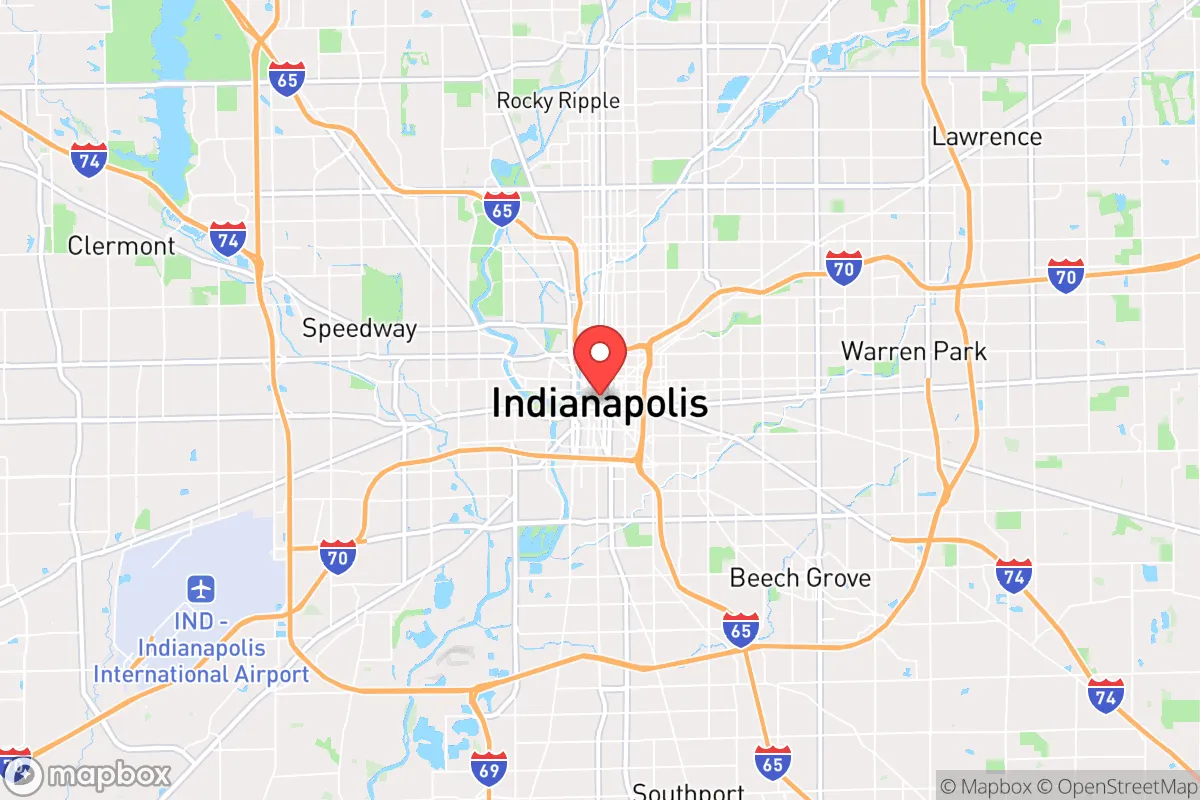
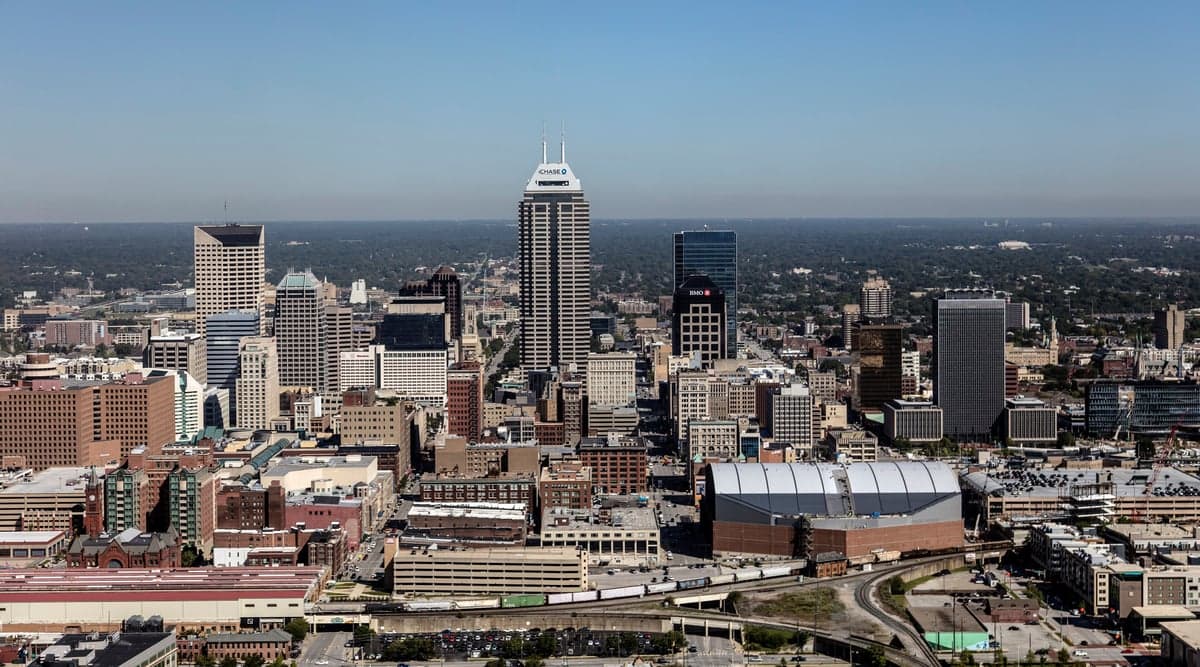
Photo: Wikipedia
Political ClimatePolitical Climate in Indianapolis, IN
District shown is the primary district for this city’s centroid. Cities may span multiple districts.
Local Political AnalysisPolitical Analysis of Indianapolis, IN
Indianapolis, Indiana, is a deep blue island in a sea of red, with a Cook PVI of D+21 that makes it one of the most reliably Democratic cities in the Midwest. This wasn't always the case—I remember when the city was a lot more purple, with a healthy mix of conservative and moderate Democrats who kept things balanced. Over the last decade or so, though, the shift has been dramatic. The city council and mayor's office are firmly in progressive hands, and the voting patterns reflect a population that increasingly favors big-government solutions. If you're looking at the state as a whole, you'll see a stark contrast: drive 20 minutes north to Hamilton County (Carmel, Fishers) or 30 minutes south to Johnson County (Greenwood, Franklin), and you're in solidly conservative territory where property taxes are lower and the local government is much more hands-off.
How it compares
Compared to the surrounding suburbs and rural areas, Indianapolis is a political outlier. The state legislature, which is heavily Republican, often clashes with the city over issues like preemption laws—they've blocked Indianapolis from enacting its own gun ordinances, local minimum wage hikes, and even plastic bag bans. This tension is a double-edged sword. On one hand, it means the state government acts as a check on some of the more ambitious progressive policies coming out of the city. On the other hand, it creates a constant tug-of-war that can feel like government overreach from both sides. The city's D+21 rating means that local elections are effectively decided in the Democratic primary, which tends to push candidates further left than the average Hoosier might prefer. If you value personal freedoms—like the right to keep and bear arms without local infringement, or the freedom from high taxes funding expansive social programs—the contrast between Indianapolis and its neighbors is stark.
What this means for residents
For residents, the political climate translates directly into daily life. Property taxes in Marion County have been climbing to fund city services and school initiatives, while surrounding counties keep theirs in check. You'll also see more aggressive enforcement of regulations—from business licensing to housing codes—that can feel like the city is getting too involved in your personal decisions. The public school system, Indianapolis Public Schools (IPS), is heavily influenced by the city's politics, with a focus on equity initiatives and diversity programs that some parents feel prioritize ideology over academics. Many families I know have voted with their feet, moving to towns like Avon or Noblesville for more local control and lower taxes. The long-term trajectory is concerning: as the city becomes more progressive, it risks alienating the very middle-class families and small businesses that keep a community healthy.
One cultural distinction that stands out is the city's approach to public space and events. Indianapolis has leaned hard into "inclusivity" initiatives, which sounds good on paper but often means more government-funded festivals, more signage, and more bureaucracy around things that used to be simple. The downtown area is a hub for progressive activism, and you'll see it reflected in the street art, the library programming, and even the way the city handles homeless encampments—with a "housing first" model that some argue enables rather than solves the problem. If you're a conservative who values self-reliance and limited government, you can still live here and find your people, but you'll feel increasingly like a minority in your own city. The political winds are blowing one direction, and they're not showing any signs of shifting back.

State Political ClimatePolitical Climate in Indiana
State Political AnalysisPolitical Environment in the State
Indiana has been a reliably Republican state for decades, but the nature of that conservatism is shifting. The state hasn't voted for a Democratic presidential candidate since 2008, and even that was an Obama anomaly. The dominant coalition is a mix of traditional Midwestern fiscal conservatives, socially conservative rural voters, and a growing number of culturally conservative suburbanites fleeing the chaos of Chicago and the coasts. Over the last 10-20 years, the state has moved from a moderate, "pragmatic" Republicanism to a more assertive, freedom-oriented conservatism, especially on Second Amendment and parental rights issues. However, the growing influence of the Indianapolis metro area and college towns like Bloomington is creating a noticeable political tension that anyone relocating here should understand.
Urban vs. rural divide
The political map of Indiana is a classic tale of two states. The rural and small-town areas—places like Kokomo, Terre Haute, and the vast farmlands of the north and south—are deeply red. These counties often vote 70-80% Republican. The real action is in the suburbs and exurbs. Hamilton County, north of Indianapolis, is one of the wealthiest and most reliably Republican counties in the nation. But the city of Indianapolis itself (Marion County) is a blue stronghold, driven by a coalition of university students, government workers, and minority communities. Bloomington (Monroe County) is the most liberal area outside of Indy, home to Indiana University and a vocal progressive activist class. Lake County, in the far northwest corner near Chicago, is also reliably blue, heavily influenced by union politics and Chicago transplants. The key battlegrounds are the "collar counties" around Indy—Hendricks, Johnson, and Hancock—which are trending redder as families move out of the city for better schools and lower taxes.
Policy environment
Indiana’s policy environment is broadly favorable for conservative-leaning families and individuals. The state has a flat income tax rate of 3.05% (down from 3.15% in 2024), with a plan to phase it out entirely by 2027. Property taxes are among the lowest in the Midwest, capped at 1% of assessed value for owner-occupied homes. There is no inheritance tax. The regulatory posture is business-friendly, with a right-to-work law (though it was repealed in 2025, a major loss for labor freedom advocates) and a strong tort reform environment. On education, Indiana has a robust school choice program—the Choice Scholarship program is one of the largest in the nation, allowing state funds to follow the child to private or religious schools. This is a huge draw for parents. Election laws are solid: voter ID is required, and the state has cleaned up its voter rolls aggressively. There is no sanctuary city policy anywhere in the state—local law enforcement cooperates with federal immigration authorities, which is a point of pride for many residents.
Trajectory & freedom
Indiana is becoming more free in several key areas, but there are warning signs. On the positive side, the state passed constitutional carry (permitless carry) in 2022, and in 2025, it expanded that to allow for the carrying of firearms on school property by licensed individuals. The state also passed a strong parental rights bill in 2023 (HEA 1608), which requires schools to notify parents of any changes to a student’s health or well-being, effectively banning secret gender transition policies. This was a major win for families. However, the repeal of the right-to-work law in 2025 was a significant step backward for economic freedom, pushed through by a coalition of union-backed Democrats and a handful of moderate Republicans. On medical freedom, Indiana banned COVID-19 vaccine mandates for state employees and contractors in 2023, but it has not passed a broad medical freedom bill protecting against future mandates. Property rights are strong, with no statewide rent control and limited eminent domain abuse. The trajectory is mixed: the state is solidifying its conservative social and gun policies, but the economic freedom front is showing cracks.
Civil unrest & political movements
Indiana is not a hotbed of civil unrest, but there are flashpoints. The most visible political movements are the pro-life and parental rights groups, which are well-organized and influential at the statehouse. The 2022 abortion ban (which went into effect after the Dobbs decision) was a major victory for these groups, though it has been challenged in court and is currently in a state of legal limbo. On the left, the most active movements are centered in Bloomington and Indianapolis, with regular protests on the IU campus over Palestine and LGBTQ issues. Immigration politics are relatively quiet, but there is a growing concern among conservatives about the influx of migrants into Elkhart and Goshen (the RV manufacturing hub), which has seen a significant Hispanic population growth. There have been no major election integrity controversies since 2020, but the state has tightened its election laws to prevent any future issues. A new resident would notice that political signs and flags are common in rural areas, but the culture war is less in-your-face than in states like Texas or Florida.
Projection
Over the next 5-10 years, Indiana is likely to become more politically divided, but the conservative majority will hold. The key demographic shift is the continued exodus of families from Illinois and California into the Indianapolis suburbs and the southern part of the state (around Jeffersonville and New Albany, across the river from Louisville). These newcomers are often culturally conservative but may be more moderate on economic issues. The growing Hispanic population in the northern counties could shift some areas toward the center-left. However, the state’s rural areas are not depopulating as fast as in other Midwestern states, and the GOP has a structural advantage in the state legislature due to gerrymandering. The biggest wildcard is the potential for a statewide school choice battle if Democrats ever gain a foothold. For now, expect Indiana to remain a reliably red state with a strong conservative social and fiscal foundation, but with a growing suburban-libertarian wing that may push back on some social issues.
Bottom line for a new resident: If you’re a conservative-leaning individual or parent, Indiana offers a very favorable environment—low taxes, strong school choice, solid gun rights, and a government that generally respects your personal freedoms. The biggest practical concern is the ongoing legal fight over abortion and the potential for future economic freedom erosion. You’ll find a welcoming community in the suburbs of Fishers or Carmel, but you’ll want to avoid the urban cores of Indianapolis and Bloomington if you prefer a more traditional, family-oriented atmosphere. The state is stable, safe, and trending in the right direction, but it’s not immune to the cultural battles sweeping the nation.
* Values derived from national, state, county, city and local statistics and may differ in a specific area. Last updated: 2026-09-21T19:36:35.000Z
Narrative content on this page is AI-generated and may contain mistakes. Verify any details that matter before acting on them.
ReloMaps may earn a commission from affiliate links at no extra cost to you.

