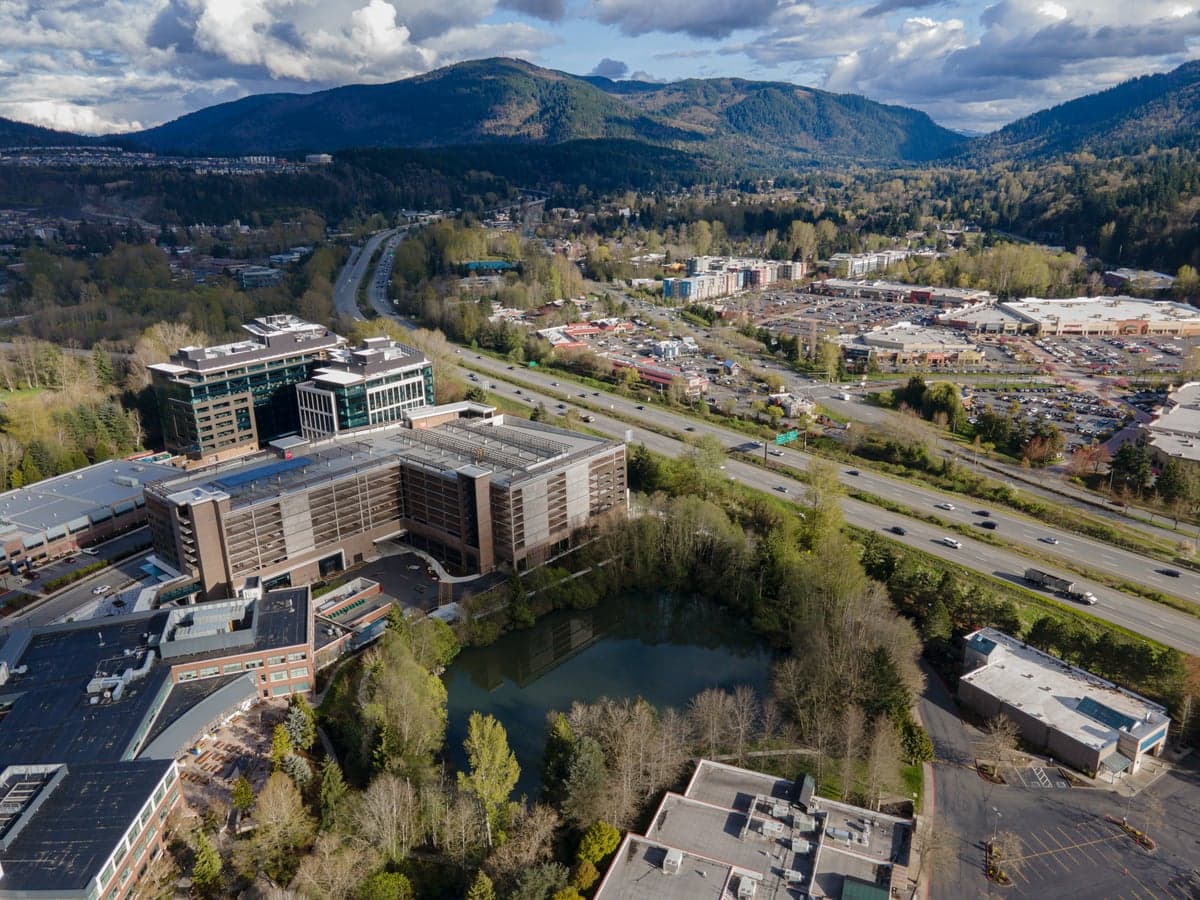
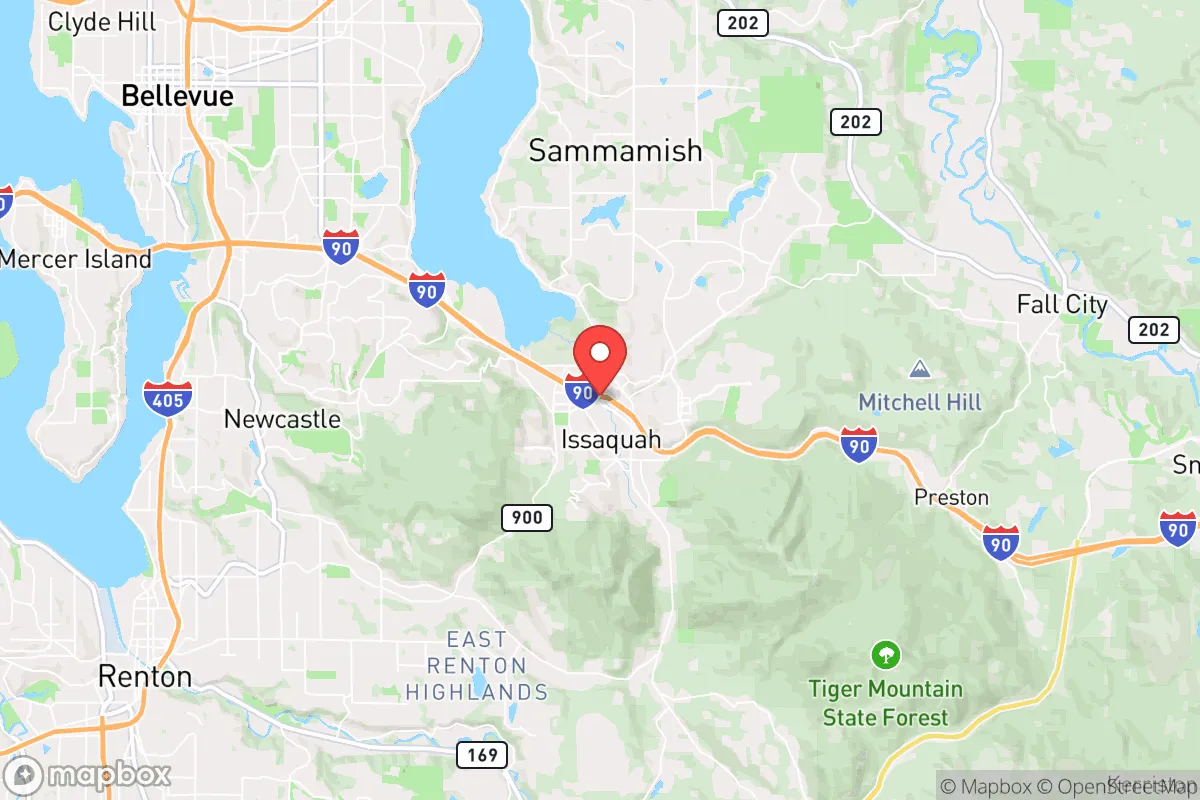
Photo: Wikipedia
Demographics of Issaquah, WA
Affluence Level in Issaquah, WA
A wealthy area with high-earning, well-educated households. Incomes, home values, and educational attainment meaningfully outpace national averages.
People of Issaquah, WA
The people of Issaquah, Washington today form a dense, highly educated, and ethnically diverse community of 39,472 residents. The city is characterized by a 69.6% college-educated population, a significant 17.1% foreign-born share, and a distinctive demographic profile where East and Southeast Asian residents (16.6%) and Indian subcontinent residents (11.0%) together make up a substantial portion of the population, while the White share stands at 56.1%. This is not a homogenous suburb but a rapidly diversifying tech-oriented hub where the legacy of a resource-based past has been overlaid by waves of professional-class immigration and domestic migration tied to the region's knowledge economy.
How the city was settled and grew
Issaquah's original inhabitants were the Coast Salish people, specifically the Snoqualmie tribe, who used the area as a seasonal fishing and hunting ground. Permanent non-Native settlement began in the 1860s with the Donation Land Claim Act, drawing homesteaders who established small farms. The discovery of coal in the nearby hills in the 1870s transformed the settlement. The original Old Town Issaquah neighborhood, centered around what is now Front Street, was built by a wave of immigrant miners—primarily from Wales, Ireland, and later Italy and Scandinavia—who worked the coal seams. The railroad arrived in 1889, and the town incorporated in 1892. Logging and shingle mills followed, with the Gilman Village area (originally the town of Gilman, annexed in 1902) housing mill workers and their families. These early waves were overwhelmingly White and working-class, and the population remained small—under 1,000—through the 1940s.
Modern era (post-1965)
The Hart-Cellar Act of 1965 had a delayed but profound effect on Issaquah. The city's modern transformation began in earnest with the 1990s tech boom, driven by the expansion of Microsoft in nearby Redmond and later Amazon in Seattle. This drew a new, highly skilled population. The first major non-White group to arrive in significant numbers were East and Southeast Asian professionals—Chinese, Japanese, Korean, and Vietnamese—who settled in newer subdivisions like Issaquah Highlands, a master-planned community built from the late 1990s onward. This neighborhood, with its modern townhomes and single-family houses near the I-90 corridor, became a primary landing pad for tech workers. A second, more recent wave of Indian subcontinent professionals (engineers, software developers, and medical professionals) began arriving in the 2010s, concentrating in the Talus and Montreux neighborhoods—upscale, gated or semi-gated communities with large homes and top-rated schools. The Hispanic population (5.7%) and Black population (1.6%) remain small but have grown modestly, with Hispanic families more dispersed across older housing stock in Central Issaquah and near the Lake Sammamish State Park area. The White share has declined from an estimated 85% in 1990 to 56.1% today, driven almost entirely by Asian and Indian immigration, not by White out-migration.
The future
The population is heading toward a continued increase in the foreign-born share, likely surpassing 20% within a decade. The city is not homogenizing but rather tribalizing into distinct, income-stratified enclaves. The East and Southeast Asian communities in Issaquah Highlands are largely assimilated into the professional class, with high rates of homeownership and English proficiency. The Indian subcontinent community in Talus and Montreux is similarly affluent and growing rapidly, driven by continued H-1B visa issuance and tech hiring. The White population, while still the largest single group, is aging and increasingly concentrated in the older, established neighborhoods like Old Town and South Cove. The Hispanic and Black populations are likely to grow slowly, as housing costs (median home price above $900,000) filter out all but the most affluent newcomers. The next 10-20 years will see Issaquah become a majority-minority city, with the combined Asian and Indian share potentially exceeding 40%, while the White share drops below 50%.
For someone moving in now, Issaquah is becoming a high-cost, high-opportunity enclave where demographic change is driven by professional-class immigration and domestic tech migration. The city offers excellent schools and low crime, but the social landscape is increasingly defined by income and ethnicity, with distinct neighborhoods serving as ethnic and economic clusters. A new resident should expect a community that is diverse in origin but stratified in daily life, where the shared identity is less about a common past and more about a common professional trajectory in the tech economy.

* Values derived from national, state, county, city and local statistics and may differ in a specific area. Last updated: 2026-04-21T11:10:16.000Z
Narrative content on this page is AI-generated and may contain mistakes. Verify any details that matter before acting on them.
ReloMaps may earn a commission from affiliate links at no extra cost to you.

