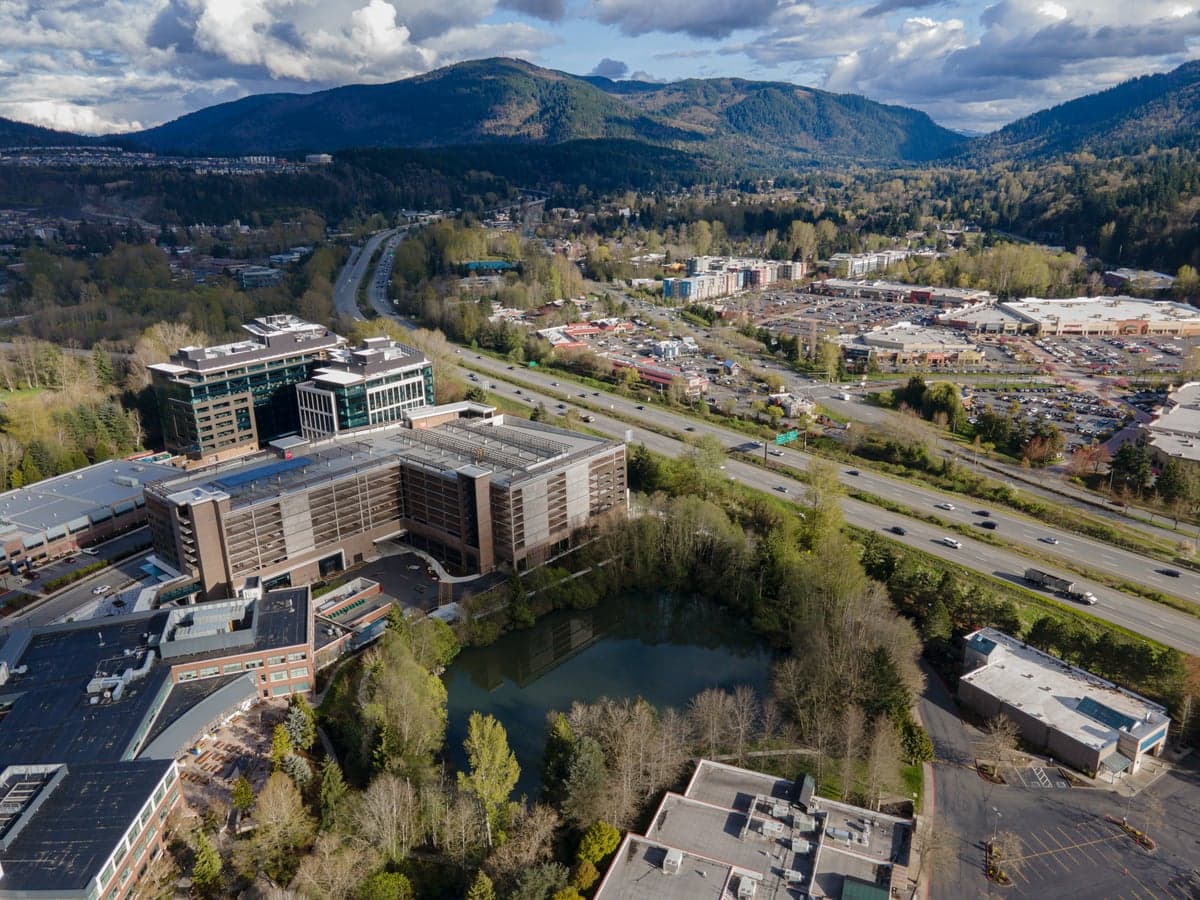
Photo: Wikipedia
Quality of Life in Issaquah, WA
A high quality of life with strong walkability, manageable living costs, healthy neighborhood signals, and solid amenity access.
What does Quality of Life tell us?
Quality of Life blends cost of living, nearby amenities, socioeconomic signals, and neighborhood character. City-level scores represent the whole municipality; individual neighborhoods can differ.
What does this tell us?
Quality of Life blends cost of living, nearby amenities, socioeconomic signals, and neighborhood character. City-level scores represent the whole municipality; individual neighborhoods can differ.
Cost of Living
161% above national average
The Real Cost of Living in Issaquah, WA for 2026
| Tier | Individual | Family (4) |
|---|---|---|
| Survival | $40k | $75k |
| Comfortable | $181k | $267k |
| Luxury | $278k+ | $431k+ |
| Elite (Top 5%) | $346k+ | $536k+ |
58%
The Area Signal
A metric tracking the socioeconomic signals of the area.
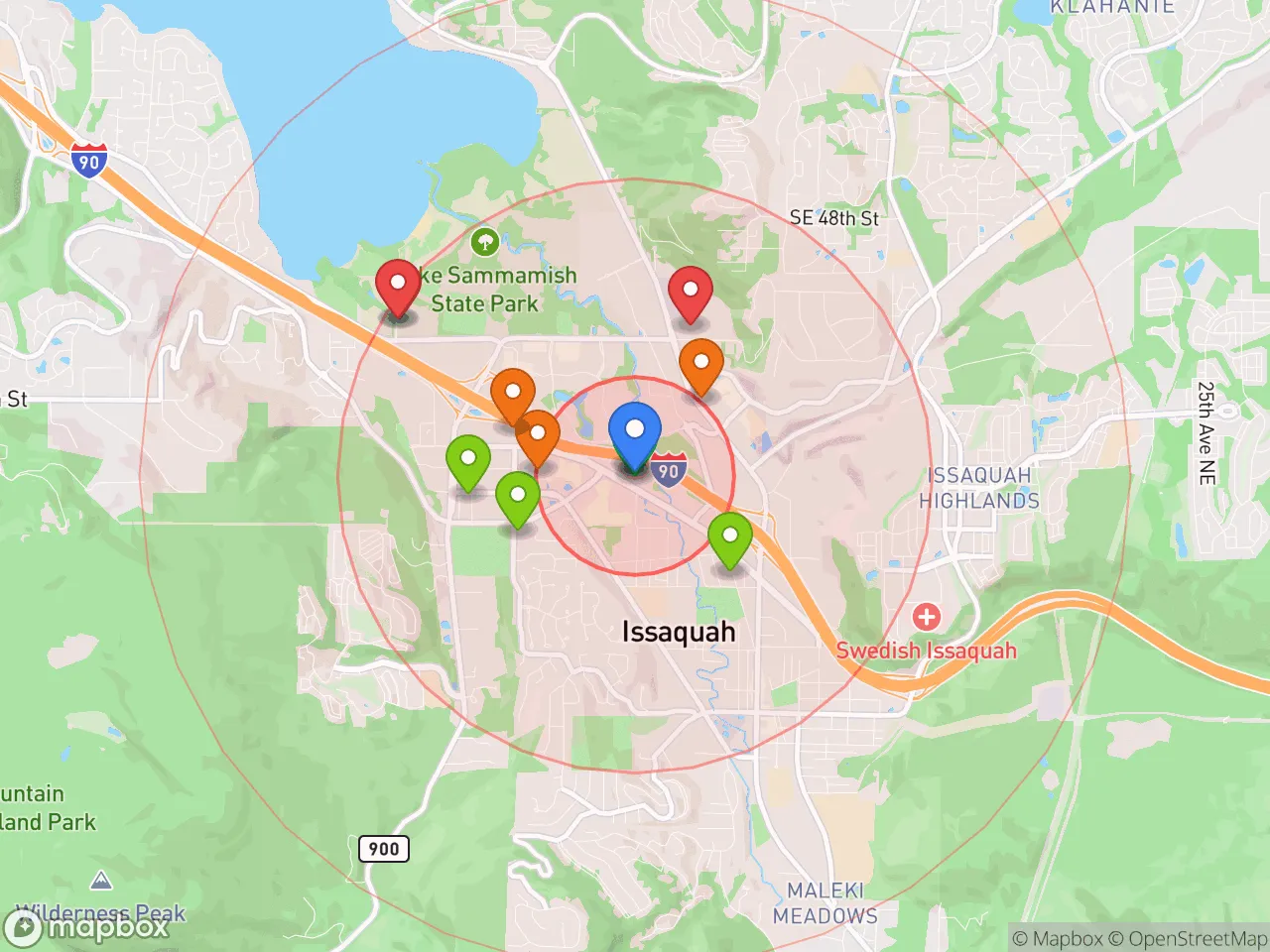
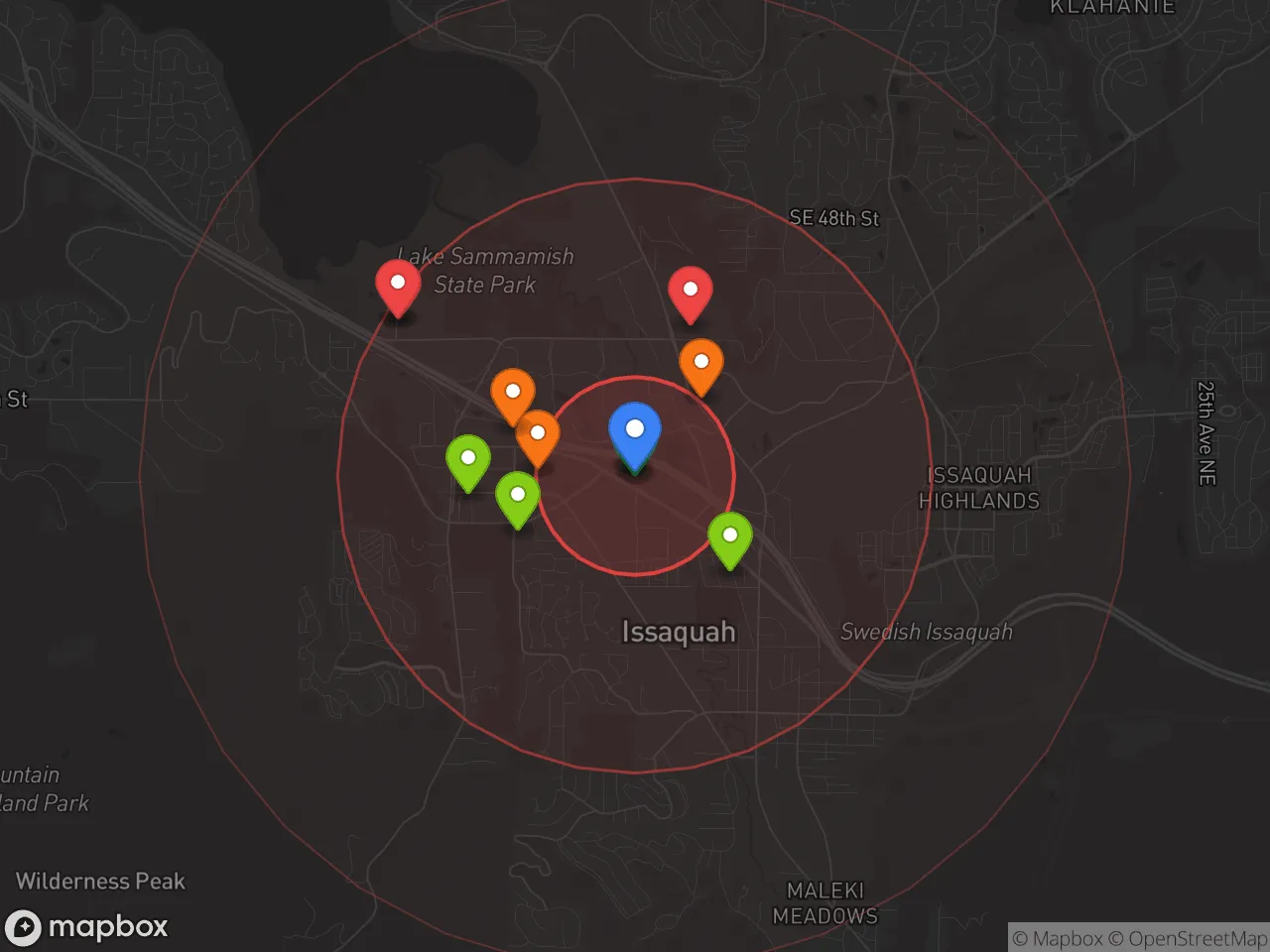
Hobbies
Explore the areaGroceries
7 within 10 miles
Gas
20 within 10 miles
Hospital
20 within 20 miles
Airport
SEA — Seattle–Tacoma International
Post Office
USPS — Issaquah, WA
Critical Amenities
Quality-of-Life Analysis
Issaquah, Washington, is an affluent Eastside suburb where the typical resident is a well-educated professional or family drawn by top-tier schools, outdoor access, and proximity to Seattle's tech economy. With a cost-of-living index of 261 (more than 2.5 times the U.S. average), the city attracts those who can afford a premium for safety, nature, and community—often employees of Microsoft, Amazon, or T-Mobile who work in nearby Redmond, Bellevue, or Seattle.
Cost of living, housing, and affordability compared to nearby cities
Issaquah's cost of living is among the highest in King County, driven almost entirely by housing. The median home value sits at $934,100, while the median rent is $2,484—both well above national averages but slightly below the most expensive Eastside hubs like Medina or Clyde Hill. Compared to Seattle proper (index ~173), Issaquah is about 50% more expensive overall, though you get significantly more space and newer housing stock. The average commute of 27 minutes is manageable for the region, with most workers heading west on I-90 toward Bellevue or Seattle, or north toward Redmond. Renters face a tight market: vacancy rates hover around 3%, and a two-bedroom apartment often lists for $2,800+. For buyers, entry-level single-family homes in Issaquah Highlands or Talus start near $800,000, while lakefront properties on Lake Sammamish exceed $2 million. Property taxes are moderate for Washington (roughly 0.9% of assessed value), but no state income tax helps offset the high housing costs for high-earning households.
Schools, parks, and what daily life feels like for families
Daily life in Issaquah revolves around its exceptional public schools—the Issaquah School District consistently ranks among Washington's top five, with Issaquah High School and Skyline High School both earning GreatSchools ratings of 9/10. The city's 40+ parks include the sprawling Lake Sammamish State Park (with beaches, trails, and boat launches) and the popular Cougar Mountain Regional Wildland Park for hiking and mountain biking. The downtown core, centered on Front Street, offers a walkable mix of independent coffee shops, breweries, and the historic Issaquah Depot Museum. For groceries and errands, the Issaquah Highlands neighborhood provides a more suburban, planned-community feel with its own shopping center. Traffic on I-90 and SR 900 can be heavy during peak hours, but the city's extensive trail network—including the Issaquah-Preston Trail and the East Lake Sammamish Trail—makes biking and walking viable for local trips. The overall rhythm is family-oriented: weekend soccer games at Central Park, summer concerts at the Issaquah Salmon Hatchery, and year-round programs at the Issaquah Community Center.
Issaquah is best suited for upper-middle-class families and tech professionals who prioritize school quality, outdoor recreation, and a safe, well-maintained environment over urban nightlife or budget-friendly living. Singles and young couples without children may find the social scene quiet and the housing costs prohibitive, while retirees on fixed incomes often look to less expensive nearby towns like North Bend or Snoqualmie. For those who can afford the premium, Issaquah delivers a consistently high quality of life with low crime rates, strong community engagement, and direct access to both wilderness and the Seattle job market.

Crime in Issaquah, WA
Lower crime rates than 81% of comparable U.S. locations.
Violent CrimeViolent Crime Analysis
Property CrimeProperty Crime Analysis
Crime Analysis
Issaquah, Washington, is a notably safe city within the Seattle metropolitan area, with violent crime rates that are a fraction of both the state and national averages. However, property crime rates, while lower than Seattle's, remain a concern for residents and align closely with broader regional trends. The city's overall safety profile is strong, but the influence of King County's progressive criminal justice policies introduces a layer of complexity for those evaluating long-term safety and community stability.
Crime in context
Issaquah's violent crime rate stands at just 45.5 incidents per 100,000 residents, a figure that is roughly one-fifth the national average and significantly lower than the Washington state average. This places Issaquah among the safest cities of its size in the region for violent offenses like homicide, robbery, and aggravated assault. Property crime, however, is more prevalent, with a rate of 1,896 per 100,000 residents. While this is substantially lower than Seattle's property crime rate, it is still elevated compared to many smaller, more isolated suburban communities. The city's proximity to major highways and its role as a regional retail hub likely contribute to this higher property crime figure, as transient property crime—such as car break-ins and package theft—is a common issue across the Eastside suburbs.
What residents experience
For daily life, the risk of being a victim of a violent crime in Issaquah is extremely low, and most residents feel safe walking in their neighborhoods and downtown areas, even in the evening. The primary safety concern is non-violent property crime, particularly theft from vehicles and residential burglaries in neighborhoods near Interstate 90 and the Issaquah Transit Center. A significant factor shaping the broader safety environment is the criminal justice philosophy of King County. The county's elected prosecutor and many local judges operate under a progressive framework that emphasizes diversion programs, reduced cash bail, and lower sentencing guidelines for non-violent and some property offenses. This approach, while intended to reduce incarceration, has been criticized for contributing to a "catch-and-release" cycle where repeat property offenders are quickly returned to the streets, undermining deterrence and frustrating residents who experience chronic theft or vandalism. For those moving from areas with more traditional law-and-order policies, this can be a notable cultural and practical shift.
Neighborhood-level variation
Safety in Issaquah is not uniform across all areas. The newer, master-planned communities on the Plateau, such as those in the Issaquah Highlands, generally report the lowest incidents of both violent and property crime, benefiting from private security patrols and less pedestrian traffic. In contrast, older neighborhoods closer to the downtown core and along the Lake Sammamish shoreline see higher rates of car prowls and package theft. The commercial corridors near the Issaquah Commons and Costco are hotspots for property crime due to high vehicle and foot traffic. While no neighborhood in Issaquah is considered dangerous by national standards, the most significant safety variable is the effectiveness of the county's justice system in handling repeat offenders, a factor that affects all neighborhoods but is most acutely felt in areas with higher commercial density.
* Values derived from national, state, county, city and local statistics and may differ in a specific area. Last updated: 2026-04-21T11:10:16.000Z
Narrative content on this page is AI-generated and may contain mistakes. Verify any details that matter before acting on them.
ReloMaps may earn a commission from affiliate links at no extra cost to you.

