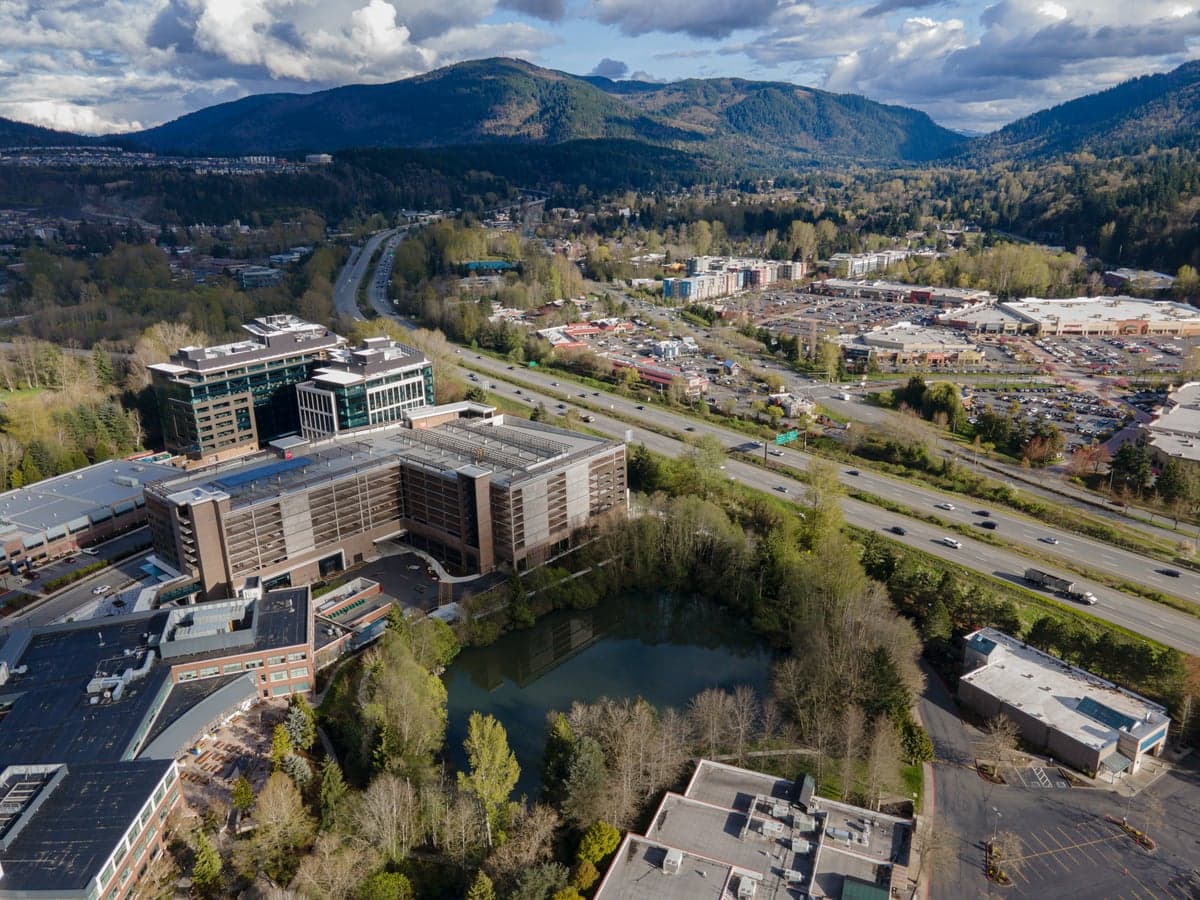
Photo: Wikipedia
Political ClimatePolitical Climate in Issaquah, WA
District shown is the primary district for this city’s centroid. Cities may span multiple districts.
Local Political AnalysisPolitical Analysis of Issaquah, WA
Issaquah, Washington, leans solidly Democratic, with a Cook PVI of D+3, but that number doesn't tell the whole story of how much the city has shifted in the last decade. Ten years ago, you could still have a reasonable conversation at the local coffee shop about property taxes or school policy without someone calling you a name. Today, the political climate is noticeably more progressive, and frankly, it feels like the old Issaquah—where folks minded their own business and didn't expect the government to solve every little problem—is fading fast. The trajectory is clear: each election cycle brings tighter alignment with Seattle's agenda, and that's a real concern for anyone who values personal freedoms and local control.
How it compares
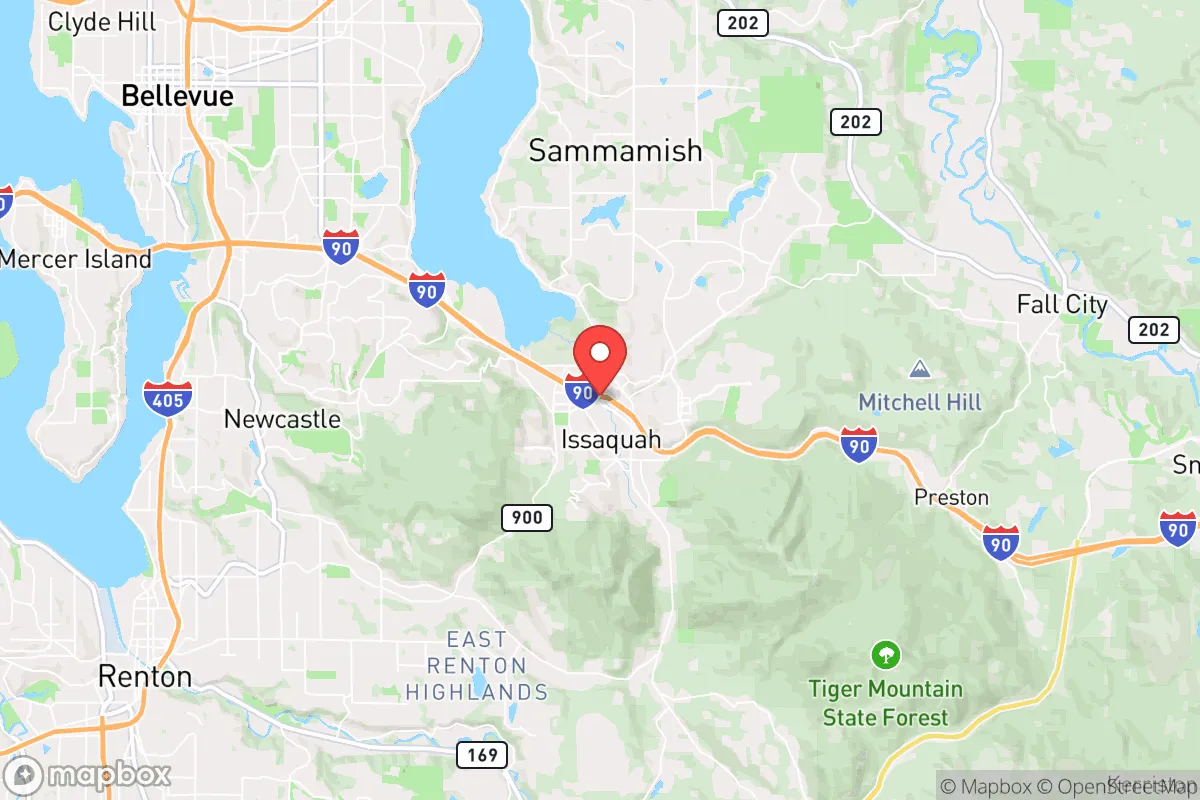
If you drive just a few miles east to Sammamish or north to Redmond, you'll find a similar story—affluent suburbs that have gone from purple to deep blue over the past two decades. But head south toward Maple Valley or east into the foothills around North Bend, and the political landscape flips hard. Those areas still vote more conservatively, and you'll see more "Don't Tread on Me" flags than "Coexist" stickers. Issaquah used to be a middle ground, a place where a small-business owner and a tech worker could disagree on taxes but agree on keeping the city council from overstepping. Now, the city council and school board are increasingly filled with folks who see government as the first answer, not the last resort. The contrast with nearby conservative towns is stark: while Maple Valley fights to keep property rights strong, Issaquah debates new mandates on everything from energy use to what kids can read in the library.
What this means for residents
For the average resident, this shift means more rules, more fees, and less say in how your own life runs. The city has pushed through higher impact fees on new homes, stricter land-use regulations that make it harder to build a simple addition, and a general attitude that the government knows best. If you own a small business here, you've probably felt the squeeze from new labor mandates and licensing hurdles that make it harder to just operate without a lawyer on retainer. The school district, once a point of pride for its balanced approach, now leans heavily into social-emotional learning and equity initiatives that often push aside traditional academics and parental input. For families who just want their kids to learn math and history without political lectures, it's getting harder to justify staying. The long-term trend is concerning: as more people move in from Seattle proper, they bring the same big-government solutions that drove them out of the city in the first place.
One cultural distinction that stands out is Issaquah's embrace of "community standards" that often translate into government overreach. The city has been aggressive in pushing climate action plans that include mandates on building materials and energy sources, effectively telling homeowners what they can and can't do with their own property. The local farmers market, once a simple gathering of growers and neighbors, now has vendor rules that feel more like a city permit office than a weekend tradition. If you value the freedom to live your life without a bureaucrat's approval, Issaquah's direction is a warning sign. The old-timers who remember when the biggest political fight was over a stop sign are either moving out or keeping their heads down. For now, the progressive wave is strong, but if you're looking for a place where personal liberty still matters, you might want to keep an eye on the foothills instead.

State Political ClimatePolitical Climate in Washington
State Political AnalysisPolitical Environment in the State
Washington State has undergone a dramatic political transformation over the past two decades, shifting from a competitive purple state to a solidly blue stronghold where Democrats control every statewide office and both legislative chambers. The state’s overall partisan lean is now roughly D+8 to D+10 in presidential elections, driven overwhelmingly by the explosive growth of the Seattle metropolitan area, which now casts nearly 60% of the state’s vote. For a conservative-leaning individual or family considering relocation, the key takeaway is that Washington’s political center of gravity has moved sharply left since the early 2000s, and the trend shows no sign of reversing.
Urban vs. rural divide
The political map of Washington is a textbook case of urban-rural polarization. King County, home to Seattle and its sprawling suburbs, alone delivers about 35% of the state’s vote and consistently goes 70-75% Democratic. The I-5 corridor from Seattle south through Tacoma and Olympia forms a continuous blue wall, with Pierce and Thurston counties trending bluer each cycle. Meanwhile, the eastern two-thirds of the state—places like Spokane, Yakima, and the Tri-Cities (Kennewick, Pasco, Richland)—vote reliably Republican, often by 15-20 points. But here’s the rub: the rural red vote is being steadily diluted by population growth in the western urban centers. A telling example is Clark County (Vancouver), which was a swing county as recently as 2016 but has now shifted blue as Portland-area transplants cross the Columbia River. Even Spokane County, once a Republican stronghold, is becoming competitive as the city of Spokane grows and liberalizes. The only truly safe red counties left are in the far eastern agricultural belt—Adams, Lincoln, Garfield—and a few rural western counties like Lewis and Pacific. If you’re looking for a conservative enclave, your best bets are the exurbs of Spokane Valley, the Yakima Valley, or the small towns in the northeastern corner like Colville and Republic.
Policy environment
Washington’s policy environment is aggressively progressive, with a tax structure that uniquely burdens the middle class. The state has no personal or corporate income tax, which sounds good on paper, but it makes up for it with the highest state sales tax in the nation (6.5% base, often 9-10% with local add-ons) and some of the highest property taxes in the West. This regressive system hits working families hardest. On the regulatory front, Washington has a cap-and-trade carbon market (enacted via the 2021 Climate Commitment Act) that adds hidden costs to gasoline, heating, and goods—gas prices routinely top $4.50-$5.00 per gallon. Education policy is dominated by teachers’ unions, with the state spending over $18,000 per student but ranking poorly in outcomes. The state has universal mail-in voting (no voter ID law), same-day voter registration, and automatic voter registration at the DMV—election integrity measures that conservatives view as lax. Healthcare is heavily regulated, with a state-run insurance exchange and some of the nation’s strictest abortion protections (codified into law in 2023). For a conservative family, the policy environment feels like a one-way ratchet toward bigger government, higher hidden taxes, and less local control.
Trajectory & freedom
On the freedom front, Washington is moving decisively in the wrong direction for conservatives. The most glaring example is gun rights: in 2023, the legislature passed a ban on assault weapons (HB 1240), a high-capacity magazine ban, and a 10-day waiting period for all firearm purchases. These laws are currently being challenged in court, but they represent a clear erosion of Second Amendment rights. On parental rights, the state passed a law in 2023 that allows minors 13 and older to receive gender-affirming care without parental consent, effectively stripping parents of medical decision-making authority. The state also has a sanctuary state law (the Keep Washington Working Act) that limits cooperation between local law enforcement and federal immigration authorities. Medical freedom took a hit with the state’s strict COVID-19 vaccine mandates for healthcare workers and state employees, which remain in place. Property rights are under pressure from the state’s Growth Management Act, which forces dense development in urban growth boundaries and limits rural building. The cumulative effect is a state where personal liberty—whether in self-defense, medical choices, or property use—is increasingly circumscribed by Olympia.
Civil unrest & political movements
Washington has a long history of political activism, and the past five years have been particularly turbulent. The 2020 CHOP/CHAZ occupation in Seattle’s Capitol Hill neighborhood was a national flashpoint, with armed protesters taking over several city blocks for weeks while police largely stood down. That event, along with the city’s defund-the-police movement (the Seattle City Council cut the police budget by 14% in 2020), drove a significant exodus of families from Seattle to suburbs like Issaquah, Sammamish, and even as far as Spokane. On the right, the Washington State Republican Party has been fractured between establishment and populist factions, but grassroots movements like the Moms for Liberty chapters in Clark and Spokane counties have gained traction on school board issues. The sanctuary state policy has created friction with border enforcement, particularly in Yakima and the Tri-Cities, where agricultural employers rely on immigrant labor. Election integrity remains a hot-button issue: Washington’s all-mail system has no voter ID requirement, and while there’s no evidence of widespread fraud, the lack of safeguards concerns many conservatives. A new resident would notice the political divide most acutely in the suburbs—places like Redmond and Bellevue are deeply blue, while nearby Duvall and Carnation remain more libertarian-leaning.
Projection
Looking ahead 5-10 years, the trajectory is clear: Washington will continue to move left, driven by three demographic forces. First, the tech industry in the Seattle area keeps attracting young, college-educated, left-leaning workers from around the world. Second, the state’s sanctuary policies and generous welfare benefits draw in migrants from other states and countries, who tend to vote Democratic. Third, the rural population is aging and shrinking, while the urban core grows. The only potential counterbalance is a growing exodus of conservatives to Idaho and Montana, which could accelerate if the state passes a wealth tax or further gun restrictions. Realistically, a conservative moving to Washington today should expect to live in a state where their vote is increasingly irrelevant at the statewide level, but where local control in red counties and exurbs can still provide some buffer. The state’s initiative process remains a tool for conservatives—in 2024, voters passed an initiative to repeal the cap-and-trade program (though the legislature may try to replace it), and another to require police to enforce certain laws. But the legislature has a history of ignoring or weakening voter-passed initiatives, so that avenue is narrowing.
Bottom line for a new resident: If you’re a conservative considering Washington, you’re moving into a state where the political culture is hostile to your values, but where the natural beauty, strong economy, and lack of income tax still draw people. You’ll find like-minded communities in the exurbs and eastern counties, but you’ll also face a constant battle against state-level policies that encroach on your freedoms. The best strategy is to choose your location carefully—look at places like Spokane Valley, Yakima, or the small towns in the northeast—and get involved in local politics to protect what ground you can. Washington is not lost, but it’s fighting a rear-guard action, and the tide is not in your favor.
* Values derived from national, state, county, city and local statistics and may differ in a specific area. Last updated: 2026-04-21T11:10:16.000Z
Narrative content on this page is AI-generated and may contain mistakes. Verify any details that matter before acting on them.
ReloMaps may earn a commission from affiliate links at no extra cost to you.

