Photo: Wikipedia
Personal Sovereignty in Issaquah, WA
Viable for self-reliance. Generally workable, though some barriers may limit total independence.
What does Personal Sovereignty tell us?
Personal Sovereignty measures your capacity for self-reliance and independence with minimal government friction. Higher scores mean fewer barriers between you and the way you want to live... but it assumes you have the space you need and good neighbors.
What does this tell us?
Personal Sovereignty measures your capacity for self-reliance and independence with minimal government friction. Higher scores mean fewer barriers between you and the way you want to live... but it assumes you have the space you need and good neighbors.
State Policy
Energy independence: Importer (55% of energy produced in-state)
Personal Liberty
Homesteading

Personal Liberty Analysis
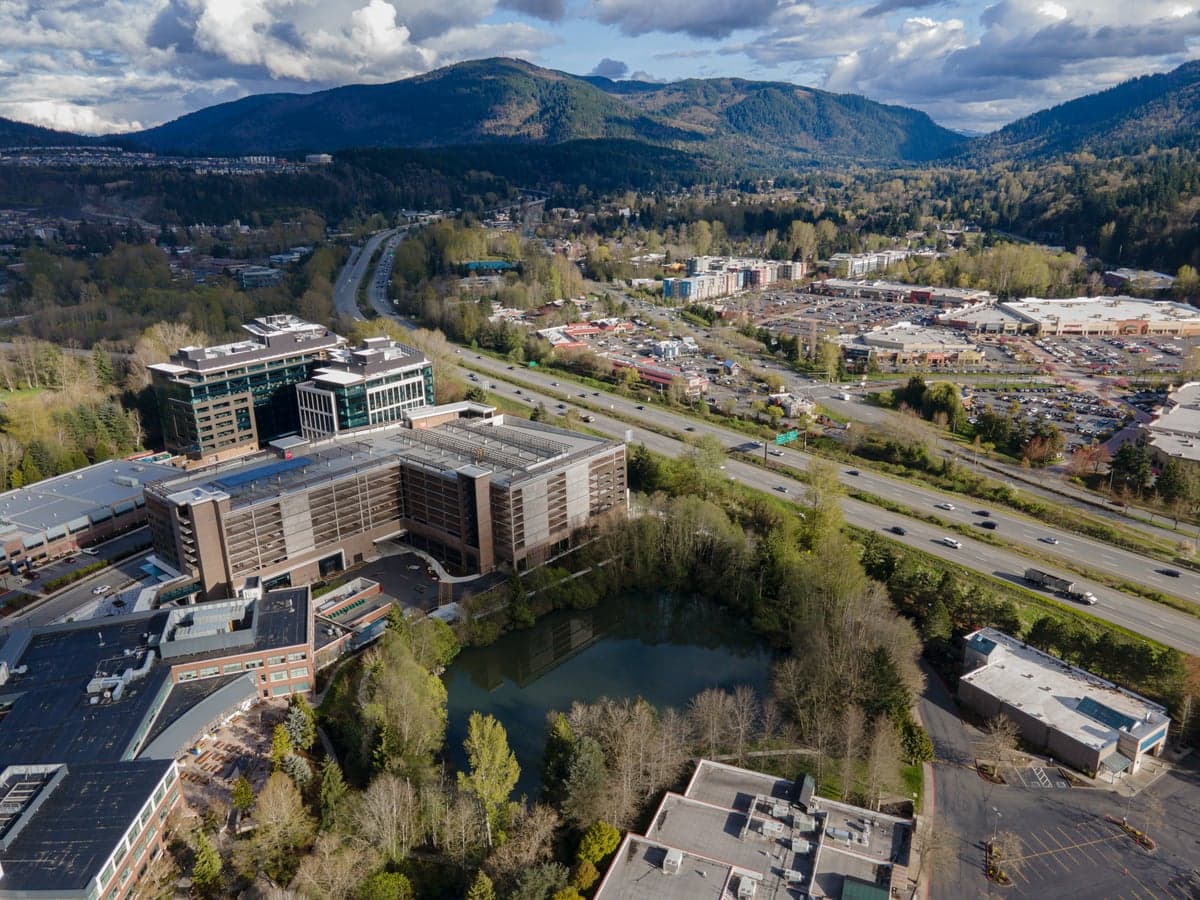
Issaquah, Washington, presents a complex picture for those prioritizing personal sovereignty. Nestled in King County, a jurisdiction with some of the most progressive governance in the nation, the city itself offers a mix of high-tech employment and access to the Cascade foothills, but the regulatory and tax environment is decidedly unfriendly to the survivalist or prepper mindset. For the conservative-leaning individual or family, the core tension here is between the natural advantages of the Pacific Northwest and the heavy hand of state and county government that actively constrains autonomy in nearly every domain—from what you can build on your land to how you can defend your home.
Tax burden and regulatory posture in King County
Washington State’s lack of a personal income tax is often cited as a freedom-friendly feature, but this is misleading for those focused on long-term self-reliance. The state relies heavily on a regressive sales tax (currently 10.1% in Issaquah) and high property taxes. King County’s property tax levy is among the highest in the state, and annual reassessments mean your tax bill can spike dramatically with market appreciation—a direct threat to fixed-income or land-wealthy preppers. More critically, the regulatory posture is hostile to independence. The Washington State Energy Code, enforced aggressively in King County, mandates strict efficiency standards that can make off-grid solar or wood-heat setups legally complicated. The Growth Management Act (GMA) severely restricts rural development, and Issaquah’s own zoning code limits accessory dwelling units and prohibits most forms of homesteading within city limits. Permitting for any significant structure—a shop, a barn, a rainwater catchment system—is a multi-month ordeal requiring engineered plans and county approval, a clear barrier to those seeking to build resilient, self-sufficient infrastructure.
Self-defense and gun law specifics in Washington State
For the individual concerned with the right to keep and bear arms, Washington has become a cautionary tale. In 2023, the state passed HB 1240, banning the sale, manufacture, and import of over 200 semi-automatic firearms commonly labeled "assault weapons." Magazine capacity is capped at 10 rounds for long guns and 10 for handguns under a separate law. A 10-day waiting period applies to all firearm purchases, and a state-issued permit is now required to purchase a handgun or semi-automatic rifle. While Issaquah itself does not have additional local gun ordinances, King County’s political climate means law enforcement and judicial attitudes are generally unsympathetic to self-defense arguments. Open carry is legal but practically discouraged by social hostility and the risk of police contact. Concealed carry requires a license, and while Washington is technically a "shall issue" state, the permitting process is cumbersome. For the survivalist, the reality is stark: you cannot legally acquire many of the most effective defensive rifles in this state, and the legal landscape is trending toward further restriction, not protection of the right.
Self-reliance and homesteading viability: lot sizes, zoning, and off-grid feasibility
True self-reliance in Issaquah is a near-impossibility for most. The city’s zoning is dominated by suburban single-family lots (typically 5,000 to 10,000 square feet) with strict covenants and homeowners’ associations that prohibit visible gardens, livestock, or non-standard structures. Chickens are allowed on lots under one acre only with a permit and strict coop setback requirements, and goats, pigs, or larger livestock are outright banned within city limits. The rural fringe—areas like Issaquah Highlands or the unincorporated county to the east—offers larger parcels (1-5 acres), but these come with their own regulatory burdens. Off-grid living is effectively illegal: Washington State law requires connection to the electrical grid if available, and King County’s health code mandates septic systems and well permits that are expensive and time-consuming. Rainwater collection is legal but limited to 5,000 gallons of storage without a water right permit. For the prepper seeking to be truly independent from municipal utilities and supply chains, Issaquah’s zoning and building codes are a direct obstacle, not a neutral framework.
Personal liberties: parental rights, medical autonomy, speech, and property
On the broader front of personal liberties, Washington State has moved aggressively to centralize authority. Parental rights have been eroded by laws like the "My Health My Data" act, which allows minors to consent to certain medical procedures without parental notification, and the state’s comprehensive sex education mandate, which overrides local school board control. Medical autonomy is similarly constrained: Washington has some of the strictest vaccine mandates in the country, including for school attendance and healthcare employment, with limited philosophical exemptions. Free speech is legally protected, but the social climate in King County is heavily conformist, and public expression of conservative or dissenting views—especially on COVID-era policies or gender ideology—can result in professional or social ostracism. Property rights are severely limited by the State Environmental Policy Act (SEPA), which allows neighbors or activist groups to challenge almost any land-use decision, and by the Shoreline Management Act, which restricts development near Issaquah Creek and Lake Sammamish. The cumulative effect is a jurisdiction where the individual’s right to make decisions for their family, their body, and their land is constantly subject to state override.
In the final analysis, Issaquah offers a poor environment for the conservative-leaning individual or family prioritizing personal sovereignty. While the natural setting—proximity to the Cascades, clean water, and forest—is appealing, the legal and regulatory framework is designed to suppress independence. Compared to states like Idaho, Montana, or even eastern Washington, King County’s tax burden, gun restrictions, zoning hostility, and erosion of parental and medical autonomy make it a place to visit for recreation, not to build a resilient, self-reliant life. For the survivalist or prepper, the cost of living under this level of government overreach far outweighs the scenic benefits. If you are determined to stay in the Pacific Northwest, look east of the Cascades or north into Skagit or Whatcom counties, where county-level governance is less intrusive and the regulatory climate is more forgiving of those who wish to be left alone.

* Values derived from national, state, county, city and local statistics and may differ in a specific area. Last updated: 2026-04-21T11:10:16.000Z
Narrative content on this page is AI-generated and may contain mistakes. Verify any details that matter before acting on them.
ReloMaps may earn a commission from affiliate links at no extra cost to you.

