Photo: Wikipedia
Personal Sovereignty in Kahului, HI
Moderate friction. Expect trade-offs in some aspect of personal liberty and independence.
What does Personal Sovereignty tell us?
Personal Sovereignty measures your capacity for self-reliance and independence with minimal government friction. Higher scores mean fewer barriers between you and the way you want to live... but it assumes you have the space you need and good neighbors.
What does this tell us?
Personal Sovereignty measures your capacity for self-reliance and independence with minimal government friction. Higher scores mean fewer barriers between you and the way you want to live... but it assumes you have the space you need and good neighbors.
State Policy
Energy independence: Importer (2% of energy produced in-state)
Personal Liberty
Homesteading

Personal Liberty Analysis
For a survivalist or prepper evaluating personal sovereignty, Kahului presents a paradox: it is the commercial and transportation hub of Maui, offering critical logistical advantages, yet it sits squarely within a state government that has aggressively expanded its reach into personal freedoms, property rights, and self-reliance. While the immediate environment offers a degree of physical isolation from mainland chaos, the legal and regulatory framework in Hawaii imposes some of the heaviest burdens on individual autonomy in the United States. A strategic relocation here requires a clear-eyed understanding that the natural advantages of the island are offset by a state apparatus that views personal sovereignty with deep suspicion, particularly in areas of self-defense, medical choice, and property use.
Tax burden and regulatory posture for individuals and families
Hawaii’s tax climate is a significant liability for anyone prioritizing financial sovereignty. The state has a progressive income tax with rates climbing to 11%, one of the highest in the nation, applied to virtually all income earned while a resident. There is no local income tax in Kahului, but the state’s general excise tax (GET) of 4% applies to nearly all business transactions, including services and rent, effectively raising the cost of living by 10-15% compared to mainland states. Property taxes in Maui County are relatively low for owner-occupied homes (around 0.45% of assessed value), but the state’s overall regulatory posture is heavy. Hawaii’s land use commission and county zoning boards exert near-total control over property development, making it extremely difficult to build new structures, add accessory dwelling units, or change land use without years of permitting. For a prepper seeking to establish a self-sufficient compound, this regulatory chokehold is a primary obstacle. The state also mandates employer-paid health insurance and has some of the strictest business licensing requirements in the country, discouraging the kind of informal economy that bolsters resilience in a crisis.
Self-defense realities and gun law specifics in Hawaii
For anyone concerned with the right to keep and bear arms, Kahului and the state of Hawaii represent one of the most restrictive environments in the United States. Hawaii is a "may issue" state for concealed carry, and in practice, permits are nearly impossible to obtain for ordinary citizens—the Maui Police Department has historically issued very few licenses, and only after demonstrating "exceptional cause" beyond general self-defense. The state also maintains a registry of all firearms, bans "assault weapons" (defined broadly to include many common semi-automatic rifles), limits magazine capacity to 10 rounds, and requires a permit to purchase even a handgun, which involves a background check, fingerprinting, and a 14-day waiting period. Open carry is effectively prohibited. For a survivalist, this means that legally arming oneself for a grid-down scenario is severely constrained. The state’s attitude toward self-defense is that it is a privilege granted by the government, not a natural right. While the island’s low violent crime rate (Maui County sees roughly 2.5 violent crimes per 1,000 residents) reduces immediate personal danger, the inability to legally possess standard defensive firearms is a major sovereignty deficit for those who view the Second Amendment as a bulwark against tyranny.
Self-reliance and homesteading viability: lot sizes, zoning, and off-grid feasibility
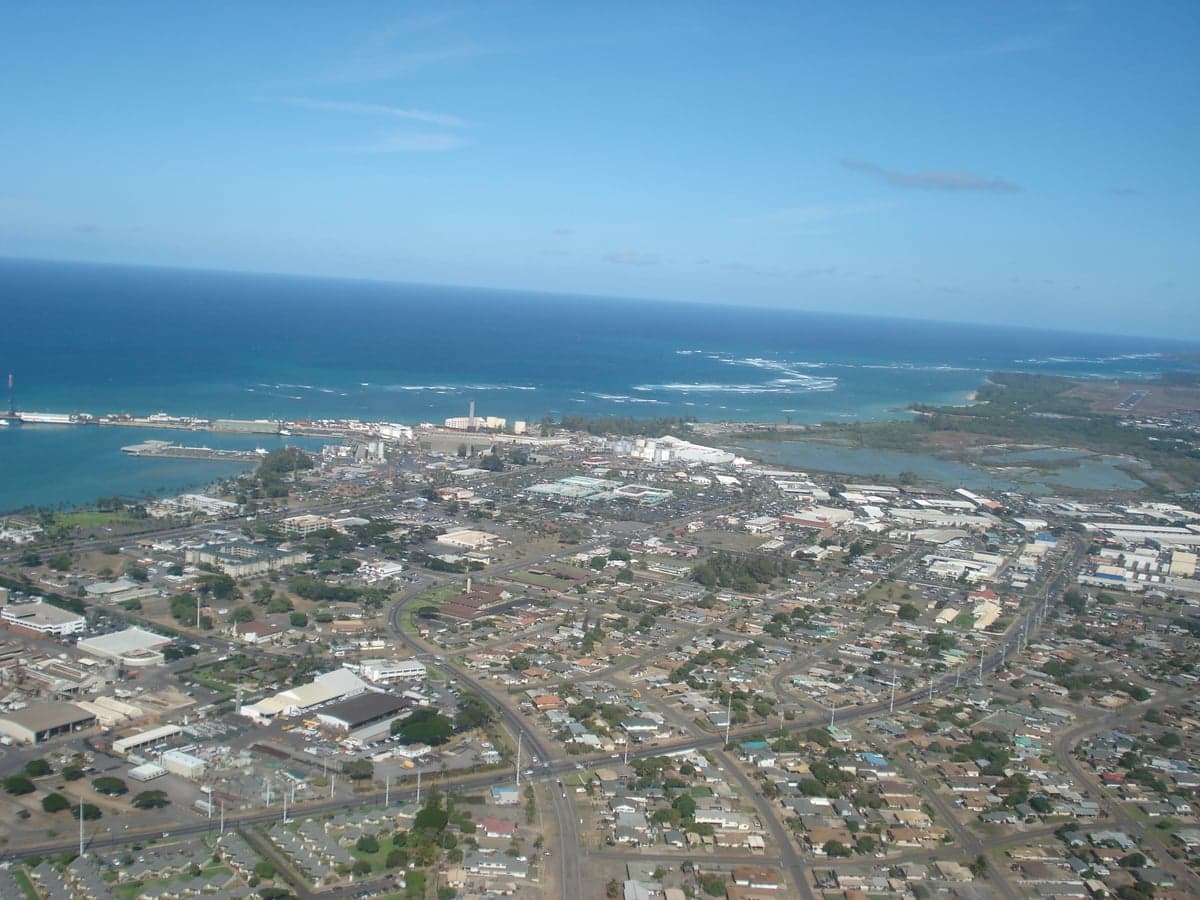
Kahului itself is a dense, urbanized area with small residential lots averaging 5,000 to 7,000 square feet, zoned primarily for single-family homes with strict prohibitions on agricultural activity, livestock, and commercial operations. True homesteading is not feasible within Kahului’s city limits; the county code restricts keeping chickens, goats, or other food animals, and rainwater catchment systems are heavily regulated due to health department concerns. For a prepper seeking land for self-sufficiency, the viable areas are in the rural upcountry (Kula, Makawao) or the remote districts of Hana, where agricultural zoning allows for larger parcels (1-5+ acres) and more freedom. However, even there, off-grid living faces major hurdles: building permits require connection to county water or an approved private well, solar systems must be permitted and grid-tied (battery storage is allowed but expensive), and composting toilets are generally not approved for permanent residences. The state’s building code and health regulations effectively mandate a grid-connected lifestyle, making a true off-grid retreat legally precarious. The high cost of land (agricultural zoned parcels start at $100,000-$200,000 per acre) and the difficulty of securing water rights further compound the challenge. For a survivalist, Kahului offers proximity to the airport and port for resupply, but the surrounding regulatory environment makes self-reliance a constant legal negotiation.
Personal liberties: parental rights, medical autonomy, speech, and property
On parental rights, Hawaii has moved toward state-centric control. The state mandates comprehensive sex education in public schools, and parents cannot opt their children out of specific lessons—only the entire curriculum. Vaccine mandates for school attendance are strict, with only narrow medical exemptions allowed; philosophical or religious exemptions are not recognized. Medical autonomy is heavily restricted: Hawaii has some of the most restrictive telemedicine and prescription laws for out-of-state providers, and the state’s health department has broad emergency powers to mandate treatments or isolation, as demonstrated during the COVID-19 pandemic. On speech, Hawaii has a state law prohibiting "harassment" by "electronic communication" that has been used broadly, and the state’s public accommodation laws can compel private businesses to provide services against their owners’ conscience. Property rights are severely curtailed by the state’s land use commission, which can designate any parcel as "important agricultural land" and restrict its use for decades. Eminent domain is used aggressively for infrastructure projects, and the state’s "public trust doctrine" gives the government broad authority over water rights, limiting a landowner’s ability to capture rainwater or drill wells without extensive permitting. For a prepper, these laws mean that the state can override personal decisions on health, education, and property use with little recourse.
Compared to mainland states like Texas, Idaho, or Montana, Kahului and Hawaii as a whole rank near the bottom for personal sovereignty. The state’s tax burden, gun control, land use regulation, and erosion of parental and medical autonomy create an environment where the individual is subordinate to the state’s vision of collective well-being. For a survivalist, the island’s physical isolation is a double-edged sword: it provides a buffer from mainland chaos but also traps residents within a legal system that is hostile to self-reliance. Kahului is a viable relocation only for those who accept a high degree of government oversight in exchange for a stable, low-crime community with strong logistical links. For anyone prioritizing maximum personal freedom, the mainland’s interior states offer far more room to maneuver. If you do choose Kahului, expect to operate within the system, not outside it, and plan your preps accordingly—with a focus on community resilience and legal compliance rather than outright independence.

* Values derived from national, state, county, city and local statistics and may differ in a specific area. Last updated: 2026-04-24T00:06:39.000Z
Narrative content on this page is AI-generated and may contain mistakes. Verify any details that matter before acting on them.
ReloMaps may earn a commission from affiliate links at no extra cost to you.

