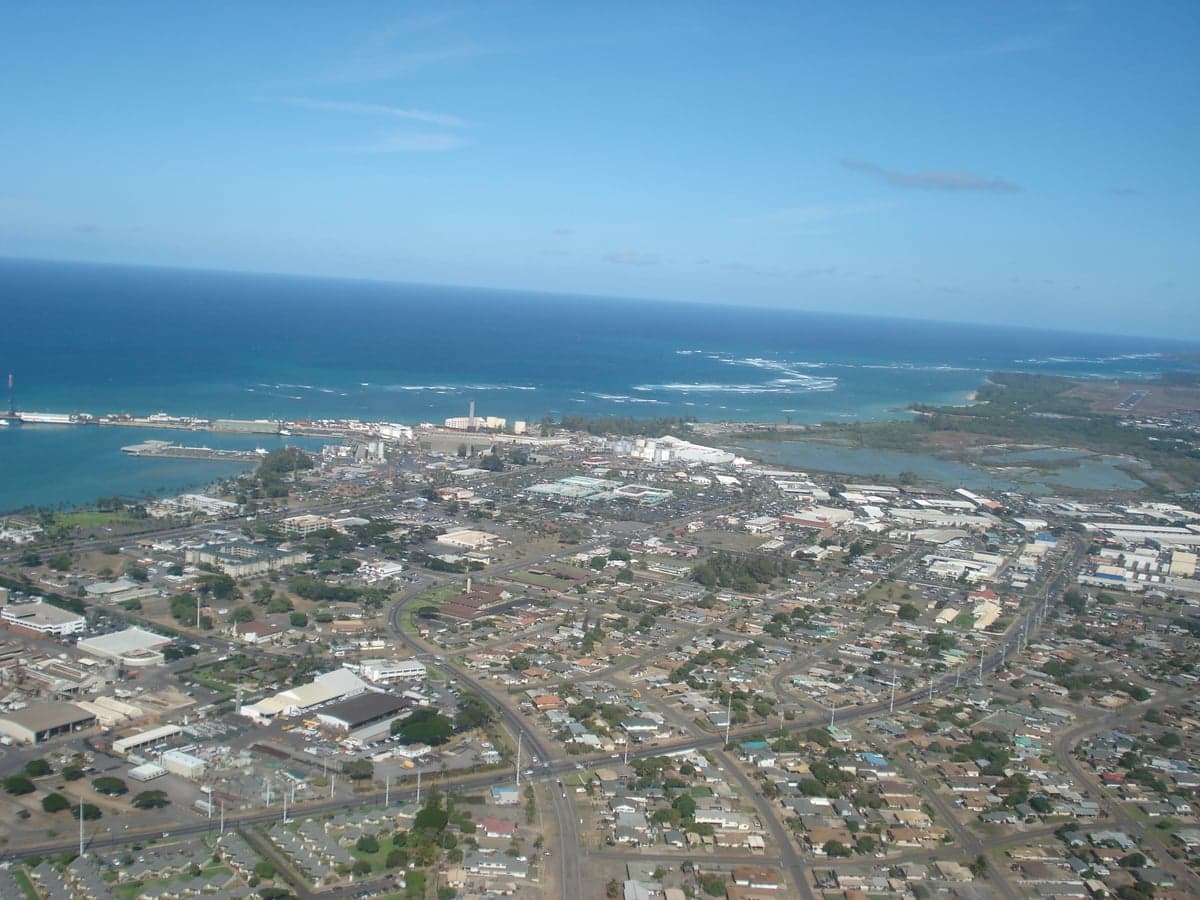
Photo: Wikipedia
Political ClimatePolitical Climate in Kahului, HI
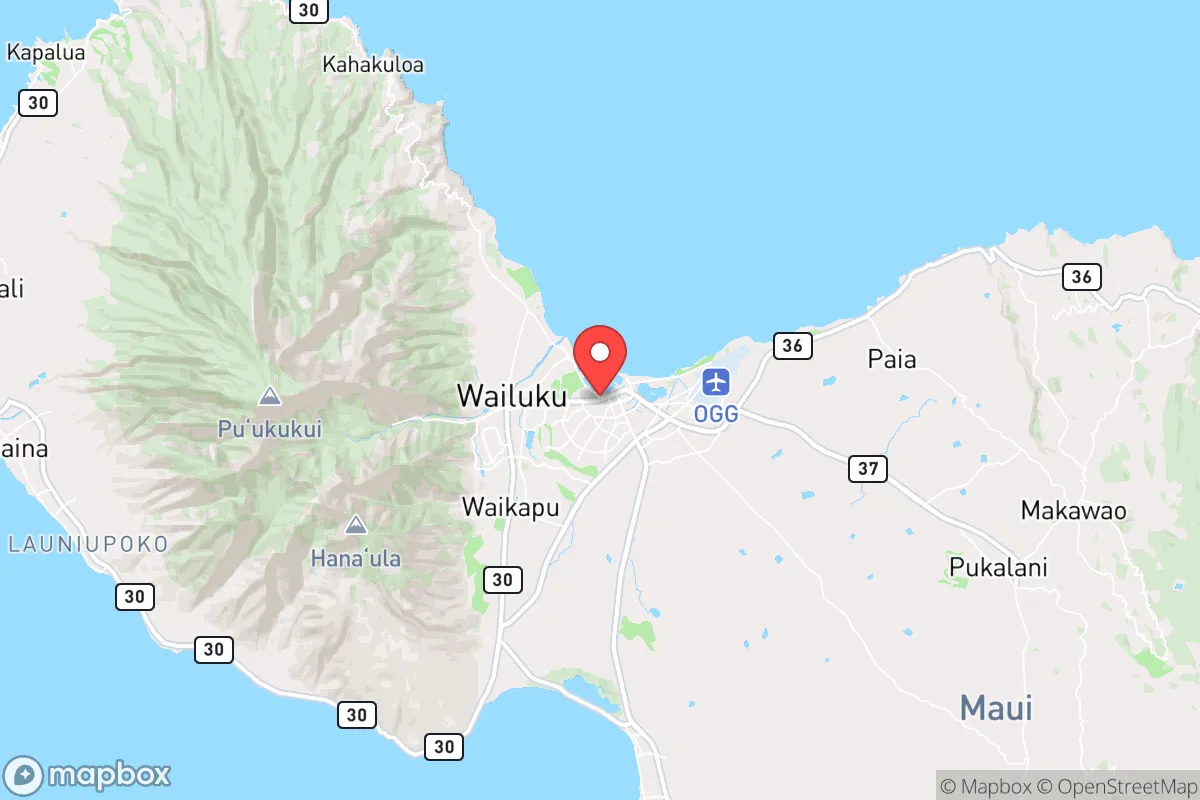
District shown is the primary district for this city’s centroid. Cities may span multiple districts.
Local Political AnalysisPolitical Analysis of Kahului, HI
Kahului leans heavily Democratic, with a Cook PVI of D+12, meaning the area votes about 12 points more Democratic than the national average. That’s a pretty deep blue spot, and it’s been trending that way for a while now. If you’re looking at the political landscape here, you’re seeing a place that’s been shifting further left over the last decade, especially on local issues like housing, land use, and business regulations. It’s not the same Kahului I remember from twenty years ago, and the direction has a lot of folks quietly worried about what’s coming next.
How it compares
Compared to the rest of Maui, Kahului is the most reliably Democratic hub. Drive twenty minutes up to Paia or Makawao, and you’ll find a more mixed bag—Paia has its progressive surf-town vibe, but Makawao still holds onto a ranching, independent streak that leans more conservative. Head over to Kihei or Wailea, and you’ll see a lot more retirees and second-home owners who tend to vote more moderately, sometimes even Republican on national races. Kahului, though, is the engine of the island’s progressive politics. It’s where the county government, the port, and most of the working-class jobs are concentrated, and that population base drives the voting patterns. The contrast is real: Kahului’s politics feel more like Honolulu’s urban core than the rest of Maui’s rural character.
What this means for residents
For someone who values personal freedoms and limited government, the trend in Kahului is concerning. The local government has been pushing harder on zoning restrictions, short-term rental bans, and environmental regulations that can feel like overreach. A few years back, there was a big push to limit vacation rentals, which sounded good on paper but ended up hurting a lot of local families who relied on that income. Now, there’s talk of stricter building codes and more fees on small businesses. The tax burden here is already high—Hawaii’s cost of living is no joke—and every new regulation seems to add another layer of red tape. If you’re a homeowner or a small business owner, you’re feeling the squeeze. The progressive majority in local offices tends to favor government solutions over individual choice, and that’s a real shift from the more live-and-let-live attitude that used to define the island.
What daily life is like for families
On the ground, this political climate means you’re dealing with a lot of bureaucracy for everyday things. Want to add a room to your house? Good luck with the permitting process. Thinking about starting a food truck or a small shop? Be ready for layers of county approvals. The schools here are public and follow state mandates, so there’s not much room for alternative approaches like charter schools or homeschooling support. The cultural pressure is also real—there’s a strong expectation to conform to progressive social norms, especially around environmentalism and localism. It’s not a place where you’ll find a lot of open pushback against the dominant political narrative. Most folks just keep their heads down and try to get by.
One thing that stands out culturally is the strong sense of community, even if the politics don’t align with your values. People here are friendly, and there’s a real aloha spirit that transcends party lines. But the long-term trajectory is something to watch. If the progressive agenda keeps tightening its grip on housing, business, and personal freedoms, Kahului could become an even harder place for independent-minded folks to thrive. For now, it’s a beautiful island with a political climate that feels increasingly out of step with the traditional Hawaiian value of personal responsibility and freedom.

State Political ClimatePolitical Climate in Hawaii
State Political AnalysisPolitical Environment in the State
Hawaii has been a one-party Democratic stronghold for decades, with Democrats holding supermajorities in both legislative chambers and every statewide office since 1962. The state consistently votes for Democratic presidential candidates by margins of 20 to 30 points, and in 2024, Kamala Harris carried the state by 24 points. However, beneath this blue veneer, a significant conservative minority exists, concentrated in rural and suburban areas, and the state’s political trajectory over the last 10-20 years has been one of steady, if slow, leftward drift on social and economic issues, driven largely by the urban core of Honolulu and the influence of organized labor and progressive activists.
Urban vs. rural divide
The political map of Hawaii is starkly divided between the urban core of Oahu and the rest of the state. Honolulu and its suburbs, particularly the Leeward and Windward sides, are the engine of Democratic dominance, with precincts routinely delivering 70-80% of the vote to Democratic candidates. The city’s economy is heavily dependent on tourism, government, and military spending, and its population is diverse, with a strong union presence and a growing progressive activist class. In contrast, the neighbor islands—Hawaii Island (the Big Island), Maui, Kauai, and Molokai—are more politically mixed. Rural areas like Hilo, Puna, and the North Shore of Oahu have a libertarian-leaning, “live and let live” streak, while the agricultural and ranching communities of Waimea (Kamuela) on the Big Island and the upcountry areas of Maui (Kula, Makawao) lean more conservative. The only reliably Republican-leaning precincts are in the affluent, gated communities of Kahala and Hawaii Loa Ridge on Oahu, and in the rural, ranching areas of Waimea on the Big Island. The 2020 and 2024 elections saw no county flip to Republican, but the margins in Hawaii County (the Big Island) and Kauai County were closer than on Oahu, with Republican candidates occasionally winning 40-45% of the vote in those areas.
Policy environment
Hawaii’s policy environment is a classic example of a high-tax, high-regulation state with a strong social safety net. The state has the highest combined state and local tax burden in the nation, with a general excise tax (GET) of 4% that applies to nearly all goods and services, and a progressive income tax with a top rate of 11%. Property taxes are relatively low, but the cost of living is astronomical. The regulatory posture is aggressively pro-government: Hawaii has some of the strictest land-use and zoning laws in the country, which has contributed to the housing crisis. Education policy is dominated by a single statewide school district, the Hawaii Department of Education, which is often criticized for bureaucracy and lack of local control. School choice is virtually nonexistent, with only a handful of charter schools and a small voucher program. Healthcare is heavily regulated, with a state-run insurance exchange and a strong push toward single-payer. Election laws are relatively permissive, with universal mail-in voting and same-day registration, though voter ID is not required. Gun rights are heavily restricted: Hawaii has a “may issue” concealed carry system, a ban on “assault weapons,” and a 14-day waiting period. The state also has a strict “red flag” law.
Trajectory & freedom
Over the last decade, Hawaii has become less free by nearly any measure. The most significant contraction of personal liberty came with the passage of Act 2 (2019), which expanded the state’s “red flag” law and imposed a 14-day waiting period on all firearm purchases. In 2022, the legislature passed Act 207, which banned the sale of “assault weapons” and large-capacity magazines. On the medical autonomy front, Act 1 (2023) codified abortion rights into state law, removing any parental notification requirements for minors. Parental rights have been eroded by the state’s mandatory “social-emotional learning” curriculum, which includes LGBTQ+ topics without an opt-out provision. Property rights are under constant assault from the state’s powerful Land Use Commission, which can rezone land at will, and from the Hawaii Community Development Authority, which has broad eminent domain powers. The state’s tax burden continues to rise, with the 2023 tax package increasing the GET on certain services and closing “loopholes” for high-income earners. The only bright spot for conservatives has been the 2024 passage of a bill allowing for the creation of “community development districts”, which could give some local control over zoning, but this is still in its infancy.
Civil unrest & political movements
Hawaii has a long history of protest and activism, but the most visible flashpoints in recent years have been around housing, homelessness, and the environment. The “Occupy Honolulu” movement in 2011 was a precursor to larger protests against the Thirty Meter Telescope (TMT) on Mauna Kea, which drew national attention and involved a coalition of Native Hawaiian activists, environmentalists, and left-wing groups. The “Mauna Kea Protests” (2019-2020) were a major flashpoint, with hundreds of activists blocking access to the summit. More recently, the “Kakaako” homeless encampment in Honolulu has been a source of tension, with the city’s aggressive sweeps drawing protests from homeless advocates. Immigration politics are relatively muted, as Hawaii has a small undocumented population, but the state is a “sanctuary state” in practice, with local law enforcement not cooperating with ICE. Election integrity controversies have been minimal, though some conservatives have raised concerns about the state’s universal mail-in voting system. The most visible political movement on the right is the Hawaii Republican Party, which is small but active, and the “Aloha Libertarians”, who have a presence on the Big Island and Maui. Secessionist rhetoric is common among some Native Hawaiian sovereignty groups, but it remains a fringe movement.
Projection
Over the next 5-10 years, Hawaii will likely continue its leftward drift, driven by demographic trends and in-migration from the mainland. The state’s population is aging and declining, with more people leaving than arriving, and those who do move in tend to be wealthy retirees or remote workers from progressive urban areas. The Native Hawaiian population is growing, and their political influence is increasing, often aligning with progressive causes. The Democratic supermajority is unlikely to be seriously challenged, as the Republican Party remains weak and fractured. The most likely scenario is a continuation of the status quo: higher taxes, more regulation, and a further erosion of personal freedoms. However, there is a wildcard: the housing crisis. If the state fails to address it, a populist backlash could emerge, potentially from the libertarian-leaning rural areas or from a new “taxpayer revolt” movement. A conservative moving in now should expect to find a state that is increasingly hostile to traditional values and economic freedom, but with pockets of resistance in the rural areas and among a small but vocal minority of conservatives.
Bottom line for a new resident: If you value low taxes, gun rights, school choice, and local control, Hawaii is a tough sell. You will be paying a premium for the weather and the lifestyle, and you will be living under a government that is actively hostile to many of your core values. The best bets for a conservative are the rural areas of the Big Island (Waimea, Puna) or upcountry Maui (Kula), where you can find a like-minded community and a bit more breathing room. But be prepared for a constant fight against a state government that sees your freedoms as obstacles to its agenda.
* Values derived from national, state, county, city and local statistics and may differ in a specific area. Last updated: 2026-04-24T00:06:39.000Z
Narrative content on this page is AI-generated and may contain mistakes. Verify any details that matter before acting on them.
ReloMaps may earn a commission from affiliate links at no extra cost to you.

