Photo: Wikipedia
Demographics of Kailua, HI
Affluence Level in Kailua, HI
A middle-class area roughly in line with national averages across income, home values, education, and employment.
People of Kailua, HI
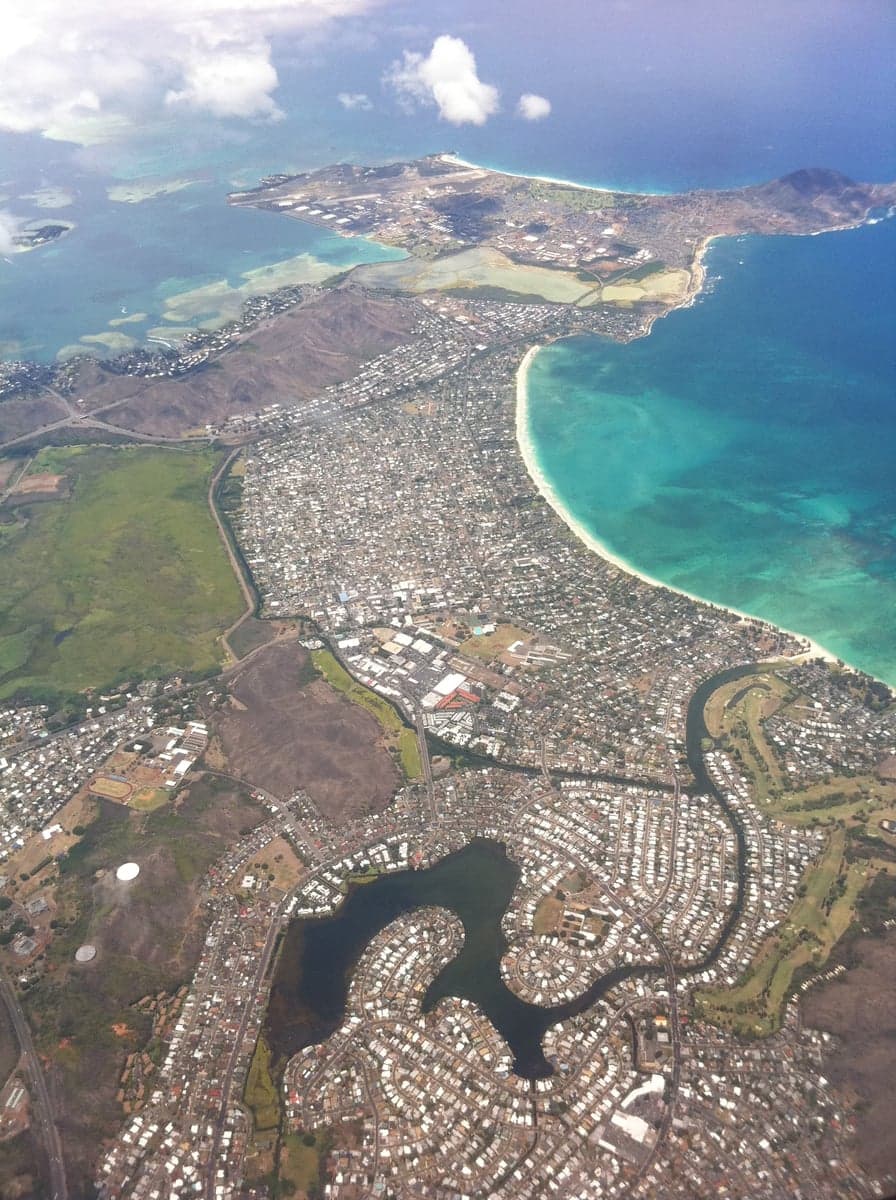
Kailua, Hawaii, is a coastal community of 21,851 residents that remains distinctly shaped by its Native Hawaiian heritage and a history of military and tourism-driven migration. The population is 41.4% white, 18.0% East and Southeast Asian, 11.6% foreign-born, and 6.2% Hispanic, with a notably high 33.2% holding a college degree. Unlike many mainland suburbs, Kailua retains a strong sense of local identity, with longtime families living alongside newer arrivals drawn by the area’s beaches and proximity to Honolulu. The city’s character is a blend of laid-back beach town and affluent bedroom community, with a visible military presence from nearby Marine Corps Base Hawaii.
How the city was settled and grew
Kailua’s human history begins with Native Hawaiians, who established ahupuaʻa (traditional land divisions) along the coast and in the fertile valleys. The area was a center for taro farming and fishing, with significant populations in what are now Kailua Beach Park and Kawainui Marsh. After the overthrow of the Hawaiian Kingdom in 1893, much of the land was consolidated into large estates. The first major non-Hawaiian wave came in the early 20th century, when Chinese and Japanese plantation workers were brought to work in the region’s sugar and pineapple fields, settling in neighborhoods like Maunawili and Enchanted Lake. The construction of the Pali Highway in the 1950s dramatically opened Kailua to development, transforming it from a rural outpost into a commuter suburb for Honolulu. This era saw the arrival of white military families and professionals, who built homes in Lanikai and Aikahi, establishing the pattern of affluent, single-family housing that defines much of the city today.
Modern era (post-1965)
The 1965 Hart-Cellar Act reshaped Kailua’s demographics by opening immigration from Asia, though the city’s foreign-born share (11.6%) remains lower than Honolulu’s. The post-1965 period saw a steady influx of Filipino and Korean families, many of whom settled in Maunawili and the Kailua Heights area, working in service industries and healthcare. The 1980s and 1990s brought a wave of mainland white retirees and remote workers drawn by the climate and quality of life, concentrating in Lanikai and Kailua Beach neighborhoods. The military presence expanded with the growth of Marine Corps Base Hawaii at Kaneohe Bay, bringing a transient population of active-duty personnel and their families, many of whom rent in Aikahi and Kailua Town. The city’s Asian population (18.0%) is predominantly Japanese and Filipino, with a small but established Chinese community. The Indian subcontinent population is negligible at 0.1%, and the Black population is 0.2%, reflecting Kailua’s limited diversity compared to the rest of Oahu.
The future
Kailua’s population is trending toward homogenization, with rising housing costs pushing out younger and less affluent residents. The city’s white share (41.4%) is stable, while the East and Southeast Asian population is plateauing as second- and third-generation families assimilate into the broader local culture. The Hispanic share (6.2%) is growing slowly, driven by service-sector workers, but remains small. The foreign-born population is likely to remain static or decline slightly, as high property values limit new immigration. The next 10-20 years will likely see Kailua become older and wealthier, with a growing share of retirees and remote professionals from the mainland. The military population will remain a constant, but its transient nature prevents deep community roots. Neighborhoods like Lanikai and Kailua Beach will continue to attract high-income buyers, while Maunawili and Kailua Heights may see modest infill development as older homes are subdivided or replaced.
For a conservative-leaning individual or family considering a move, Kailua offers a stable, safe, and affluent environment with strong community ties and a low crime rate. However, the high cost of living and limited demographic diversity mean it is best suited for those who can afford the premium for beach-adjacent living and value a slower pace over urban amenities. The city is not becoming more diverse or dynamic; it is solidifying its identity as an exclusive, established enclave where newcomers are expected to fit into the existing local culture rather than reshape it.

* Values derived from national, state, county, city and local statistics and may differ in a specific area. Last updated: 2026-04-24T00:03:46.000Z
Narrative content on this page is AI-generated and may contain mistakes. Verify any details that matter before acting on them.
ReloMaps may earn a commission from affiliate links at no extra cost to you.

