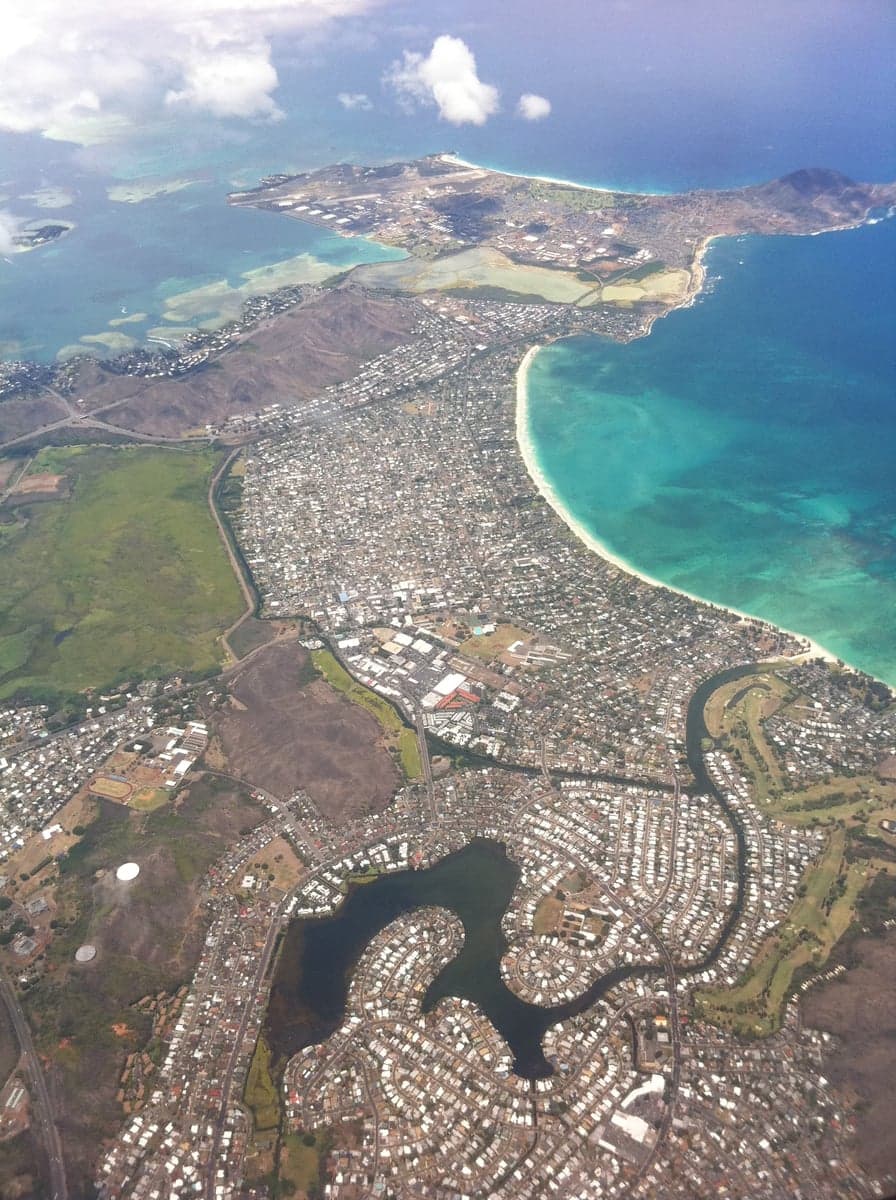
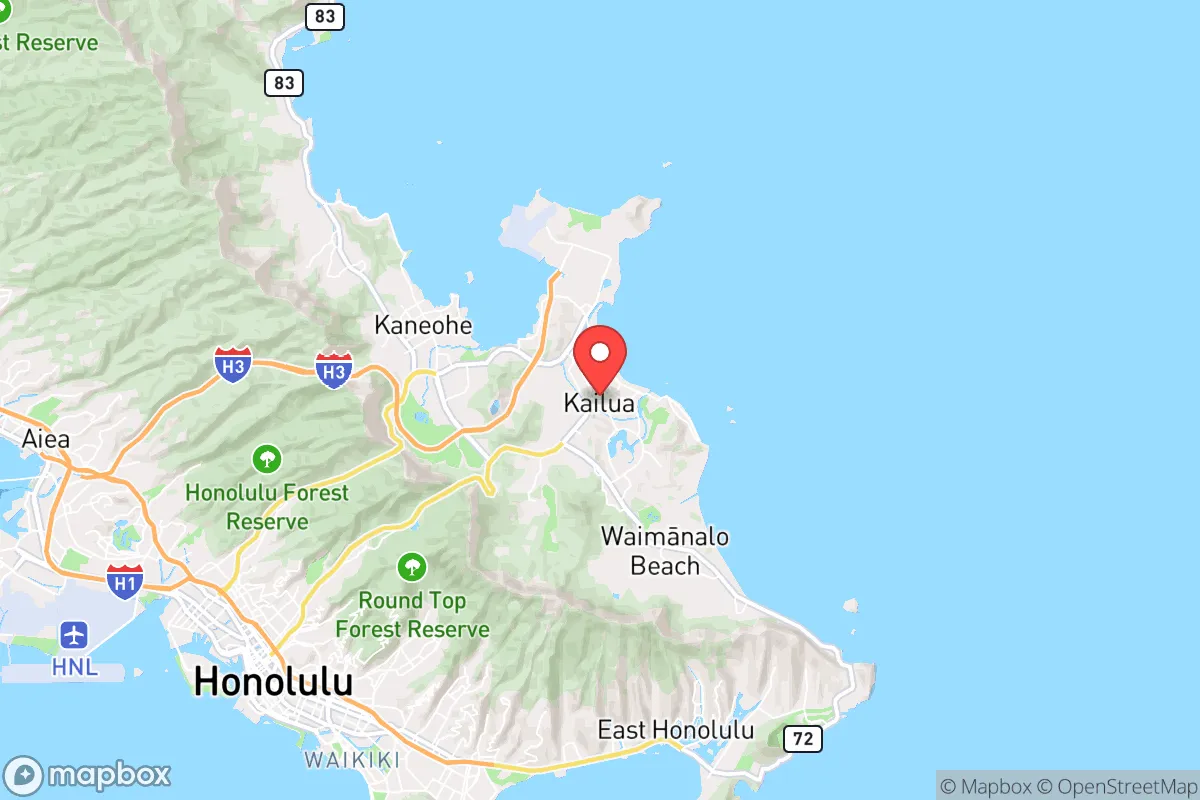
Photo: Wikipedia
Personal Sovereignty in Kailua, HI
Moderate friction. Expect trade-offs in some aspect of personal liberty and independence.
What does Personal Sovereignty tell us?
Personal Sovereignty measures your capacity for self-reliance and independence with minimal government friction. Higher scores mean fewer barriers between you and the way you want to live... but it assumes you have the space you need and good neighbors.
What does this tell us?
Personal Sovereignty measures your capacity for self-reliance and independence with minimal government friction. Higher scores mean fewer barriers between you and the way you want to live... but it assumes you have the space you need and good neighbors.
State Policy
Energy independence: Importer (2% of energy produced in-state)
Personal Liberty
Homesteading

Personal Liberty Analysis
For the liberty-minded individual or family evaluating Kailua, Hawaii, as a potential relocation destination, the personal sovereignty picture is deeply constrained by state-level policies that prioritize collective mandates over individual autonomy. While the island of Oahu offers stunning natural beauty and a tight-knit community feel, the regulatory environment in Kailua—and across Hawaii—presents significant headwinds for those seeking to minimize government overreach into daily life, self-defense, medical choices, and property rights. The state’s heavy reliance on tourism and federal spending, combined with a progressive political culture, means that personal freedoms are often secondary to state-defined public health, safety, and environmental goals. For a survivalist or prepper mindset, the trade-offs between lifestyle and liberty are stark, and Kailua’s appeal hinges on whether one can accept a high degree of government involvement in exchange for a unique island existence.
Tax burden and regulatory posture: How Hawaii’s state-level policies affect your wallet and freedom
Hawaii’s tax burden is among the highest in the nation, and Kailua residents feel this acutely. The state imposes a general excise tax (GET) of 4% on nearly all goods and services, including groceries and medical supplies—a regressive levy that hits families hard. There is no local income tax, but the state’s progressive income tax tops out at 11% for single filers earning over $200,000, and property taxes, while relatively low (around 0.3% of assessed value), are paired with some of the highest home prices in the country. The median home value in Kailua exceeds $1.2 million, meaning even a modest property tax bill translates to thousands of dollars annually. For a prepper focused on self-reliance, the regulatory posture is equally burdensome: Hawaii has strict land-use laws under the State Land Use Commission, which zones nearly all of Oahu into urban, agricultural, or conservation districts. Building permits, even for minor renovations, require extensive review, and off-grid systems like solar panels or rainwater catchment must meet county and state codes that often discourage true independence. The state’s Jones Act also inflates the cost of shipped goods, including emergency supplies and building materials, by requiring them to be carried on U.S.-flagged vessels. For a family seeking to reduce reliance on external systems, these policies create a high-cost, high-hassle environment that erodes financial sovereignty.
Self-defense and gun law specifics: What you can and cannot do in Kailua
Hawaii has some of the most restrictive gun laws in the United States, and Kailua residents face a near-total prohibition on the right to keep and bear arms for self-defense. The state requires a permit to acquire any firearm, which involves a background check, fingerprinting, and a 14-day waiting period. Concealed carry is effectively banned—the state issues permits only if an applicant can demonstrate “exceptional circumstances” that go beyond general self-defense, and as of 2026, fewer than a dozen permits have been issued statewide. Open carry is also prohibited. For a survivalist, this means that in a home invasion or civil unrest scenario, your ability to defend your family is severely limited. The state also bans “assault weapons” (defined broadly to include many common semi-automatic rifles) and large-capacity magazines (over 10 rounds). Ammunition purchases require a permit and are logged by the state. The legal environment is hostile to self-reliance: there is no “stand your ground” law, and the duty to retreat applies even in your own home. For parents, this means that teaching children firearm safety or keeping a home defense weapon is legally fraught. The only practical option for self-defense in Kailua is non-lethal tools like pepper spray, which is legal but limited in effectiveness against determined threats. For those prioritizing personal sovereignty, this is a dealbreaker.
Self-reliance and homesteading viability: Lot sizes, zoning, and off-grid feasibility in Kailua
Kailua’s residential zoning and lot sizes make traditional homesteading or off-grid living nearly impossible for most families. The typical lot in Kailua’s residential neighborhoods is 0.15 to 0.25 acres, with many homes on smaller parcels in planned subdivisions. The Kailua Neighborhood Board and the City and County of Honolulu enforce strict zoning that prohibits livestock (chickens, goats, pigs) in most residential areas, and even vegetable gardens may be subject to homeowners’ association (HOA) rules in many communities. Off-grid systems like solar panels are allowed but must be grid-tied—Hawaii’s net metering program has been phased out, and new solar installations require approval from Hawaiian Electric, which can take months. Rainwater catchment is legal but must meet county health department standards if used for potable water, and most homes are required to connect to municipal water and sewer. For a prepper seeking to stockpile supplies, HOA covenants often restrict sheds, outdoor storage, and even the number of vehicles you can park on your property. The agricultural district on Oahu is mostly in the central plains (e.g., Wahiawa, Kunia), not in Kailua, and even there, minimum lot sizes of 1-2 acres and strict farming-only use rules limit true self-sufficiency. The bottom line: Kailua is a bedroom community, not a homesteading haven. If your vision of sovereignty involves growing your own food, raising animals, or living off-grid, you will need to look to the Big Island or rural Maui—but even there, state regulations remain a barrier.
Personal liberties: Parental rights, medical autonomy, speech, and property in Hawaii
Hawaii’s state government has a strong record of asserting authority over personal and parental decisions, which may concern families seeking to maintain control over their children’s upbringing. Parental rights in education are limited: the state mandates comprehensive sex education that includes LGBTQ+ topics, and parents cannot opt their children out of specific lessons—only the entire program. Homeschooling is legal but requires annual notification and submission of a curriculum plan to the Department of Education, with oversight that some families find intrusive. Medical autonomy is heavily restricted: Hawaii has strict vaccine mandates for school attendance, with only narrow medical exemptions (no religious or philosophical exemptions), and during the COVID-19 pandemic, the state imposed some of the longest-lasting indoor mask mandates and vaccine passport requirements in the nation. For a prepper concerned about future public health emergencies, this precedent suggests the state will not hesitate to mandate medical interventions. Property rights are also constrained: the state’s Land Use Commission can designate land for conservation or agriculture without compensation, and the county’s Special Management Area (SMA) rules require permits for any development near the shoreline, which covers much of Kailua. Free speech is protected under the First Amendment, but Hawaii has a history of local government restricting political signs and public demonstrations in residential areas. For a conservative-leaning individual, the cumulative effect is a sense that the state views personal autonomy as subordinate to collective goals—a dynamic that may feel oppressive over time.
In the broader context of personal sovereignty across the United States, Kailua ranks among the most restrictive areas for liberty-minded individuals. Compared to states like Texas, Idaho, or Montana, where property rights, gun laws, and parental control are far more robust, Hawaii’s regulatory density and progressive political culture create a high-friction environment for those seeking to live independently. The natural beauty and community feel of Kailua are real, but they come at the cost of accepting a government that actively limits your ability to defend yourself, make medical choices for your family, or pursue off-grid self-reliance. For a survivalist or prepper, the strategic calculation is clear: Kailua offers a pleasant place to visit, but for long-term sovereignty, the mainland’s red states provide far more room to breathe. If you are determined to make Hawaii work, focus on the Big Island’s rural districts (e.g., Puna, Ka’u) where lot sizes are larger and zoning is looser—but even there, state-level restrictions remain a constant challenge. Ultimately, Kailua is a trade-off: you gain paradise, but you surrender significant control over your own life.

* Values derived from national, state, county, city and local statistics and may differ in a specific area. Last updated: 2026-04-24T00:03:46.000Z
Narrative content on this page is AI-generated and may contain mistakes. Verify any details that matter before acting on them.
ReloMaps may earn a commission from affiliate links at no extra cost to you.

