Photo: Wikipedia
Personal Sovereignty in Kailua-Kona, HI
Self-reliance is harder here. Restrictive laws and challenging geography make a self-reliant lifestyle difficult to maintain.
What does Personal Sovereignty tell us?
Personal Sovereignty measures your capacity for self-reliance and independence with minimal government friction. Higher scores mean fewer barriers between you and the way you want to live... but it assumes you have the space you need and good neighbors.
What does this tell us?
Personal Sovereignty measures your capacity for self-reliance and independence with minimal government friction. Higher scores mean fewer barriers between you and the way you want to live... but it assumes you have the space you need and good neighbors.
State Policy
Energy independence: Importer (2% of energy produced in-state)
Personal Liberty
Homesteading

Personal Liberty Analysis
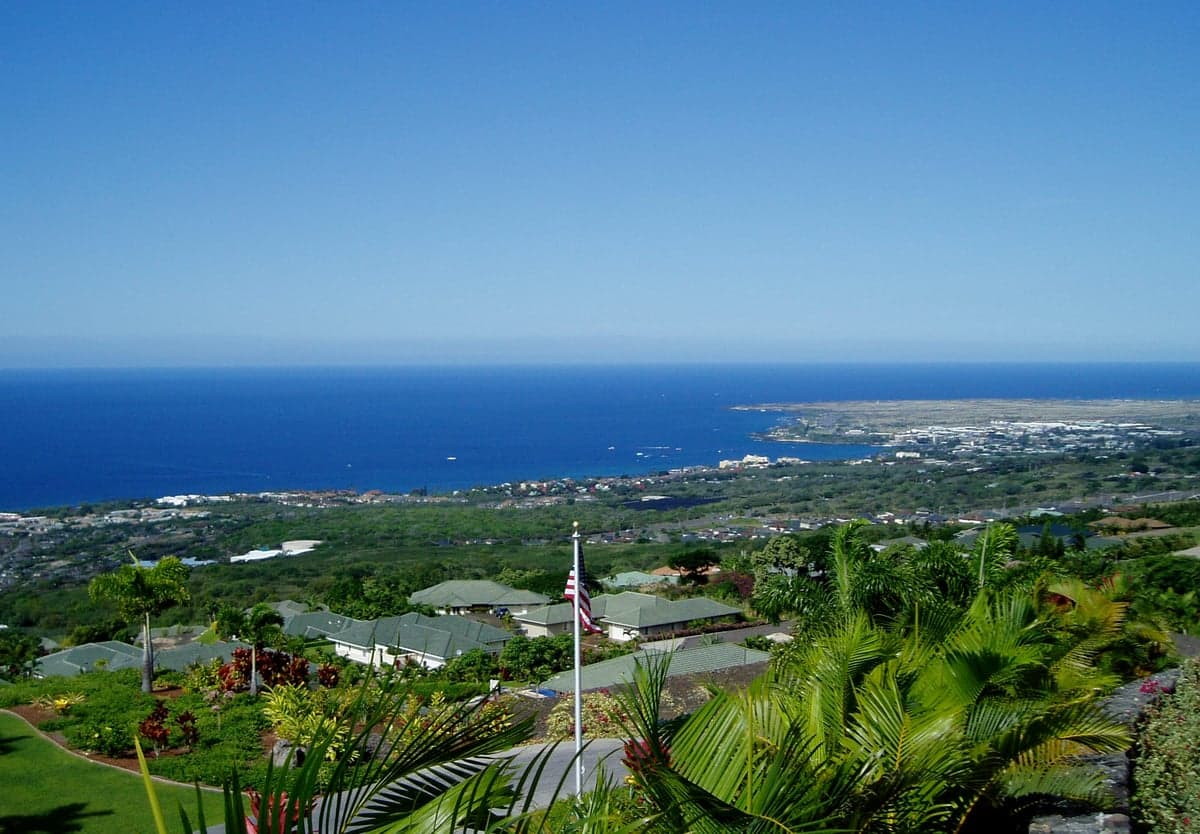
Kailua-Kona presents a paradox for the sovereignty-minded individual: it offers a stunning natural fortress and a deep cultural tradition of self-reliance, but it sits under the thumb of one of the most interventionist state governments in the country. For the prepper or conservative seeking to maximize personal autonomy, the Big Island’s relative isolation and rural character are genuine assets, yet they are constantly undermined by Hawaii’s aggressive tax regime, restrictive gun laws, and heavy-handed regulatory environment. The key question is whether the physical distance from mainland chaos is worth the trade-off in legal and economic freedom.
Tax burden and regulatory posture: the cost of island autonomy
Hawaii’s state-level tax burden is among the highest in the nation, and Kailua-Kona offers no escape. There is no local income tax, but the state income tax hits hard, with a top marginal rate of 11% on income over $200,000—a bracket that catches many dual-income professional households. Property taxes are relatively low by mainland standards, typically around 0.3% to 0.5% of assessed value, but this is a double-edged sword: the state makes up the difference with a general excise tax of 4% on nearly all goods and services, which compounds at every stage of production and distribution. For a prepper stockpiling supplies, every can of beans and box of ammunition carries this hidden surcharge. The regulatory posture is equally stifling. Hawaii’s land use commission and county planning departments exert near-total control over development, meaning any attempt to build a workshop, expand a dwelling, or install a rainwater catchment system requires navigating a Byzantine permitting process. The state’s Jones Act shipping requirements drive up the cost of everything from lumber to solar panels, making self-sufficient infrastructure projects significantly more expensive than on the mainland. For the sovereignty-minded, this is a constant friction: the island’s natural abundance is offset by a government that treats every square foot of land as a resource to be managed rather than a right to be owned.
Self-defense and gun law specifics: what you can and cannot own
Hawaii’s gun laws are among the most restrictive in the United States, and Kailua-Kona offers no rural exemption. The state requires a permit to acquire any firearm, which involves a background check, fingerprinting, and a 14-day waiting period—but the real choke point is the county police chief’s discretion. In practice, obtaining a permit for a handgun in Hawaii County is difficult, and concealed carry is virtually impossible for ordinary citizens. The state does not recognize any out-of-state permits, and open carry is prohibited. Magazine capacity is limited to ten rounds, and there is a ban on so-called “assault weapons,” which includes many common semi-automatic rifles. For the prepper, this means that the AR-15 platform—a standard tool for home defense and community security in many rural areas—is effectively illegal to acquire new. The state’s firearm registry and the requirement to register all firearms with the county police create a paper trail that many sovereignty-minded individuals find deeply concerning. Self-defense in the home is legally protected under the “castle doctrine,” but there is no “stand your ground” law; a person has a duty to retreat if safely possible. For a family living in a rural subdivision outside Kona, this legal framework means that the primary tools of personal security are severely limited, and the state’s attitude toward armed self-defense is one of grudging tolerance rather than affirmation.
Self-reliance and homesteading viability: lot sizes, zoning, and off-grid feasibility
The Big Island’s rural character offers genuine opportunities for self-reliance, but the regulatory hurdles are significant. In the Kona coffee belt and the upland areas above the highway, agricultural-zoned lots of one to five acres are common, and many are sold with the expectation of off-grid living. Rainwater catchment is standard practice, and solar power is widespread, but the county requires a building permit for any structure over 200 square feet, and the permitting process for a primary residence can take six to twelve months. The county’s building code requires compliance with the International Residential Code, which adds cost and complexity to owner-built homes. Zoning laws restrict the number of structures per lot and limit commercial activity in residential zones, making it difficult to run a small farm stand or workshop without a special use permit. For the prepper, the ideal scenario—a remote parcel with a well, solar panels, a garden, and a workshop—is achievable, but it requires patience, capital, and a willingness to navigate the bureaucracy. The county’s septic system regulations are strict, and composting toilets require approval. The upside is that the climate allows year-round food production, and the local culture of self-sufficiency means that neighbors are often willing to share knowledge and resources. The downside is that the state’s regulatory apparatus treats every attempt at independence as a potential violation of code.
Personal liberties: parental rights, medical autonomy, speech, and property
Hawaii’s state government has a strong progressive tilt that directly impacts personal liberties. Parental rights are legally protected under state law, but the Department of Education has implemented policies that many conservative parents find intrusive, including comprehensive sex education and LGBTQ+ inclusive curricula that do not require parental opt-in. The state’s vaccine mandate for school attendance is among the strictest in the nation, with no philosophical exemption and a narrow religious exemption that is difficult to obtain. Medical autonomy is further constrained by the state’s strict prescription drug monitoring program and its aggressive enforcement of telemedicine regulations. For the prepper, this means that stockpiling antibiotics or other prescription medications through out-of-state telehealth services is legally risky. Free speech is protected under the First Amendment, but Hawaii’s anti-discrimination laws and hate speech statutes create a chilling effect for those who hold traditional views on marriage, gender, or immigration. Property rights are the most concerning area: the state’s strong eminent domain powers and its aggressive enforcement of land use regulations mean that a property owner’s ability to use their land as they see fit is heavily circumscribed. The county’s short-term rental ban has already forced many property owners to stop renting their homes, and there is ongoing pressure to restrict vacation rentals further. For the sovereignty-minded, the message is clear: the state views your property as a privilege to be managed, not a right to be exercised.
In the final analysis, Kailua-Kona offers a mixed picture for the individual seeking maximum personal sovereignty. The physical isolation, the climate, and the rural character of the Big Island provide a genuine refuge from the chaos of the mainland, and the local culture of self-reliance is a real asset. But the trade-offs are severe: one of the highest tax burdens in the nation, some of the most restrictive gun laws, a regulatory environment that treats every attempt at independence as a potential violation, and a state government that is actively hostile to traditional values and parental rights. For the prepper who values physical security and self-sufficiency above all else, the Big Island can work—but only if you are willing to accept that you will be fighting the government every step of the way. Compared to states like Idaho, Montana, or Texas, Kailua-Kona is a poor choice for the sovereignty-minded. It is a beautiful prison, but a prison nonetheless.

* Values derived from national, state, county, city and local statistics and may differ in a specific area. Last updated: 2026-04-24T00:07:43.000Z
Narrative content on this page is AI-generated and may contain mistakes. Verify any details that matter before acting on them.
ReloMaps may earn a commission from affiliate links at no extra cost to you.

