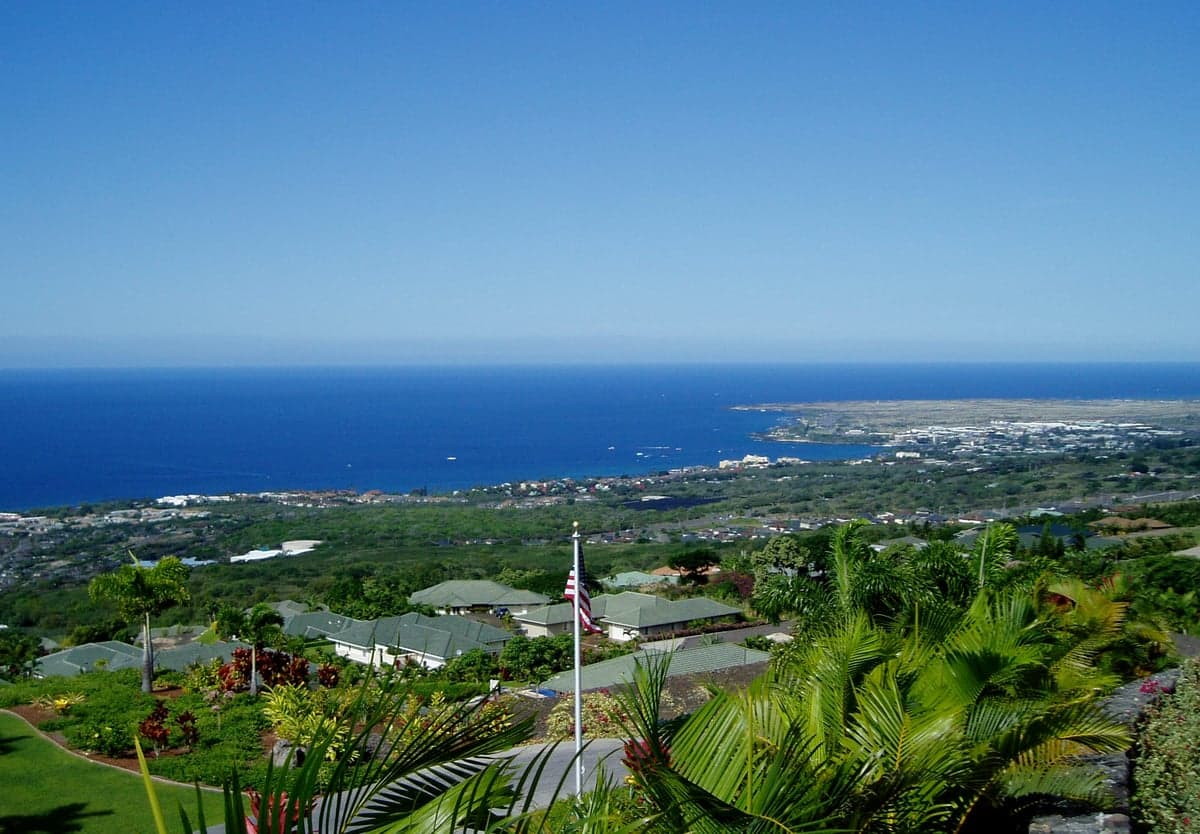
Photo: Wikipedia
Strategic Assessment of Kailua-Kona, HI
Workable tactical position. Some exposure to population density or targets, but generally defensible in a crisis.
What does the Strategic Assessment tell us?
Our Strategic Assessment grades tactical survivability of an area. Major population centers, military targets, fallout zones, natural disasters, and border exposure all drive risk — lower exposure means a more defensible position in a crisis.
This is heavily inspired by Joel Skousen's Strategic Relocation book. Highly recommended you checkout the book ($)What does this tell us?
Our Strategic Assessment grades tactical survivability of an area. Major population centers, military targets, fallout zones, natural disasters, and border exposure all drive risk — lower exposure means a more defensible position in a crisis.
This is heavily inspired by Joel Skousen's Strategic Relocation book. Highly recommended you checkout the book ($)Strategic Pillars

Key Distances
Regional Safe Places
Below is our recommended "safe zones" in Hawaii and the surrounding area based on our strategic heuristics. For most people, it's unrealistic to live in a “safe zone” full-time due to work, family or other personal reasons. They tend to be more rural. However, many of these areas are perfect for second homes and retreat properties that double as a vacation home or even a short-term rental.

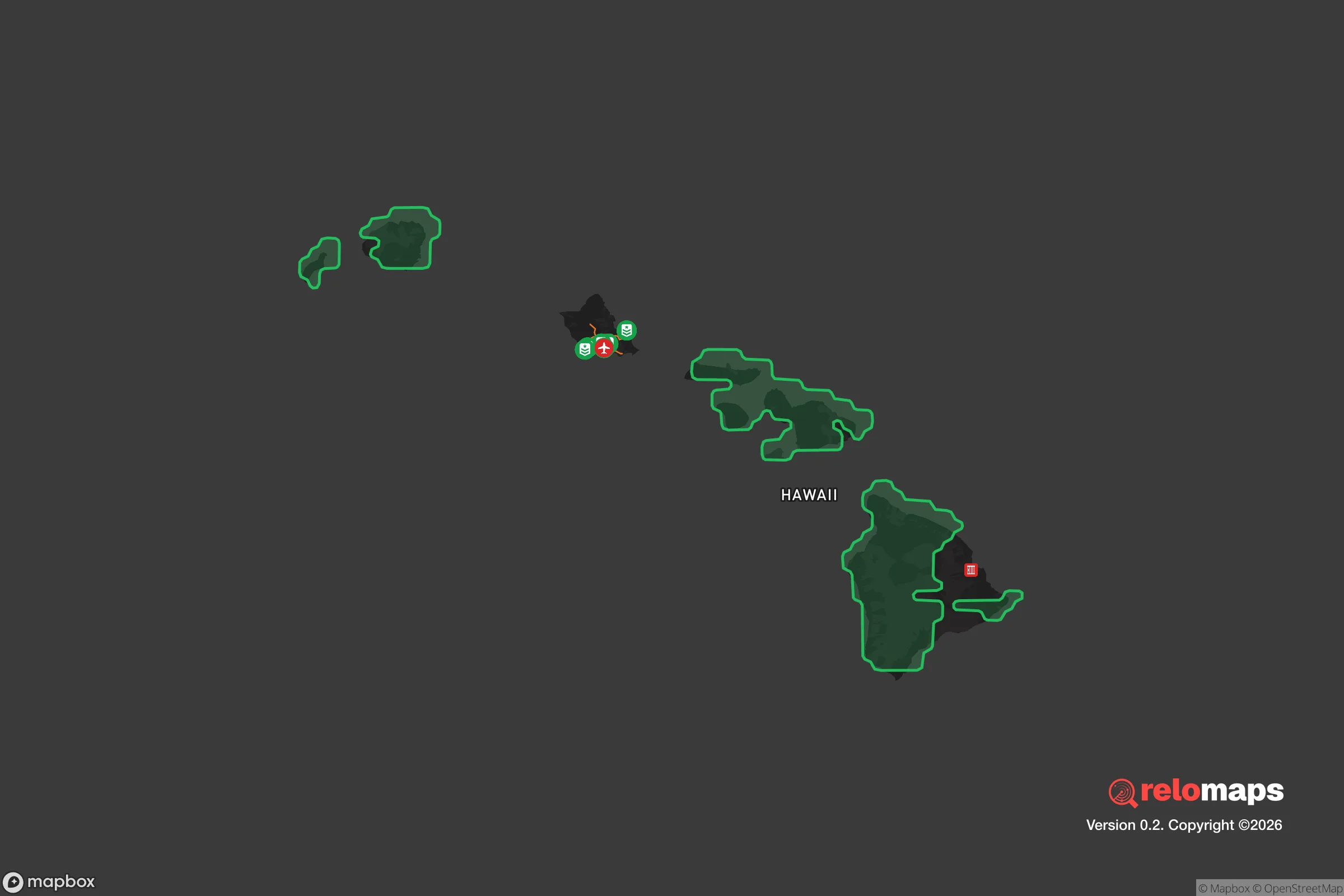


Important Note: For informational purposes only. This does not mean nothing bad ever happens in the green zones. Please use common sense. This is based on public data and modeled with AI. We tried to take a conservative approach but mistakes happen. We update this regularly as new information becomes available.
Solar Generator Recommendations
Backup power matters more here than in safer locations. We've picked three solar generators across budgets and capacity tiers — start with the budget unit if you only need a few essentials, or step up if you want to run a fridge and HVAC for days at a time.

Jackery Portable Power Station Explorer 300
Budget OptionPower on the Go: Weighing only 11 lbs, it's convenient to set up and store with book-sized foldable solar panels

BLUETTI Portable Power Station AC180
Designed for both indoor and outdoor scenarios, AC180 is highly capable as it has a robost capacity and continuous output power.

EF ECOFLOW DELTA Pro Ultra Power Station
Upgraded PickEcoFlow DELTA Pro Ultra is a whole-home energy system designed to grow with your family. Integrated with the Smart Home Panel 2, it scales to meet your evolving energy needs — keeping your home powered, intelligent, and secure through every stage of life.
We earn a commission, at no additional cost to you.
Strategic Assessment Analysis
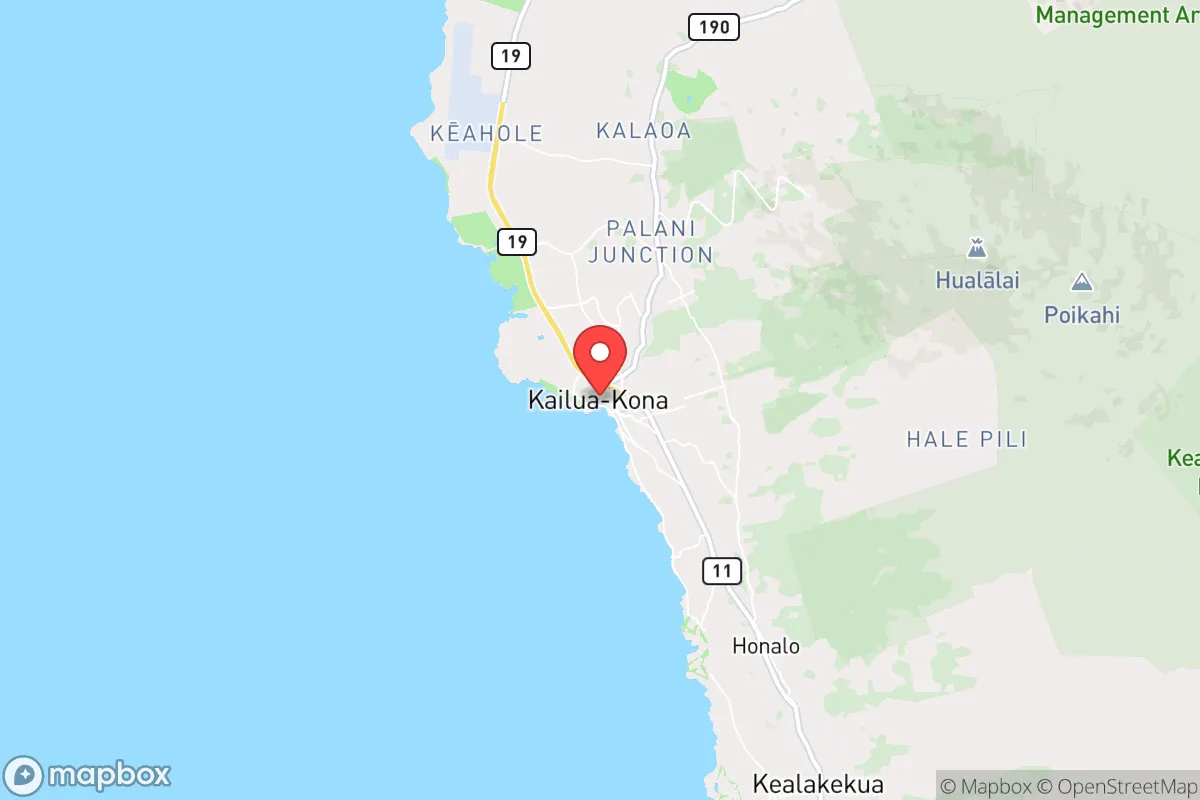
Kailua-Kona on the Big Island of Hawaii presents a genuinely unique strategic relocation option for those prioritizing resilience and distance from mainland instability. Its location on the leeward coast of the Big Island offers a rare combination of geographic isolation, a stable microclimate, and relative proximity to critical infrastructure without the density and target risks of Honolulu or the mainland’s major metropolitan corridors. For a prepper or survivalist-minded individual, this isn’t just a tropical escape—it’s a deliberate hedge against cascading societal collapse, with the Pacific Ocean serving as a 2,500-mile moat.
Geographic position and natural advantages for long-term security
The Big Island’s sheer size—over 4,000 square miles—means Kailua-Kona sits far from the island’s active volcanic hazards, which are concentrated around Kīlauea and Mauna Loa to the south and east. The Kona coast benefits from a rain shadow effect, receiving roughly 20 inches of annual rainfall compared to Hilo’s 130 inches, which reduces the risk of flooding and mold-related infrastructure failures. Elevation gradients rise sharply from sea level to over 8,000 feet within 20 miles, offering immediate retreat options to cooler, more defensible terrain if coastal conditions degrade. The area’s position on the western side also places it downwind of prevailing trade winds, meaning volcanic vog (sulfur dioxide) from Kīlauea typically blows southwest, sparing Kona from chronic air quality issues that plague the Puna and Kaʻū districts. This geographic buffer is critical for sustained habitation during prolonged volcanic or atmospheric events.
Risks, exposures, and proximity to fallout-relevant landmarks
No location is immune, and Kailua-Kona has specific vulnerabilities that a strategic relocator must weigh. The primary concern is its exposure to Pacific tsunami waves generated by distant earthquakes—the 1960 Valdivia quake produced a 35-foot wave that struck Hilo, and while Kona’s coastline is less funneled, low-lying areas like the Kailua Pier and Ali‘i Drive are within the inundation zone. The U.S. Geological Survey rates the Big Island’s tsunami risk as moderate, but the lack of a robust early-warning siren system outside of Hilo means personal monitoring is essential. More critically, the area sits approximately 60 miles from the Pacific Missile Range Facility on Kaua‘i and 100 miles from the U.S. Army’s Pohakuloa Training Area on the Big Island itself—both potential targets in a conflict scenario involving China or North Korea. While Hawaii is not a primary nuclear strike target compared to Oahu’s Pearl Harbor or mainland ICBM silos, a limited exchange could still produce fallout patterns that affect the Kona coast depending on wind direction. The island’s single major airport (Kona International) and one deep-water port (Kawaihae) are choke points that could be disrupted or contested during a crisis, limiting evacuation or resupply options.
Practical resilience for a relocator: food, water, energy, and defensibility
Kailua-Kona’s practical resilience hinges on its ability to sustain a household without external supply chains. The area’s volcanic soil and consistent sun support year-round agriculture—coffee, macadamia nuts, citrus, and tropical vegetables thrive with minimal inputs. Rainwater catchment is common, with many off-grid homes collecting 10,000–20,000 gallons annually from roof runoff, though the low rainfall means storage capacity must be sized for extended dry spells. Municipal water comes from the Kona aquifer, which is deep and generally reliable, but a grid-down scenario would require a backup pump or hand-bailing system. Solar energy is abundant, with over 270 sunny days per year, and net-metering policies are favorable, though battery storage is a must for nighttime and cloudy periods. The island’s electrical grid is islanded—no connection to other islands or the mainland—so a localized blackout means no external power injection. Defensibility is mixed: the Kona coast is relatively open, with few natural chokepoints, but the surrounding lava fields and steep terrain limit approach routes from the east. A small, well-prepared group could secure a homestead in the uplands above 1,500 feet, where visibility is high and access is limited to a few paved roads. The local population is around 12,000 in Kailua-Kona proper, with a county-wide population of 200,000, meaning density is low enough to avoid the resource competition seen in Honolulu or Hilo. However, the area’s reliance on imported goods—over 85% of food is shipped in—means that any prolonged port closure would force a rapid shift to local foraging and barter, which requires pre-established knowledge of edible plants and fishing grounds.
The overall strategic picture for Kailua-Kona is one of high potential paired with non-negotiable preparation requirements. It offers the best balance of isolation, climate stability, and agricultural capacity of any U.S. location outside the contiguous states, but it demands a serious commitment to self-sufficiency—water storage, solar backup, seed banks, and a network of trusted neighbors. For a conservative-minded relocator who sees the mainland’s urban centers as increasingly fragile, this is a viable long-term outpost, not a bug-out location. The trade-offs are real: limited medical infrastructure (one hospital with a helipad), high cost of living (median home price above $700,000), and the psychological weight of being 2,500 miles from any continent. But for those willing to invest in the land and the skills, Kailua-Kona represents a defensible, resource-rich redoubt in a world that may not stay stable for long.

* Values derived from national, state, county, city and local statistics and may differ in a specific area. Last updated: 2026-04-24T00:07:43.000Z
Narrative content on this page is AI-generated and may contain mistakes. Verify any details that matter before acting on them.
ReloMaps may earn a commission from affiliate links at no extra cost to you.

