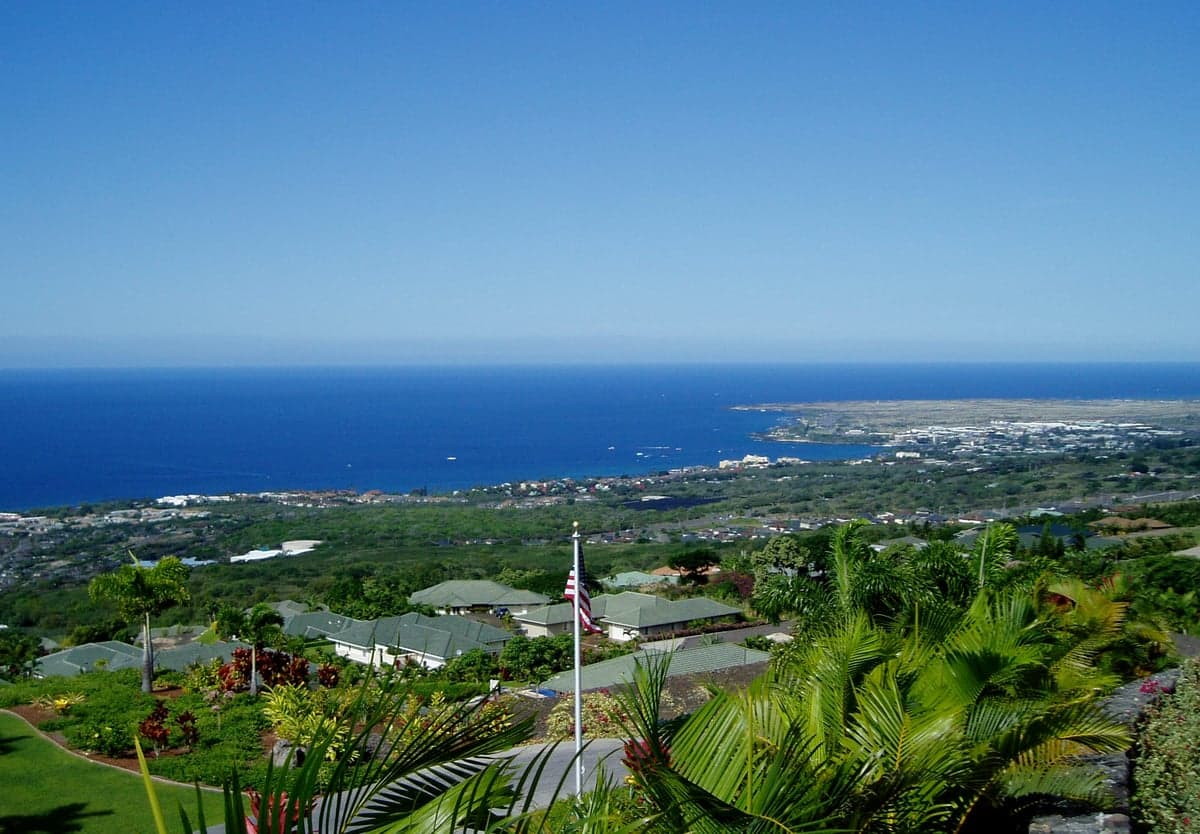
Photo: Wikipedia
Political ClimatePolitical Climate in Kailua-Kona, HI
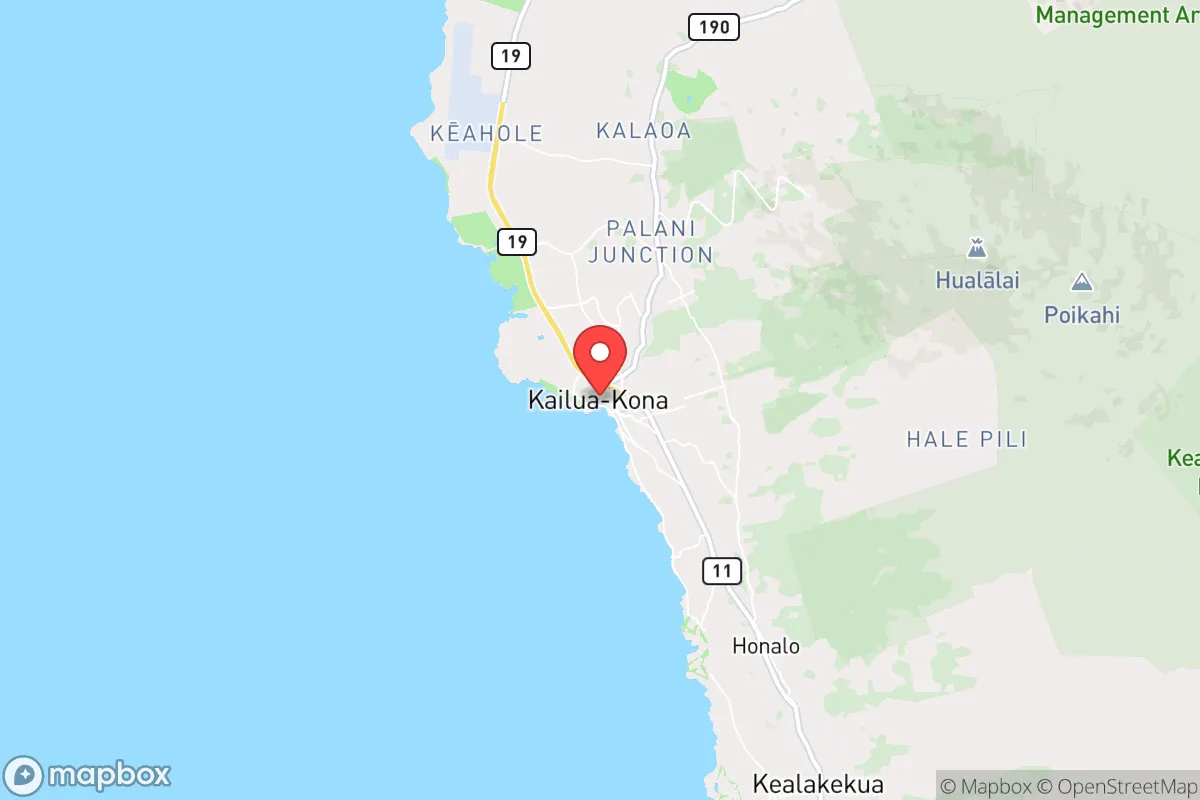
District shown is the primary district for this city’s centroid. Cities may span multiple districts.
Local Political AnalysisPolitical Analysis of Kailua-Kona, HI
Kailua-Kona leans heavily Democratic, with a Cook PVI of D+12, but honestly, that number doesn't tell the whole story of what it's like to live here. The area has shifted noticeably leftward over the past decade, driven by an influx of mainland transplants and a growing reliance on tourism and government jobs. If you've been around since the 90s or early 2000s, you remember when local politics were more about practical, small-government solutions—keeping the roads paved, protecting fishing rights, and letting folks run their businesses without a dozen permits. Now, the county council and state legislature seem more focused on progressive social policies and environmental regulations that can feel heavy-handed, especially for anyone who values personal freedom and property rights.
How it compares
To understand Kailua-Kona's political climate, you have to look at the surrounding areas. Drive 20 minutes north to Waimea or head south to Ocean View, and you'll find a much more conservative, libertarian-leaning vibe. Those communities are full of ranchers, off-grid homesteaders, and folks who moved here specifically to escape overregulation. In contrast, Kailua-Kona proper—especially the newer subdivisions and resort zones—has become a stronghold for progressive candidates. The state legislature districts covering this area consistently send Democrats to Honolulu, and local county council seats often go to candidates who push for stricter land-use rules, higher minimum wages, and expanded social programs. It's a stark split: the rural edges of the Big Island still vote their conscience, but the Kona coast's political center of gravity has moved decisively left.
What this means for residents
For a long-time resident who values limited government, the practical effects are frustrating. You see it in the permitting process for even minor home improvements—adding a shed or a carport can take months and cost thousands in fees. The county has also tightened short-term vacation rental rules, which hits small property owners hard while big hotel chains seem to get a pass. There's a growing sense that local government is more interested in symbolic gestures—like plastic bag bans or resolutions on national issues—than in fixing the real problems, like the crumbling roads in Holualoa or the lack of affordable housing for working families. The tax burden is creeping up, too, with property assessments rising faster than inflation, and no real push to cut spending. If you're someone who believes in keeping government out of your life, you'll find yourself voting against most ballot measures and candidates here, just to hold the line.
One cultural distinction that stands out is the area's relationship with firearms and outdoor recreation. Kailua-Kona has a strong hunting and fishing tradition, but recent county proposals to restrict firearm access in certain zones and expand "sensitive area" designations have raised eyebrows. There's also a growing push for "climate resilience" policies that could limit coastal development and private beach access—a real concern for anyone who values the freedom to enjoy the ocean without a permit. The local school board has also become a battleground, with progressive members pushing curriculum changes that some parents see as overreach. If you're looking for a place where personal liberty is still the default, Kailua-Kona is becoming less that place every year. The old-timers who remember when "live and let live" was the unofficial motto are watching the pendulum swing, and hoping it doesn't swing too far.

State Political ClimatePolitical Climate in Hawaii
State Political AnalysisPolitical Environment in the State
Hawaii has been a one-party Democratic stronghold for decades, with Democrats holding supermajorities in both legislative chambers and every statewide office since 1962. The state’s overall partisan lean is roughly D+20 in presidential elections, but that masks a deep and growing urban-rural split. Over the last 10-20 years, the Democratic coalition has shifted from a moderate, union-based machine to a more progressive, coastal-elite alignment, while rural and suburban areas have drifted rightward. For a conservative-leaning individual or family, the key takeaway is that Hawaii’s political climate is increasingly defined by Honolulu’s progressive dominance, with the rest of the state—especially the Big Island and Kauai—offering more breathing room.
Urban vs. rural divide
The political map of Hawaii is essentially a battle between Oahu and everything else. Honolulu and its suburbs—particularly Waikiki, Kailua, and Kaneohe—drive the state’s Democratic supermajority. These areas are home to the bulk of the state’s population, unionized government workers, and a growing progressive activist class. In contrast, the Big Island (Hawaii County) is the most politically divided, with rural districts like Puna, Hilo, and Kona swinging between moderate Democrats and Republicans. Kauai leans left but has a strong independent streak, while Maui is a mixed bag—Kihei and Lahaina are reliably blue, but Upcountry Maui and Hana have libertarian-leaning pockets. The North Shore of Oahu is a unique blend of old-school local conservatives and new-age hippies, making it one of the few areas where a Republican can win a local seat. The urban-rural divide is stark: Honolulu County votes 70% Democratic, while rural precincts on the Big Island and Kauai often split 50-50 or even lean Republican in down-ballot races.
Policy environment
Hawaii’s policy environment is a textbook case of progressive overreach. The state has the highest combined tax burden in the nation, with a 4% general excise tax (effectively a sales tax on nearly everything, including services), high property taxes, and some of the steepest income tax rates in the country—topping out at 11%. There is no statewide property tax cap, and counties can raise rates at will. Education policy is dominated by a single statewide school district, the Hawaii Department of Education, which is notoriously bureaucratic and underperforming. Act 51 (2004) created a "weighted student formula" that was supposed to fund schools equitably but has instead led to chronic underfunding of rural schools. Healthcare is heavily regulated, with the state mandating employer-provided insurance and running a robust Medicaid program. Election laws are relatively open—same-day registration, no-excuse absentee voting, and automatic voter registration—which tends to benefit Democrats. The state also has a sanctuary policy (Act 2, 2019) that limits cooperation with federal immigration enforcement, a flashpoint for conservatives.
Trajectory & freedom
Hawaii is becoming less free by nearly every measure, especially for conservatives. The most alarming trend is on gun rights: Act 52 (2022) banned the open carry of firearms and imposed a "may-issue" concealed carry regime that effectively denies permits to most applicants. In 2023, the legislature passed HB 1230, which raised the minimum age to purchase a firearm to 21 and banned "ghost guns." Parental rights have taken a hit with Act 55 (2022), which requires public schools to adopt "culturally responsive" curricula that critics say downplay traditional values. Medical autonomy is limited—the state has strict vaccine mandates for school attendance (no philosophical exemption) and a controversial Act 1 (2021) that expanded the authority of the Department of Health to impose quarantine and isolation orders without judicial review. Property rights are under constant assault from the state’s powerful Land Use Commission, which can rezone land at will, and from Act 48 (2021), which imposed a moratorium on new short-term vacation rentals in many areas. The only bright spot for freedom is the state’s stand-your-ground law (Act 1, 2019), which was expanded to cover vehicles and workplaces—a rare win for self-defense advocates.
Civil unrest & political movements
Hawaii has a long history of civil unrest, much of it centered on land rights and indigenous sovereignty. The Mauna Kea protests (2019-2020) against the Thirty Meter Telescope were a massive, multi-month occupation that drew both Native Hawaiian activists and left-wing environmentalists. That movement has since morphed into a broader push for decolonization and secession, with groups like the Hawaiian Kingdom calling for the overthrow of the state government. On the right, the Hawaii Republican Party is a shell of its former self, but there are active grassroots conservative groups on the Big Island and Maui that focus on school board races and property rights. Immigration politics are relatively quiet, but the sanctuary policy has created friction with federal authorities—in 2023, the state refused to cooperate with ICE on a deportation raid in Waipahu. Election integrity is a growing concern: in 2020, Hawaii was one of the first states to go all-mail-in voting, and while no major fraud was proven, the lack of voter ID laws and the state’s same-day registration have raised eyebrows among conservatives. The most visible flashpoint for a new resident would be the homelessness crisis in Honolulu, which has led to periodic clashes between city enforcement and activist groups like Hawaii Homeless Alliance.
Projection
Over the next 5-10 years, Hawaii is likely to become more progressive and less free. Demographic trends are working against conservatives: the state’s population is aging, with a growing share of retirees from the mainland who tend to vote Democratic. In-migration from California and the Pacific Northwest is accelerating, bringing more progressive voters to Kona, Kihei, and Kauai. The Native Hawaiian population, which is younger and more politically active, is increasingly aligned with left-wing causes like land reparations and decolonization. The Republican Party shows no signs of revival—its voter registration share has fallen below 25%. Expect more gun control, higher taxes (including a possible wealth tax), and further erosion of parental rights in education. The only countervailing trend is the cost of living, which is driving some moderate Democrats and independents to question the state’s regulatory overreach. A new resident moving in now should expect to find a state where the government is deeply involved in daily life, from housing to healthcare to education, and where conservative voices are increasingly marginalized.
For a conservative-leaning individual or family, the bottom line is that Hawaii offers a beautiful natural environment but a hostile political climate. If you value low taxes, gun rights, school choice, and limited government, you will find yourself swimming against a strong progressive current. The best bet is to settle in a rural area like Puna on the Big Island or Upcountry Maui, where local politics are more libertarian and you can carve out a degree of autonomy. But be prepared for a state government that will continue to expand its reach into your life, and for a culture that increasingly views conservative values as out of step with the times. If you’re willing to fight for your freedoms, Hawaii can still be a home—but it’s not a refuge from big government.
* Values derived from national, state, county, city and local statistics and may differ in a specific area. Last updated: 2026-04-24T00:07:43.000Z
Narrative content on this page is AI-generated and may contain mistakes. Verify any details that matter before acting on them.
ReloMaps may earn a commission from affiliate links at no extra cost to you.

