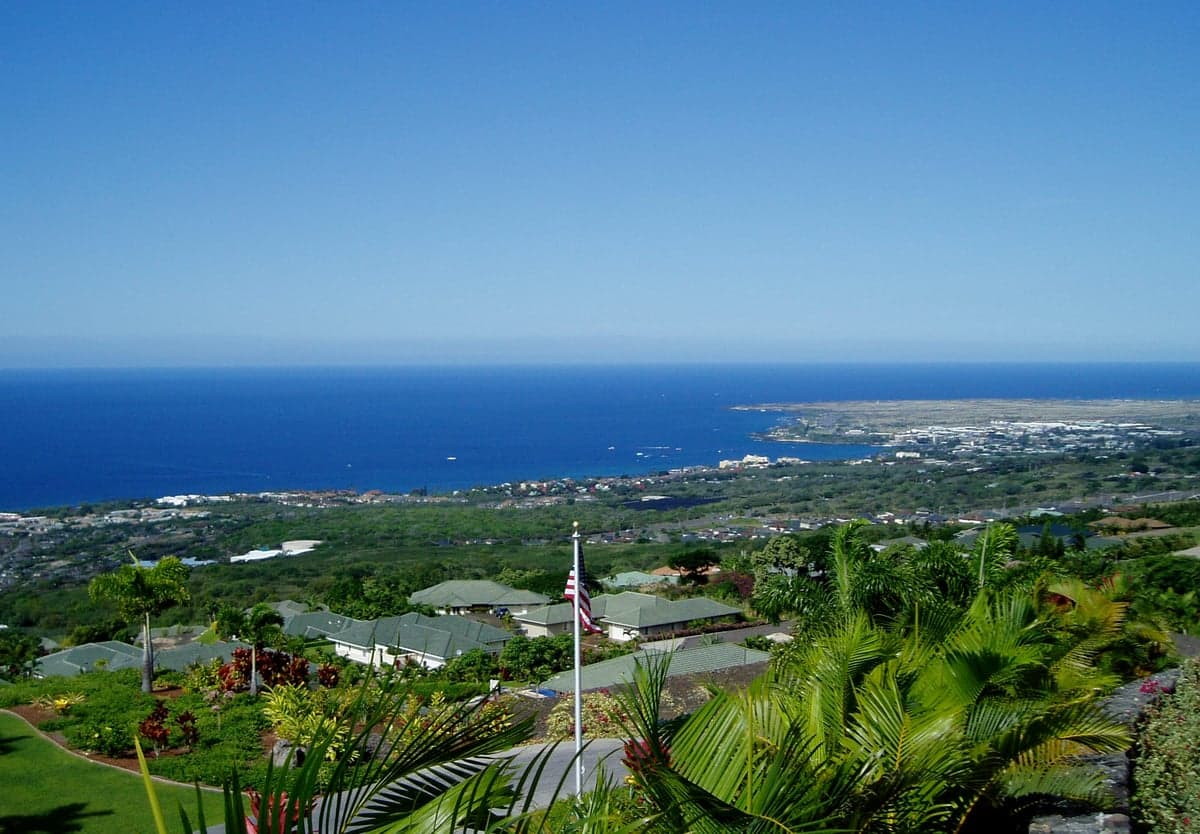
Photo: Wikipedia
Quality of Life in Kailua-Kona, HI
A high quality of life with strong walkability, manageable living costs, healthy neighborhood signals, and solid amenity access.
What does Quality of Life tell us?
Quality of Life blends cost of living, nearby amenities, socioeconomic signals, and neighborhood character. City-level scores represent the whole municipality; individual neighborhoods can differ.
What does this tell us?
Quality of Life blends cost of living, nearby amenities, socioeconomic signals, and neighborhood character. City-level scores represent the whole municipality; individual neighborhoods can differ.
Cost of Living
70% above national average
The Real Cost of Living in Kailua-Kona, HI for 2026
| Tier | Individual | Family (4) |
|---|---|---|
| Survival | $29k | $55k |
| Comfortable | $92k | $136k |
| Luxury | $135k+ | $210k+ |
| Elite (Top 5%) | $159k+ | $247k+ |
62%
The Area Signal
A metric tracking the socioeconomic signals of the area.
Hobbies
Explore the areaGroceries
3 within 10 miles
Gas
14 within 10 miles
Hospital
2 within 20 miles
Airport
Daniel K. Inouye International Airport
Post Office
USPS — Kailua-Kona, HI
Critical Amenities
Quality-of-Life Analysis
Kailua-Kona, on the west coast of Hawaii Island, is an affluent, amenity-rich community where the cost of living index sits at 170—70 percent above the national average—attracting a mix of remote professionals, retirees, and second-home owners drawn to its year-round sunshine and oceanfront lifestyle. The area’s median home value of $530,100 and median rent of $1,833 reflect a market that is expensive by mainland standards but notably more affordable than Honolulu or Maui, making it a practical entry point for those seeking a Hawaiian quality of life without the premium of Oahu or Wailea. Residents tend to be older, with a median age around 44, and the population skews toward higher-income households, though service-industry workers and local families also form a significant part of the social fabric.
Cost of living, housing, and how Kailua-Kona compares to nearby areas
With a composite cost of living index of 170, Kailua-Kona is roughly 70% more expensive than the average U.S. city, driven primarily by housing, groceries, and utilities. The median home value of $530,100 is about 40% lower than Honolulu’s median of roughly $880,000 and significantly less than Maui’s $1.1 million, but it is still nearly double the national median of around $350,000. Renters face a median monthly cost of $1,833, which is below the statewide median of $2,100 and far cheaper than Waikiki’s typical $2,500-plus. The average commute of 26.4 minutes is manageable for a semi-rural area, though traffic along the Queen Kaʻahumanu Highway (Route 19) can stretch that time during peak tourist season. For buyers, the market is competitive but not as cutthroat as in Honolulu; inventory includes condos in the Kona Vistas area and single-family homes in subdivisions like Holualoa and Keauhou, where prices often start in the mid-$400,000s for fixer-uppers.
What daily life is like: amenities, schools, and the local rhythm
Daily life in Kailua-Kona revolves around outdoor recreation and a relaxed pace, with residents frequently visiting beaches like Magic Sands or Kahaluʻu for snorkeling, paddleboarding, and sunset walks. The town’s commercial core along Aliʻi Drive and Henry Street offers grocery stores (Sack N Save, KTA Super Stores), a handful of sit-down restaurants, and the Kona Farmers Market, which runs three days a week. For education, the area is served by the Hawaii Department of Education, with Kealakehe High School and Konawaena High School both scoring in the middle tier of state rankings; private options include Kona Pacific Public Charter School and St. Michael’s School. Healthcare is concentrated at Kona Community Hospital, a 94-bed facility in Kealakekua, about 10 minutes south, with specialists in cardiology and orthopedics available but limited compared to Oahu. The rhythm is distinctly slower than Honolulu’s—shops often close by 7 p.m., and weekend traffic is more about beach access than gridlock—making it ideal for those who prioritize ocean access and quiet over urban nightlife.
Kailua-Kona is best suited for remote workers, retirees, and families who value warm weather, water sports, and a tight-knit community over career opportunities or cultural diversity found in larger Hawaiian cities. The high cost of living and limited job market—tourism and healthcare dominate local employment—mean that newcomers should have a stable income or savings before relocating. For those who can afford it, the trade-off is a lifestyle defined by daily sunsets, year-round temperatures averaging 75–85°F, and a slower, more intentional pace that many find worth the premium.

Crime in Kailua-Kona, HI
Generally safer than 64% of comparable U.S. locations.
Violent CrimeViolent Crime Analysis
Property CrimeProperty Crime Analysis
Crime Analysis
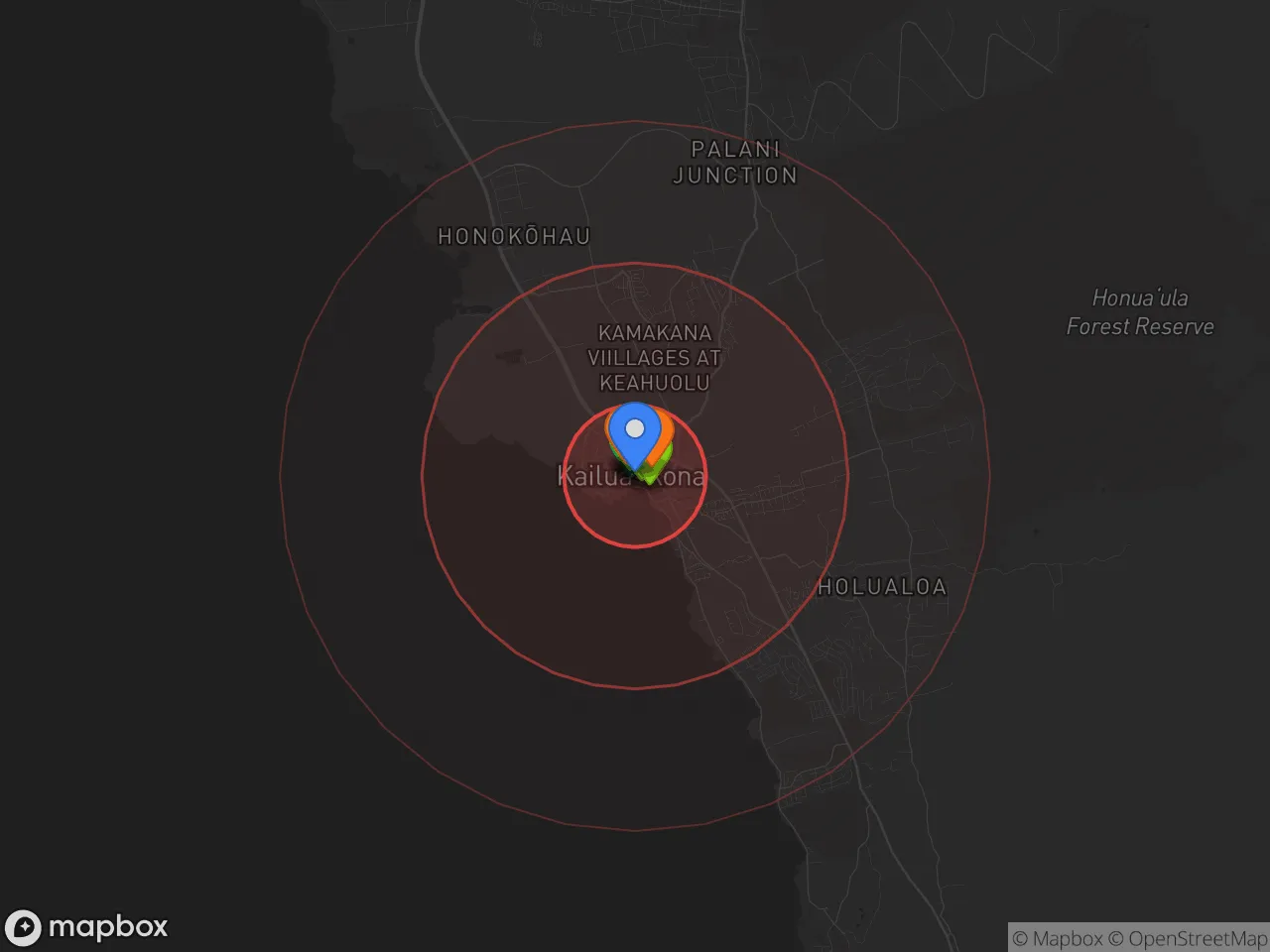
Kailua-Kona presents a mixed safety profile for prospective residents. While its violent crime rate of 200.2 incidents per 100,000 residents is notably lower than the national average, its property crime rate of 1,586.9 per 100,000 is significantly elevated, placing it above both the Hawaii state average and the U.S. median. This combination means that while the risk of a violent encounter is relatively low, the likelihood of experiencing theft, burglary, or vehicle break-ins is a genuine concern for those living in or moving to this Big Island community.
Crime in context
To understand Kailua-Kona's safety, it helps to compare its numbers to broader benchmarks. The national violent crime rate sits at roughly 380 per 100,000, meaning Kailua-Kona's rate of 200.2 is about 47% lower than the U.S. average. However, the national property crime rate is approximately 1,954 per 100,000, placing Kailua-Kona's figure of 1,586.9 about 19% below that national benchmark. The more immediate comparison is to the rest of Hawaii. The state's overall property crime rate is roughly 2,500 per 100,000, making Kailua-Kona's rate significantly lower than the state average. Yet, property crime remains the dominant safety issue here, driven largely by thefts from vehicles and unlocked homes, a pattern common in tourist-heavy areas. It is also important to note that Hawaii County, which includes Kailua-Kona, operates under a progressive prosecutorial philosophy. This approach, while intended to reduce incarceration, can result in shorter sentences and more plea deals for property offenders, a factor that directly contributes to repeat offenses and a perception that consequences for theft are minimal.
What residents experience
Day-to-day life in Kailua-Kona involves a heightened awareness of property security. Residents commonly report that leaving a vehicle unlocked or a garage door open, even for a few minutes, can result in a theft. Theft of packages from porches and break-ins at vacation rentals are also frequent complaints. Violent crime, by contrast, is less a part of daily life. When it does occur, it is often concentrated in specific contexts, such as late-night altercations near bars along Ali‘i Drive or domestic disputes within private residences. The presence of a progressive district attorney's office in Hawaii County means that even when property crimes are prosecuted, the penalties are often light, with many offenders receiving probation or short jail terms. This creates a cycle where property crime feels persistent and under-policed, a source of frustration for long-term residents who feel the justice system prioritizes offender rehabilitation over public safety.
Neighborhood-level variation is notable. Areas closer to the tourist corridor of Ali‘i Drive and the Kailua Pier experience the highest rates of property crime, particularly vehicle break-ins and thefts targeting visitors. Residential neighborhoods further from the coast, such as those in the Holualoa or Hualalai areas, tend to have lower crime rates but are not immune. Gated communities and subdivisions with active neighborhood watch programs report fewer incidents. For anyone considering a move, choosing a home with secure parking, good lighting, and a strong sense of community vigilance is the most effective strategy for mitigating the property crime risk that defines this otherwise beautiful location.
* Values derived from national, state, county, city and local statistics and may differ in a specific area. Last updated: 2026-04-24T00:07:43.000Z
Narrative content on this page is AI-generated and may contain mistakes. Verify any details that matter before acting on them.
ReloMaps may earn a commission from affiliate links at no extra cost to you.

