Demographics of Kaneohe, HI
Affluence Level in Kaneohe, HI
An upper-middle-class area. Household wealth, education levels, and homeownership run ahead of national benchmarks.
People of Kaneohe, HI
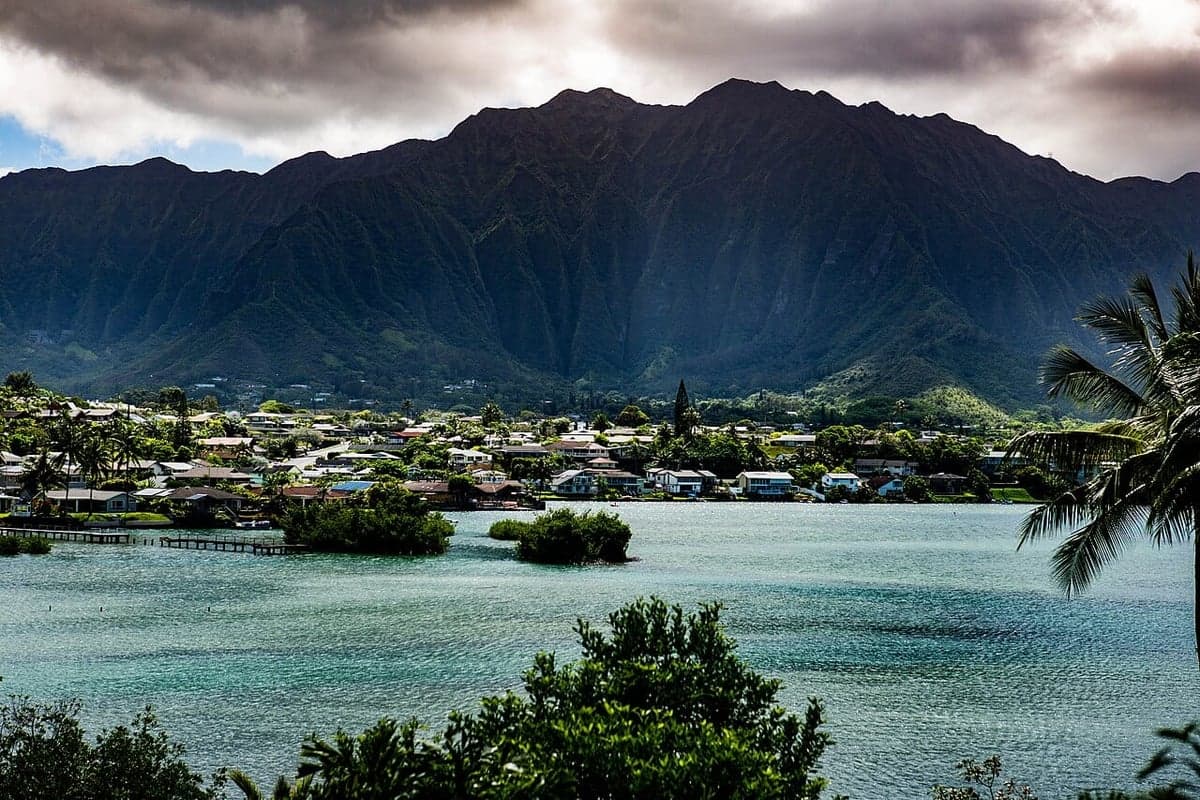
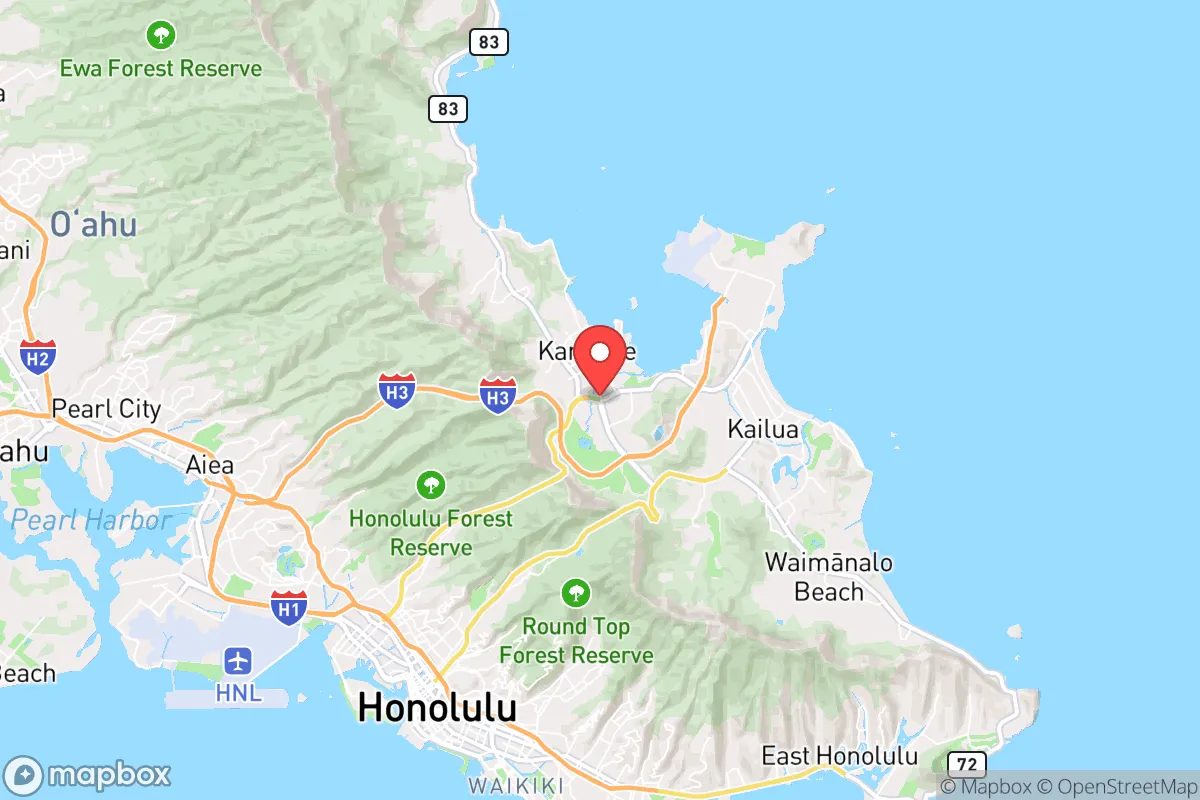
Kaneohe’s 35,945 residents form a predominantly Asian (39.2%) and White (15.7%) community, with a notably small foreign-born population of just 2.2% and a Hispanic share of 10.6%. The city is characterized by its dense, family-oriented neighborhoods along Kamehameha Highway and the windward side of Oahu, where a strong sense of local identity—rooted in Native Hawaiian and plantation-era history—persists despite modern suburban growth. With 36.7% of adults holding a college degree, Kaneohe is an educated, middle-to-upper-middle-class enclave that feels distinctly separate from Honolulu’s urban core.
How the city was settled and grew
Kaneohe’s human history begins with Native Hawaiians, who established ahupuaʻa (traditional land divisions) along Kaneohe Bay, farming taro and fishing in the sheltered waters. The first major demographic shift came in the mid-19th century with the arrival of Chinese and Japanese laborers to work sugar plantations, particularly at the Kaneohe Sugar Plantation (founded 1863). These workers settled in what is now Kaneohe Town, the historic commercial core around Kamehameha Highway and Keaahala Road, where descendants of these families still own local businesses. By the early 20th century, Portuguese and Filipino immigrants joined the plantation workforce, forming tight-knit clusters in Ahulmanu and Heʻeia, neighborhoods that retain a rural, agricultural feel with narrow roads and older homes. The plantation era ended by the 1940s, but the ethnic mosaic it created—with Japanese, Chinese, Filipino, and Portuguese families—remains the bedrock of Kaneohe’s population.
Modern era (post-1965)
The 1965 Hart-Cellar Act opened immigration from Asia, but Kaneohe did not see a surge of new foreign arrivals; instead, the city grew through domestic migration from other parts of Oahu and the mainland. The 1970s and 1980s saw suburban expansion into Kaneohe Bay View and Kaneohe Heights, neighborhoods of single-family homes built on former plantation land, attracting middle-class families—many of Japanese and Chinese ancestry—seeking larger lots and better schools. The city’s Asian share (39.2%) is overwhelmingly composed of these multigenerational East and Southeast Asian families, not recent immigrants. The White population (15.7%) is concentrated in Kaneohe Bay View and parts of Maunawili, a newer subdivision with larger homes and views of the Koʻolau Range. The Hispanic share (10.6%) is a more recent addition, with families settling in Kaneohe Town and Ahulmanu, often working in service and construction jobs tied to Honolulu’s economy. The Black population (0.5%) and Indian subcontinent population (0.1%) remain negligible, reflecting Kaneohe’s historical lack of migration corridors for these groups.
The future
Kaneohe’s population is aging and slowly homogenizing, with younger adults often moving to Honolulu or the mainland for jobs, while older residents—many of Japanese and Chinese descent—stay in family homes. The foreign-born share (2.2%) is among the lowest in Hawaii, indicating that immigration is not a major driver of change. The Hispanic share (10.6%) is the fastest-growing segment, but from a small base, and these families are assimilating into existing neighborhoods rather than forming distinct enclaves. The Asian and White shares are plateauing, as birth rates among these groups are below replacement and in-migration is limited by high housing costs—median home prices in Kaneohe exceed $1 million. Over the next 10–20 years, Kaneohe will likely become slightly more Hispanic and slightly less Asian, but the overall character—a stable, family-oriented, majority-Asian suburb—will persist. No new large-scale developments are planned, so population growth will remain minimal.
For a conservative-leaning individual or parent considering relocation, Kaneohe offers a stable, low-crime community with strong schools and a deep sense of place, but it is not a place of rapid demographic change or new immigrant energy. The city is becoming a quieter, older version of itself—a good fit for those seeking continuity and a tight-knit, predominantly Asian and White suburban lifestyle, but less suited for those looking for diversity of new arrivals or a dynamic, growing economy.

* Values derived from national, state, county, city and local statistics and may differ in a specific area. Last updated: 2026-04-24T00:05:56.000Z
Narrative content on this page is AI-generated and may contain mistakes. Verify any details that matter before acting on them.
ReloMaps may earn a commission from affiliate links at no extra cost to you.

