Personal Sovereignty in Kaneohe, HI
Moderate friction. Expect trade-offs in some aspect of personal liberty and independence.
What does Personal Sovereignty tell us?
Personal Sovereignty measures your capacity for self-reliance and independence with minimal government friction. Higher scores mean fewer barriers between you and the way you want to live... but it assumes you have the space you need and good neighbors.
What does this tell us?
Personal Sovereignty measures your capacity for self-reliance and independence with minimal government friction. Higher scores mean fewer barriers between you and the way you want to live... but it assumes you have the space you need and good neighbors.
State Policy
Energy independence: Importer (2% of energy produced in-state)
Personal Liberty
Homesteading

Personal Liberty Analysis
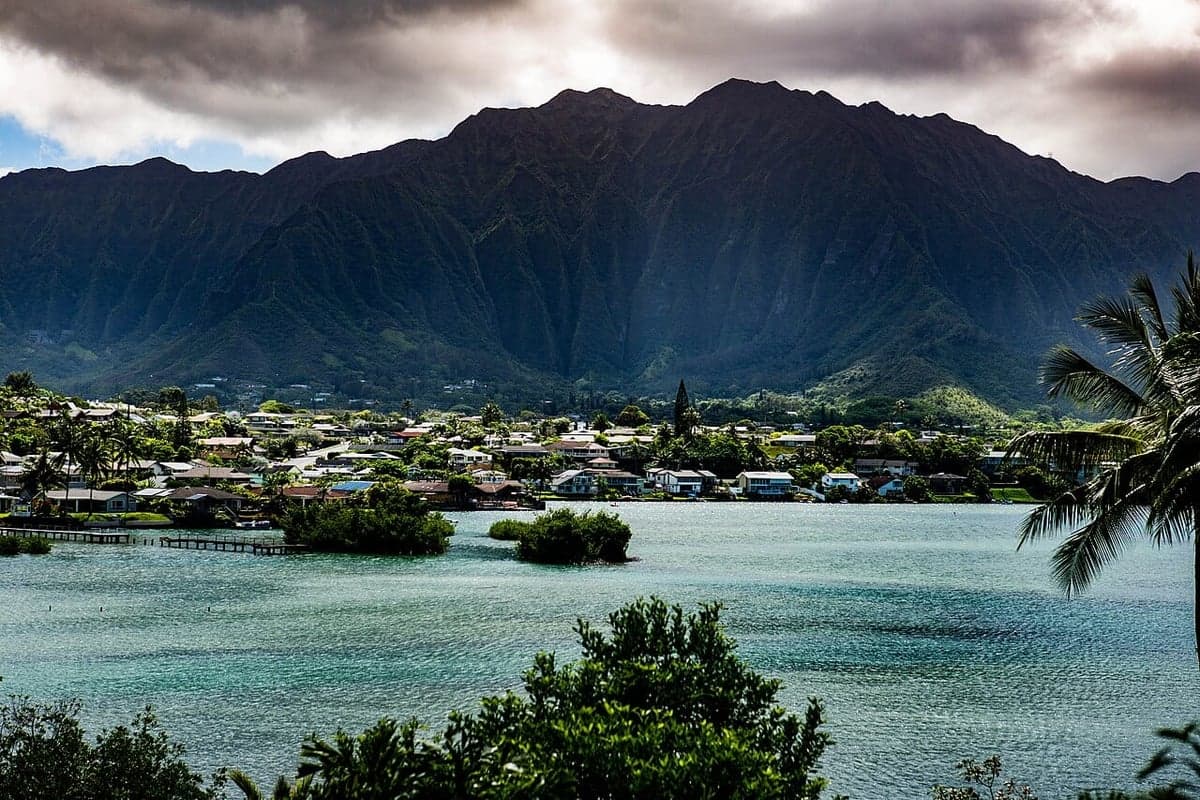
For the individual or family approaching relocation through a lens of personal sovereignty, Kaneohe on Oahu’s windward side presents a paradox: stunning natural isolation paired with some of the nation’s most restrictive state-level governance. While the lush Koolau mountains and quiet neighborhoods offer a genuine escape from urban chaos, the reality is that Hawaii’s centralized, heavily regulated state apparatus imposes significant constraints on self-reliance, from firearm ownership to property use. A prepper or survivalist mindset must weigh the tactical advantages of geographic remoteness against a legal environment that often prioritizes collective mandates over individual autonomy.
Tax burden and regulatory posture: How Hawaii’s state-level policies affect your wallet and freedom
Hawaii’s tax structure is a double-edged sword for those seeking financial sovereignty. The state imposes a general excise tax (GET) of 4% on most goods and services, which effectively functions as a hidden sales tax—and in Honolulu County, including Kaneohe, the rate climbs to 4.5%. There is no local sales tax, but the GET applies to nearly every transaction, including rent and groceries, making it a regressive burden on daily living. Property taxes in Kaneohe are relatively low by national standards, typically around 0.28% of assessed value, but this is offset by Hawaii’s aggressive income tax structure: rates range from 1.4% to 11%, with the top bracket kicking in at just $200,000 for single filers. For a conservative-leaning individual, the state’s regulatory posture is equally concerning. Hawaii maintains some of the strictest land-use laws in the country, with the state Land Use Commission classifying most of Oahu into conservation, agricultural, or urban districts. Building permits, even for minor structures like sheds or fences, require county approval and often trigger lengthy environmental reviews. The state’s rent control-like measures, including a 2023 law capping annual rent increases at 5% plus inflation, signal a broader interventionist trend that limits property owners’ discretion. For the prepper, this means that acquiring land for a bug-out location or expanding a homestead is not a simple matter of purchase—it’s a bureaucratic negotiation with a state that views private property as a resource to be managed, not a right to be exercised.
Self-defense and gun law specifics: What Kaneohe residents face under Hawaii’s restrictive framework
For those prioritizing the right to keep and bear arms, Kaneohe sits within one of the most hostile legal environments in the United States. Hawaii is a may-issue state for concealed carry permits, and in practice, Honolulu County (which includes Kaneohe) rarely issues them. The 2022 Supreme Court decision in New York State Rifle & Pistol Association v. Bruen forced Hawaii to loosen its standards, but the state responded by implementing a rigorous permitting process that includes a 14-hour training course, a psychological evaluation, and a requirement to demonstrate “good moral character.” As of 2025, fewer than 200 concealed carry permits had been issued across the entire state. Open carry is effectively banned. Firearm purchases require a permit from the county police chief, a process that can take weeks and includes a mandatory 14-day waiting period. Assault weapons and large-capacity magazines (over 10 rounds) are prohibited, and all firearms must be registered with the county. For the survivalist, this means that self-defense options are severely limited: a bolt-action rifle or a revolver may be your only legal choices, and even then, ammunition storage is subject to local fire codes. The practical takeaway is that Kaneohe offers no sanctuary for the armed citizen; the state’s posture is one of distrust toward private gun ownership, and any defensive plan must account for legal exposure that could turn a justified self-defense incident into a criminal prosecution.
Self-reliance and homesteading viability: Lot sizes, zoning, and off-grid feasibility in Kaneohe
Kaneohe’s residential landscape is a mix of suburban subdivisions and older agricultural lots, but the potential for true self-reliance is constrained by zoning and infrastructure realities. Most residential lots in Kaneohe range from 5,000 to 10,000 square feet, with a few larger parcels in the rural ahupua‘a of Waiahole and Waikane. Agricultural zoning exists in these areas, but the state’s definition of “agriculture” is narrow: you must demonstrate a bona fide farming operation to qualify for tax breaks, and residential structures on ag land are limited to one dwelling per parcel. Off-grid living is technically possible but practically difficult. Hawaii law requires all new homes to connect to county water and sewer systems where available, and in Kaneohe, most areas have municipal water and sewer. Solar panels are common—Hawaii has the highest residential electricity rates in the nation, around $0.42 per kWh—but net metering policies have been curtailed, and battery storage is often required for true independence. Rainwater catchment is allowed in some rural zones but must meet strict health department standards for potable use. For the homesteader, the biggest hurdle is the county’s building code, which mandates permits for any structure over 120 square feet, including chicken coops and tool sheds. The state’s ban on new cesspools (effective 2022) and strict wastewater rules further complicate off-grid ambitions. In short, Kaneohe is not a place where you can quietly disappear into the woods and live off the land; it’s a regulated suburb where self-reliance requires navigating a thicket of permits and inspections.
Personal liberties: Parental rights, medical autonomy, speech, and property in a high-regulation state
On personal liberties, Hawaii’s track record is mixed but leans heavily toward state authority over individual choice. Parental rights are relatively strong in theory—Hawaii does not have a universal vaccine mandate for schoolchildren, though COVID-era policies saw temporary mandates for public school attendance. However, the state’s compulsory education law requires children to attend school from age 5 to 18, and homeschooling is permitted but requires annual notification and submission of a curriculum plan to the Department of Education. Medical autonomy is a flashpoint: Hawaii has some of the nation’s most permissive laws on assisted suicide (the Our Care, Our Choice Act) and recreational marijuana (legal since 2023), but these are framed as state-managed privileges, not individual rights. For the conservative concerned about medical mandates, the state’s health department retains broad emergency powers, including the ability to compel vaccinations during declared outbreaks—a power used during the 2020 pandemic. Free speech is constitutionally protected, but Hawaii’s strong anti-discrimination laws can be used to penalize speech deemed harassing, and the state’s public accommodation laws extend to online platforms in some contexts. Property rights are the weakest link: the state’s eminent domain authority is broad, and the Hawaii Housing Finance and Development Corporation has used it to acquire private land for affordable housing projects. The legacy of the 1978 state constitutional convention, which declared that “the State shall conserve and protect agricultural lands,” means that property use is always subject to the public interest. For the individualist, this creates a climate where personal decisions—from how you raise your children to what you build on your land—are constantly subject to state review and approval.
Overall, Kaneohe offers a unique trade-off for the sovereignty-minded relocator: a physically beautiful, low-crime environment with genuine geographic isolation, but wrapped in a legal framework that treats personal autonomy as a conditional privilege rather than a natural right. Compared to states like Idaho or Montana, where county-level governance often pushes back against state overreach, Kaneohe is firmly under the thumb of Honolulu County and the state of Hawaii. The tax burden is moderate but regressive, gun laws are among the most restrictive in the nation, and homesteading is heavily regulated. For the prepper or survivalist who values tactical retreat over legal confrontation, Kaneohe can work—but only if you are prepared to operate within a system that demands compliance at every turn. If your priority is maximum personal sovereignty with minimal government interference, the mainland’s interior West or rural South will offer far more latitude. Kaneohe is a beautiful cage, not a fortress of liberty.

* Values derived from national, state, county, city and local statistics and may differ in a specific area. Last updated: 2026-04-24T00:05:56.000Z
Narrative content on this page is AI-generated and may contain mistakes. Verify any details that matter before acting on them.
ReloMaps may earn a commission from affiliate links at no extra cost to you.

