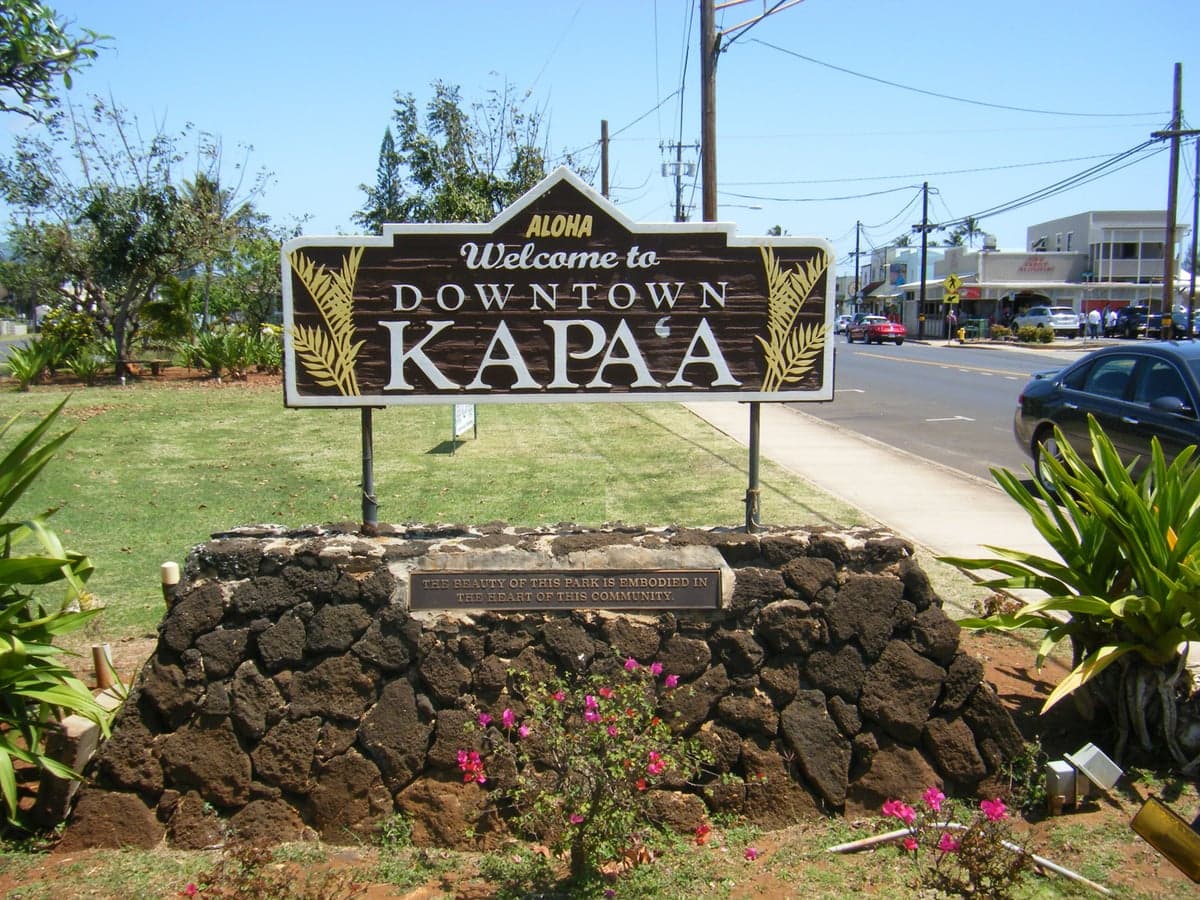
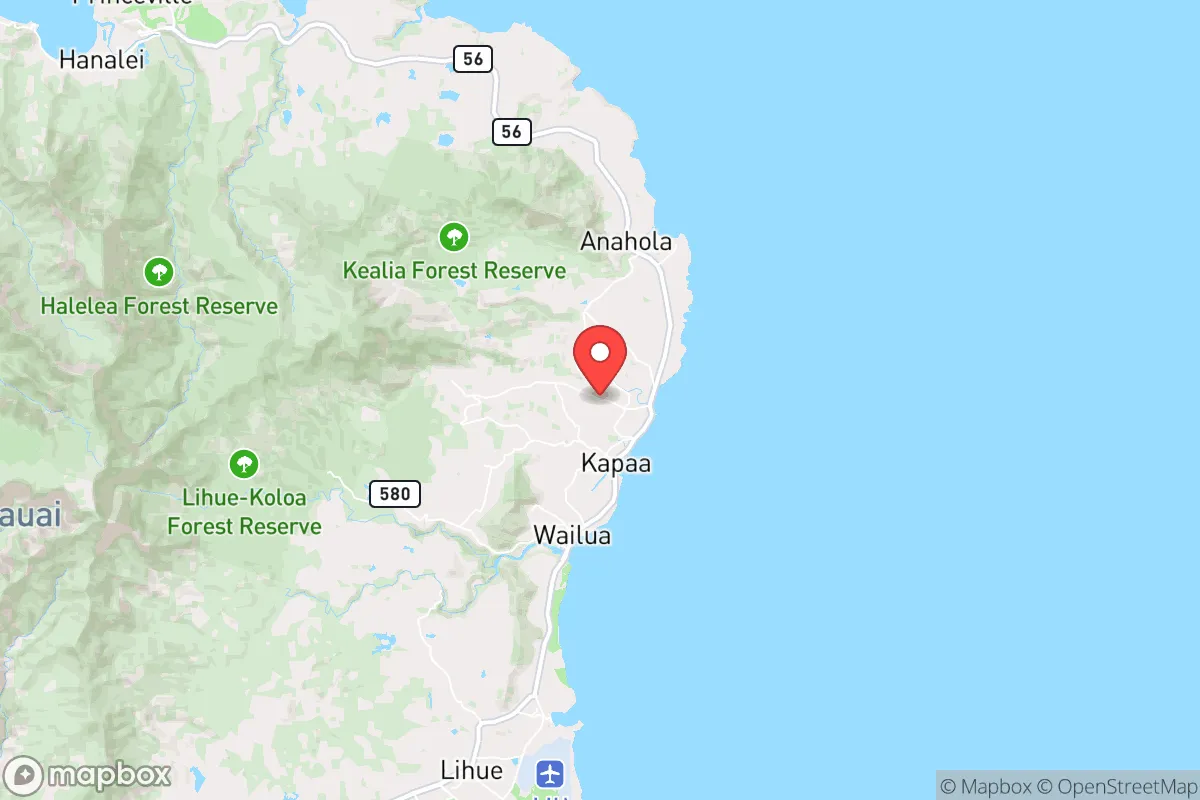
Photo: Wikipedia
Personal Sovereignty in Kapaa, HI
Moderate friction. Expect trade-offs in some aspect of personal liberty and independence.
What does Personal Sovereignty tell us?
Personal Sovereignty measures your capacity for self-reliance and independence with minimal government friction. Higher scores mean fewer barriers between you and the way you want to live... but it assumes you have the space you need and good neighbors.
What does this tell us?
Personal Sovereignty measures your capacity for self-reliance and independence with minimal government friction. Higher scores mean fewer barriers between you and the way you want to live... but it assumes you have the space you need and good neighbors.
State Policy
Energy independence: Importer (2% of energy produced in-state)
Personal Liberty
Homesteading

Personal Liberty Analysis
For a conservative-leaning individual or family evaluating Kapaa, Hawaii, from a survivalist or prepper perspective, the personal sovereignty environment is a study in stark contradictions. While the island of Kauai offers a remote, physically secure location with a strong sense of local community and a slower pace of life, the overarching legal and regulatory framework of the State of Hawaii imposes some of the most restrictive constraints on personal autonomy in the United States. The trade-off is clear: you gain geographic isolation and a tight-knit, self-reliant local culture, but you must navigate a state government that actively limits your rights to self-defense, property use, and medical choice. For those prioritizing maximum personal freedom, Kapaa represents a high-cost, high-risk proposition that demands careful strategic planning.
Tax burden and regulatory posture for residents and property owners
Hawaii’s tax and regulatory climate is a major headwind for anyone seeking to maximize personal sovereignty. The state has a combined state and local tax burden that consistently ranks among the highest in the nation. There is no local income tax in Kapaa, but the state income tax is progressive, with rates ranging from 1.4% to 11% on high earners. The general excise tax (GET) is a hidden killer: it applies to nearly all business transactions, including rent and services, effectively raising the cost of everything by 4.5% to 4.7% (with a higher rate on Oahu). For a prepper, this means every supply run, every contractor, and every piece of gear is more expensive. Property taxes in Kauai County are relatively moderate compared to the mainland, with a residential rate around 0.45% of assessed value, but the assessed values themselves are high due to limited land. The regulatory posture is equally burdensome. Building permits, land use changes, and even minor renovations can take months or years due to strict county and state environmental and historical preservation reviews. This makes rapid, self-directed improvements to a property—like reinforcing a structure or installing a water catchment system—a bureaucratic ordeal. For a survivalist, this regulatory friction is a direct attack on the ability to prepare and adapt.
Self-defense and gun law specifics on Kauai
For those who view the Second Amendment as a cornerstone of personal sovereignty, Kapaa is a deeply challenging location. Hawaii has some of the most restrictive gun laws in the country. The process to obtain a permit to acquire a firearm is lengthy, requires a background check through the local police department, and often involves a 14-day waiting period. Open carry is effectively prohibited, and concealed carry permits are issued on a "may-issue" basis, meaning the county police chief has near-total discretion to deny them. In practice, concealed carry permits on Kauai are extremely rare and typically granted only to those with a documented, specific threat. The state also bans "assault weapons" (defined broadly), magazines over 10 rounds, and requires registration of all firearms. For a prepper, this means your defensive capabilities are severely limited by law. You cannot legally keep a standard-capacity rifle for home defense, and you cannot carry a concealed handgun for personal protection outside your home. The local police department in Lihue is generally professional, but the legal environment forces law-abiding citizens into a position of vulnerability. Self-defense with a firearm inside your home is legally defensible under Hawaii's "stand your ground" precedent, but the burden of proof is high, and the legal costs can be ruinous. This is a critical factor for anyone who believes in the right to defend themselves and their family without government permission.
Self-reliance and homesteading viability: lot sizes, zoning, and off-grid feasibility
The dream of self-reliance on Kauai is real but heavily constrained by zoning and infrastructure realities. In Kapaa, residential lots are typically small—often 5,000 to 10,000 square feet in the main town area—making large-scale gardening or animal husbandry difficult. However, the surrounding rural areas (like Wailua Homesteads or Kapaʻa Homesteads) offer larger parcels, some exceeding one acre, where more ambitious homesteading is possible. Zoning is the primary obstacle: the county strictly regulates what you can do on your land, including the number of structures, the type of animals, and the use of land for commercial agriculture. Keeping chickens is generally allowed, but pigs, goats, or cattle require larger lots and specific permits. Off-grid living is legally complex. While many rural properties rely on rainwater catchment and solar power, connecting to the county water and electrical grid is often required for new construction. Going fully off-grid—with no grid connection at all—is technically possible but requires navigating a thicket of building codes and health department approvals for septic and water systems. The county also has strict rules about composting toilets and graywater systems. For a prepper, the ideal scenario is to buy a larger rural lot with an existing older home that already has a catchment system and solar panels, then upgrade it quietly. New construction is a regulatory minefield. The climate is forgiving—year-round growing season, abundant rainfall—but the legal and bureaucratic hurdles make true self-reliance a long, expensive, and frustrating process.
Personal liberties: parental rights, medical autonomy, speech, and property
On the spectrum of personal liberties, Hawaii leans heavily toward state control, which is a significant concern for a conservative audience. Parental rights are under consistent pressure: the state has mandatory vaccination requirements for school attendance (with limited medical exemptions), and during the COVID-19 pandemic, Hawaii had some of the longest-lasting and most restrictive mandates in the country, including travel quarantines and indoor mask requirements. Medical autonomy is similarly constrained. Hawaii has a state-run health insurance exchange and strong regulations on alternative medicine. Access to raw milk is illegal for retail sale, and the state actively prosecutes unlicensed medical practitioners. For a prepper, this means that medical freedom—choosing your own treatments or opting out of government-mandated protocols—is not a given. Free speech is protected by the First Amendment, but the state has a history of aggressive enforcement of defamation and harassment laws, and local social pressure can be intense in a small island community. Property rights are the weakest link. Hawaii’s unique history of land tenure, including the legacy of the Hawaiian Homes Commission Act and strict county zoning, means that your property is subject to a high degree of government oversight. The county can impose conservation easements, restrict building heights, and even limit the color of your house. For a survivalist, the inability to freely modify, fortify, or use your land as you see fit is a direct infringement on sovereignty. The local culture values community consensus and environmental protection, which often translates into government overreach into private decisions.
In conclusion, Kapaa offers a unique but compromised form of personal sovereignty. The geographic isolation and strong local community provide a buffer against some national-level chaos, but the state-level legal and regulatory framework is a persistent adversary for anyone seeking maximum autonomy. Compared to a place like rural Montana or Idaho, Kapaa scores very low on gun rights, property rights, and medical freedom. It scores higher on community resilience and physical security from external threats. For a strategic relocation, Kapaa is best viewed as a long-term, high-investment play where you trade legal freedom for physical isolation. It is not a place for someone who wants to live entirely by their own rules, but it can work for those willing to navigate the bureaucracy and accept the trade-offs. The key is to buy a property that already has the infrastructure you need, build strong local relationships, and keep a low profile while quietly preparing. The state will not help you, but the land and the community can.

* Values derived from national, state, county, city and local statistics and may differ in a specific area. Last updated: 2026-04-29T20:03:50.000Z
Narrative content on this page is AI-generated and may contain mistakes. Verify any details that matter before acting on them.
ReloMaps may earn a commission from affiliate links at no extra cost to you.

