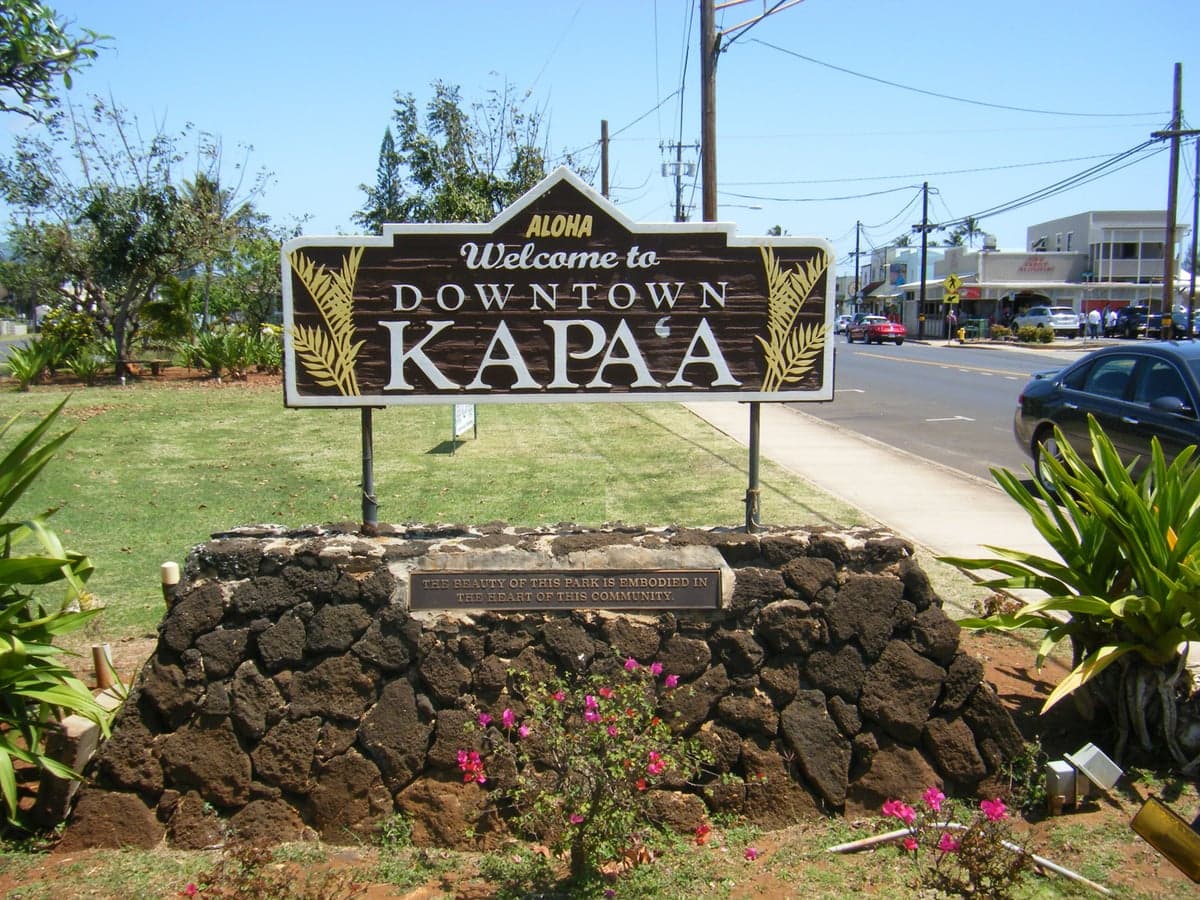
Photo: Wikipedia
Political ClimatePolitical Climate in Kapaa, HI
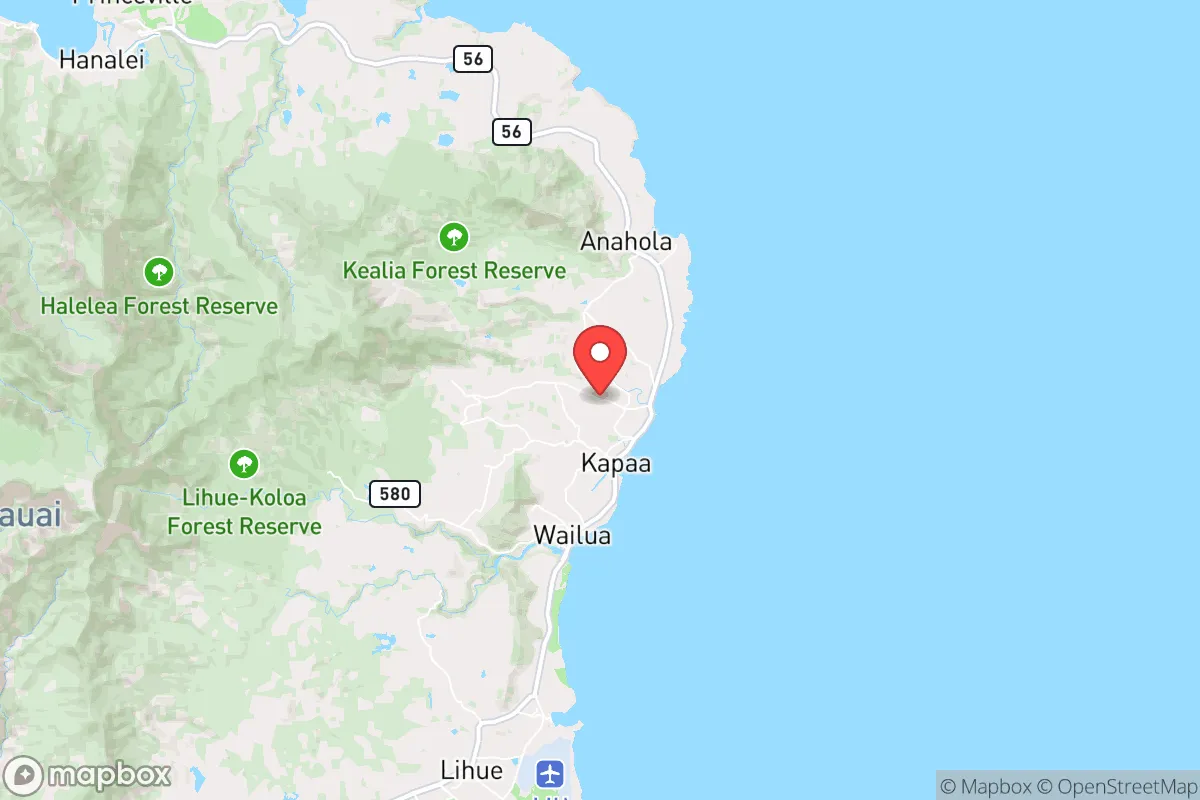
District shown is the primary district for this city’s centroid. Cities may span multiple districts.
Local Political AnalysisPolitical Analysis of Kapaa, HI
Kapaa, on Kauai's east side, leans heavily Democratic, with a Cook PVI of D+12, and that gap has only widened in recent years. It wasn't always this way—twenty years ago, you could have a reasonable conversation about property rights or local fishing regulations without someone bringing up systemic oppression. Now, the local political scene is dominated by progressive activists who push for ever-tighter land use controls, higher hotel taxes, and a general attitude that if you own a home or run a small business, you're part of the problem. The trajectory is clear: more government oversight, less room for individual choice, and a growing sense that your personal freedoms are secondary to the latest social agenda.
How it compares
Drive just a few miles north to Kilauea or south to Lihue, and you'll find a slightly more balanced mix of voices—more folks who remember when the county council actually debated the cost of regulations instead of just nodding them through. But Kapaa itself has become a progressive stronghold, especially among the younger transplants who moved here during the pandemic. They bring mainland voting habits and a zeal for rent control, vacation rental bans, and mandatory affordable housing quotas that sound good on paper but crush the very flexibility that made this town work for generations. The contrast with Hanalei, which still has a libertarian streak among its farming families, is stark. In Kapaa, the assumption is that government knows best, and if you disagree, you're labeled as out of touch.
What this means for residents
For those of us who value personal liberty, the practical effects are already here. The county has tightened short-term rental rules to the point where it's nearly impossible for a local family to rent out a spare room for extra income without a costly permit process. Building a simple addition to your home now requires navigating a maze of environmental reviews and community input meetings that can drag on for years. The push for a "living wage" ordinance sounds noble, but it's driving up costs for small businesses and making it harder for them to hire part-time help. And the school board has shifted focus from basic academics to social-emotional learning and equity training, which leaves many parents wondering if their kids are actually learning to read and do math. The long-term concern is that Kapaa is becoming a place where the government manages every aspect of daily life, from what you can build to how you can earn a living.
Culturally, Kapaa still has its old soul—the Sunday market, the local plate lunch joints, the families who've been here for generations. But the policy direction is unmistakably progressive, and it's driving a quiet exodus of long-time residents who feel like they don't belong anymore. The real test will come in the next few years as the county considers a proposed "community land trust" that would essentially put large swaths of residential property under government control. If that passes, Kapaa will have crossed a line from a place with a strong community spirit to a place where the state owns your future. For now, if you value your freedom to make your own choices about your property, your business, and your family's education, you might want to keep an eye on the next county council election—or consider looking at neighborhoods with a little more breathing room.

State Political ClimatePolitical Climate in Hawaii
State Political AnalysisPolitical Environment in the State
Hawaii has been a one-party Democratic stronghold for decades, with Democrats holding supermajorities in both legislative chambers and every statewide office since 1962. The state’s political culture is deeply collectivist, prioritizing government-led solutions over individual autonomy, and the recent multi-cycle trajectory shows a steady march toward more progressive policies on taxation, housing, and social issues. For a conservative considering relocation, the Aloha State presents a challenging environment where personal freedoms—especially regarding property rights, education choice, and firearm ownership—are increasingly constrained by a powerful state apparatus.
Urban vs. rural divide
The political map of Hawaii is starkly divided between the urban core of Honolulu on Oahu and the more rural, less populated neighbor islands. Honolulu and its suburbs, including Waipahu and Kaneohe, drive the state’s Democratic dominance, consistently delivering 70%+ margins for Democratic candidates. The rest of Oahu, particularly the windward side and the North Shore, leans even further left. In contrast, the Big Island’s Hilo is a progressive stronghold, but the western side—Kailua-Kona and Waimea—shows more conservative tendencies, with pockets of libertarian-leaning ranchers and farmers. Maui’s Kahului and Kihei are reliably blue, while upcountry Makawao has a small but vocal conservative minority. Kauai’s Lihue and Kapaa are solidly Democratic, though the island’s agricultural communities occasionally break for Republicans. The rural-urban divide is less about partisan competition and more about intensity: even the “conservative” areas rarely elect Republicans to office, as the state’s political culture discourages open dissent from the progressive consensus.
Policy environment
Hawaii’s policy environment is defined by high taxes, heavy regulation, and a strong government presence in daily life. The state has the highest combined state and local tax burden in the nation, with a general excise tax that applies to nearly all goods and services, including rent and groceries. Property taxes are relatively low, but the state’s land use commission tightly controls development, driving housing costs to extreme levels. Education policy is centralized and union-dominated; there are no charter schools of significance, and homeschooling is subject to annual registration and curriculum approval by the Department of Education. Healthcare is heavily regulated, with a state-run insurance exchange and mandates that drive up premiums. Election laws are among the most restrictive in the nation for third parties and independents, with a closed primary system that effectively locks out non-Democrats. The state also has a universal mail-in voting system implemented in 2020, which critics argue reduces ballot security.
Trajectory & freedom
Hawaii is becoming less free by nearly every measure. Recent legislation has expanded government control over personal choices. In 2023, the state passed Act 2, which severely restricted firearm ownership by banning the carry of firearms in most public places, including beaches, parks, and businesses unless explicitly posted. The law also raised the age to purchase a firearm to 21 and mandated liability insurance for gun owners. In 2024, the legislature passed Act 157, which expanded the state’s “red flag” law, allowing family members or law enforcement to petition for temporary firearm seizure without a criminal conviction. On education, Act 51 (2023) created a state-run “Office of Wellness and Resilience” that mandates social-emotional learning curricula in public schools, raising concerns about parental rights and ideological indoctrination. Medical freedom took a hit with Act 220 (2024), which extended COVID-era vaccine mandates for healthcare workers indefinitely. Property rights are under constant threat from the state’s Land Use Commission, which can reclassify agricultural land for development only after years of bureaucratic review, effectively freezing private property use.
Civil unrest & political movements
Hawaii has a history of organized protest, primarily from the left. The Mauna Kea telescope protests (2014-2019) were a major flashpoint, with Native Hawaiian activists and environmentalists blocking construction of the Thirty Meter Telescope, leading to hundreds of arrests and a lasting legacy of anti-development sentiment. The Kahoolawe Island occupation in the 1970s and the ongoing Puuhonua o Waimanalo homeless encampment on Oahu reflect a persistent strain of anarcho-environmentalism that influences state policy. On the right, conservative activism is small but organized, with groups like the Hawaii Republican Assembly and Grassroot Institute of Hawaii pushing for tax reform, school choice, and property rights. Immigration politics are muted, as Hawaii’s geographic isolation limits illegal immigration, but the state is a sanctuary state by policy, with state law prohibiting local law enforcement from cooperating with federal immigration authorities. Election integrity concerns have grown since the 2020 switch to universal mail-in voting, with reports of ballot harvesting and signature verification issues, though no major scandals have been proven. The Hawaii Sovereignty Movement, which advocates for Native Hawaiian self-governance, remains a fringe but vocal presence, occasionally disrupting public meetings and calling for secession from the United States.
Projection
Over the next 5-10 years, Hawaii will likely become more progressive and less free. Demographic trends favor the left: the state’s population is aging, with a growing retiree class that votes reliably Democratic, while younger residents are leaving for lower-cost states. In-migration from the mainland is dominated by wealthy progressives from California and New York, who bring their political preferences with them. The state’s housing crisis will continue to drive out middle-class families, further concentrating political power among the wealthy and the government-dependent. The Democratic supermajority shows no signs of weakening, and the Republican Party is effectively a non-factor in statewide elections. Expect more gun control, higher taxes (including a potential wealth tax or capital gains tax), and further restrictions on property rights through “affordable housing” mandates and land use regulations. The only wildcard is a potential economic collapse driven by tourism decline or military base closures, which could force a reckoning with the state’s unsustainable fiscal policies.
For a conservative moving to Hawaii, the bottom line is clear: you will be a political minority in a state that actively works against your values. Your tax dollars will fund programs you oppose, your children will attend schools that teach a progressive worldview, and your ability to defend yourself or your property will be severely limited. If you value personal freedom, low taxes, and a government that stays out of your life, Hawaii is likely not the right fit. However, if you are willing to adapt and find community among the small but resilient conservative enclaves in places like Kailua-Kona or Makawao, you can carve out a life—just be prepared to fight for every inch of freedom you keep.
* Values derived from national, state, county, city and local statistics and may differ in a specific area. Last updated: 2026-04-29T20:03:50.000Z
Narrative content on this page is AI-generated and may contain mistakes. Verify any details that matter before acting on them.
ReloMaps may earn a commission from affiliate links at no extra cost to you.

