Photo: Wikipedia
Strategic Assessment of Kapolei, HI
Meaningful friction. Expect exposure to either population pressure, blast zones, or natural disaster risk. Consider buying a retreat property.
What does the Strategic Assessment tell us?
Our Strategic Assessment grades tactical survivability of an area. Major population centers, military targets, fallout zones, natural disasters, and border exposure all drive risk — lower exposure means a more defensible position in a crisis.
This is heavily inspired by Joel Skousen's Strategic Relocation book. Highly recommended you checkout the book ($)What does this tell us?
Our Strategic Assessment grades tactical survivability of an area. Major population centers, military targets, fallout zones, natural disasters, and border exposure all drive risk — lower exposure means a more defensible position in a crisis.
This is heavily inspired by Joel Skousen's Strategic Relocation book. Highly recommended you checkout the book ($)Strategic Pillars

Key Distances
Regional Safe Places
Below is our recommended "safe zones" in Hawaii and the surrounding area based on our strategic heuristics. For most people, it's unrealistic to live in a “safe zone” full-time due to work, family or other personal reasons. They tend to be more rural. However, many of these areas are perfect for second homes and retreat properties that double as a vacation home or even a short-term rental.

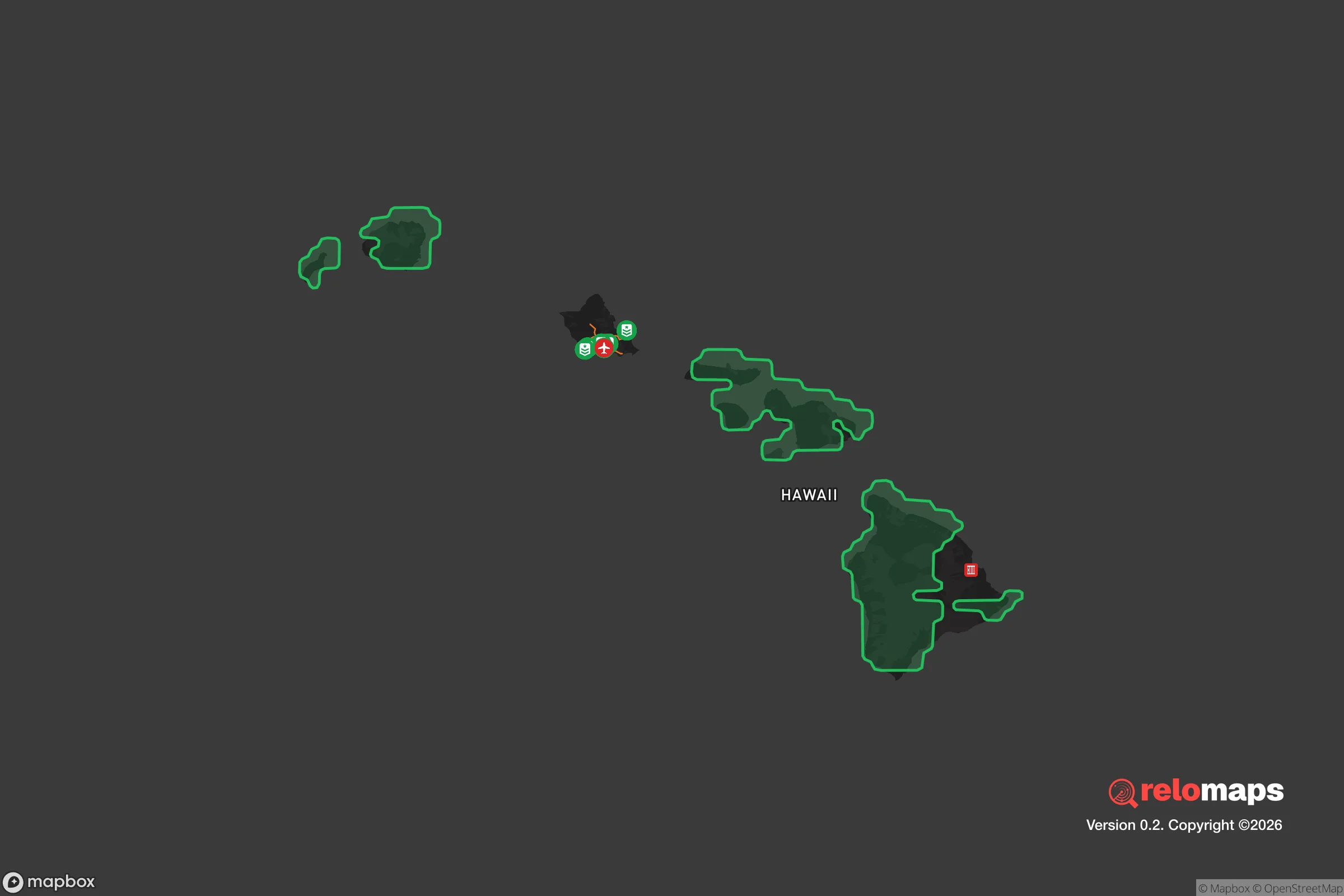


Important Note: For informational purposes only. This does not mean nothing bad ever happens in the green zones. Please use common sense. This is based on public data and modeled with AI. We tried to take a conservative approach but mistakes happen. We update this regularly as new information becomes available.
Solar Generator Recommendations
Backup power matters more here than in safer locations. We've picked three solar generators across budgets and capacity tiers — start with the budget unit if you only need a few essentials, or step up if you want to run a fridge and HVAC for days at a time.

Jackery Portable Power Station Explorer 300
Budget OptionPower on the Go: Weighing only 11 lbs, it's convenient to set up and store with book-sized foldable solar panels

BLUETTI Portable Power Station AC180
Designed for both indoor and outdoor scenarios, AC180 is highly capable as it has a robost capacity and continuous output power.

EF ECOFLOW DELTA Pro Ultra Power Station
Upgraded PickEcoFlow DELTA Pro Ultra is a whole-home energy system designed to grow with your family. Integrated with the Smart Home Panel 2, it scales to meet your evolving energy needs — keeping your home powered, intelligent, and secure through every stage of life.
We earn a commission, at no additional cost to you.
Strategic Assessment Analysis
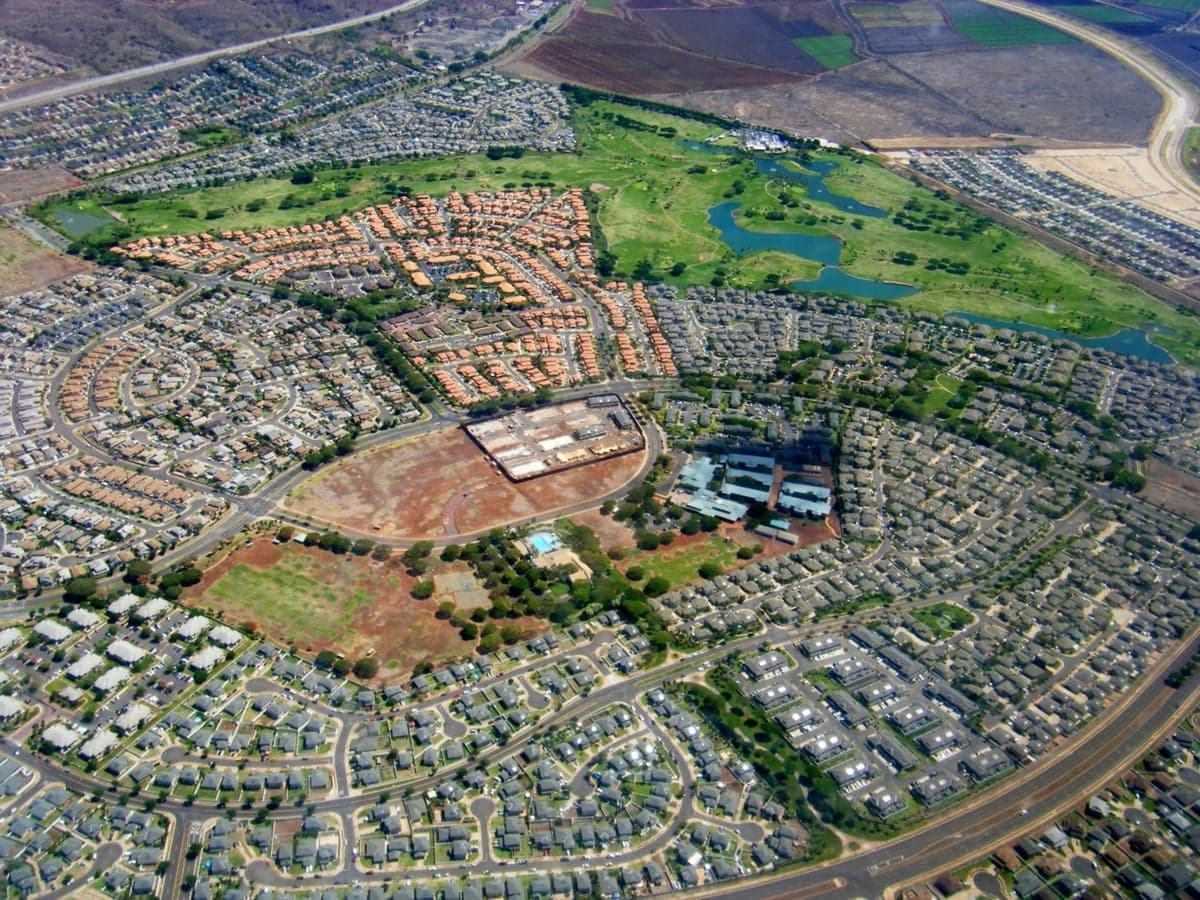
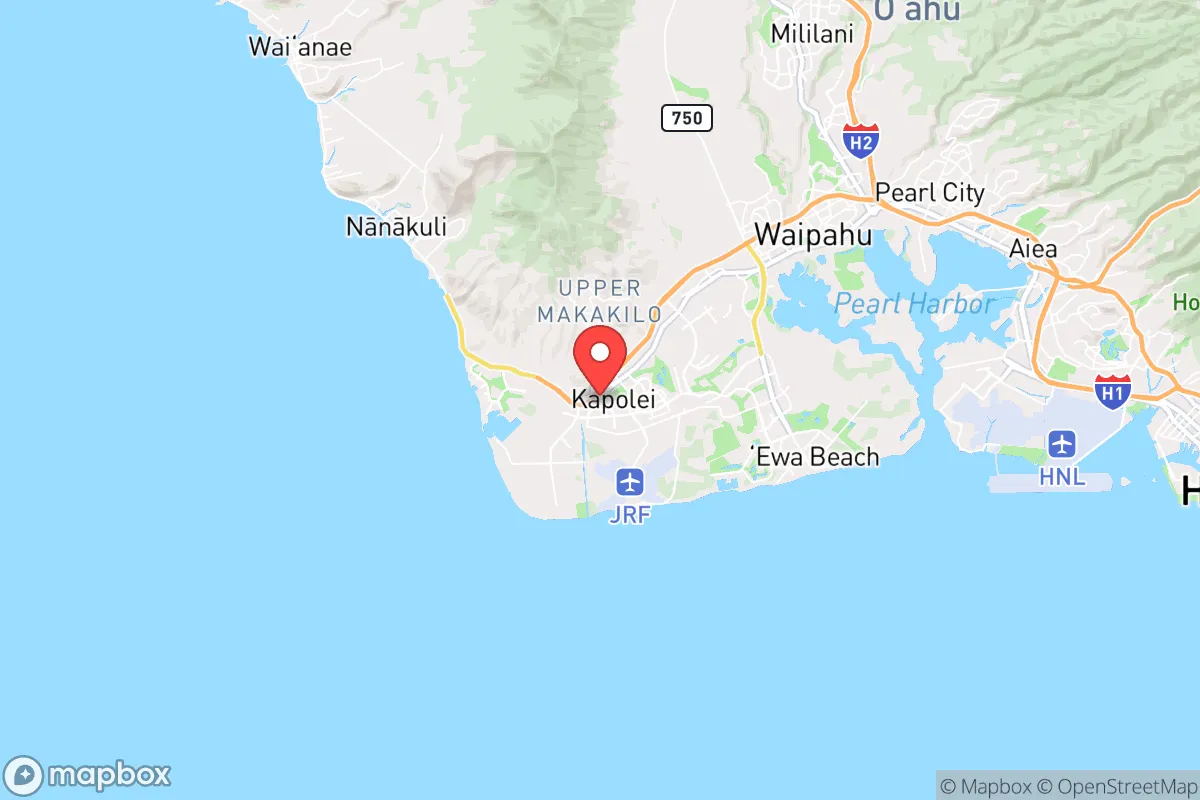
Kapolei, often called Oahu’s “second city,” offers a unique strategic position for those prioritizing resilience and self-sufficiency in a volatile world. Located on the leeward (western) coast of Oahu, roughly 20 miles from Honolulu, it was deliberately developed as a satellite urban center to relieve population pressure on the capital. For a relocator with a survivalist mindset, Kapolei’s key advantage is its relative isolation from the densest population centers and the most obvious fallout targets, while still providing access to essential infrastructure. The area’s geography—sheltered by the Waianae Range to the west and the central plateau to the east—creates a natural buffer zone that could prove invaluable during civil unrest or a mass casualty event, though it is not without its own vulnerabilities.
Geographic position and natural advantages for long-term survival
Kapolei sits on a coastal plain that benefits from the rain shadow of the Waianae Mountains, meaning it receives less rainfall than windward Oahu—a mixed blessing for water security but a clear advantage for solar energy generation and dry storage. The area’s elevation is low (roughly 30–100 feet above sea level), which reduces exposure to wind-driven debris during storms, but it is not immune to tsunami risk from distant seismic events. The nearby Barbers Point Harbor and the Kapolei Inland Port provide logistical redundancy for supply chains, which could be critical if Honolulu’s ports are compromised. The surrounding agricultural lands—including the former sugar cane fields now being converted to diversified farming—offer a foundation for local food production, though current development is heavily tilted toward residential and commercial use. For a prepper, the ability to retreat into the Waianae Range or the central Oahu forest reserves (accessible via the H-2 freeway) provides a natural escape route if coastal areas become untenable. The Kalaeloa Airport (formerly Barbers Point Naval Air Station) is a general aviation field that could serve as an alternative evacuation point, though it is also a potential target due to its military history.
Risks, exposures, and proximity to fallout-relevant landmarks
Kapolei’s proximity to several high-value military and government installations is the most significant risk factor in a strategic relocation analysis. The area is within 10 miles of Joint Base Pearl Harbor-Hickam, the Schofield Barracks (home to the 25th Infantry Division), and the Pacific Missile Range Facility on Kauai’s west side—all of which are prime targets in any conventional or asymmetric conflict. Additionally, the Honolulu International Airport and the Port of Honolulu are roughly 20 miles east, making Kapolei part of the broader Oahu target set. While Kapolei itself is not a primary military hub, its location along the H-1 freeway corridor means it would be a logical staging area for military or emergency response movements, potentially drawing secondary attacks or civil unrest. The Waianae Coast to the west has a history of socioeconomic tension and occasional civil disturbances, which could spill over during a crisis. Natural disaster risks include hurricanes (the leeward coast is less exposed than the north shore but still vulnerable), tsunamis from distant earthquakes (the low-lying coastal areas near Kapolei’s marina are at risk), and volcanic vog from Kilauea, which can drift over the island during trade wind disruptions. The Pearl Harbor Naval Shipyard and its associated fuel storage facilities represent a catastrophic hazard if compromised—a direct hit or major accident could render large portions of southern Oahu uninhabitable for months.
Practical resilience for a relocator: food, water, energy, and defensibility
For a single individual or family looking to establish a resilient base, Kapolei presents a mixed picture. Water security is the most pressing concern: Oahu’s freshwater comes from the Basal Aquifer, which is vulnerable to saltwater intrusion from over-pumping and contamination from surface runoff. Kapolei’s water supply is managed by the Honolulu Board of Water Supply, and while the area has its own wells, a prolonged grid failure would leave residents dependent on stored water or rainwater catchment—which is limited due to the low annual rainfall (roughly 20 inches per year). Food production is possible but requires effort: the Kapolei Community Garden and nearby Waimanalo Agricultural Park offer plots, but the soil is volcanic and often rocky, requiring amendment. The Mililani Farmers Market and Kapolei Farmers Market provide local produce, but these supply lines would be disrupted in a crisis. Energy independence is more feasible: Oahu’s abundant sunshine makes solar panels with battery storage a practical investment, and the island’s grid is already transitioning to renewables. However, Hawaiian Electric’s grid is notoriously fragile, with frequent outages during storms—a prepper should plan for off-grid capability. Defensibility is Kapolei’s weakest point: the area is a sprawling suburban development with few natural chokepoints, and the H-1 freeway is the only major evacuation route eastward. A determined mob or organized group could easily block access to the Waianae coast or the central valley. The Kapolei Police Station and the Honolulu Police Department’s west Oahu presence provide some security, but during widespread civil unrest, response times would be measured in hours, not minutes. The Kalaeloa Community Development District has some gated communities, but most of Kapolei is open-access suburban sprawl.
Overall, Kapolei offers a strategic compromise for the survivalist relocator: it is far enough from Honolulu’s core to avoid the worst of a city-centric disaster, yet close enough to benefit from its medical, logistical, and economic resources. The area’s natural advantages—sheltered geography, solar potential, and agricultural land—are real but require active investment to realize. The risks—military targets, tsunami exposure, and a fragile grid—are equally real and demand contingency planning. For a conservative-leaning individual or family who values community, self-reliance, and a slower pace of life, Kapolei can work as a base of operations, provided they are willing to invest in water storage, renewable energy, and a solid evacuation plan for the Waianae uplands. It is not a fortress, but it is a defensible outpost in a region that, for all its beauty, sits on the edge of a volatile Pacific theater. The key is to treat Kapolei as a starting point, not a final destination—a place to build skills, stockpile supplies, and network with like-minded neighbors before the next crisis hits.

* Values derived from national, state, county, city and local statistics and may differ in a specific area. Last updated: 2026-04-24T00:10:34.000Z
Narrative content on this page is AI-generated and may contain mistakes. Verify any details that matter before acting on them.
ReloMaps may earn a commission from affiliate links at no extra cost to you.

