Photo: Wikipedia
Personal Sovereignty in Kapolei, HI
Moderate friction. Expect trade-offs in some aspect of personal liberty and independence.
What does Personal Sovereignty tell us?
Personal Sovereignty measures your capacity for self-reliance and independence with minimal government friction. Higher scores mean fewer barriers between you and the way you want to live... but it assumes you have the space you need and good neighbors.
What does this tell us?
Personal Sovereignty measures your capacity for self-reliance and independence with minimal government friction. Higher scores mean fewer barriers between you and the way you want to live... but it assumes you have the space you need and good neighbors.
State Policy
Energy independence: Importer (2% of energy produced in-state)
Personal Liberty
Homesteading

Personal Liberty Analysis
For a conservative-leaning individual or family evaluating Kapolei, Hawaii, as a relocation destination, the personal sovereignty picture is complex and, frankly, sobering. While the island of Oahu offers a stunning natural environment and a distinct cultural identity, the state of Hawaii consistently ranks among the most restrictive in the nation for personal autonomy, particularly in the areas of taxation, self-defense, and property rights. Kapolei, as a master-planned "second city" on the leeward coast, provides a more suburban and somewhat less congested alternative to Honolulu, but it operates entirely within a state framework that heavily prioritizes collective governance over individual liberty. For those with a survivalist or prepper mindset, the trade-offs are significant: you gain a remote, defensible island position with a strong sense of local community, but you lose nearly all the legal and economic tools that enable true self-reliance and resistance to government overreach. This analysis breaks down the key sovereignty factors for Kapolei, focusing on the hard numbers and legal realities that matter most to strategic relocation.
Tax burden and regulatory posture: How Hawaii’s state-level policies affect Kapolei residents
The tax and regulatory environment in Kapolei is dictated entirely by the state of Hawaii, which imposes one of the heaviest burdens in the country. There is no local income tax, but the state’s progressive income tax ranges from 1.4% to a punishing 11% on income over $200,000, making it one of the highest top marginal rates in the US. For a family earning a solid six-figure income, this represents a significant annual loss of capital that could otherwise be used for savings, investments, or prepping supplies. Property taxes are relatively low by national standards—around 0.3% of assessed value—but this is a double-edged sword: the state relies heavily on tourism and transient accommodation taxes, making the economy vulnerable to external shocks. The regulatory posture is equally restrictive. Hawaii has some of the nation’s strictest land-use and environmental regulations, which can delay or block any attempt to build independent structures, install rainwater catchment systems, or even modify existing homes without extensive permitting. For a prepper, this means that any attempt to increase self-sufficiency—such as adding a solar array, a backup generator, or a food storage building—will likely require navigating a bureaucratic maze that can take months or years. The state’s heavy reliance on imported goods (over 85% of food is imported) also creates a systemic vulnerability that no individual can fully mitigate through local regulation.
Self-defense and gun law specifics: What Kapolei residents can and cannot do for personal protection
For those prioritizing the right to self-defense, Hawaii is among the most restrictive states in the union, and Kapolei residents face severe limitations. The state operates under a "may-issue" concealed carry regime, meaning that even after the Supreme Court’s Bruen decision, local police chiefs retain significant discretion to deny permits. In practice, obtaining a concealed carry permit in Honolulu County (which includes Kapolei) is nearly impossible for ordinary citizens without a specific, documented threat. Open carry is effectively banned. Furthermore, Hawaii has a strict assault weapons ban, a 10-round magazine limit, and a mandatory waiting period for all firearm purchases. The state also maintains a firearm registry and requires a permit to acquire (a separate background check) for each handgun purchase. For a prepper, this means that building a robust personal arsenal for defense against civil unrest or home invasion is legally constrained. The practical workaround for many residents is to rely on less-lethal options (pepper spray, tasers) and to invest heavily in home security systems, reinforced doors, and neighborhood watch networks. The legal climate also discourages defensive gun use; Hawaii’s "duty to retreat" laws mean that using deadly force in self-defense is only justified if you cannot safely escape, which is a far cry from the "stand your ground" laws in many mainland states.
Self-reliance and homesteading viability: Lot sizes, zoning, and off-grid feasibility in Kapolei
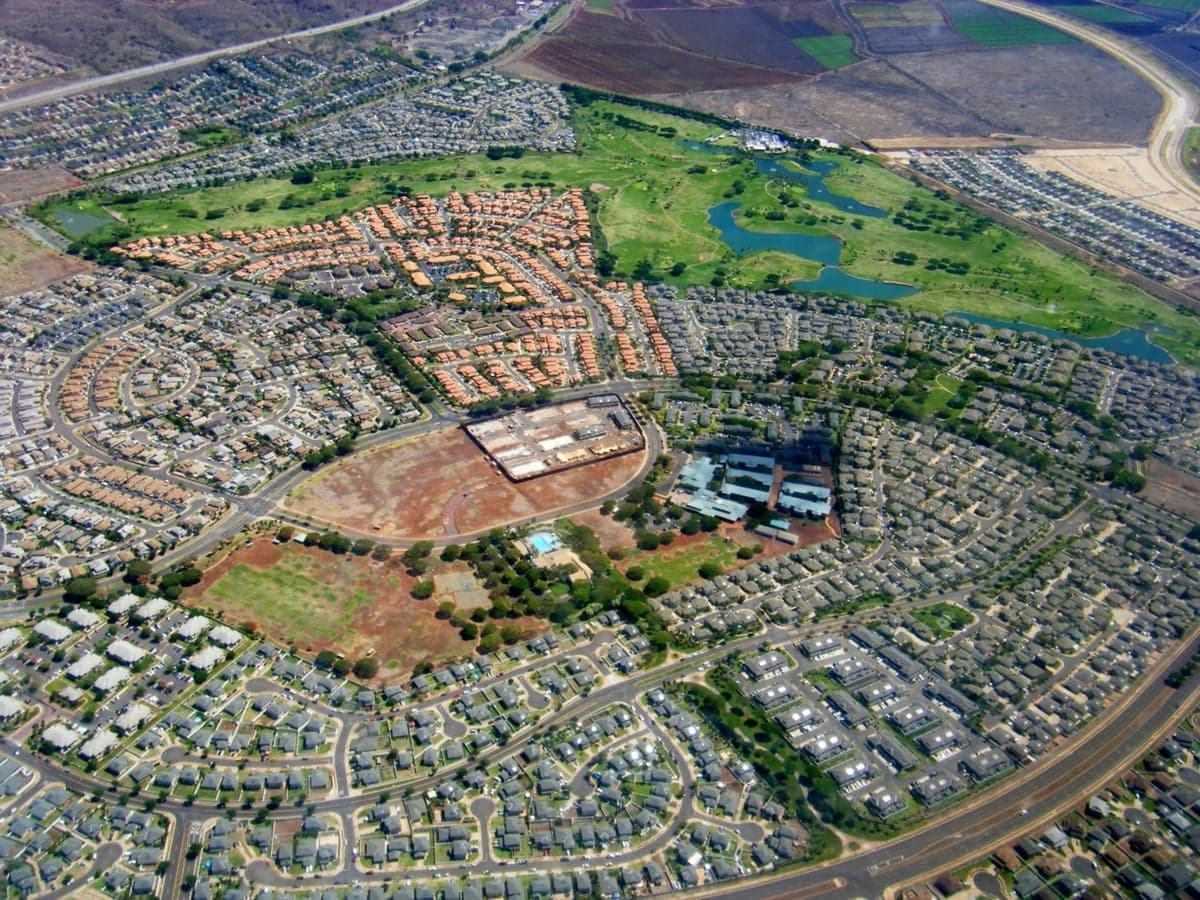
Kapolei is a master-planned community, which means its zoning is designed for suburban convenience, not rural self-sufficiency. Typical residential lots range from 5,000 to 10,000 square feet—enough for a modest garden and a small chicken coop, but far too small for serious homesteading or livestock. The city’s zoning code explicitly prohibits the keeping of pigs, goats, or cattle on standard residential lots, and even chickens may be subject to HOA restrictions in many subdivisions. Off-grid living is effectively illegal in Kapolei; all homes must be connected to the municipal water and sewer systems, and solar panels must be grid-tied with no battery storage unless specifically permitted (which is rare). Rainwater catchment is not allowed for potable use in most areas due to health code restrictions. For a prepper seeking true self-reliance, the only viable option is to look outside Kapolei, into the more rural areas of the leeward coast (e.g., Makakilo, Ewa Beach, or further out toward Waianae), where lot sizes increase to 1-5 acres and zoning is more permissive. However, even there, state-level restrictions on water rights, building codes, and land use remain formidable. The bottom line: Kapolei is a comfortable, convenient suburb, but it is not a location where you can build a self-sufficient homestead. Your prepping strategy here must focus on stockpiling, community networking, and redundancy within a grid-dependent framework.
Personal liberties: Parental rights, medical autonomy, speech, and property in Hawaii’s legal landscape
Hawaii’s legal environment is generally progressive, which translates to a mixed bag for personal liberties from a conservative perspective. On parental rights, the state has strong mandatory vaccination laws for school attendance (with limited exemptions) and a robust child protective services system that can intervene in family decisions more readily than in many mainland states. Medical autonomy is heavily restricted: Hawaii has some of the strictest prescription drug monitoring laws in the nation, and access to alternative or holistic treatments is limited by a powerful medical establishment. The state also mandates health insurance coverage, which can be a financial burden for those who prefer to self-insure or use direct primary care. Free speech is protected under the First Amendment, but Hawaii’s strong public accommodation laws and hate speech statutes can create a chilling effect for those expressing controversial political or religious views. Property rights are particularly weak: the state has a history of aggressive eminent domain for development projects, and the Land Use Commission has broad authority to rezone land without local input. For a prepper, this means that your property is not a fortress; the state can, in theory, take it for a "public purpose" with minimal compensation. The overall message is that Hawaii’s government is deeply involved in personal decisions, from healthcare to education to land use, and Kapolei residents must accept a lower degree of personal sovereignty than they would find in, say, Texas or Idaho.
In the broader context of personal sovereignty, Kapolei offers a unique but highly constrained environment. It is a beautiful, safe, and well-planned community with a strong sense of local identity, but it operates within a state that ranks near the bottom nationally for individual freedom in taxation, self-defense, and property rights. For a survivalist or prepper, the island’s natural isolation is both a blessing and a curse: it provides a defensible position against mainland chaos, but it also creates a dependency on a fragile supply chain and a government that is not friendly to self-reliance. Compared to states like Montana, Wyoming, or New Hampshire, Kapolei is a poor choice for those seeking maximum personal sovereignty. However, for those who value the unique lifestyle and are willing to work within the system—building community networks, stockpiling supplies, and navigating regulations—it can be a viable, if challenging, relocation option. The key is to go in with eyes wide open: Kapolei is a place to live well within the system, not to escape it.

* Values derived from national, state, county, city and local statistics and may differ in a specific area. Last updated: 2026-04-24T00:10:34.000Z
Narrative content on this page is AI-generated and may contain mistakes. Verify any details that matter before acting on them.
ReloMaps may earn a commission from affiliate links at no extra cost to you.

