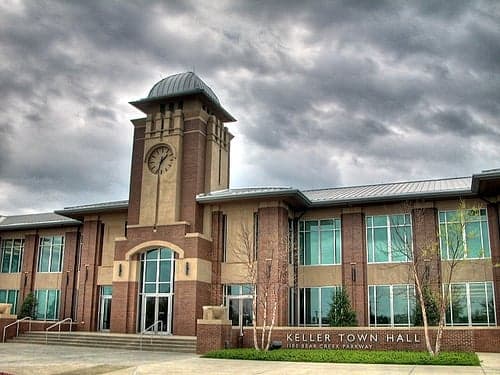
Photo: Wikipedia
Strategic Assessment of Keller, TX
Multiple tactical vulnerabilities. Population density, target proximity, or disaster risk are likely compounding. A retreat property and exit planning is required.
What does the Strategic Assessment tell us?
Our Strategic Assessment grades tactical survivability of an area. Major population centers, military targets, fallout zones, natural disasters, and border exposure all drive risk — lower exposure means a more defensible position in a crisis.
This is heavily inspired by Joel Skousen's Strategic Relocation book. Highly recommended you checkout the book ($)What does this tell us?
Our Strategic Assessment grades tactical survivability of an area. Major population centers, military targets, fallout zones, natural disasters, and border exposure all drive risk — lower exposure means a more defensible position in a crisis.
This is heavily inspired by Joel Skousen's Strategic Relocation book. Highly recommended you checkout the book ($)Strategic Pillars

Key Distances
Regional Safe Places
Below is our recommended "safe zones" in Texas and the surrounding area based on our strategic heuristics. For most people, it's unrealistic to live in a “safe zone” full-time due to work, family or other personal reasons. They tend to be more rural. However, many of these areas are perfect for second homes and retreat properties that double as a vacation home or even a short-term rental.

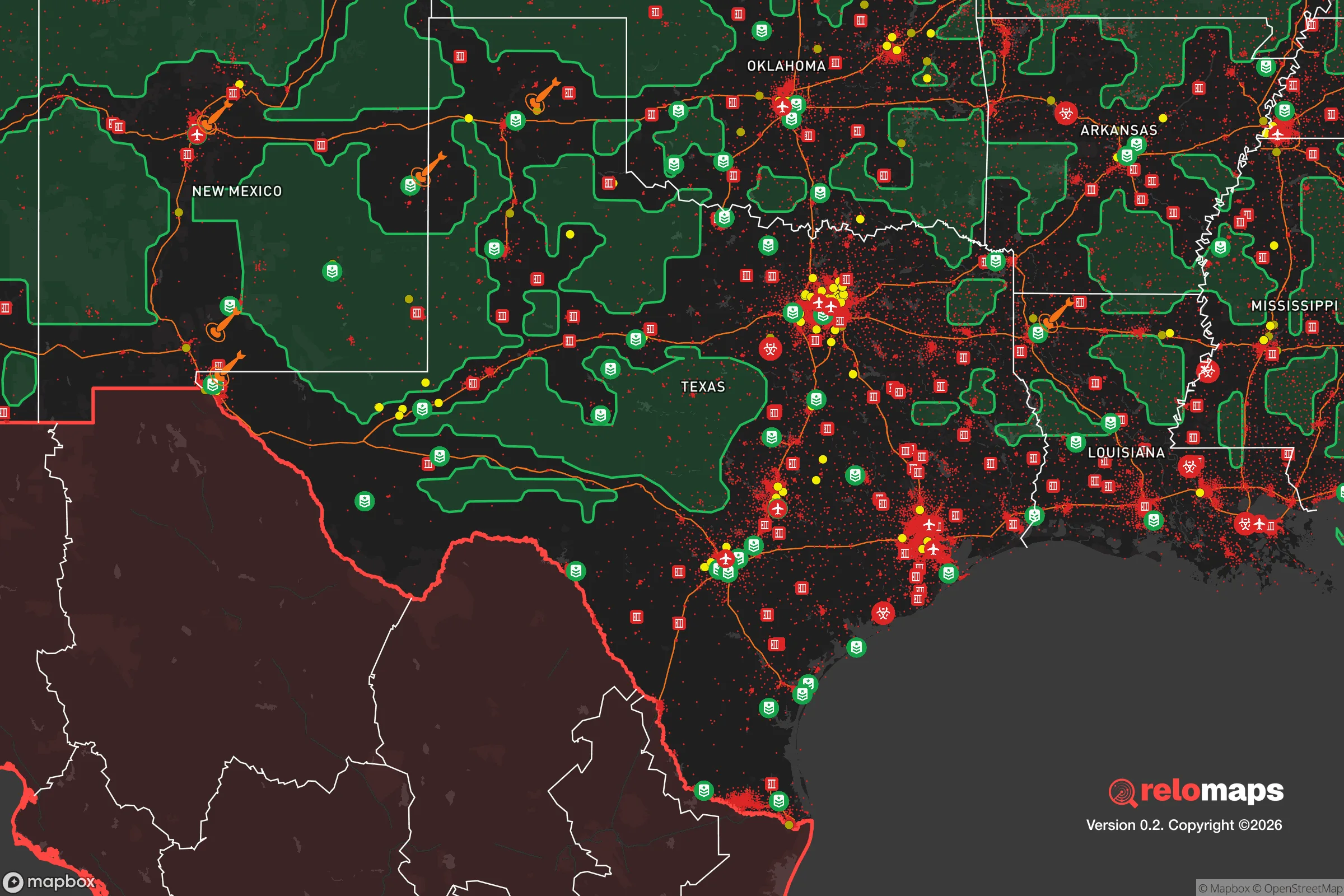


Important Note: For informational purposes only. This does not mean nothing bad ever happens in the green zones. Please use common sense. This is based on public data and modeled with AI. We tried to take a conservative approach but mistakes happen. We update this regularly as new information becomes available.
Solar Generator Recommendations
Backup power matters more here than in safer locations. We've picked three solar generators across budgets and capacity tiers — start with the budget unit if you only need a few essentials, or step up if you want to run a fridge and HVAC for days at a time.

Jackery Portable Power Station Explorer 300
Budget OptionPower on the Go: Weighing only 11 lbs, it's convenient to set up and store with book-sized foldable solar panels

BLUETTI Portable Power Station AC180
Designed for both indoor and outdoor scenarios, AC180 is highly capable as it has a robost capacity and continuous output power.

EF ECOFLOW DELTA Pro Ultra Power Station
Upgraded PickEcoFlow DELTA Pro Ultra is a whole-home energy system designed to grow with your family. Integrated with the Smart Home Panel 2, it scales to meet your evolving energy needs — keeping your home powered, intelligent, and secure through every stage of life.
We earn a commission, at no additional cost to you.
Strategic Assessment Analysis
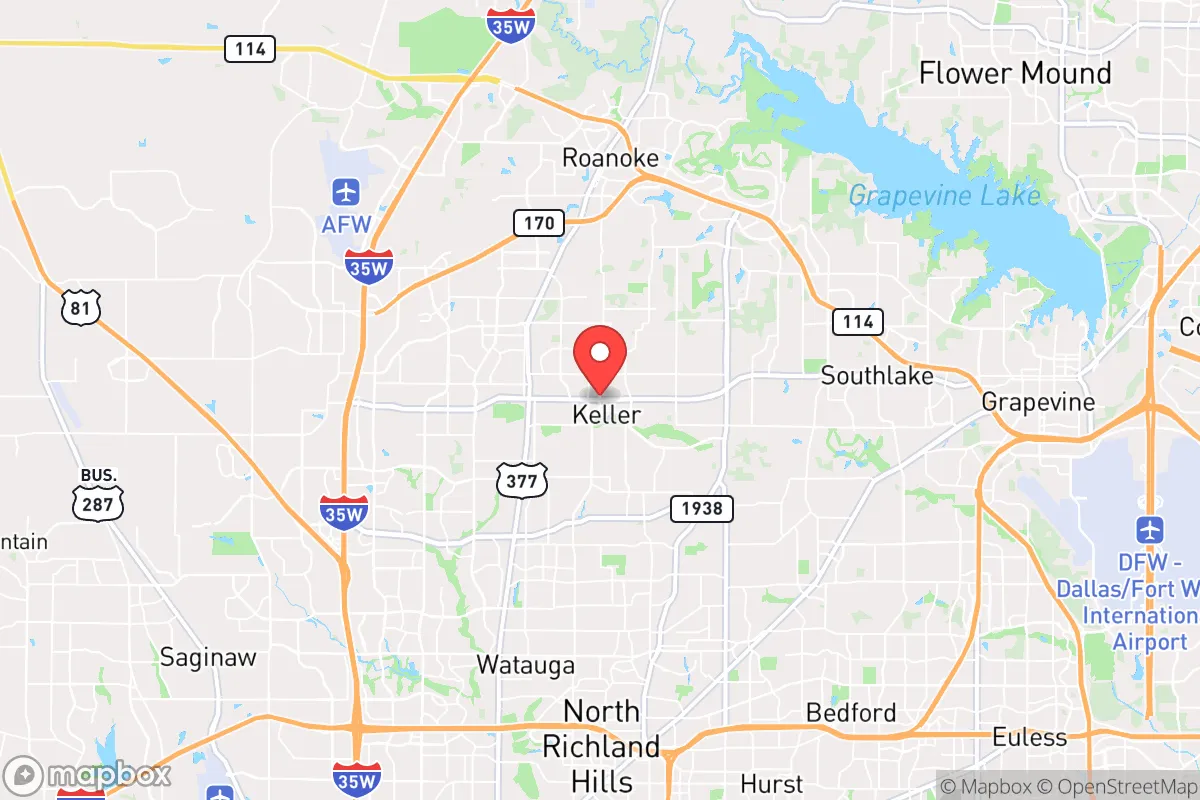
Keller, Texas, sits in a curious strategic pocket: close enough to the economic engine of the Dallas-Fort Worth metroplex to offer job access and infrastructure, yet far enough from the urban core to provide a meaningful buffer against the worst-case scenarios that concern a prepared relocator. The city’s position in the far northeast corner of Tarrant County places it roughly 15 miles from downtown Fort Worth and 30 miles from Dallas, a distance that translates into a 20- to 40-minute drive under normal conditions—but that same proximity becomes a liability when considering the concentric rings of risk radiating from a major metropolitan target. For a conservative-minded individual or family prioritizing resilience, self-sufficiency, and a lower profile, Keller presents a mixed picture: genuine advantages in community cohesion and local governance, offset by the unavoidable reality of being within the blast-zone-adjacent radius of a high-value national target.
Geographic position and natural advantages for long-term security
Keller’s geography offers a few underappreciated defensive assets. The city sits on the eastern edge of the Cross Timbers ecoregion, a band of post oak and blackjack forest that provides natural cover and a modest break from the flat, exposed prairie that dominates much of North Texas. This tree canopy, while not dense enough to stop a determined group, does offer visual screening and some thermal signature reduction for a prepared homestead. The terrain is gently rolling, with elevations ranging from 650 to 750 feet above sea level—no mountains, but enough variation to create natural drainage and a few defensible high points. The area is not prone to major natural disasters: tornadoes are a real but manageable threat (the region averages about 10-12 tornado days per year), and the risk of hurricanes, earthquakes, or wildfires is low compared to coastal or western states. Flooding is limited to a few low-lying areas near Big Bear Creek and the Trinity River tributaries, and most of Keller’s residential lots sit on well-drained clay-loam soils that support gardening and small-scale agriculture. The climate is humid subtropical, with hot summers (average July high of 96°F) and mild winters (average January low of 33°F), meaning a year-round growing season for a serious prepper’s garden—but also high water demand and heat stress on infrastructure during summer months.
Risks, exposures, and proximity to fallout-relevant landmarks
The single greatest strategic vulnerability of Keller is its proximity to the Dallas-Fort Worth metroplex, a metropolitan area of roughly 8 million people that contains multiple high-value targets: DFW International Airport (one of the busiest in the world), the Federal Reserve Bank of Dallas, major defense contractors like Lockheed Martin in Fort Worth, and the sprawling infrastructure of a national transportation hub. In a scenario involving a nuclear detonation, a large-scale terrorist attack, or a coordinated cyber-physical assault on the power grid, Keller sits within the moderate-to-severe fallout zone for a ground burst at DFW or downtown Fort Worth. Depending on wind direction, a 10-kiloton device at DFW (roughly 12 miles south) could deliver lethal radiation doses to Keller within 30-60 minutes. The city is also within the secondary blast radius for a major conventional explosion at the nearby natural gas storage facilities or chemical plants along the Trinity River corridor. Beyond WMD scenarios, Keller’s location on the I-35W corridor means it lies on a primary evacuation route for Fort Worth residents fleeing a disaster—a double-edged sword that could bring both relief supplies and desperate, unprepared crowds. The city’s own population of roughly 50,000 is small enough to avoid the worst of urban chaos, but the surrounding suburban sprawl (Southlake, Roanoke, North Richland Hills) creates a dense ring of potential competition for resources in a crisis.
Practical resilience for a relocator: food, water, energy, and defensibility
For a relocator serious about self-sufficiency, Keller’s practical resilience metrics are a mixed bag. Water security is the most pressing concern: the city draws its municipal supply from the Trinity River via the Tarrant Regional Water District, a surface-water system that is vulnerable to contamination, drought, and infrastructure failure. A prepared household should plan for at least 30 days of stored water (roughly 30 gallons per person) and consider a well—though drilling a new well in Keller is expensive ($8,000–$15,000) and subject to city permitting, as the area sits over the Trinity Aquifer, which yields moderate-quality water at depths of 200–400 feet. Rainwater catchment is legal in Texas and practical here, given the average annual rainfall of 36 inches, but a typical 2,000-square-foot roof can collect about 1,200 gallons per inch of rain—enough for supplemental use but not full reliance. Food production is feasible but limited: most residential lots are 0.25–0.5 acres, enough for a substantial vegetable garden and a few fruit trees (peach, fig, persimmon do well here), but not for significant livestock. Chickens are allowed in most of Keller (check HOA covenants), but goats or larger animals are restricted in many subdivisions. The city’s zoning is generally friendly to home-based food processing and canning, but a serious prepper should look for a lot with at least 1–2 acres outside the denser subdivisions. Energy resilience is improving but not robust: Keller is served by Oncor Electric Delivery, and the Texas grid (ERCOT) has shown vulnerability to winter storms (2021’s Uri) and summer heat waves. Solar panels with battery storage are a wise investment, as net metering is available and the area averages 220 sunny days per year. Natural gas is widely available for backup heating and cooking, but a whole-house generator (propane or natural gas) is strongly recommended. Defensibility is moderate: Keller’s street layout is a mix of cul-de-sacs and arterial roads, which can be easily blocked or monitored by a prepared neighborhood watch. The city’s police department is well-funded and responsive (response times average 5–7 minutes), but in a widespread crisis, law enforcement will be stretched thin. The local culture leans heavily conservative and community-oriented, with strong church networks and a high rate of firearm ownership—factors that can be either stabilizing or polarizing depending on the nature of the emergency. The Keller Independent School District is highly rated and would likely serve as a community coordination point in a disaster, but its large campuses (Keller High School has over 3,000 students) could also become targets or logistical bottlenecks.
The overall strategic picture for Keller is one of calculated trade-offs. It is not a remote bug-out location—you are not disappearing into the woods here. But for a relocator who needs to maintain a professional career while building a resilient household, Keller offers a rare combination: a conservative, family-oriented community with good schools, a functional local government, and enough physical space to implement serious preparedness measures. The key is to treat the city as a semi-prepared suburban base, not a final redoubt. Stockpile for 90 days, not 90 years. Build relationships with neighbors who share your mindset. Invest in water storage, solar, and a generator. And always have a secondary plan—a rural property within 100 miles, or a network of trusted contacts in the Hill Country or East Texas—for the day when the metroplex’s risks become reality. Keller is a solid B+ on the prepper’s map: not perfect, but far better than 90% of the alternatives within commuting distance of a major American city.

* Values derived from national, state, county, city and local statistics and may differ in a specific area. Last updated: 2026-04-14T19:59:02.000Z
Narrative content on this page is AI-generated and may contain mistakes. Verify any details that matter before acting on them.
ReloMaps may earn a commission from affiliate links at no extra cost to you.

