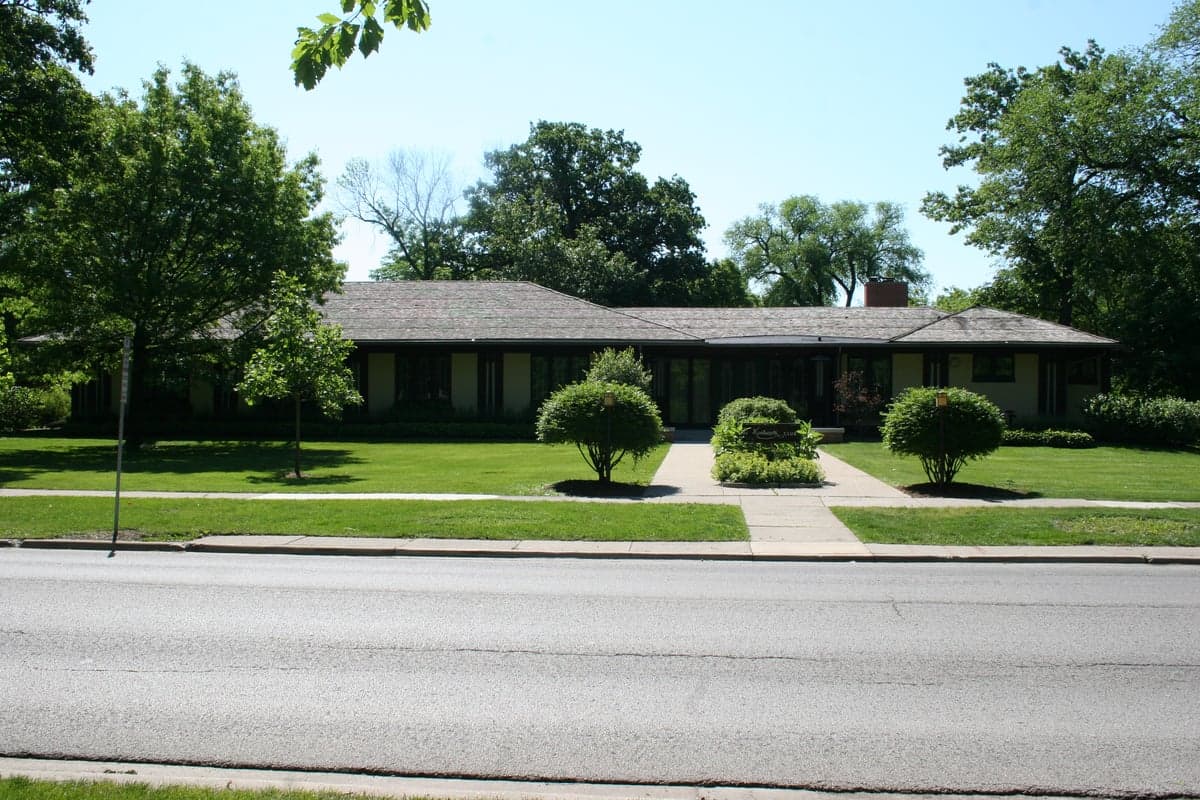
Photo: Wikipedia
Personal Sovereignty in Kenilworth, IL
Viable for self-reliance. Generally workable, though some barriers may limit total independence.
What does Personal Sovereignty tell us?
Personal Sovereignty measures your capacity for self-reliance and independence with minimal government friction. Higher scores mean fewer barriers between you and the way you want to live... but it assumes you have the space you need and good neighbors.
What does this tell us?
Personal Sovereignty measures your capacity for self-reliance and independence with minimal government friction. Higher scores mean fewer barriers between you and the way you want to live... but it assumes you have the space you need and good neighbors.
State Policy
Energy independence: Importer (45% of energy produced in-state)
Personal Liberty
Homesteading

Personal Liberty Analysis
Kenilworth, Illinois presents a complex sovereignty picture for the conservative-leaning individual or family, where the state's heavy regulatory hand clashes with the village's insulated, high-property-value environment. While the immediate community offers a degree of local control and low crime, residents must navigate Illinois' aggressive tax structure, restrictive gun laws, and expanding state-level mandates that erode personal autonomy. For those prioritizing self-reliance and minimal government overreach, Kenilworth's appeal is largely defensive—it provides a stable, affluent buffer against urban chaos, but the state's legal framework imposes significant constraints on true personal sovereignty.
Tax burden and regulatory posture in Kenilworth
Illinois is among the most heavily taxed states in the nation, and Kenilworth residents bear the full brunt of that reality. The state's flat income tax rate of 4.95% is compounded by some of the highest property taxes in the country—Kenilworth's effective property tax rate hovers around 1.8% of assessed value, meaning a $1.5 million home carries an annual tax bill exceeding $27,000. This is a direct transfer of wealth from the individual to the state, funding pension obligations and public sector salaries that many conservatives view as unsustainable. The regulatory posture is equally burdensome: Illinois imposes strict environmental codes, building permit delays, and a statewide ban on local rent control (though that matters less in a village where nearly all housing is owner-occupied). For the prepper, this means every dollar earned is heavily taxed before it can be saved or invested in self-sufficiency measures like land improvements or emergency supplies. The state's progressive income tax was rejected by voters in 2020, but the underlying fiscal pressure remains—Illinois carries over $140 billion in unfunded pension liabilities, and Kenilworth's high property values make it a prime target for future revenue grabs. The village itself has limited regulatory autonomy, as state preemption laws override local zoning on issues like short-term rentals and energy codes, further reducing the community's ability to tailor rules to resident preferences.
Self-defense and gun law specifics in Illinois
Illinois is one of the most restrictive states in the nation for gun owners, and Kenilworth offers no refuge from these mandates. The state requires a Firearm Owner's Identification (FOID) card for possession of any firearm or ammunition, a process that involves fingerprinting, background checks, and a 30-day waiting period for first-time applicants. In 2023, Illinois enacted a ban on so-called "assault weapons" and high-capacity magazines, effectively criminalizing ownership of many common semi-automatic rifles and handguns that are legal in neighboring Indiana and Wisconsin. Concealed carry is permitted only with a state-issued license, which requires 16 hours of training and a $150 fee, and even then, carry is prohibited in a long list of "sensitive places" including public parks, libraries, and any establishment that serves alcohol—a category that covers most of Kenilworth's commercial district. For the survivalist, this means self-defense options are severely limited: magazine capacity is capped at 10 rounds for long guns and 15 for handguns, and the state's "duty to retreat" doctrine applies outside the home, requiring individuals to avoid confrontation even when threatened. Castle doctrine is recognized, but the burden of proof falls on the homeowner to demonstrate reasonable fear of death or great bodily harm. The Cook County Sheriff's office, which has jurisdiction over Kenilworth, is not known for leniency in self-defense cases, and the political climate in the county is overwhelmingly anti-gun. For those serious about personal sovereignty, the legal environment here is a significant liability—Illinois' gun laws are designed to disarm law-abiding citizens, and Kenilworth's affluent, low-crime setting does not exempt residents from state-level restrictions.
Self-reliance and homesteading viability in Kenilworth
Kenilworth is a dense, established suburb with lot sizes averaging 0.2 to 0.5 acres, making traditional homesteading—gardening, livestock, or off-grid systems—largely impractical. The village's zoning code prohibits keeping chickens, goats, or any farm animals on residential lots, and homeowners associations (HOAs) in many neighborhoods impose additional restrictions on vegetable gardens, clotheslines, and outdoor storage. For the prepper seeking self-reliance, this environment is fundamentally hostile: you cannot raise your own food, store significant fuel or supplies in visible locations, or install solar panels without extensive permitting and HOA approval. The village's water supply comes from Lake Michigan via the City of Chicago's system, meaning residents have no control over their water source and are vulnerable to municipal disruptions or contamination events. Off-grid feasibility is essentially zero—Illinois requires grid connection for any habitable structure, and Kenilworth's building codes mandate compliance with the International Energy Conservation Code, which limits the use of alternative heating or power systems. The nearest viable land for homesteading is in McHenry or DeKalb counties, 60 to 90 minutes west, where 5-acre parcels with fewer restrictions can be found for $200,000 to $400,000. For the survivalist, Kenilworth functions as a base of operations for professional income, not a self-sufficient retreat. The best strategy is to treat it as a financial hub while maintaining a separate property in a more permissive jurisdiction for actual self-reliance activities.
Personal liberties in Kenilworth: parental rights, medical autonomy, and property
Illinois has aggressively expanded state authority over personal decisions in recent years, and Kenilworth residents are subject to these mandates. Parental rights have been eroded by laws that allow minors to consent to certain medical procedures without parental notification, including mental health treatment and substance abuse counseling. The state's 2023 "Health Care Protection Act" codified access to gender transition procedures for minors, overriding parental authority in medical decisions—a direct violation of the traditional family sovereignty that many conservatives hold dear. Medical autonomy is further constrained by Illinois' vaccine mandates for school attendance, which were enforced during the COVID-19 pandemic and remain on the books for routine immunizations. The state also maintains a prescription drug monitoring program that tracks all controlled substance prescriptions, creating a de facto registry of medical treatments that privacy-conscious individuals may find intrusive. Property rights are relatively strong within Kenilworth's borders—the village enforces zoning codes consistently, and eminent domain is rarely used—but state-level environmental regulations can restrict what homeowners do with their land, including tree removal, wetland modification, and shoreline access along Lake Michigan. Speech protections are nominally strong under the First Amendment, but Illinois has enacted laws against "hate speech" in public accommodations and online platforms, and the state's attorney general has pursued legal action against individuals for political speech deemed harassing. For the conservative individual, the cumulative effect is a legal environment where the state increasingly positions itself as the arbiter of personal and family decisions, leaving less room for traditional autonomy.
Overall, Kenilworth offers a mixed sovereignty profile: the village itself provides a safe, orderly, and low-crime environment with strong property values and a politically engaged community, but it sits within a state that is actively hostile to many core conservative values. The tax burden is crushing, gun rights are severely restricted, homesteading is impossible, and personal liberties are increasingly subject to state override. For the survivalist or prepper, Kenilworth is best understood as a temporary base for wealth accumulation, not a long-term haven for self-reliant living. The real sovereignty advantage lies in the surrounding region—specifically in Indiana, Wisconsin, or rural Illinois counties like Jo Daviess or Pope, where taxes are lower, gun laws are more permissive, and local control is stronger. If you must live in Kenilworth for professional reasons, the prudent strategy is to maintain a low profile, comply with state mandates while minimizing exposure, and invest in a secondary property in a more liberty-friendly jurisdiction. Compared to other affluent Chicago suburbs, Kenilworth's sovereignty environment is average—better than Oak Park or Evanston, but worse than Barrington or Lake Forest, where larger lots and more conservative local governance offer slightly more breathing room. The bottom line: Kenilworth is a comfortable cage, not a sovereign sanctuary.

* Values derived from national, state, county, city and local statistics and may differ in a specific area. Last updated: 2026-04-27T14:44:03.000Z
Narrative content on this page is AI-generated and may contain mistakes. Verify any details that matter before acting on them.
ReloMaps may earn a commission from affiliate links at no extra cost to you.

