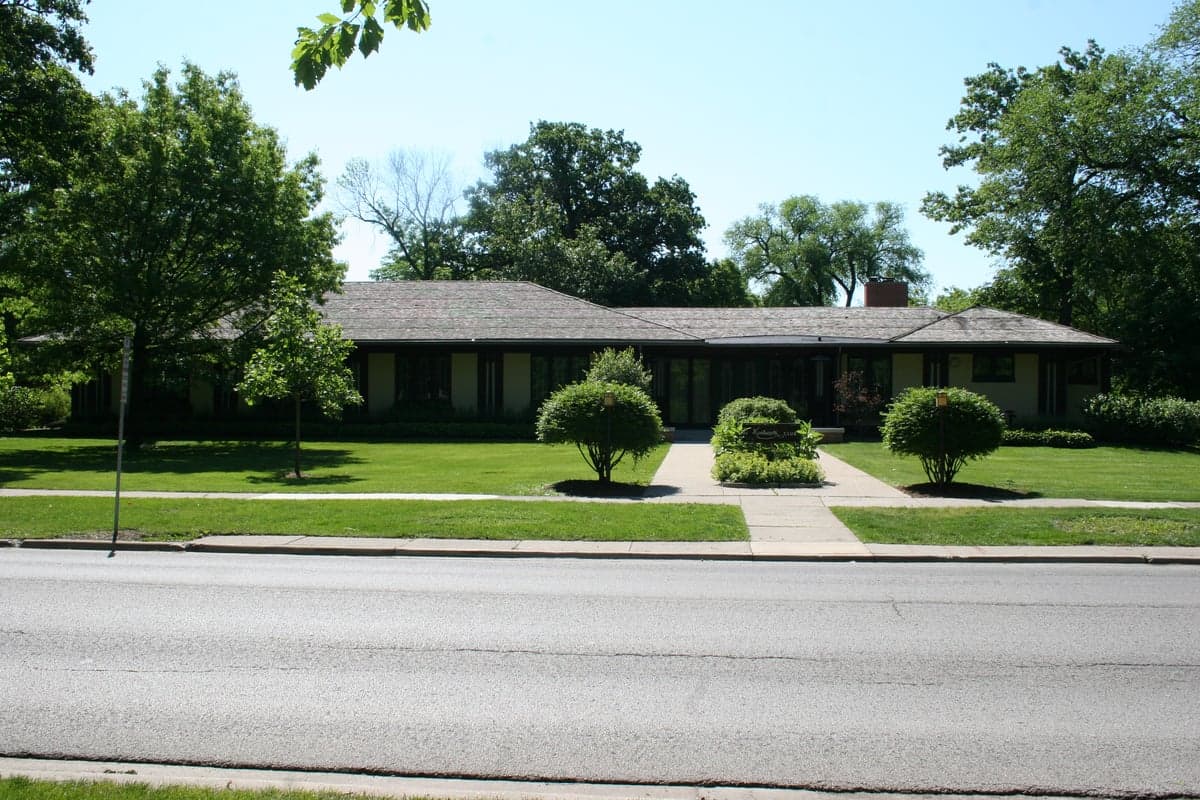
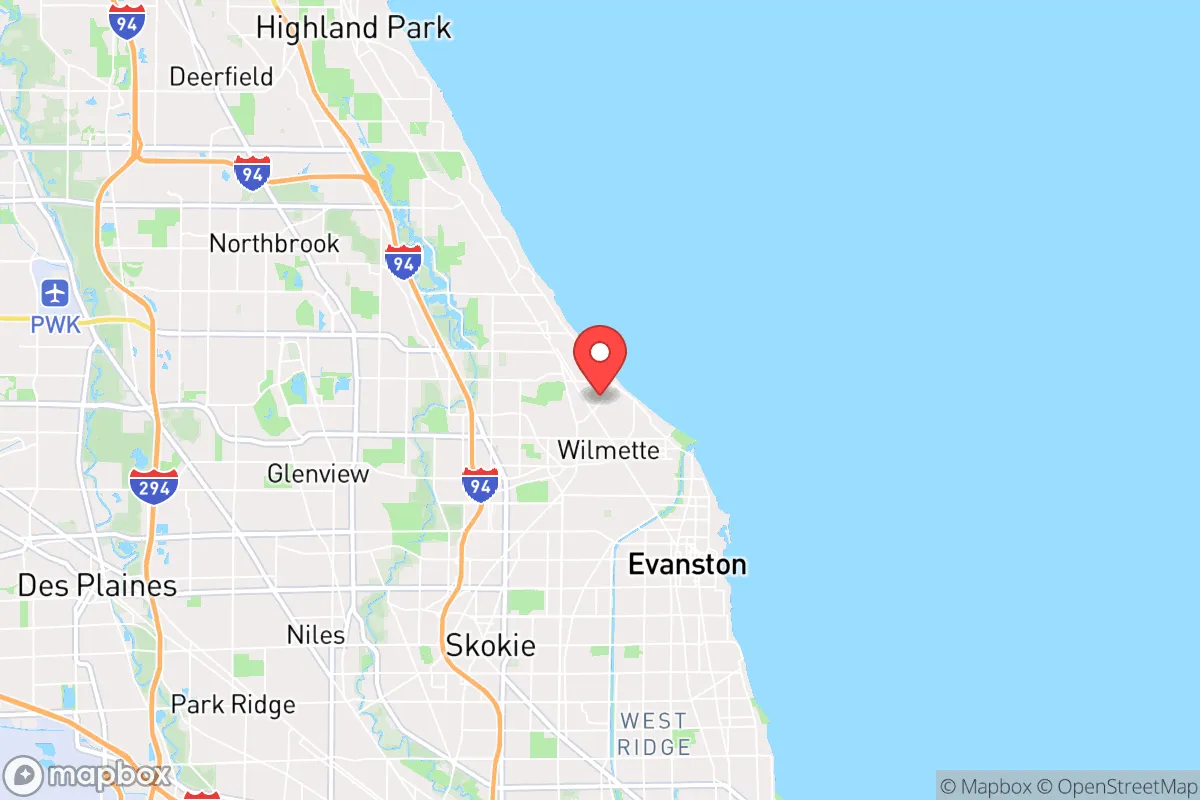
Photo: Wikipedia
Quality of Life in Kenilworth, IL
A high quality of life with strong walkability, manageable living costs, healthy neighborhood signals, and solid amenity access.
What does Quality of Life tell us?
Quality of Life blends cost of living, nearby amenities, socioeconomic signals, and neighborhood character. City-level scores represent the whole municipality; individual neighborhoods can differ.
What does this tell us?
Quality of Life blends cost of living, nearby amenities, socioeconomic signals, and neighborhood character. City-level scores represent the whole municipality; individual neighborhoods can differ.
Cost of Living
281% above national average
The Real Cost of Living in Kenilworth, IL for 2026
| Tier | Individual | Family (4) |
|---|---|---|
| Survival | $56k | $105k |
| Comfortable | $274k | $403k |
| Luxury | $452k+ | $700k+ |
| Elite (Top 5%) | $709k+ | $1.1M+ |
62%
The Area Signal
A metric tracking the socioeconomic signals of the area.
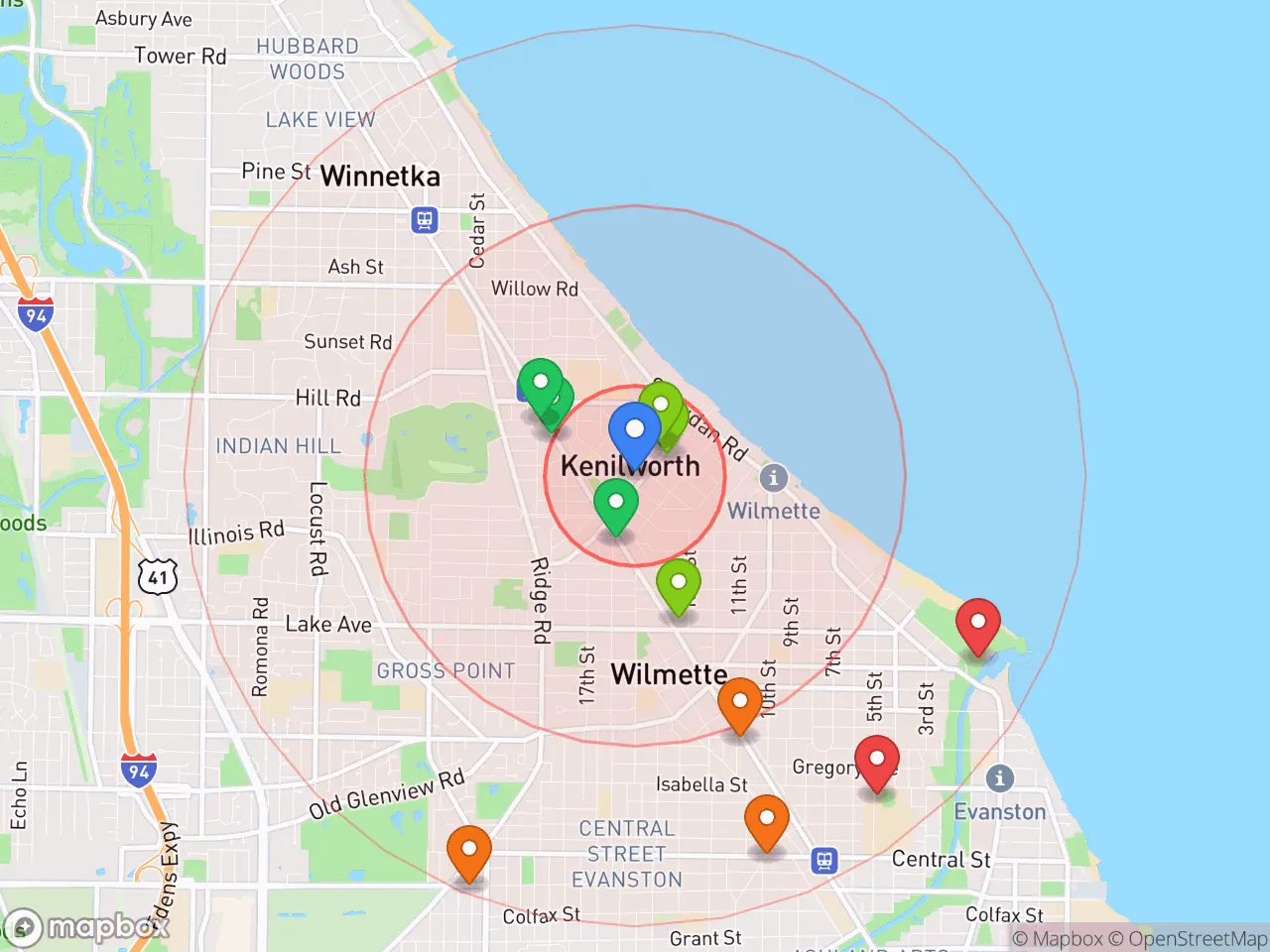
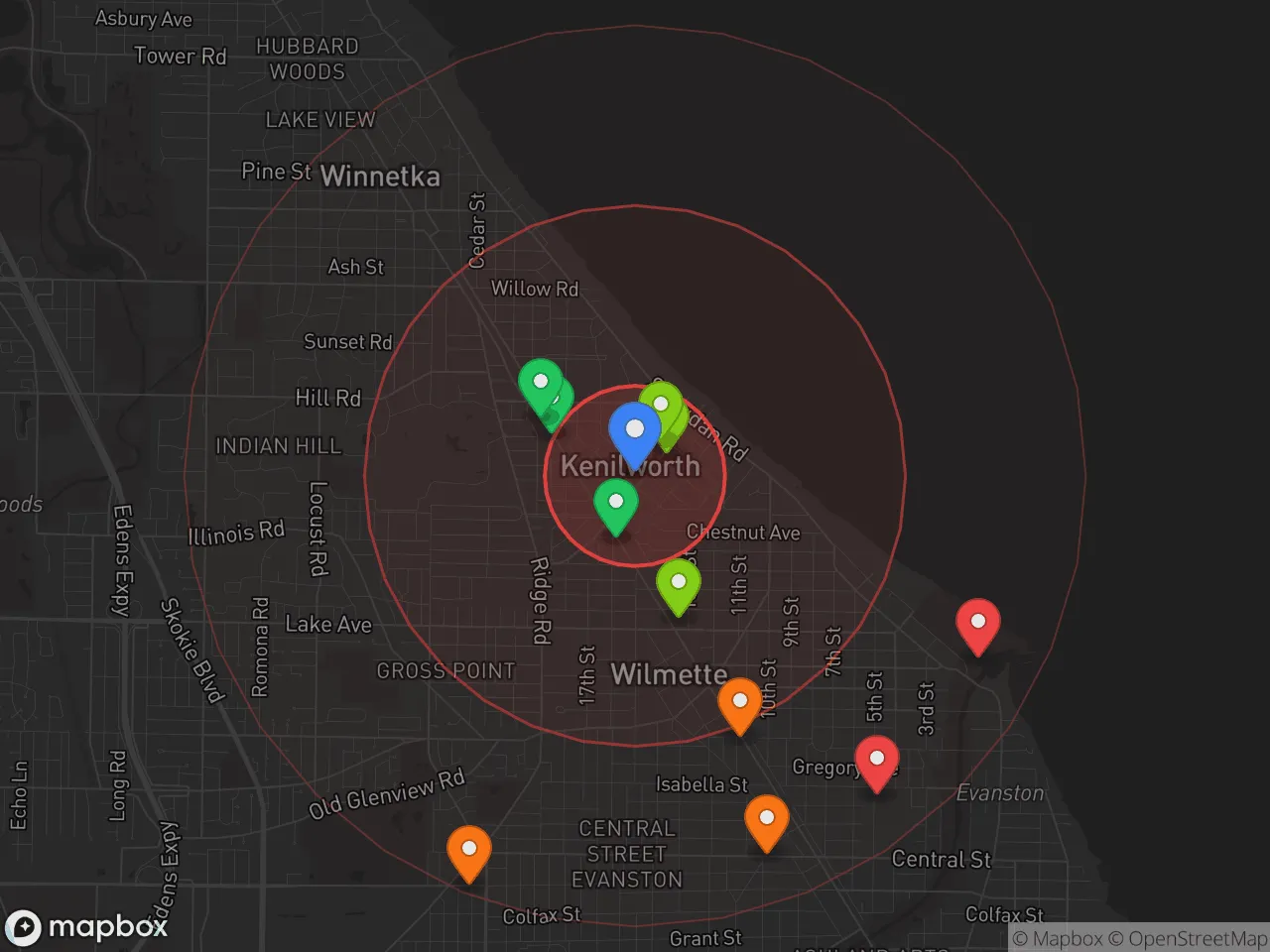
Hobbies
Explore the areaGroceries
5 within 10 miles
Gas
20 within 10 miles
Hospital
20 within 20 miles
Airport
ORD — O'Hare International
Post Office
USPS — Kenilworth, IL
Critical Amenities
Quality-of-Life Analysis
Kenilworth, Illinois, is one of the most affluent communities in the Chicago metropolitan area, with a cost of living index of 381—nearly four times the U.S. average. This North Shore village of roughly 2,500 residents is defined by its historic lakefront estates, tree-lined streets, and a population that skews toward high-net-worth professionals, executives, and families who prioritize privacy, top-tier schools, and proximity to downtown Chicago. The village’s exclusivity is deliberate: there are no commercial districts, no through traffic, and a strict zoning code that preserves large lots and architectural character.
Cost of living, housing prices, and how Kenilworth compares to nearby North Shore suburbs
Kenilworth’s cost of living is driven almost entirely by housing. The median home value sits at $1,409,800, placing it among the priciest suburbs in Illinois—well above neighboring Winnetka ($1.1M) and Glencoe ($950,000). Median rent is $3,501 per month, though rental inventory is extremely limited due to the village’s low-density, single-family-home character. Property taxes in Cook County are among the highest in the nation, and Kenilworth’s effective tax rate typically falls between 1.8% and 2.2% of assessed value, meaning annual tax bills on a median-priced home can exceed $28,000. For buyers, this means the true cost of ownership is significantly higher than the purchase price suggests. Compared to Lake Forest or Highland Park further north, Kenilworth offers less square footage per dollar but compensates with shorter commutes and a more compact, walkable village core.
Schools, amenities, and what daily life is like for families in Kenilworth
Daily life in Kenilworth revolves around the New Trier Township High School District 203, consistently ranked among the top public high schools in the nation, and Joseph Sears School (K–8), which feeds directly into New Trier. The village has no downtown strip—no grocery stores, no coffee shops, no retail—so residents rely on the adjacent downtowns of Wilmette (a 5-minute drive) or Winnetka for errands and dining. The average commute to downtown Chicago is 34 minutes, facilitated by the Metra Union Pacific North line station at the village’s edge; trains reach the Ogilvie Transportation Center in about 25 minutes. The lakefront is the primary recreational amenity, with a private beach club, a park district offering tennis and summer camps, and the 22-acre Kenilworth Park. The village’s strict architectural review board ensures that new construction and renovations maintain the historic Tudor, Colonial Revival, and Prairie-style homes that define the streetscape.
Kenilworth is best suited for families and professionals who value extreme privacy, elite public schools, and a walkable-to-train commute over commercial convenience or housing affordability. Retirees and empty-nesters are less common here than in nearby Evanston or Glenview, as the village’s social fabric is heavily oriented around school-age children and neighborhood block parties. Singles and young renters will find the rental market thin and the social scene subdued. For those who can absorb the property tax burden and desire a quiet, manicured, low-turnover community with direct rail access to the Loop, Kenilworth offers a quality of life that few other Chicago suburbs can match—but it comes at a premium that prices out all but the top income brackets.

Crime in Kenilworth, IL
Lower crime rates than 99% of comparable U.S. locations.
Violent CrimeViolent Crime Analysis
Property CrimeProperty Crime Analysis
Crime Analysis
Kenilworth, Illinois, is one of the safest communities in the Chicago metropolitan area, reporting a violent crime rate of 0 per 100,000 residents and a property crime rate of 413.2 per 100,000. These figures place the village far below both state and national averages, reflecting a highly secure environment for its roughly 2,500 residents. The absence of violent crime is particularly notable given Kenilworth's location within Cook County, where progressive prosecutorial policies have been a source of concern for public safety advocates.
Crime in context
Kenilworth's violent crime rate of zero is a statistical outlier even among affluent North Shore suburbs. By comparison, the national violent crime rate in 2024 was approximately 380 per 100,000, while Illinois' rate hovered near 440 per 100,000. Property crime in Kenilworth, at 413.2 per 100,000, is roughly one-third the national average of 1,200 per 100,000 and significantly lower than the Illinois state average of 1,500 per 100,000. These numbers are a direct result of the village's small population, high property values, and robust private security measures, but they also stand in contrast to broader trends in Cook County, where progressive district attorneys and judges have been criticized for lenient sentencing and reduced incarceration rates, contributing to higher crime in surrounding areas.
What residents experience
Daily life in Kenilworth is characterized by a near-total absence of street-level crime. Residents commonly leave doors unlocked, children play unsupervised in yards, and the village's own police department maintains a highly visible presence. The most frequent incidents are minor property crimes such as package thefts or occasional vehicle break-ins, typically concentrated near the Metra train station. However, the broader Cook County justice system's emphasis on diversion programs and reduced prosecution for non-violent offenses means that even these low-level incidents may not result in meaningful consequences for offenders. This creates a disconnect between the village's immediate safety and the regional legal environment, which some residents view as a long-term risk factor.
Neighborhood-level variation within Kenilworth is minimal due to the village's compact size and uniformly affluent housing stock. The area east of Green Bay Road, closer to Lake Michigan, sees slightly less foot traffic and therefore fewer property crime opportunities. The commercial corridor along Kenilworth Avenue, near the train station, experiences the highest concentration of minor thefts. Overall, Kenilworth's crime profile is exceptional for a Cook County suburb, but residents should remain aware that the progressive policies governing the county's justice system could gradually erode this safety if regional crime trends continue to rise.
* Values derived from national, state, county, city and local statistics and may differ in a specific area. Last updated: 2026-04-27T14:44:03.000Z
Narrative content on this page is AI-generated and may contain mistakes. Verify any details that matter before acting on them.
ReloMaps may earn a commission from affiliate links at no extra cost to you.

