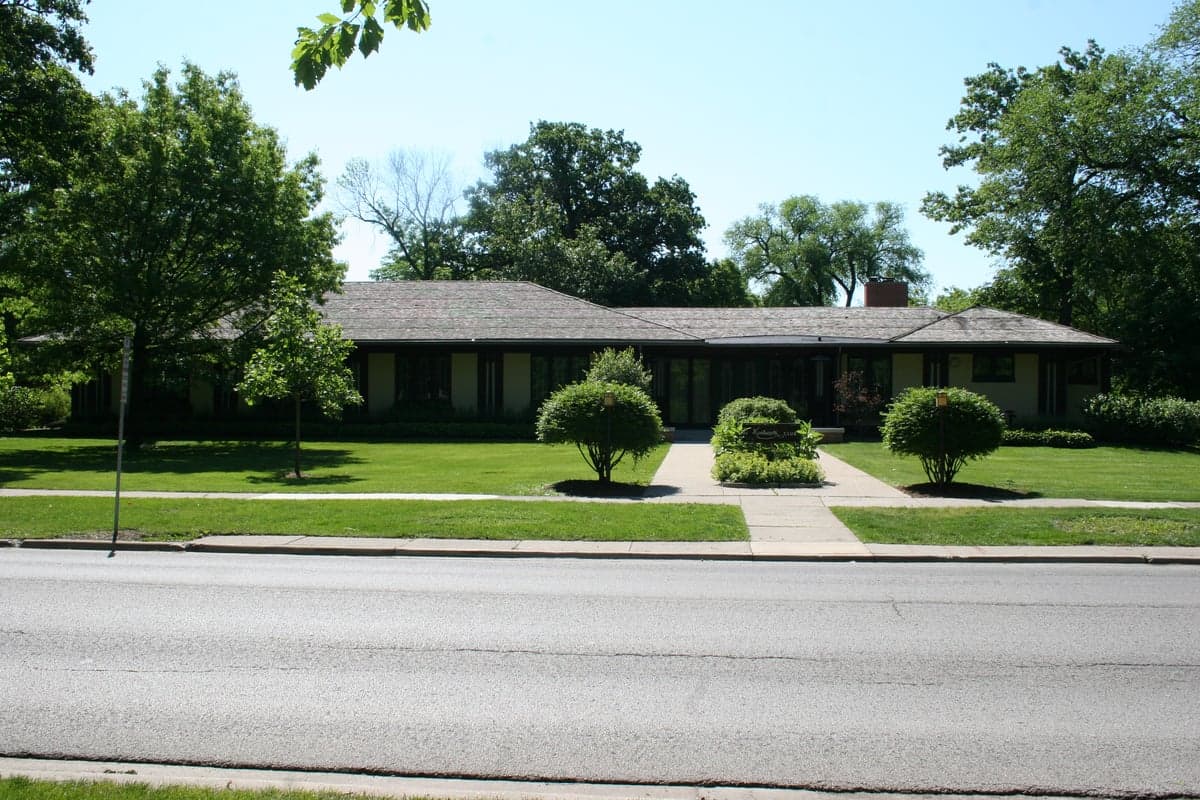
Photo: Wikipedia
Political ClimatePolitical Climate in Kenilworth, IL
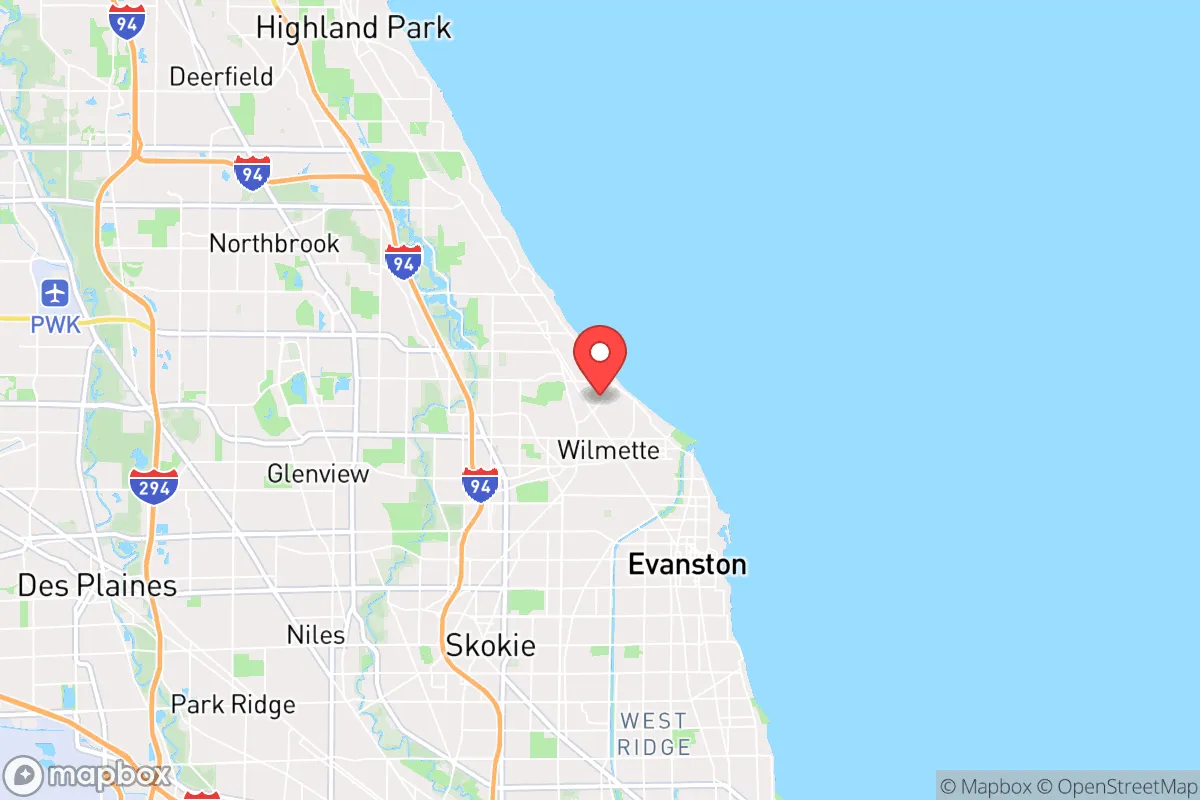
District shown is the primary district for this city’s centroid. Cities may span multiple districts.
Local Political AnalysisPolitical Analysis of Kenilworth, IL
Kenilworth, Illinois, has long been a bastion of traditional values in a state that’s increasingly tilted left, but the political winds are shifting in ways that should give any freedom-loving resident pause. The Cook Partisan Voting Index (PVI) of D+12 for the surrounding 10th Congressional District tells the story: this area, once reliably conservative, now leans heavily Democratic in federal elections, and local trends are following suit. I’ve lived here for decades, and I can tell you—the quiet, independent spirit that defined Kenilworth is being tested by a wave of progressive policies that feel more like government overreach every year.
How it compares
Drive ten minutes south to Winnetka or east to Evanston, and you’ll see the contrast sharp as a knife. Winnetka still holds a more moderate, fiscally conservative streak, with residents pushing back on tax hikes and zoning overhauls. Evanston, meanwhile, has fully embraced progressive governance—think rent control experiments and police reform measures that prioritize social experiments over public safety. Kenilworth sits in the middle, but it’s losing ground. In the 2020 presidential race, the 10th District voted for Biden by a 12-point margin, a far cry from the days when this area was a swing district that could go either way. The surrounding suburbs like Glencoe and Highland Park have also drifted left, with local school boards and village councils adopting DEI initiatives and climate action plans that feel more like mandates than community choices. It’s a slow erosion, but it’s real.
What this means for residents
For those of us who value personal freedom, the practical effects are already showing up. Property taxes in Kenilworth are among the highest in the nation—about 2.5% of assessed value—and they keep climbing to fund state-mandated programs like the Evidence-Based Funding formula for schools, which redistributes local dollars to Chicago. Then there’s the push for electric vehicle mandates and energy codes that dictate what you can do with your own home. I’ve seen neighbors get hit with fines for minor landscaping changes because the village board, now stacked with appointees who lean progressive, tightened regulations under the guise of “sustainability.” The local police department, once a model of community trust, now faces pressure to adopt de-escalation training quotas and civilian oversight boards—changes that sound good on paper but often tie officers’ hands. If you’re a parent, you’ve probably noticed the school curriculum shifting too, with more emphasis on social-emotional learning and less on core academics. It’s not the Kenilworth I grew up in, where local control meant your voice actually mattered.
The cultural distinction here is that Kenilworth still fights to hold the line, but it’s an uphill battle. We’ve got a strong homeowners’ association that pushes back on overreach, and the village council has managed to keep a few conservative holdouts who block the worst of the progressive agenda—like a proposed “welcoming city” ordinance that would have limited cooperation with federal immigration enforcement. But the long-term trajectory is concerning. As younger families move in from Chicago, drawn by the schools and lakefront, they bring big-government habits with them. If you’re considering a move here, know that you’ll find a community that still values privacy and property rights, but you’ll need to stay engaged—or watch those freedoms slip away one village meeting at a time.

State Political ClimatePolitical Climate in Illinois
State Political AnalysisPolitical Environment in the State
Illinois is a deeply blue state in presidential elections, having voted Democratic by double digits in every cycle since 1992, but its political reality is far more complicated than that headline suggests. The state is dominated by the Chicago metropolitan area, which accounts for roughly 65% of the population and drives the statewide Democratic lean, while the rest of Illinois—from the collar counties to the Mississippi River—has shifted sharply right over the past two decades. For a conservative considering relocation, the state presents a stark choice: live under the policy regime of a one-party state with some of the nation’s highest taxes and most restrictive gun laws, or find a pocket of relative freedom in the downstate region where local culture and politics push back hard against Springfield.
Urban vs. rural divide
The political map of Illinois is essentially a tale of two states. Cook County, home to Chicago, delivers about 40% of the state’s vote and is overwhelmingly Democratic—Joe Biden won it by 74 points in 2020. The collar counties (DuPage, Lake, Kane, Will, McHenry) were once Republican strongholds but have trended purple or blue in recent cycles, with DuPage County flipping to Biden in 2020 after voting Republican for decades. Downstate, the dynamic is reversed: counties like Williamson, Effingham, and Macoupin routinely vote Republican by 40-50 points. The divide is so sharp that Madison County, just across the Mississippi from St. Louis, voted for Trump by 12 points in 2020, while neighboring St. Clair County (home to East St. Louis) went for Biden by 20. The geographic split means that a conservative living in a place like Quincy or Marion experiences a completely different political reality than someone in Evanston or Oak Park—local school boards, sheriff’s offices, and city councils in downstate areas often reflect conservative values, even as state law overrides them on major issues.
Policy environment
Illinois’s state-level policy environment is among the most progressive in the Midwest, and it has become more so over the past decade. The state has a flat income tax rate of 4.95%, but that’s paired with some of the highest property taxes in the nation—the average effective rate is around 2.1%, and in counties like Lake and DuPage, it can exceed 2.5%. In 2020, voters rejected a graduated income tax amendment, but the legislature continues to find ways to raise revenue through fee increases and expanded sales taxes. On education, Illinois mandates a comprehensive sex education curriculum that includes LGBTQ+ content, and in 2021 it became one of the first states to require that all public schools teach Asian American history. The state also has a sanctuary law (the Illinois TRUST Act) that limits local law enforcement cooperation with federal immigration authorities, and in 2023, it expanded healthcare coverage to non-citizen adults over 42 through Medicaid. Election laws are among the most accessible in the country: no-excuse mail voting, automatic voter registration, and same-day registration are all in place. For a conservative, the cumulative effect is a state government that actively works to centralize power in Springfield and preempt local control on everything from gun rights to immigration enforcement.
Trajectory & freedom
Over the past five years, Illinois has moved decisively in the direction of expanded government control and reduced personal liberty, particularly on the Second Amendment. In 2023, Governor JB Pritzker signed the Protect Illinois Communities Act, which bans the sale and possession of dozens of semi-automatic firearms and magazines over 10 rounds, and requires existing owners to register them with the state police. This law is currently being challenged in federal court, but it represents the most aggressive gun control measure in the Midwest. On parental rights, Illinois passed the Keeping Youth Safe and Healthy Act in 2021, which allows minors 12 and older to consent to mental health and substance abuse treatment without parental notification. The state also expanded abortion access dramatically, repealing the parental notification requirement for minors in 2021 and passing the Reproductive Health Act in 2019, which codified abortion as a “fundamental right” and removed most restrictions. On the tax front, the state’s pension debt—over $140 billion—continues to grow, and there is no serious movement toward a spending cap or property tax relief. For a freedom-minded individual, the trajectory is clear: more mandates, more preemption, and less room for local communities to opt out.
Civil unrest & political movements
Illinois has seen significant civil unrest and political activism in recent years, much of it centered on Chicago. The 2020 George Floyd protests in Chicago were among the largest in the country, with widespread looting and property damage in the Loop and along the Magnificent Mile. In response, the city saw a surge in organized conservative activism, particularly in the suburbs and downstate. Groups like the Illinois Policy Institute have been vocal in opposing the gun ban and tax increases, and there have been multiple county-level resolutions declaring “sanctuary counties” for gun rights—Effingham County passed such a resolution in 2023, vowing not to enforce the state’s gun registration law. Immigration politics remain a flashpoint: Chicago is a sanctuary city, and the state has seen an influx of migrants bused from Texas, straining resources in places like Aurora and Joliet. Election integrity has been a persistent concern for conservatives, with the 2020 election seeing widespread use of mail-in ballots and no-excuse voting, though no major fraud was proven. The most visible flashpoint for a new resident would likely be the gun registration requirement, which has created a grassroots resistance movement that includes sheriffs in over 60 counties publicly refusing to enforce it.
Projection
Over the next 5-10 years, Illinois is likely to continue its current trajectory: a solidly blue state with a shrinking population, rising taxes, and increasing government control over personal choices. The state lost population in every year from 2014 to 2023, with net out-migration concentrated among working-age families and higher-income earners—many of whom are moving to Indiana, Wisconsin, or Tennessee. The Democratic supermajority in Springfield is unlikely to be broken, as the Chicago metro area continues to dominate the state’s population, and the downstate Republican base is too geographically dispersed to win statewide office. However, the resistance at the local level will likely intensify, with more counties passing Second Amendment sanctuary resolutions and more school boards pushing back against state curriculum mandates. A new resident moving to a place like Edwardsville or Carbondale can expect a local culture that is conservative and community-oriented, but they will still be subject to state laws on guns, taxes, and education that are set by Chicago-area legislators. The most realistic projection is that Illinois becomes a laboratory for progressive policy, with the downstate region functioning as a semi-autonomous conservative enclave within a blue state framework.
For a conservative considering a move to Illinois, the bottom line is this: you can find a good life here if you choose your location carefully, but you will be fighting an uphill battle against state government at every turn. The property taxes will eat into your income, the gun laws will restrict your rights, and your children will be subject to a curriculum you may not agree with. If you value local control and low taxes, states like Indiana or Missouri offer a much better fit. But if you have family ties or a job that keeps you in Illinois, places like Quincy, Effingham, or Marion offer a strong conservative community where you can push back against the tide—just don’t expect the state government to have your back.
* Values derived from national, state, county, city and local statistics and may differ in a specific area. Last updated: 2026-04-27T14:44:03.000Z
Narrative content on this page is AI-generated and may contain mistakes. Verify any details that matter before acting on them.
ReloMaps may earn a commission from affiliate links at no extra cost to you.

