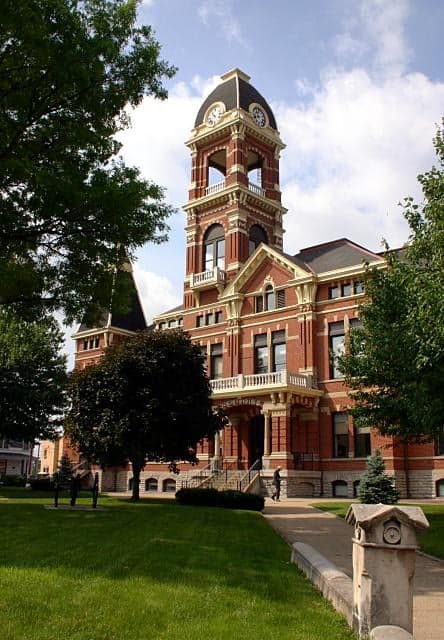
Photo: Wikipedia
Political ClimatePolitical Climate in Campbell County
Showing district-level results — no local-only data available.
Local Political AnalysisPolitical Analysis of Campbell County
Campbell County, Kentucky, is a solidly conservative area with a Cook PVI of R+18, making it three points more Republican than the state of Kentucky as a whole (R+15). This isn't just a number on a map; it reflects a deep-rooted cultural and political identity that has held steady for decades, though you can see the cracks forming in certain pockets. The county has long been a reliable red anchor in Northern Kentucky, but like a lot of places, the political winds are shifting, especially in the more populated river towns.
How it compares
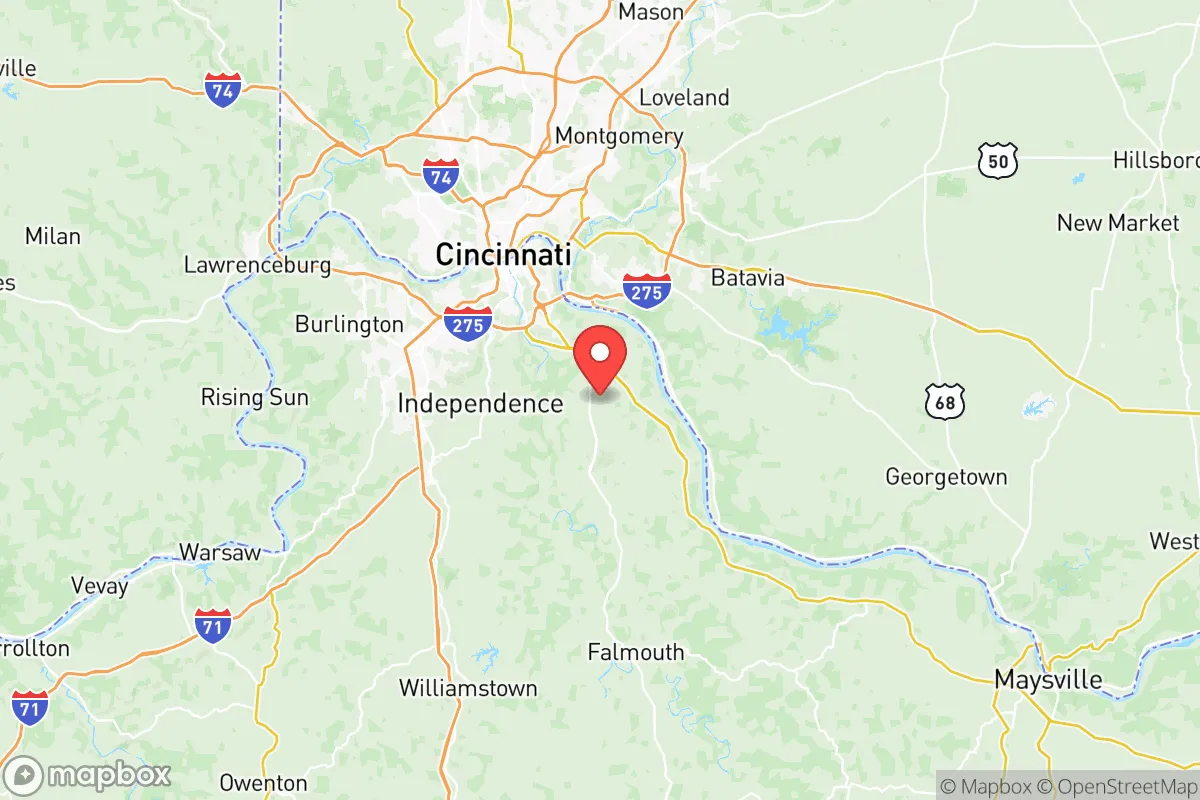
The three-point gap between Campbell County (R+18) and the state (R+15) might not sound like much, but it’s significant when you look at the map. The real story is the internal divide. Newport and Covington, the two largest cities along the Ohio River, are where you’ll find the blue-leaning precincts. These areas have seen an influx of younger professionals and out-of-state transplants, and their voting patterns are starting to mirror Cincinnati’s more progressive tilt. Walk into a coffee shop in Covington’s Mainstrasse Village, and you’ll hear a very different political conversation than you would in the county’s rural stretches. Meanwhile, Alexandria, Cold Spring, and Highland Heights are the conservative strongholds. These are the bedroom communities where families have lived for generations, and the politics are reliably, and proudly, red. The swing precincts are few and far between, but they tend to cluster in the unincorporated areas between the cities—places like Ryland Heights and California, where old-guard conservative values still hold sway but are being tested by new development. Compared to the rest of Kentucky, Campbell County is a bit more of a bellwether for the state’s suburban shift, but it’s still a long way from turning purple.
What this means for residents
For a long-time resident like me, the biggest concern is the slow creep of progressive policies from the river cities into county-wide governance. It’s not an immediate takeover, but it’s a real shift. You see it in local school board races and city council meetings, where the conversation is moving away from fiscal responsibility and parental rights toward more government involvement in daily life. The push for "equity" initiatives in some of the county’s public schools is a red flag—it feels like an overreach that prioritizes ideology over education. On the flip side, the county’s strong Republican majority has kept a lid on the worst of it. Property taxes remain relatively low compared to neighboring Hamilton County, Ohio, and there’s a general resistance to new zoning regulations that would tell you what you can and can’t do with your own land. That’s the Campbell County I grew up in—a place where personal freedom and local control still mean something.
One cultural distinction that stands out is the county’s relationship with alcohol regulation. Campbell County has a long history of being "wet," unlike many of its more rural Kentucky neighbors, but that’s less about progressive values and more about a practical, live-and-let-live attitude. The real battle lines are drawn over development and land use. There’s a growing tension between those who want to preserve the county’s rural character and those pushing for more dense, "smart growth" projects that often come with strings attached from state or federal grants. If you value your Second Amendment rights and want to keep government out of your healthcare decisions, Campbell County is still a safe bet, but you need to keep an eye on the local elections. The next five to ten years will determine whether this county stays the conservative stronghold it’s always been or starts to drift toward the same policies that are causing problems in places like Louisville and Lexington.

State Political ClimatePolitical Climate in Kentucky
State Political AnalysisPolitical Environment in the State
Kentucky is a deeply red state with a Cook PVI of R+15, meaning it votes about 15 points more Republican than the national average in presidential elections. The dominant coalition is a mix of rural conservatives, evangelical Christians, and working-class voters who have shifted rightward over the past two decades, while the state’s few urban centers—Louisville and Lexington—pull in the opposite direction. Over the last 10-20 years, Kentucky has moved from a reliably but not overwhelmingly Republican state to one where the GOP holds supermajorities in both legislative chambers and every statewide office except the governorship, which Democrats have won only sporadically (most recently Andy Beshear in 2019 and 2023, largely on personal appeal and disaster response).
Urban vs. rural divide
The political map of Kentucky is a textbook study in urban-rural polarization. Jefferson County (Louisville) and Fayette County (Lexington) are the only reliably blue strongholds, with Louisville delivering margins of 15-20 points for Democrats in recent cycles. But even these cities have conservative suburbs: Oldham County, just northeast of Louisville, voted +37 for Trump in 2020, while Boone County in the Cincinnati metro area (part of Northern Kentucky) is solidly red. The real action is in the rural and exurban counties that have swung hard right. Pike County in the eastern coalfields, once a Democratic stronghold thanks to union coal miners, flipped from Obama to Trump and now votes +50 R. Warren County (Bowling Green) and Madison County (Richmond) are growing conservative hubs driven by manufacturing and state universities. The Purchase area in far western Kentucky—counties like Marshall and Calloway—are deeply red, with Trump winning some precincts by 70+ points. The only real political tension is between the Louisville/Lexington bubbles and the rest of the state, which feels increasingly ignored by the coastal media and federal government.
Policy environment
Kentucky’s policy environment is aggressively conservative on most fronts. The state has a flat income tax that is being phased down from 5% to 4% by 2026, with a goal of elimination—a major draw for those fleeing high-tax states. There is no state property tax; local governments handle that. The regulatory climate is business-friendly, with right-to-work laws and no state-level minimum wage above the federal $7.25. On education, Kentucky has a robust school choice movement: the 2022 “Education Opportunity Account Act” created tax-credit scholarships for private school tuition, though it was struck down by the state Supreme Court in 2023. The legislature is currently pushing a constitutional amendment to allow public funds for private and charter schools. Healthcare is a mixed bag: the state expanded Medicaid under the ACA, but the legislature has imposed work requirements (currently tied up in court). Election laws tightened after 2020: voter ID is required, absentee ballot drop boxes were banned, and early voting windows were shortened. The state also passed a near-total abortion ban in 2022 with no exceptions for rape or incest, only to save the mother’s life. For a conservative audience, this is a state that largely respects local control and limits government overreach, though the Medicaid expansion remains a point of contention among fiscal hawks.
Trajectory & freedom
On the freedom front, Kentucky has been moving in the right direction for conservatives, but not without some backsliding. The 2019 “Constitutional Carry” law (SB 150) allowed permitless concealed carry of firearms, a major win for Second Amendment advocates. In 2023, the legislature passed a “Parents’ Bill of Rights” (HB 163) requiring schools to notify parents of any medical or mental health services sought by a minor, and banning instruction on sexual orientation or gender identity in elementary grades. This was a direct response to perceived overreach by the Biden administration and local school boards. On medical freedom, Kentucky banned COVID-19 vaccine mandates for state employees and contractors in 2023 (SB 9), and the attorney general has sued the federal government over various mandates. However, property rights took a hit with the 2023 “Land Use” bill (HB 581), which limited local governments’ ability to regulate short-term rentals and zoning—a win for property owners but a loss for local control. The biggest red flag for liberty-minded folks is the state’s heavy reliance on federal dollars (about 40% of the budget), which creates a dependency that could be weaponized by Washington. Overall, Kentucky is trending more free on guns, education, and medical choice, but the tax burden is still too high for some, and the state’s pension crisis (unfunded liabilities over $40 billion) looms as a future tax threat.
Civil unrest & political movements
Kentucky has seen its share of political flashpoints, but they’re less about left-right street battles and more about cultural and legal clashes. The 2020 Breonna Taylor protests in Louisville were the most visible, with months of demonstrations, property damage, and a heavy police presence. That event radicalized many suburban conservatives who saw the protests as lawless and the city’s response as weak. Since then, Louisville has seen a rise in organized left-wing activism, including the “Louisville People’s Assembly” pushing for police reform and defunding. On the right, the “Kentucky Freedom Coalition” and local Moms for Liberty chapters have been highly active in school board meetings, particularly in Boone County and Oldham County, where they’ve successfully pushed for book bans and curriculum transparency. Immigration politics are less heated than in border states, but there’s a growing concern about the influx of migrants into Louisville and Lexington, with some local officials declaring “sanctuary city” policies—though the state legislature has passed laws banning such designations (2023’s HB 200). Election integrity remains a hot topic: the 2020 election saw Trump win Kentucky by 26 points, but many conservatives remain skeptical of the state’s electronic voting machines and have pushed for hand-count audits. The most visible political movement is the “Bluegrass Freedom” network, which organizes around school choice, gun rights, and anti-mandate issues. A new resident would notice the strong presence of “Don’t Tread on Me” flags and pro-life billboards along interstates, especially in the rural stretches between Elizabethtown and Bowling Green.
Projection
Over the next 5-10 years, Kentucky is likely to become even more Republican, but with a growing urban-rural tension that could create friction. In-migration is modest but noticeable: people from California, Illinois, and Ohio are moving to the Lexington and Bowling Green areas for lower housing costs and a more conservative culture. This influx is slowly shifting the suburbs rightward, but it’s also bringing some progressive ideas into the blue cities. The real demographic shift is internal: rural counties are losing population, while the I-65 corridor from Louisville to Bowling Green is growing. This could make the state’s politics more suburban and less rural over time, potentially moderating some social issues while keeping fiscal conservatism strong. The pension crisis is the ticking time bomb—if the state is forced to raise taxes to cover it, that could erode the low-tax advantage. Expect continued fights over school choice, with a constitutional amendment likely passing in 2024 or 2026. On personal freedom, the trend is toward more liberty: permitless carry is here to stay, parental rights will expand, and vaccine mandates are dead. The biggest unknown is federal policy—if a future Democratic administration withholds highway funds or Medicaid dollars, Kentucky’s dependence on Washington could force compromises that anger the base.
For a new resident, the bottom line is this: Kentucky offers a high degree of personal freedom, low taxes, and a culture that respects traditional values, especially outside Louisville and Lexington. You’ll find a state where your Second Amendment rights are secure, your kids’ education is more likely to reflect your values, and your tax burden is shrinking. But you’ll also need to accept that the state’s infrastructure is aging, the pension system is shaky, and the urban areas are becoming more progressive. If you’re looking for a place where you can live your life without the government breathing down your neck, and you’re willing to drive an hour to the nearest Costco, Kentucky is a solid bet. Just keep an eye on Frankfort—the legislature is friendly now, but the next governor could change the equation.
* Values derived from national, state, county, city and local statistics and may differ in a specific area. Last updated: 2026-05-13T08:42:12.000Z
Narrative content on this page is AI-generated and may contain mistakes. Verify any details that matter before acting on them.
ReloMaps may earn a commission from affiliate links at no extra cost to you.

