Photo: Wikipedia
Personal Sovereignty in Kivalina, AK
Strong independent fundamentals that actively favor personal liberty and low regulation.
What does Personal Sovereignty tell us?
Personal Sovereignty measures your capacity for self-reliance and independence with minimal government friction. Higher scores mean fewer barriers between you and the way you want to live... but it assumes you have the space you need and good neighbors.
What does this tell us?
Personal Sovereignty measures your capacity for self-reliance and independence with minimal government friction. Higher scores mean fewer barriers between you and the way you want to live... but it assumes you have the space you need and good neighbors.
State Policy
Energy independence: Net exporter (350% of energy produced in-state)
Personal Liberty
Homesteading

Personal Liberty Analysis
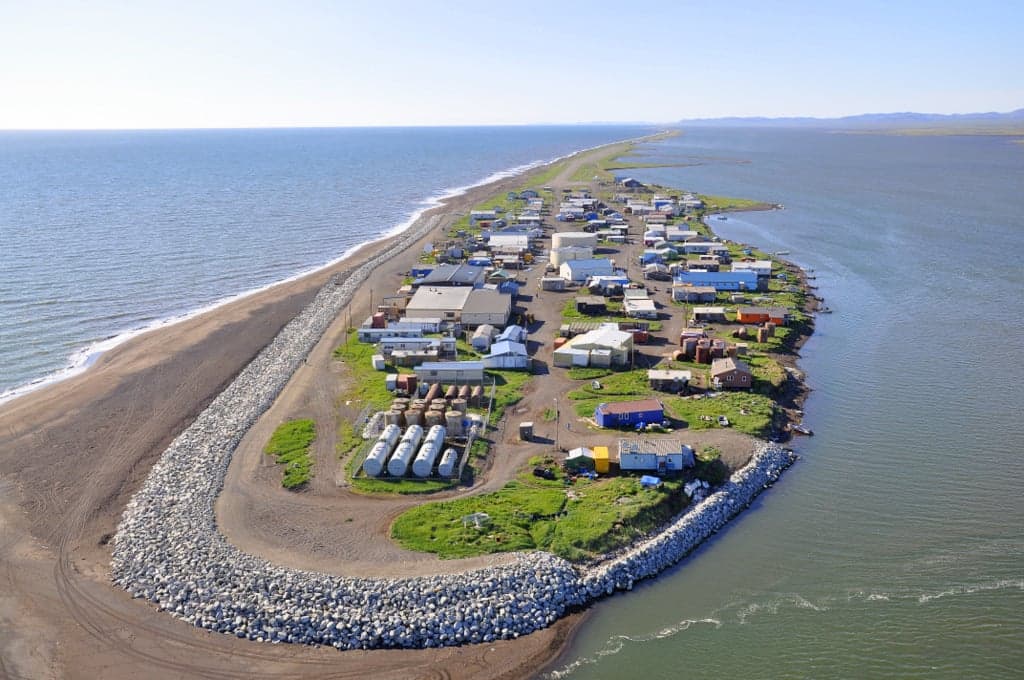
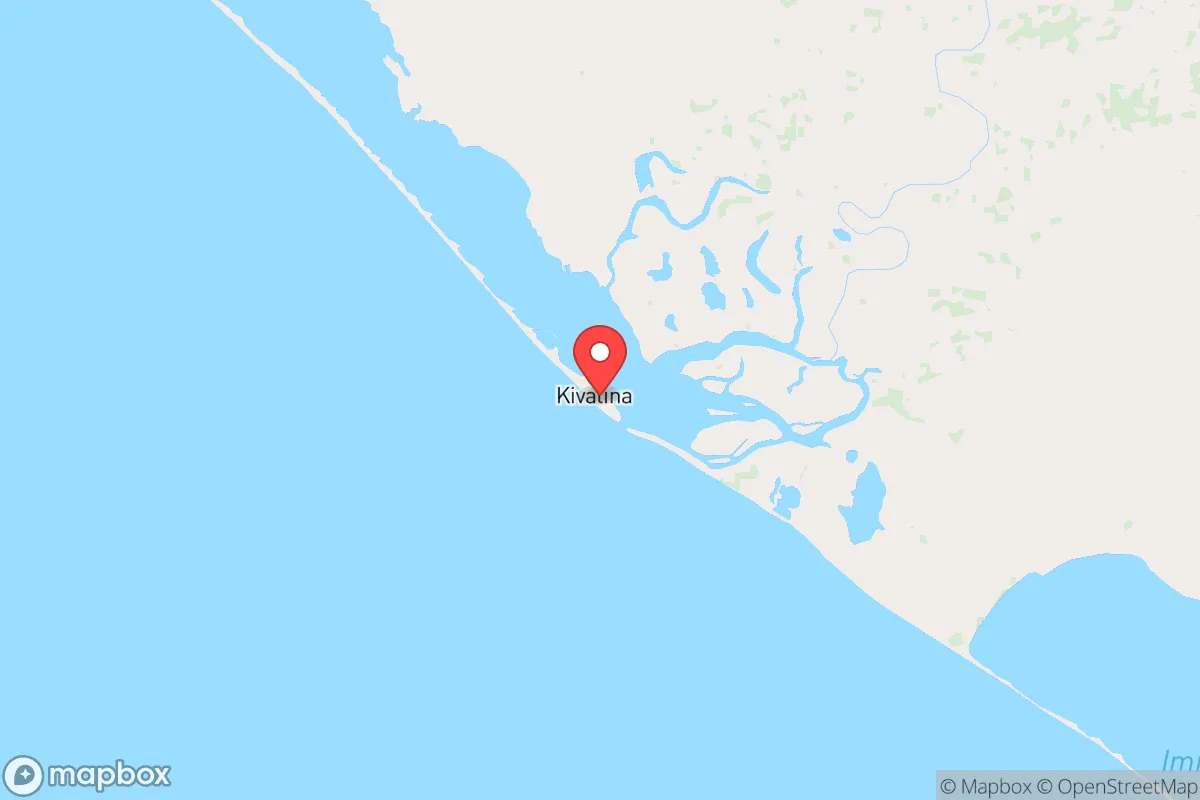
Kivalina, Alaska, offers a personal sovereignty environment that is as extreme as its geography—a remote barrier island where state presence is thin, but federal and tribal governance layers create a complex web of authority. For the survivalist or prepper seeking maximum autonomy, this village of roughly 400 Iñupiat residents presents a paradox: physical isolation from most government infrastructure, yet legal entanglements with the Northwest Arctic Borough, the State of Alaska, and the federal government, particularly over climate relocation and land use. The practical reality is that daily life here demands self-reliance, but the legal framework still imposes constraints that a liberty-minded individual must navigate carefully.
Tax burden and regulatory posture in a remote Alaska village
Alaska’s state-level tax posture is among the most favorable in the nation for those seeking to minimize government extraction. There is no state income tax, no state sales tax, and no state property tax, a direct result of the Alaska Permanent Fund and oil revenue. Kivalina itself, as a second-class city, does not levy a local sales tax, and the Northwest Arctic Borough imposes no borough-wide property tax. This means your earnings, purchases, and real estate are largely untaxed by local or state entities. However, the regulatory posture is not absent. The Alaska Department of Environmental Conservation (ADEC) enforces strict water and waste management rules, which are particularly burdensome in a village without piped water or sewer—most homes rely on honey buckets and hauled water, and ADEC mandates specific disposal methods. The federal Environmental Protection Agency (EPA) also has a say, especially given Kivalina’s status as a site of climate-related erosion, with lawsuits and relocation planning creating a regulatory fog. For the prepper, the tax burden is near-zero, but the regulatory overhead on subsistence activities—hunting, fishing, and building—can be significant, requiring permits and compliance with state fish and game laws, as well as federal Marine Mammal Protection Act rules for seal and whale harvests.
Self-defense and gun law specifics in a remote Alaskan context
Alaska is one of the most gun-friendly states in the union, and Kivalina’s remote location amplifies that reality. No permit is required to purchase, own, or carry a firearm, whether open or concealed, for anyone 18 or older. There is no state-level firearm registry, no waiting period, and no magazine capacity restrictions. The Alaska Constitution explicitly protects the right to keep and bear arms under Article I, Section 19, and state preemption laws prevent local governments like Kivalina’s city council from enacting their own gun control ordinances. This means you can legally carry a rifle for bear defense or a sidearm for personal protection without any bureaucratic hurdles. However, practical considerations matter: ammunition is expensive and must be flown or barged in, and the corrosive salt air demands diligent maintenance. For self-defense against wildlife—brown bears and polar bears are present—a .44 Magnum revolver or a 12-gauge shotgun with slugs is standard. The village has no local police force; law enforcement is provided by the Alaska State Troopers, who are based in Kotzebue, a 30-minute flight away. In practice, self-defense is entirely your responsibility, and the legal environment supports that. The only caveat is federal law: the Gun Control Act of 1968 still applies, so felons and certain domestic violence misdemeanants are prohibited, and any firearm purchase from a licensed dealer requires a background check via the NICS system. But private sales between individuals are unregulated.
Self-reliance and homesteading viability in Kivalina
Homesteading in Kivalina is not for the faint of heart, but for those committed to off-grid living, it offers a blank slate. The village is on a barrier island, with lot sizes typically ranging from 0.1 to 0.5 acres, though most land is held under a combination of Native allotments and the Kivalina IRA (Indian Reorganization Act) council. Private fee-simple ownership is rare; most land is subject to tribal or borough jurisdiction, meaning you cannot simply buy a plot and build. Zoning is minimal—the Northwest Arctic Borough has no formal zoning code for Kivalina—but building permits are required from the city for new construction, and the Alaska Department of Natural Resources oversees any state-owned land. Off-grid feasibility is high: there is no municipal power grid, so residents rely on diesel generators, solar panels, or wind turbines. The average annual temperature is 23°F, with permafrost beneath the island, so building requires pilings or gravel pads to prevent thaw settlement. Water is hauled from the lagoon or collected from rain, and sewage is handled via honey buckets. For the prepper, this is a true frontier: you must be your own utility company, waste manager, and food supplier. Subsistence hunting of caribou, seal, and fish is central to life, but state and federal regulations on bag limits and seasons still apply. The Alaska Department of Fish and Game requires a hunting license and big game tags, though subsistence priority is given to rural residents under state law. The viability of full self-reliance is real but demands a skill set far beyond suburban homesteading—you need to know how to butcher a seal, maintain a generator at -40°F, and navigate sea ice.
Personal liberties: parental rights, medical autonomy, speech, and property
Alaska generally respects personal liberties, but Kivalina’s unique context creates friction points. Parental rights are strong under state law; Alaska has no mandatory vaccination laws for school attendance (though the state requires certain immunizations for public school, with broad medical and religious exemptions), and homeschooling is deregulated—no notification or testing is required. The Alaska Supreme Court has upheld parental authority in medical decisions, but the state’s Office of Children’s Services can intervene in cases of neglect, which in a remote village might be triggered by a child’s lack of access to healthcare. Medical autonomy is a double-edged sword: there is no hospital in Kivalina—only a small clinic run by the Maniilaq Health Center, a tribal organization. For serious issues, you must be medevaced to Kotzebue or Anchorage, which can take hours. The state does not have a right-to-try law for terminal patients, but Alaska’s general medical freedom is above average, with no state-level mandates for COVID-19 vaccines or masks. Speech is fully protected under the First Amendment and the Alaska Constitution, which has a stronger free speech clause than the federal version. Property rights are more complicated: the Alaska Native Claims Settlement Act (ANCSA) of 1971 extinguished aboriginal title and created village and regional corporations that own most land. In Kivalina, the Kivalina IRA council controls much of the land base, and non-Native individuals cannot own land outright unless it is a state-selected or privately patented parcel—extremely rare. This means your property rights are essentially leasehold or communal, not fee-simple, which is a significant limitation for those seeking absolute control over their land.
Overall, Kivalina offers a sovereignty profile that is a study in contrasts. The tax burden is near-zero, gun laws are among the most permissive in the country, and the physical isolation forces a level of self-reliance that most Americans will never experience. But the regulatory overlay from tribal, state, and federal entities—particularly around land ownership, subsistence harvests, and environmental compliance—creates a ceiling on personal autonomy that a hardcore survivalist must accept. Compared to the Lower 48, where property taxes and zoning codes are ubiquitous, Kivalina is a libertarian dream on paper but a bureaucratic maze in practice. For the prepper willing to navigate the ANCSA land system and the tribal council’s authority, and who can master the extreme climate, it is one of the last places in the United States where you can live largely outside the reach of the state—but only if you are prepared to operate within a framework that is not entirely your own.

* Values derived from national, state, county, city and local statistics and may differ in a specific area. Last updated: 2026-04-19T19:28:24.000Z
Narrative content on this page is AI-generated and may contain mistakes. Verify any details that matter before acting on them.
ReloMaps may earn a commission from affiliate links at no extra cost to you.

