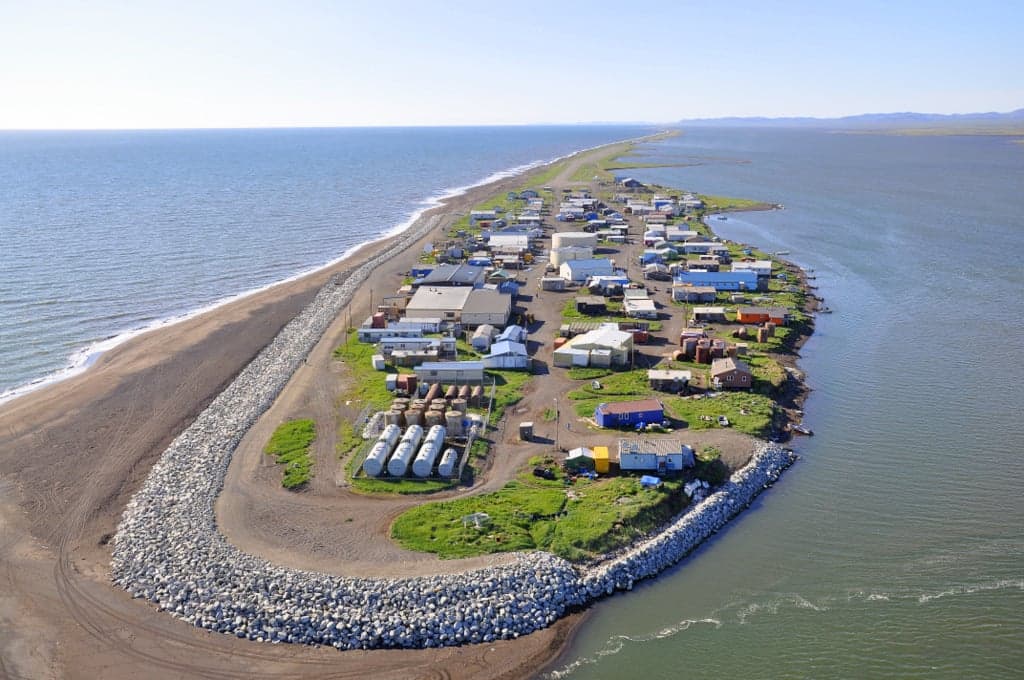
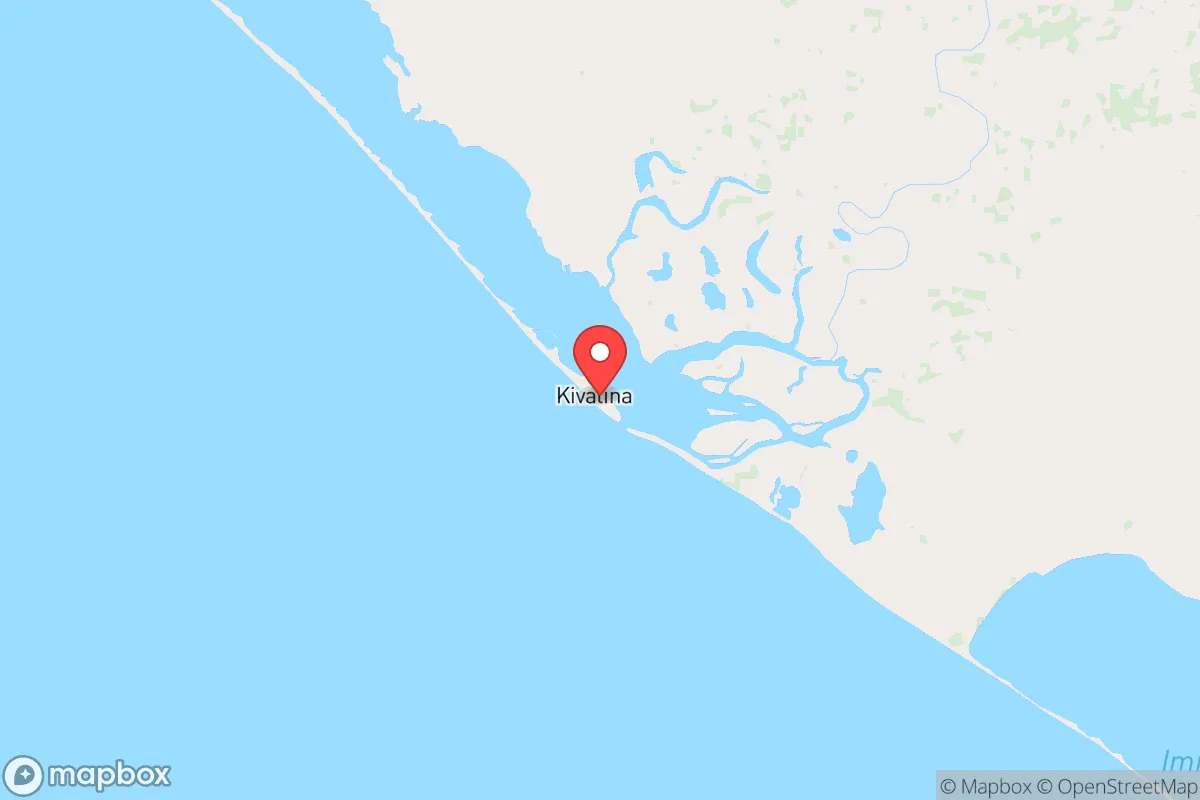
Photo: Wikipedia
Political ClimatePolitical Climate in Kivalina, AK
District shown is the primary district for this city’s centroid. Cities may span multiple districts.
Inherited from parent state — no local data available.
Local Political AnalysisPolitical Analysis of Kivalina, AK
Kivalina, Alaska, has historically been a deeply conservative community, and its political leanings reflect that, with a Cook PVI of R+6. For as long as I can remember, folks here have valued self-reliance, traditional subsistence living, and a fierce independence from outside interference. But lately, there's a real undercurrent of concern—a feeling that the old ways of doing things, where the village council and local elders called the shots, are being slowly chipped away by outside pressures and a creeping progressive agenda that doesn't understand our way of life.
How it compares
When you compare Kivalina to other places in the region, the contrast is stark. Up in Utqiaġvik (Barrow), you see a lot more government influence and a push for policies that feel disconnected from the ground. Down in Kotzebue, there's a similar conservative streak, but even there, you can feel the shift—more talk about "equity" and "climate justice" that sounds like it's straight out of a Juneau or Anchorage policy meeting. Kivalina has always been a place where you take care of your own, where the idea of the government telling you how to live, what to hunt, or how to raise your kids is met with a hard "no." That's what makes our R+6 rating feel like a badge of honor, but it's also a warning sign. The closer we get to the coast, the more we see federal agencies trying to dictate land use and resource management, and that's a direct threat to our personal freedoms.
What this means for residents
For those of us living here, the political climate isn't just about who you vote for—it's about daily life. The push for more government oversight in things like subsistence hunting and fishing permits, or the pressure to adopt "green" energy mandates that don't fit our remote reality, feels like a direct attack on our rights. I've seen neighbors get frustrated with new regulations that make it harder to put food on the table, all in the name of some abstract environmental goal. The real concern is that these progressive ideas, often pushed by outside groups with no skin in the game, are eroding the very fabric of our community. We don't need a bureaucrat in a warm office telling us how to manage our land; we need the freedom to adapt and survive on our own terms.
There's also a cultural distinction here that outsiders often miss. Kivalina is a place where tradition and personal responsibility are intertwined. The shift towards a more progressive, government-centric model—where the state or federal government is seen as the solution to every problem—is deeply unsettling. It undermines the authority of our elders and the wisdom of generations who have lived off this land. If we're not careful, we'll lose the very independence that makes Kivalina special. The long-term trajectory, if we don't push back, is a slow erosion of our rights and a future where our children are raised to look to the government for answers, not to themselves. That's a future I'm not willing to accept, and I know I'm not alone in feeling that way.

State Political ClimatePolitical Climate in Alaska
State Political AnalysisPolitical Environment in the State
Alaska has long been a fiercely independent state with a strong libertarian streak, leaning Republican in most statewide elections but with a stubborn independent and moderate streak that keeps things interesting. The state voted for Donald Trump by about 10 points in both 2020 and 2024, but it also elected a Democratic U.S. House member, Mary Peltola, in a special election in 2022, before flipping back to Republican Nick Begich in 2024. Over the last 20 years, the state has shifted from a reliably red stronghold to a more volatile battleground where the old oil-driven GOP machine has fractured, and a new wave of conservative populism is competing with a growing progressive influence in Anchorage and Juneau.
Urban vs. rural divide
The political map of Alaska is a study in contrasts. The largest city, Anchorage, is the state’s political bellwether, but it’s far from monolithic. The city’s core neighborhoods—like Spenard and downtown—lean left, while the suburban sprawl of Eagle River, Chugiak, and the Hillside areas are solidly conservative. In the 2022 gubernatorial race, Anchorage split almost evenly between Republican Mike Dunleavy and independent Bill Walker, with the city’s moderate Republicans often crossing over. Juneau, the capital, is the state’s most consistently blue city, driven by state government employees and a strong environmental activist presence. Fairbanks is more conservative but has a sizable military and university population that can swing elections. The real story is the rural divide: the vast, roadless Bush Alaska—places like Bethel, Nome, and Barrow (Utqiaġvik)—votes overwhelmingly Democratic, often by 70-80% margins, due to strong tribal government influence and heavy reliance on federal programs. Meanwhile, the Mat-Su Borough, anchored by Wasilla and Palmer, is the state’s conservative heartland, voting 70%+ Republican and driving the state’s rightward tilt. The Kenai Peninsula, with towns like Soldotna and Homer, is a mix: Soldotna is deep red, while Homer has a quirky, artsy libertarian-left vibe.
Policy environment
Alaska’s policy environment is a mixed bag for conservatives. On the plus side, there is no state income tax and no statewide sales tax, making it one of the most tax-friendly states in the nation. The state’s regulatory posture on oil and gas development is generally permissive, though the Biden administration’s restrictions on ANWR and the National Petroleum Reserve have been a major point of contention. Education policy is a flashpoint: the state has a school choice program that includes charter schools and correspondence programs, but the powerful teachers’ union in Anchorage has fought to keep funding formulas centralized. In 2024, the legislature passed a bill expanding parental rights in education, requiring schools to notify parents of curriculum changes involving sexuality or gender identity. Healthcare is a mixed bag—the state expanded Medicaid under the Affordable Care Act in 2015, which many conservatives see as a federal overreach, but the state also has a robust telehealth system that serves rural areas. Election laws are relatively open: Alaska uses a top-four primary system and ranked-choice voting, which was passed by ballot initiative in 2020. This system has been criticized by conservatives for diluting party power and allowing moderate candidates to win with less than 50% of the first-choice vote. A repeal effort is underway for 2026.
Trajectory & freedom
Alaska’s trajectory on personal freedom is a tug-of-war. On the positive side, the state has some of the strongest gun rights in the nation: no permit required for concealed carry, no magazine capacity limits, and a state preemption law that blocks local gun control. In 2023, the legislature passed a bill prohibiting state enforcement of any future federal gun bans, a clear stand against federal overreach. On parental rights, the 2024 notification law was a win for conservatives, but the state’s education department still pushes progressive DEI initiatives in some districts. Medical autonomy took a hit in 2020 when the state mandated COVID-19 vaccines for healthcare workers, though that mandate was later rescinded. Property rights are generally strong, but the state’s vast federal land holdings (60% of Alaska is federally owned) create constant friction—the Biden administration’s 2023 decision to block the Ambler Road project in the Brooks Range was seen as a major federal land grab. The Permanent Fund Dividend (PFD), the annual oil-revenue check every resident receives, is a unique freedom-enhancing policy that gives Alaskans a direct stake in resource development. However, the state’s budget has become increasingly dependent on drawing from the PFD’s earnings reserve, which some see as a slow erosion of that freedom.
Civil unrest & political movements
Alaska has seen its share of political flashpoints. The 2020 election integrity controversy was muted compared to the Lower 48, but the ranked-choice voting system has sparked ongoing protests from conservative groups like the Alaska Republican Party and the Alaska Policy Forum. In 2022, a group of armed protesters gathered at the Anchorage Legislative Information Office to oppose the state’s COVID-19 mandates, a scene that felt more like a Lower 48 standoff than typical Alaskan politics. Immigration politics are less visible here due to the state’s small foreign-born population, but the issue of sanctuary policies has flared up in Anchorage, where the city council voted in 2023 to limit cooperation with ICE, drawing sharp backlash from the state legislature. The secessionist and nullification rhetoric is stronger in Alaska than almost any other state—the Alaska Independence Party, which once elected a governor (Wally Hickel), still advocates for a vote on secession. The environmental movement is a major force, with groups like the Sierra Club and Alaska Wilderness League organizing protests against oil drilling, particularly in the Arctic Refuge. The 2021 Willow Project protests in Washington, D.C., had a strong Alaska contingent, but within the state, support for resource development remains high, especially in the Mat-Su and Kenai.
Projection
Over the next 5-10 years, Alaska is likely to become more polarized rather than more uniformly conservative. The in-migration pattern is a double-edged sword: the state is seeing an influx of remote workers and retirees from blue states, many of whom bring progressive politics, especially to Anchorage and Juneau. At the same time, the Mat-Su Borough is growing rapidly, drawing conservative families from the Lower 48 who are fleeing high taxes and crime in places like California and Washington. The ranked-choice voting system, if it survives the 2026 repeal effort, will continue to produce moderate-to-liberal winners in statewide races, frustrating the conservative base. The state’s fiscal situation is the wild card: if oil prices stay high, the PFD will remain robust, and the state can avoid an income tax. But if prices drop, the pressure to impose a state income tax or sales tax will grow, which would be a major blow to personal freedom. The federal land issue will only intensify, with the Biden administration’s restrictions likely to be partially reversed under a future Republican president, but the legal battles will drag on. A new resident should expect a state that remains culturally conservative in the Bush and the suburbs, but where the urban centers are slowly shifting left, and where the fight over resource development and federal control will define the decade.
For a conservative moving to Alaska, the bottom line is this: you’ll find a state that still values individual liberty, low taxes, and gun rights, but you’ll need to pick your community carefully. The Mat-Su Borough, the Kenai Peninsula, and Fairbanks offer the most aligned political environment, while Anchorage and Juneau will require more vigilance on local elections and school board races. The ranked-choice voting system means your vote may not go as far as you’d like, but the state’s independent streak also means that no single party can take you for granted. If you value being left alone by the government, Alaska is still one of the best bets in the nation—just keep an eye on the ballot measures and the federal land managers.
* Values derived from national, state, county, city and local statistics and may differ in a specific area. Last updated: 2026-04-19T19:28:24.000Z
Narrative content on this page is AI-generated and may contain mistakes. Verify any details that matter before acting on them.
ReloMaps may earn a commission from affiliate links at no extra cost to you.

