Photo: Wikipedia
Strategic Assessment of Kivalina, AK
Strong survivability profile. Good buffer from population centers, with manageable environmental and tactical risks.
What does the Strategic Assessment tell us?
Our Strategic Assessment grades tactical survivability of an area. Major population centers, military targets, fallout zones, natural disasters, and border exposure all drive risk — lower exposure means a more defensible position in a crisis.
This is heavily inspired by Joel Skousen's Strategic Relocation book. Highly recommended you checkout the book ($)What does this tell us?
Our Strategic Assessment grades tactical survivability of an area. Major population centers, military targets, fallout zones, natural disasters, and border exposure all drive risk — lower exposure means a more defensible position in a crisis.
This is heavily inspired by Joel Skousen's Strategic Relocation book. Highly recommended you checkout the book ($)Strategic Pillars

Key Distances
Regional Safe Places
Below is our recommended "safe zones" in Alaska and the surrounding area based on our strategic heuristics. For most people, it's unrealistic to live in a “safe zone” full-time due to work, family or other personal reasons. They tend to be more rural. However, many of these areas are perfect for second homes and retreat properties that double as a vacation home or even a short-term rental.
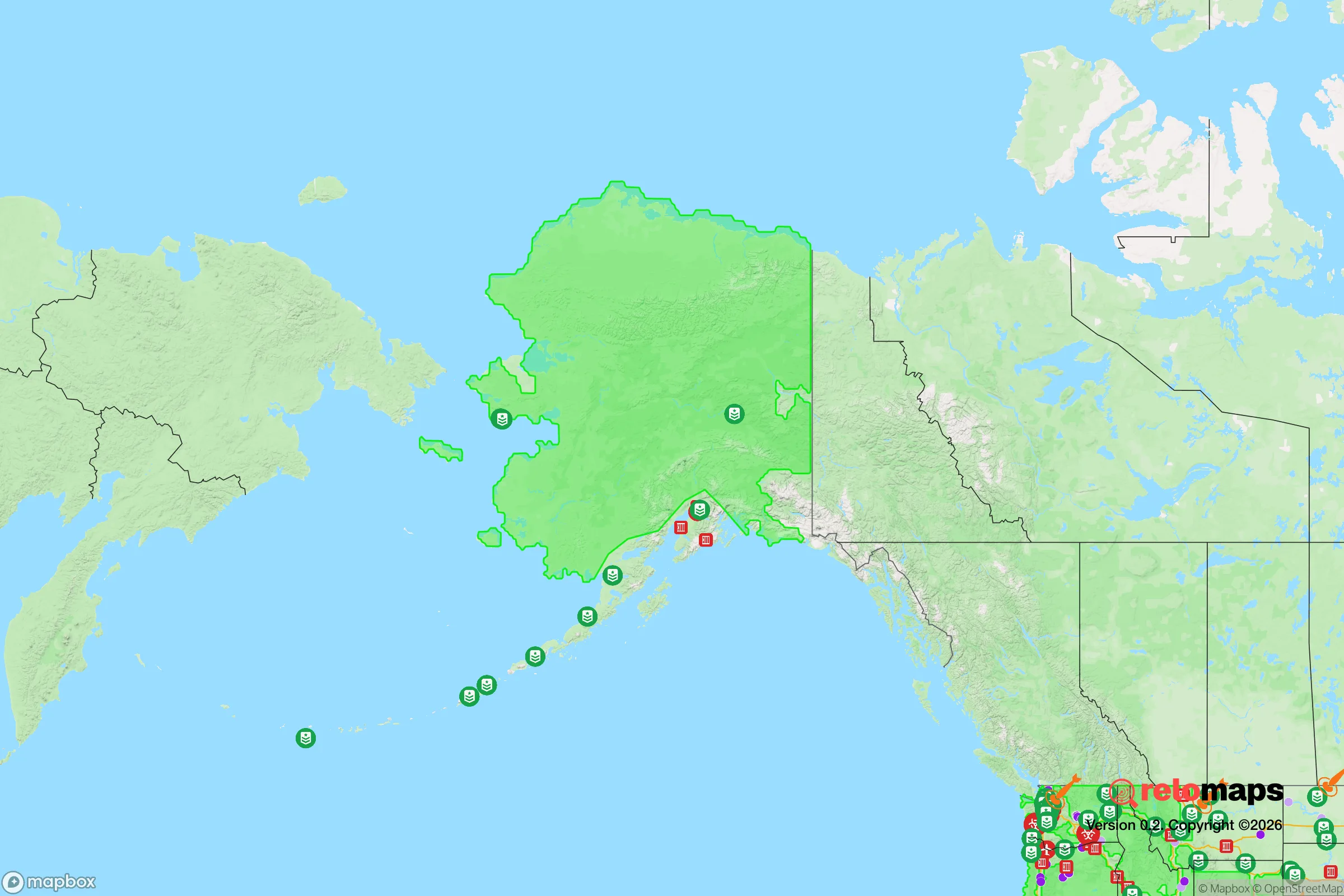
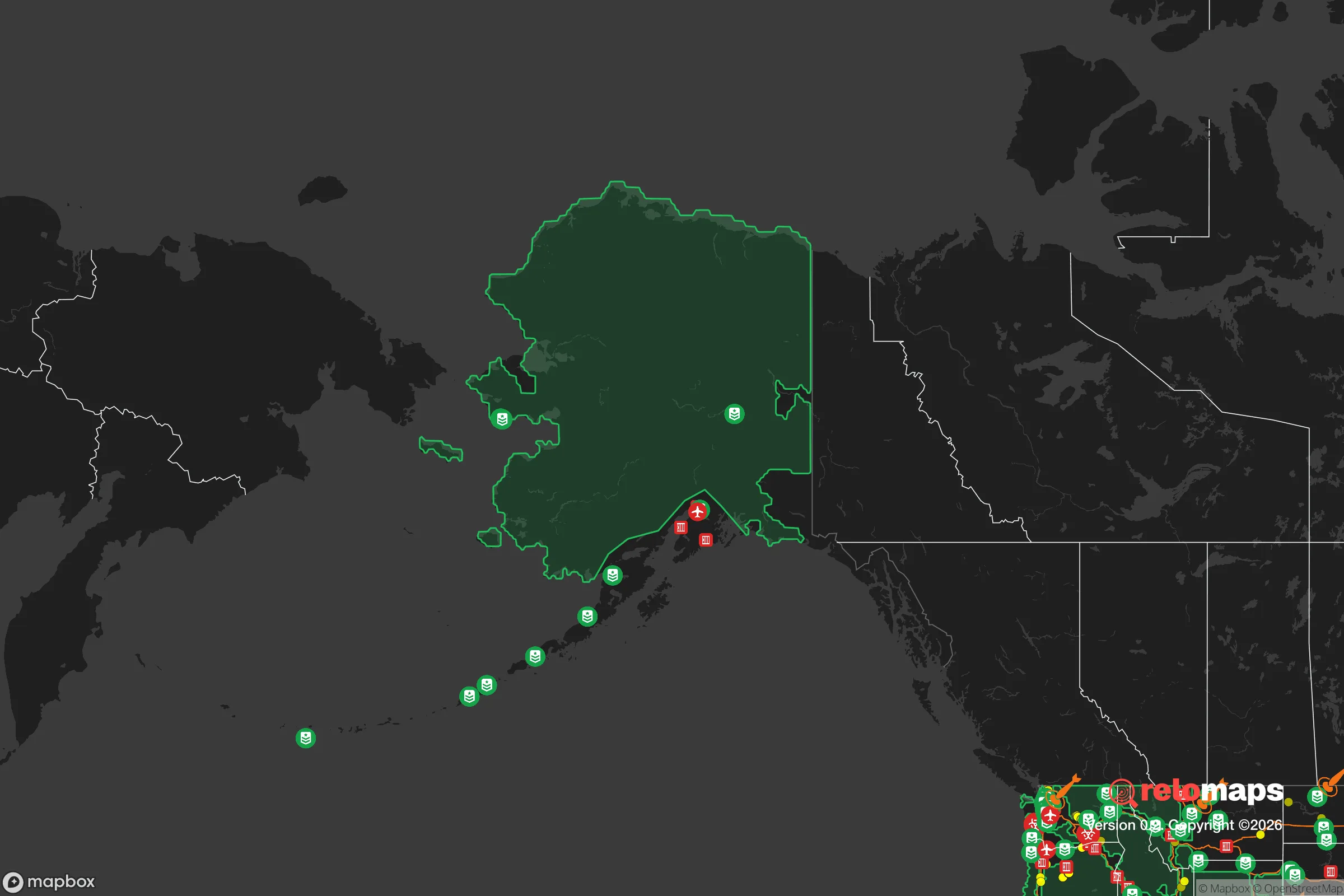


Important Note: For informational purposes only. This does not mean nothing bad ever happens in the green zones. Please use common sense. This is based on public data and modeled with AI. We tried to take a conservative approach but mistakes happen. We update this regularly as new information becomes available.
Solar Generator Recommendations
Backup power matters more here than in safer locations. We've picked three solar generators across budgets and capacity tiers — start with the budget unit if you only need a few essentials, or step up if you want to run a fridge and HVAC for days at a time.

Jackery Portable Power Station Explorer 300
Budget OptionPower on the Go: Weighing only 11 lbs, it's convenient to set up and store with book-sized foldable solar panels

BLUETTI Portable Power Station AC180
Designed for both indoor and outdoor scenarios, AC180 is highly capable as it has a robost capacity and continuous output power.

EF ECOFLOW DELTA Pro Ultra Power Station
Upgraded PickEcoFlow DELTA Pro Ultra is a whole-home energy system designed to grow with your family. Integrated with the Smart Home Panel 2, it scales to meet your evolving energy needs — keeping your home powered, intelligent, and secure through every stage of life.
We earn a commission, at no additional cost to you.
Strategic Assessment Analysis
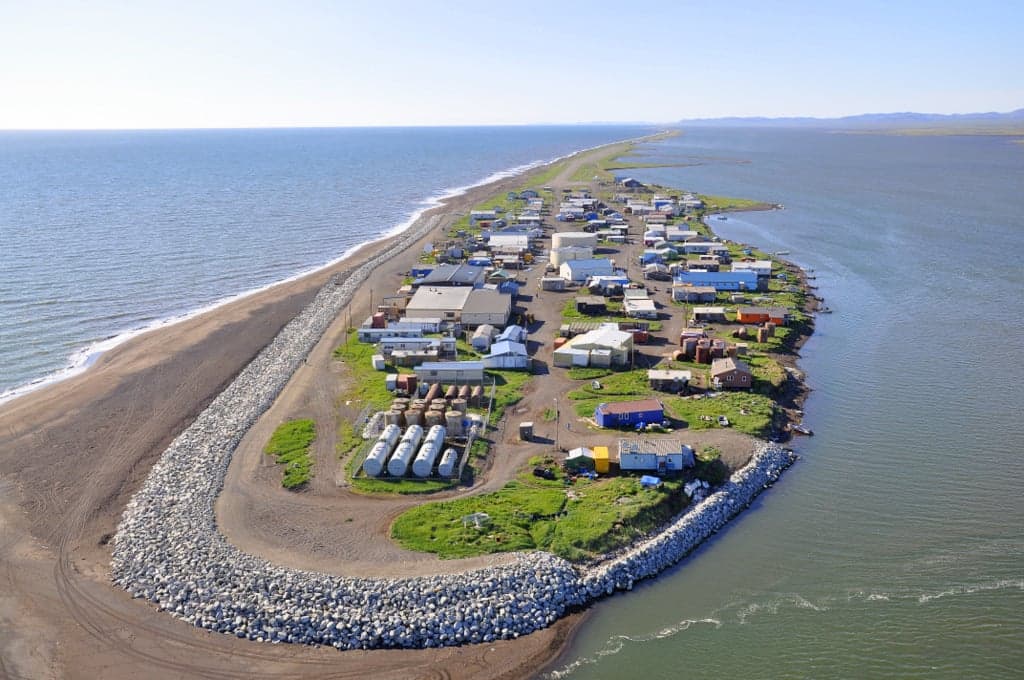
Kivalina, Alaska, is one of the most remote and strategically defensible locations in the United States, offering a near-total buffer from the cascading failures of urban centers and the fallout of societal collapse. Situated on a narrow barrier island at the edge of the Chukchi Sea, roughly 80 miles northwest of Kotzebue and over 500 miles from Anchorage, this Inupiat community of roughly 400 people sits in a position that is both geographically isolated and naturally resilient. For a relocator with a prepper mindset, Kivalina represents a hard-mode survival outpost—extreme climate, limited infrastructure, and no road access—but also a place where the noise of the collapsing world is physically and logistically muffled by hundreds of miles of tundra and sea ice.
Geographic isolation and natural defensive advantages
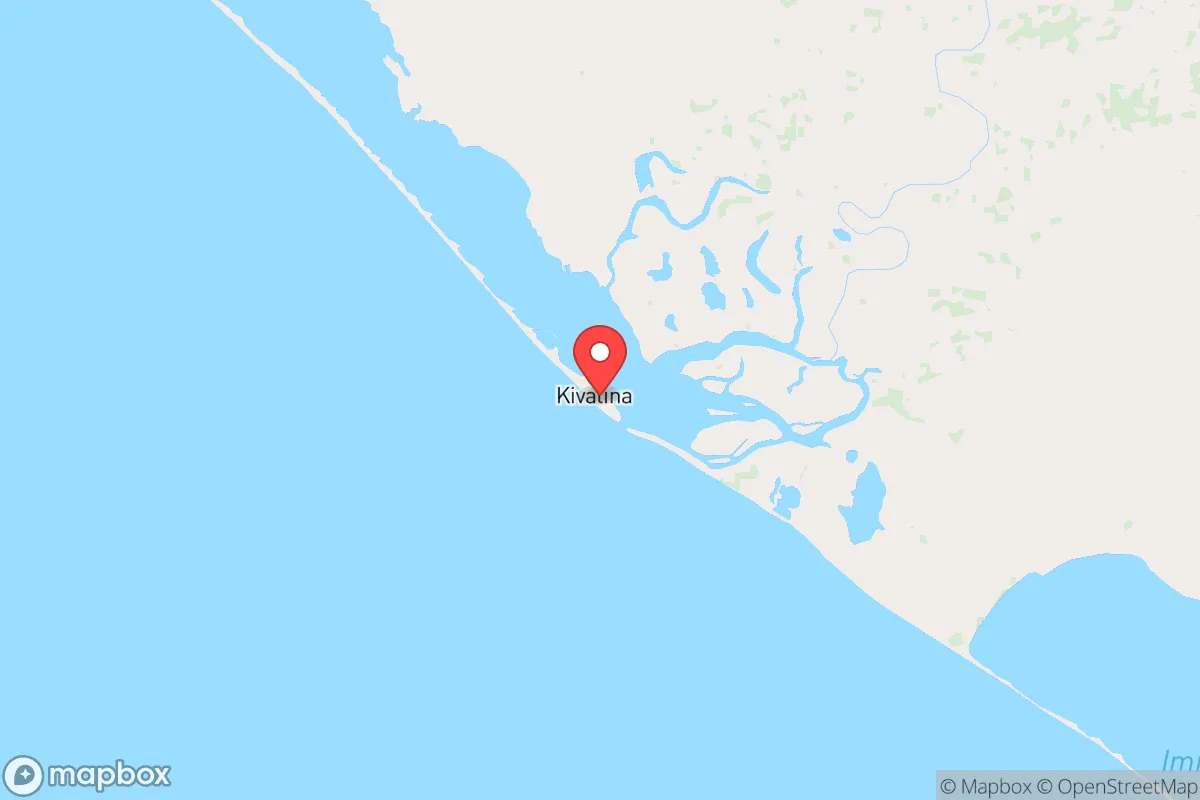
Kivalina’s location is its primary strategic asset. The village is accessible only by small aircraft, boat, or snowmobile, with no roads connecting it to any other settlement. This means any large-scale unrest, supply chain disruption, or mass casualty event in the Lower 48 or even in Anchorage will take weeks or months to ripple here—if it ever does. The nearest city of any size is Kotzebue (population ~3,200), which itself is a remote hub, not a sprawling urban target. The Chukchi Sea to the west and the Wulik River delta to the east create natural barriers that funnel any approach by land or water into narrow, easily monitored corridors. In a scenario where civil order breaks down, this kind of terrain is a defender’s dream: you can see threats coming from miles away, and the harsh environment does most of the work of filtering out unprepared intruders. The lack of road infrastructure also means that Kivalina is effectively off the grid for any organized force or refugee wave moving through Alaska. For a relocator, the trade-off is clear: you trade convenience for a fortress-like buffer against the chaos of the outside world.
Risks, exposures, and proximity to fallout-relevant landmarks
The most significant exposure for Kivalina is not human-caused fallout but environmental collapse. The island is eroding at an alarming rate due to sea ice loss and storm surges, with the U.S. Army Corps of Engineers estimating that the community has roughly 10 to 15 years before it becomes uninhabitable without major relocation. This is a ticking clock for any long-term survival plan. Additionally, Kivalina sits within 200 miles of the Red Dog Mine, one of the world’s largest zinc and lead mines, which is a potential industrial hazard in the event of a catastrophic failure or targeted disruption. While not a nuclear target, the mine’s tailings ponds and chemical storage could pose a contamination risk if infrastructure fails during a societal breakdown. On the positive side, Kivalina is far from any major military installations, nuclear power plants, or population centers that would be primary targets in a conflict. The nearest strategic asset is the Thule Air Base in Greenland, over 1,000 miles away, and the missile warning radar at Clear, Alaska, is more than 400 miles south. For a relocator worried about nuclear fallout or EMP strikes, Kivalina’s distance from these landmarks is a major plus—you are not in the blast zone, and you are not on any likely targeting list. The real risk is that the island itself may not be a viable long-term home, meaning any investment here must account for a planned move inland within a decade.
Practical resilience for a relocator: food, water, energy, and defensibility
Survival in Kivalina demands a complete rethinking of modern convenience. There is no municipal water system; residents rely on rainwater collection, ice melt, and a small desalination unit that is often unreliable. For a prepper, this means you must bring or build your own water purification system—think high-capacity reverse osmosis or a robust snow-melt setup with UV sterilization. Food security is tied entirely to subsistence hunting and fishing: caribou, seal, whale, and salmon are the staples. The local store, the Native Store, stocks basics at extreme prices (a gallon of milk can run $10), so a relocator must either master traditional hunting or stockpile years of freeze-dried supplies. Energy comes from diesel generators, with fuel flown in at enormous cost—roughly $6 per gallon. Solar is marginal due to the long winter darkness, but wind turbines have been tested and could supplement a well-insulated cabin. Defensibility is excellent: the village is small enough that everyone knows everyone, and outsiders are immediately noticed. The community is tight-knit and culturally cohesive, which can be a double-edged sword—integration requires respect for Inupiat traditions and a willingness to contribute to the collective survival effort. For a single individual or family willing to learn, this is one of the most defensible and low-profile locations in North America. You are not hiding in the woods; you are living in a community that has already been surviving on the edge for centuries.
The overall strategic picture for Kivalina is one of extreme trade-offs. It offers unparalleled isolation from the collapse of urban America, a natural defensive position that would deter all but the most determined threats, and a subsistence-based lifestyle that aligns with long-term resilience. But it also comes with a hard expiration date due to erosion, a brutal climate that tests even the hardiest individuals, and a reliance on airlifted fuel and supplies that could be severed in a crisis. For a conservative-leaning relocator who values self-reliance, community cohesion, and distance from the chaos of the Lower 48, Kivalina is a viable option only if you are prepared to treat it as a temporary base—a place to ride out the first wave of societal breakdown while you plan a move to higher ground inland, perhaps near the Wulik River or the De Long Mountains. It is not a long-term homestead for the faint of heart, but for those who see the writing on the wall and want a place where the world’s problems feel very far away, Kivalina is about as far as you can get without leaving the country.

* Values derived from national, state, county, city and local statistics and may differ in a specific area. Last updated: 2026-04-19T19:28:24.000Z
Narrative content on this page is AI-generated and may contain mistakes. Verify any details that matter before acting on them.
ReloMaps may earn a commission from affiliate links at no extra cost to you.

