 Popular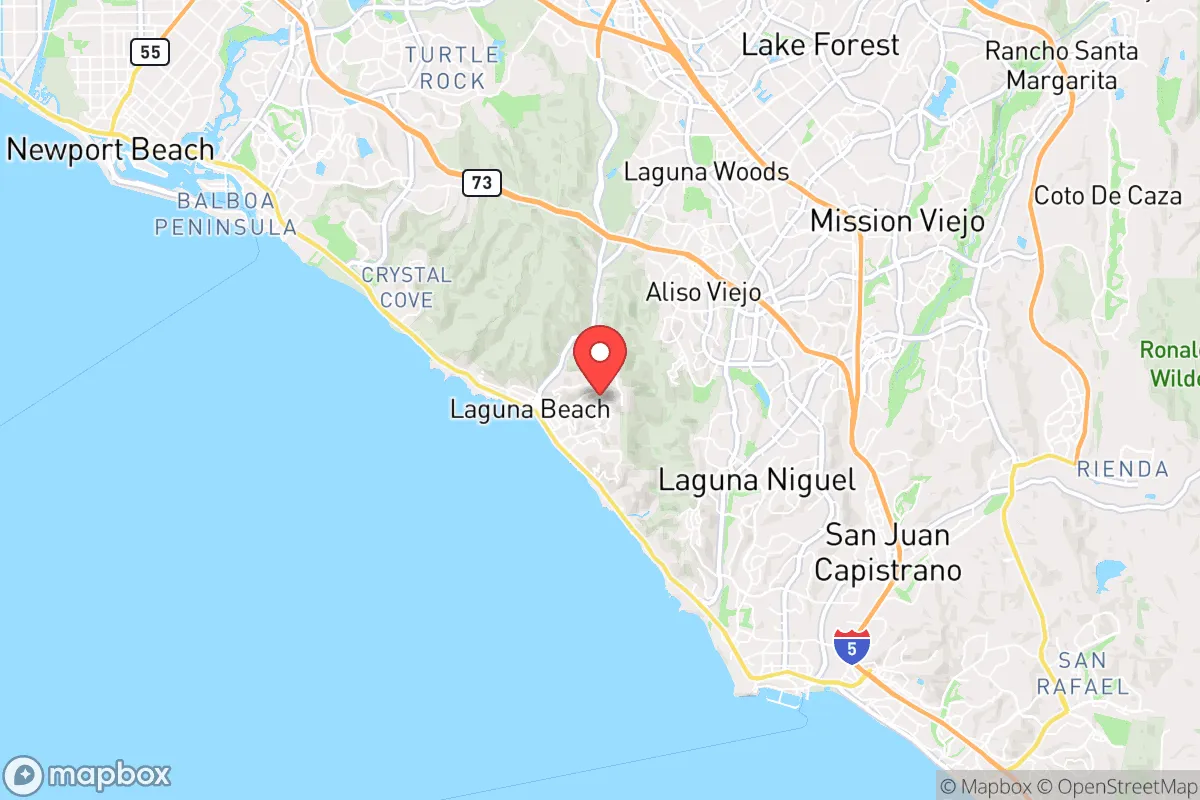
Political ClimatePolitical Climate in Laguna Beach, CA
District shown is the primary district for this city’s centroid. Cities may span multiple districts.
Local Political AnalysisPolitical Analysis of Laguna Beach, CA
Laguna Beach has long been a blue dot in a county that’s more politically mixed than people assume, but its lean is distinct from the broader state. With a Cook PVI of D+3, the city is notably less Democratic than California as a whole, which sits at D+12. That gap means Laguna Beach isn’t a progressive stronghold in the way San Francisco or West Hollywood are; it’s a place where moderate Democrats, independents, and even a visible minority of Republicans coexist, especially in local elections. The trajectory over the past decade has been a slow drift leftward, driven by younger, wealthier newcomers from Los Angeles and Orange County’s coastal corridor, but it hasn’t flipped as hard as nearby Santa Ana or Irvine. If you’d asked me ten years ago, I’d have said the city council was a toss-up between slow-growth conservatives and environmental liberals. Now, it’s reliably Democratic, but the flavor is more “fiscal restraint meets coastal preservation” than “tax-and-spend progressivism.”
How it compares
Compared to California’s D+12 average, Laguna Beach’s D+3 is a meaningful divergence. Drive 15 minutes inland to Mission Viejo or Lake Forest, and you’ll hit solidly Republican turf—those areas lean R+10 or more. Even within Orange County, Laguna Beach stands out: the county as a whole is now a battleground (Biden won it by a hair in 2020), but Laguna Beach has been consistently Democratic since the 1990s, while neighboring Newport Beach and Dana Point remain more conservative. The real contrast is with the state’s Central Valley or inland Empire, where D+12 feels like a distant fantasy. In practice, this means Laguna Beach voters often split tickets: they’ll back a Democrat for president and a Republican for city council if that candidate opposes high-density development. The state’s progressive policies on housing and homelessness, for instance, get more pushback here than in Los Angeles proper. It’s a reminder that “California politics” isn’t monolithic—Laguna Beach is its own animal.
What this means for residents
For liberal residents, life is comfortable: local policies align with their values on environmental protection, LGBTQ+ rights, and public arts funding. You’ll see Pride flags year-round, and the city’s ban on single-use plastics passed years before the state’s. But don’t expect a radical agenda—the city’s budget is tight, and property taxes are capped by Prop 13, so big social programs aren’t in the cards. For conservative residents, it’s not hostile, but you’ll be in the minority. The local Republican club still meets, and you’ll find plenty of neighbors who grumble about state mandates on housing density or gas-powered leaf blowers. The key is that local elections are often decided by single-digit margins, so your vote actually matters more here than in a deep-blue district. If you’re conservative, you’ll appreciate that the city’s slow-growth ethos—limiting hotel construction, preserving open space—often aligns with your instincts, even if the candidates have a D next to their name.
Culturally, Laguna Beach wears its politics lightly. The biggest policy fights I’ve seen in the last five years weren’t about national issues—they were about parking, short-term rentals (Airbnb restrictions are strict), and whether to allow a new hotel on the bluff. The city’s identity as an artist colony and tourist destination means there’s a live-and-let-live vibe that softens partisan edges. You won’t see the kind of street-level activism you get in Santa Monica or Berkeley. What you will see is a community that votes its local interests first: protecting the coastline, managing traffic, and keeping the village feel. That’s the Laguna Beach reality—politics here is less about red vs. blue and more about how to keep a small, expensive beach town from being loved to death.

State Political ClimatePolitical Climate in California
State Political AnalysisPolitical Environment in the State
California is a solidly Democratic state with a Cook PVI of D+12, meaning it votes about 12 points more Democratic than the national average in presidential elections. The dominant coalition is a mix of coastal urban professionals, Latino voters (who lean Democratic but are not monolithic), and a growing Asian American electorate, while the state’s Republican base has shrunk to about 24% of registered voters. Over the last 20 years, the state has shifted from a competitive purple state (it voted for George W. Bush in 2004) to a deep blue stronghold, driven by demographic change and a steady exodus of moderate and conservative-leaning residents to Texas, Arizona, and Idaho.
Urban vs. rural divide
The political map of California is a tale of two states. The coastal metros—Los Angeles, San Francisco, San Diego, and San Jose—are the engine of the Democratic majority, with precincts routinely voting 70-80% Democratic. The Central Valley, by contrast, is a mixed bag: Fresno and Bakersfield are reliably Republican in their outskirts, though the cities themselves are trending blue as Latino populations grow. The rural north, including Redding and Yreka, is deeply conservative, with some counties voting 65-70% Republican. The Inland Empire (Riverside and San Bernardino) is a classic swing region—fast-growing, diverse, and increasingly Democratic, though still home to conservative pockets like Temecula. The Bay Area suburbs, once Republican strongholds like Orange County, have flipped decisively: Orange County voted for Hillary Clinton in 2016 after decades of GOP dominance, and it hasn’t looked back.
Policy environment
California’s policy environment is defined by high taxes, heavy regulation, and expansive state services. The state has a progressive income tax with a top marginal rate of 13.3% (the highest in the nation), a state sales tax that can exceed 10% in some cities, and some of the highest gas taxes in the country. Property taxes are capped at 1% of assessed value under Prop 13, but reassessment upon sale means newer homeowners often pay far more than long-term residents. The regulatory posture is aggressive: California has its own environmental standards (e.g., CARB vehicle emissions rules), strict labor laws (a $16 minimum wage as of 2024, rising to $18 for some industries), and a robust public healthcare system through Medi-Cal. Education policy is centralized in Sacramento, with the state setting curriculum standards and funding formulas; school choice is limited, with charter schools under increasing pressure. Election laws are among the most expansive in the nation: universal mail-in ballots, same-day registration, and no-excuse absentee voting are the norm.
Recent policy direction
Recent legislation shows California doubling down on its progressive identity. On gun and self-defense law, the state passed SB 2 in 2023, which effectively bans concealed carry in most public places (sensitive places like parks, hospitals, and public transit), and it has a roster of approved handguns that limits new models. Parental and education rights have been a flashpoint: AB 1955 (2024) prohibits school districts from requiring parental notification when a child changes their gender identity, and the state has a law banning book bans in schools. On speech, California has a strict anti-SLAPP law protecting free expression, but also passed AB 587 (2023) requiring social media platforms to report hate speech, which critics call a backdoor censorship tool. Privacy and surveillance: the California Privacy Rights Act (CPRA) of 2020 gives residents strong data rights, but the state also has a massive surveillance apparatus through license plate readers and police drones. Medical and bodily autonomy is protected: abortion is a constitutional right under Prop 1 (2022), and the state is a sanctuary for gender-affirming care. Property rights are weak: rent control is expanding (AB 1482 caps annual rent increases at 5% plus inflation), and the state’s environmental review process (CEQA) is frequently used to block development. Voting and ballot access is extremely easy, but the state also has a top-two primary system that can lock out third-party candidates.
Civil unrest & political movements
California has a long history of political activism, from the 1960s Free Speech Movement to the 2020 George Floyd protests, which saw widespread property damage in Los Angeles, San Francisco, and Oakland. The state’s sanctuary law (SB 54, 2017) limits local law enforcement cooperation with federal immigration authorities, making it a flashpoint in the national immigration debate. Secession rhetoric is mostly a fringe movement (Calexit), but the state’s high cost of living and homelessness crisis have fueled a growing “exodus” narrative, with conservative influencers urging relocation to Texas or Florida. Election integrity controversies have been minimal compared to other states, though the 2020 and 2022 elections saw isolated disputes over ballot drop boxes and signature verification. Visible flashpoints for a new resident: homeless encampments in urban centers, frequent protests on both sides of the abortion and transgender rights debates, and occasional clashes at school board meetings over curriculum and parental rights.
Projection
Over the next 5-10 years, California will likely remain solidly Democratic, but the margin may narrow slightly as the state’s high cost of living continues to push moderate and conservative-leaning residents out. The biggest demographic shift is the aging of the Latino electorate: younger Latino voters are more progressive, but older generations are more moderate, and the state’s declining birth rate means the population is aging overall. In-migration from other states is net negative (about 300,000 people left annually in recent years), but international immigration (especially from Asia and Latin America) keeps the population stable. The Central Valley and Inland Empire will continue to trend blue as suburban sprawl brings more diverse residents. A new resident moving in now should expect a state where the political direction is set by Sacramento and the coastal metros, with rural and inland areas having limited influence. The policy environment will likely become even more progressive on climate, housing (more rent control, more density mandates), and social issues, while tax rates may rise further to fund pension obligations and infrastructure.
For a conservative-leaning relocator, the bottom line is that California offers a high-cost, high-regulation environment where your political voice will be a minority in statewide elections, but you can find like-minded communities in places like Bakersfield, Temecula, or Redding. For a liberal relocator, the state delivers on progressive policy goals but at a steep price in taxes, housing, and quality-of-life issues like homelessness and crime. Either way, you’re moving into a state where the political reality is deeply entrenched, and the trajectory is unlikely to shift dramatically in the next decade.
* Values derived from national, state, county, city and local statistics and may differ in a specific area. Last updated: 2026-06-08T04:41:54.000Z
Narrative content on this page is AI-generated and may contain mistakes. Verify any details that matter before acting on them.
ReloMaps may earn a commission from affiliate links at no extra cost to you.

