Quality of Life in Lakeway, TX
A high quality of life with strong walkability, manageable living costs, healthy neighborhood signals, and solid amenity access.
What does Quality of Life tell us?
Quality of Life blends cost of living, nearby amenities, socioeconomic signals, and neighborhood character. City-level scores represent the whole municipality; individual neighborhoods can differ.
What does this tell us?
Quality of Life blends cost of living, nearby amenities, socioeconomic signals, and neighborhood character. City-level scores represent the whole municipality; individual neighborhoods can differ.
Cost of Living
160% above national average
The Real Cost of Living in Lakeway, TX for 2026
| Tier | Individual | Family (4) |
|---|---|---|
| Survival | $94k | $176k |
| Comfortable | $199k | $292k |
| Luxury | $298k+ | $462k+ |
| Elite (Top 5%) | $356k+ | $551k+ |
57%
The Area Signal
A metric tracking the socioeconomic signals of the area.


Hobbies
Explore the areaGroceries
0 within 10 miles
Gas
0 within 10 miles
Hospital
3 within 20 miles
Airport
AUS — Austin-Bergstrom International
Post Office
USPS — Austin, TX
Critical Amenities
Quality-of-Life Analysis
Lakeway, Texas, is an affluent lakeside community on the Colorado River’s Lake Travis, where the cost of living index of 260 (more than 2.5 times the U.S. average) signals a population of high-income professionals, executives, and retirees who prioritize waterfront access, top-tier schools, and low crime rates over urban affordability. The city’s 27.9-minute average commute—comparable to suburban Austin—reflects a workforce that largely commutes to downtown Austin or tech hubs in the Hill Country, while its gated subdivisions and custom homes attract families seeking a resort-like daily environment.
Cost of living, housing prices, and affordability compared to Austin and the Hill Country
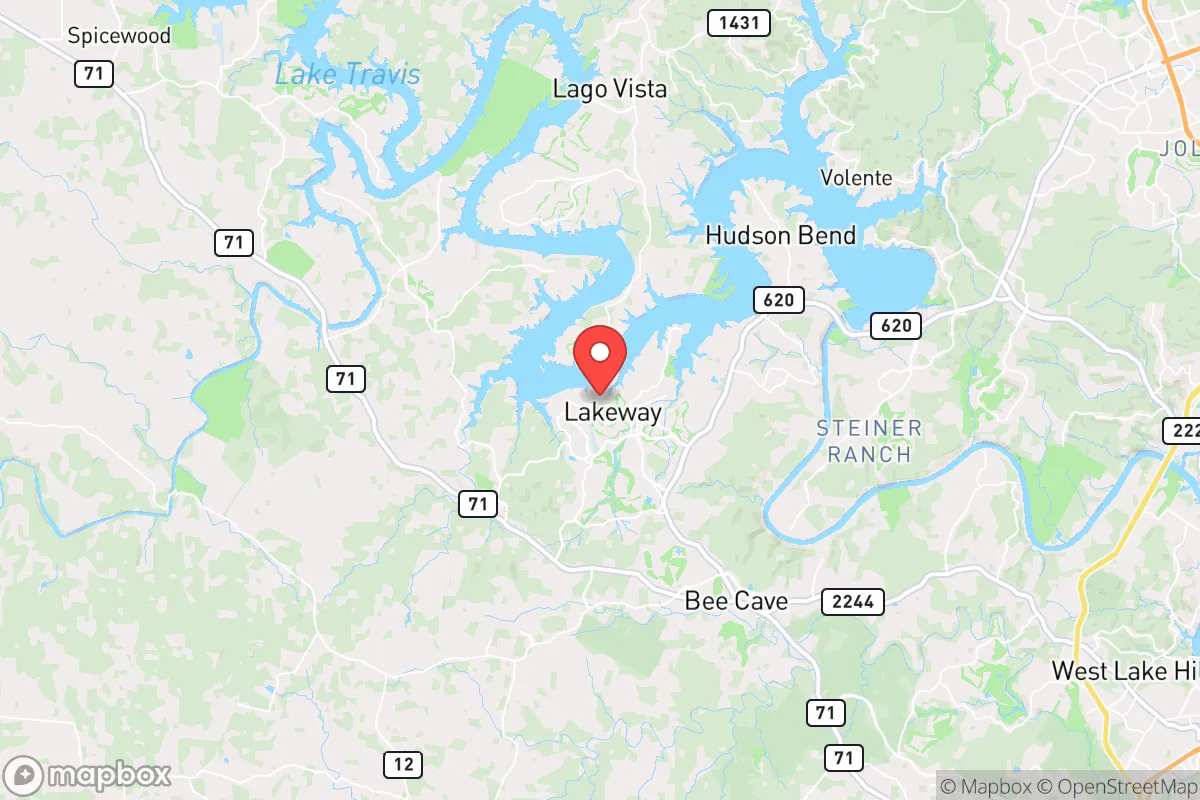
Lakeway’s cost of living index of 260 is driven almost entirely by housing: the median home value sits at $695,400, roughly 40% higher than the Austin metro average and more than double the Texas state median. Renters face a median monthly rent of $3,123, placing Lakeway among the most expensive rental markets in Central Texas outside of West Austin’s core. For context, nearby Bee Cave (median home value $750,000) and Westlake Hills ($1.2 million) are even pricier, while Dripping Springs ($620,000) and Cedar Park ($510,000) offer slightly lower entry points. Property taxes in Travis County hover near 2.0% of assessed value, meaning a $695,400 home carries roughly $13,900 in annual taxes—a significant but manageable cost for the area’s typical dual-income professional households. The 27.9-minute average commute is shorter than the Austin metro average (29 minutes) and reflects Lakeway’s direct access to State Highway 71 and the 620 corridor, though congestion on these routes during peak hours can push trips to 40 minutes or more.
What daily life is like for families: amenities, schools, and recreation
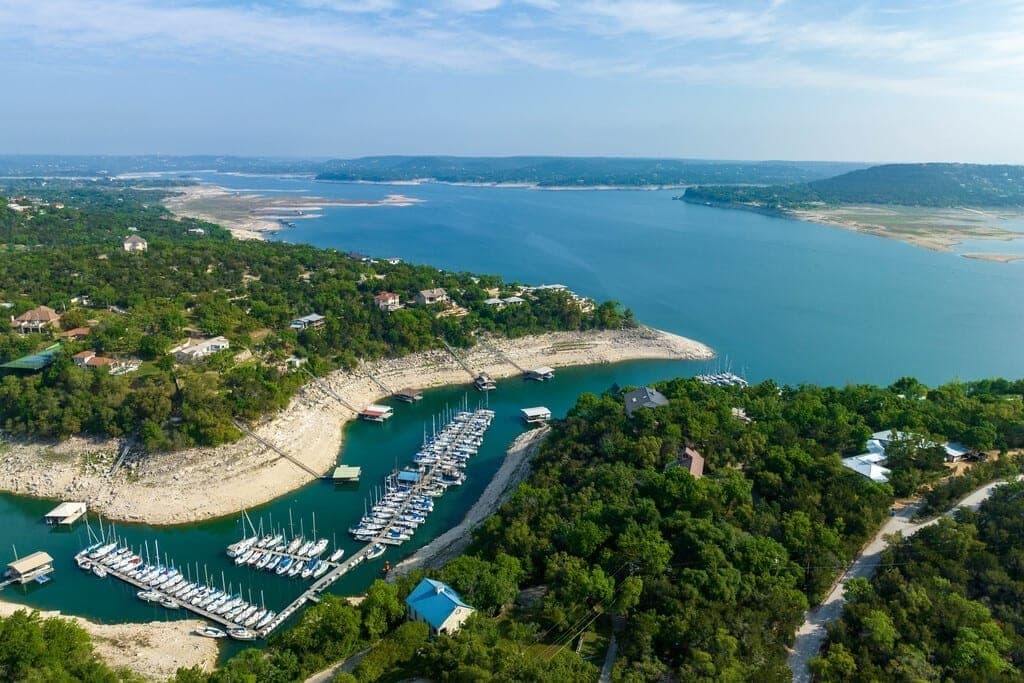
Daily life in Lakeway revolves around Lake Travis, with residents accessing the city’s three public parks (including the 40-acre Lakeway City Park with boat ramps and a swimming area) and the private Lakeway Activity Center. The Lake Travis Independent School District (LTISD) is a major draw: its three high schools—Lake Travis High School, Hudson Bend Middle School, and Lake Travis Elementary—consistently rank among Texas’s top 10% for academic performance, with a 96% graduation rate and average SAT scores exceeding 1200. The city’s 12-hole Live Oak Golf Course and the 18-hole Flintrock Falls course provide year-round recreation, while the Lakeway Marina offers boat rentals and slips for residents. Retail is concentrated at the Lakeway Towne Center (anchored by H-E-B, Target, and a 14-screen cinema), and dining leans toward upscale casual spots like The Grove Wine Bar & Kitchen and Oasthouse Kitchen + Bar. The area’s low violent crime rate (0.8 per 1,000 residents, versus the Texas average of 4.6) and minimal traffic noise in most neighborhoods reinforce a quiet, family-oriented rhythm that contrasts sharply with Austin’s urban bustle.
Lakeway is best suited for families and retirees with household incomes above $150,000 who value lake access, strong public schools, and a low-crime environment over walkability or nightlife. Empty-nesters downsizing from larger Austin homes find the $3,123 median rent manageable for lake-view condos, while tech professionals commuting to downtown Austin or the Domain tolerate the 28-minute drive for the trade-off of a 2,500-square-foot home on a half-acre lot. Those seeking a more affordable Hill Country lifestyle should look to Marble Falls or Burnet, where median home values are half of Lakeway’s but commute times to Austin exceed 45 minutes.

Crime in Lakeway, TX
Lower crime rates than 90% of comparable U.S. locations.
Violent CrimeViolent Crime Analysis
Property CrimeProperty Crime Analysis
Crime Analysis
Lakeway, Texas, consistently ranks among the safest cities in the Austin metropolitan area, with violent crime rates dramatically lower than both state and national averages. The city's violent crime rate of 63.1 incidents per 100,000 residents is roughly one-fifth the national average, while its property crime rate of 815.4 per 100,000 sits below the Texas average but slightly above the safest suburban benchmarks. These figures reflect a community that benefits from proactive local policing and a relatively insulated geography, though residents should remain aware of property-related risks common to affluent suburbs.
Crime in context
Lakeway's violent crime rate of 63.1 per 100,000 is 87% lower than the U.S. average of 380 per 100,000 and well below the Texas state average of roughly 445 per 100,000. Homicide, robbery, and aggravated assault are exceptionally rare events here. Property crime, at 815.4 per 100,000, is about 15% below the national average of 1,954 per 100,000 but higher than some neighboring Hill Country communities like Bee Cave (which reports property crime rates near 600 per 100,000). The primary property crime drivers are vehicle burglaries and package thefts, typical of bedroom communities with many working homeowners. It is important to note that Lakeway falls under the jurisdiction of Travis County, where progressive district attorney policies have been a concern for residents. Critics argue that lenient sentencing and reduced prosecution for non-violent property offenses in the county have contributed to a perception of increased recidivism, though Lakeway's own police department maintains a visible presence that mitigates these broader trends.
What residents experience
Most Lakeway residents describe feeling safe walking their neighborhoods at night and leaving doors unlocked during the day, a sentiment backed by the city's low violent crime numbers. The Lakeway Police Department, which employs about 35 sworn officers, emphasizes community policing and rapid response times—typically under five minutes for priority calls. Neighborhood Watch programs are active in subdivisions like The Hills and Rough Hollow. However, residents should be aware that vehicle burglaries and theft from construction sites are the most common complaints, particularly in areas near Lake Travis High School and the 620 corridor. The city also contracts with Travis County for jail services, and some residents express frustration that repeat property offenders cycle through the system quickly due to county-level diversion programs, a direct consequence of the progressive justice philosophy that prioritizes rehabilitation over incarceration.
Neighborhood-level variation is modest but worth noting. Gated communities along Lake Travis, such as those in the 78734 ZIP code, report near-zero violent crime and property crime rates roughly half the city average. In contrast, areas closer to the RM 620 commercial corridor, especially near apartment complexes and retail centers, see a slightly elevated incidence of vehicle break-ins and shoplifting. Overall, Lakeway remains one of the safest communities in Central Texas, but its location within a large metro area with a progressive justice system means residents should remain vigilant about property crime and advocate for policies that prioritize public safety and victim rights over offender leniency.
* Values derived from national, state, county, city and local statistics and may differ in a specific area. Last updated: 2026-04-14T23:45:58.000Z
Narrative content on this page is AI-generated and may contain mistakes. Verify any details that matter before acting on them.
ReloMaps may earn a commission from affiliate links at no extra cost to you.

