Political ClimatePolitical Climate in Lakeway, TX
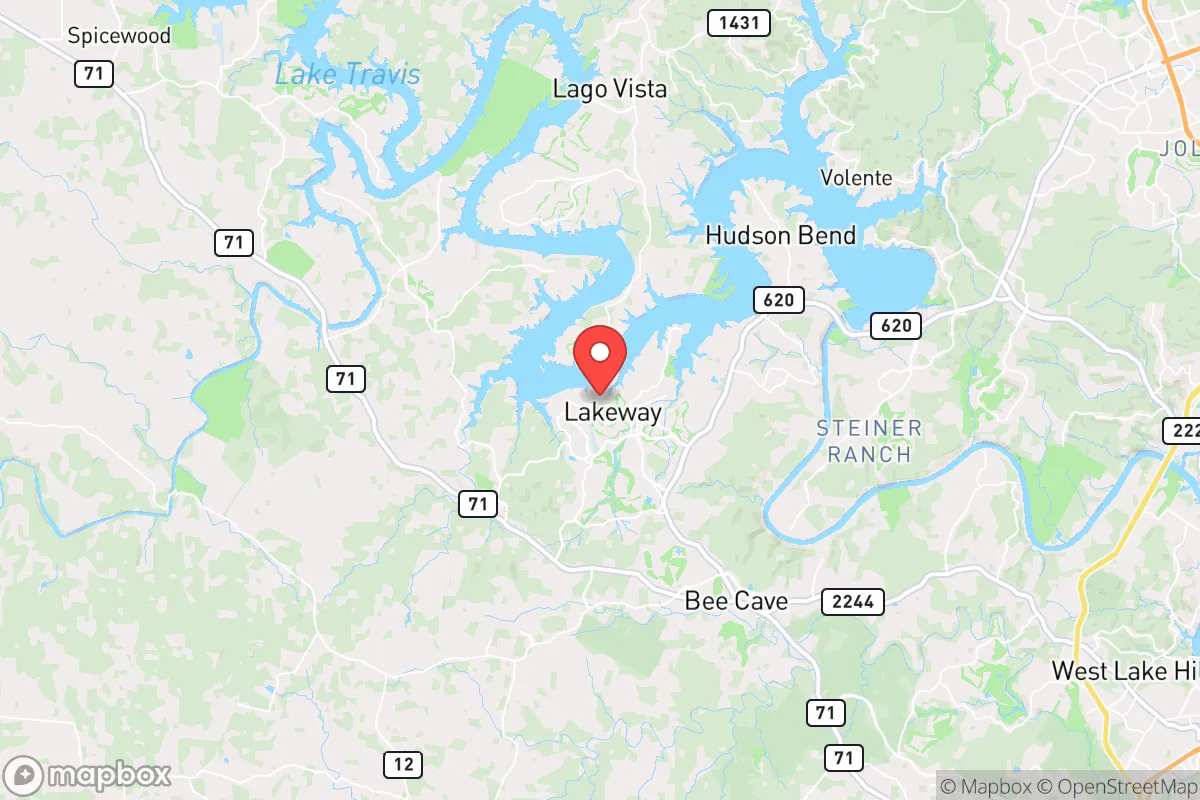
District shown is the primary district for this city’s centroid. Cities may span multiple districts.
Local Political AnalysisPolitical Analysis of Lakeway, TX
Lakeway has long been one of the most reliably conservative corners of the Austin metro, and that hasn’t changed much despite the region’s rapid growth. The area’s Cook Partisan Voting Index (PVI) of R+12 tells you everything you need to know: this is a place where Republican candidates routinely win by double digits, and where the local culture still prizes limited government, personal responsibility, and a healthy skepticism of Austin’s ever-expanding regulatory appetite. If you’ve been here since the 1990s like I have, you’ve watched the city council stay steady on fiscal restraint and property rights, even as Travis County to the east has lurched leftward. The trajectory is stable, but there are real pressures—mostly from newcomers who bring big-city ideas about zoning, taxes, and “equity” programs—that make it worth keeping an eye on local elections.
How it compares
Drive ten miles east into Austin proper and you’re in a different political universe—a deep-blue city where the city council has pushed through paid sick leave mandates, strict short-term rental caps, and a police oversight board that’s drawn national controversy. Head south to Buda or Kyle, and you’ll find a more mixed picture, with Hays County trending purple as San Marcos’s college influence spreads. But Lakeway sits squarely in the western Hill Country corridor, alongside Bee Cave and West Lake Hills, where the R+12 PVI actually feels a bit soft compared to the R+18 or R+20 you’d see in nearby Spicewood or Marble Falls. The contrast is sharpest on tax policy: Lakeway keeps its property tax rate low and has resisted the kind of “affordable housing” mandates that Austin has embraced, which means your rights as a homeowner—to sell, rent, or improve your property—are far less tangled in red tape here than they are just a few miles east.
What this means for residents
For anyone who values keeping government out of their personal decisions, Lakeway’s political climate is a breath of fresh air compared to the overreach you see in Austin. You won’t find the city council debating which lightbulbs you can buy or how many guests you can have at a dinner party. The local school board, which covers Lake Travis ISD, has held the line on parental rights and curriculum transparency, even as other districts in the state have caved to progressive pressure groups. That said, the long-term concern is demographic drift: as more remote workers and California transplants move in, there’s a slow creep of “we know better” attitudes showing up in planning commission meetings. If you’re moving here, pay attention to city council races—they’re nonpartisan on paper, but the candidates’ stances on property rights, tax caps, and police funding will tell you everything about whether Lakeway stays Lakeway or starts looking like a mini-Austin.
One cultural distinction worth noting: Lakeway has a strong tradition of civic volunteerism that keeps politics local and personal. The city’s parks, the Lakeway Activity Center, and the police department are all run with a “neighbor helping neighbor” ethos that’s rare in bigger cities. There’s no push for a citywide “equity audit” or a diversity, equity, and inclusion office here—and that’s by design. The prevailing view is that individual freedom and community self-reliance work better than top-down government programs. If you’re looking for a place where your vote actually matters and where the city council still thinks twice before imposing a new fee or regulation, Lakeway is about as solid as it gets in Central Texas. Just keep an eye on those annexation battles with Travis County—that’s where the real fight over your rights is happening.

State Political ClimatePolitical Climate in Texas
State Political AnalysisPolitical Environment in the State
Texas remains a solidly Republican state, but the margin has tightened noticeably over the past decade. In 2024, Donald Trump carried Texas by roughly 14 points, down from 19 points in 2016 and 9 points in 2020, reflecting a slow but real Democratic shift driven by explosive growth in the urban core. The dominant coalition is still conservative — rural voters, suburban families, and business interests — but the GOP’s grip is no longer ironclad, and the state’s political future is being shaped by a tug-of-war between fast-growing blue metros and a deeply red hinterland.
Urban vs. rural divide
The political map of Texas is starkly split. The major metros — Houston, Dallas-Fort Worth, San Antonio, and especially Austin — are increasingly Democratic strongholds. Travis County (Austin) voted +50 points for Biden in 2020, and Harris County (Houston) flipped blue in 2018 and hasn’t looked back. Meanwhile, the vast rural and exurban counties — places like Lubbock, Midland, and the Rio Grande Valley’s Starr County — remain deeply Republican. The Valley itself is a fascinating battleground: historically Democratic but shifting right, with Starr County flipping from +52 Biden in 2020 to +15 Trump in 2024. The suburbs are the real battleground: Collin County (north of Dallas) went from +18 Romney in 2012 to +10 Trump in 2024, while Fort Bend County (southwest of Houston) flipped blue entirely. If you’re moving to Texas, your experience of politics will depend almost entirely on whether you land in a dense urban core, a sprawling suburb, or a small town.
Policy environment
Texas’s policy environment is a mixed bag for conservatives. On the plus side, there’s no state income tax, property taxes are high but capped at 10% annual growth (thanks to Proposition 4 in 2023), and the regulatory climate is business-friendly — no state-level OSHA, minimal zoning in many areas, and a right-to-work law that keeps unions weak. Education policy is a flashpoint: the state funds schools through a complex Robin Hood system that redistributes property tax revenue from wealthy districts to poor ones, and school choice legislation (like the 2023 HB 3 voucher bill) has repeatedly stalled due to rural Republican opposition. Healthcare is a perennial frustration — Texas has the highest uninsured rate in the nation, and the state has refused Medicaid expansion under the ACA. Election laws have tightened: SB 1 (2021) restricted mail-in voting, added ID requirements, and banned drive-through voting, which critics say suppresses turnout but supporters argue secures integrity. For a conservative, the policy environment is generally favorable on taxes and regulation, but frustrating on education reform and healthcare access.
Trajectory & freedom
On personal freedom, Texas has moved in both directions recently. The good news for conservatives: constitutional carry (HB 1927, 2021) allows permitless carry of handguns, and the state has a strong castle doctrine and stand-your-ground law. Parental rights were bolstered by HB 900 (2023), which restricts sexually explicit content in school libraries, and the Save Women’s Sports Act (SB 15, 2023) bans transgender athletes from female sports. Property rights got a boost with SB 2038 (2023), which limits the ability of homeowners’ associations to restrict short-term rentals. On the concerning side: the state’s abortion ban (SB 8, 2021, and the trigger law after Dobbs) is among the strictest in the nation, with no exceptions for rape or incest — a policy that many conservatives support but that has created a medical access crisis in rural areas. Medical freedom took a hit with SB 29 (2023), which bans gender-affirming care for minors, but also with vaccine mandate bans (SB 7, 2023) that protect private employers’ ability to require shots. The net trajectory: Texas is becoming more free on gun rights and parental control, but less free on medical autonomy and abortion access, depending on your perspective.
Civil unrest & political movements
Texas has seen its share of political flashpoints. The 2020 protests in Austin and Houston over George Floyd’s death were large and occasionally violent, leading to property damage and a lasting police reform debate. The “Defund the Police” movement gained traction in Austin, where the city council cut the police budget by $150 million in 2020, only to restore most of it after a crime spike. On the right, the “Take Back Texas” movement and local GOP county conventions have seen fierce battles between establishment and grassroots factions, especially over election integrity. The 2021 power grid collapse during Winter Storm Uri sparked a populist backlash against ERCOT and deregulated energy markets, with both parties blaming each other. Immigration politics are a constant: the “Operation Lone Star” border security initiative under Governor Abbott has bused migrants to northern cities, creating a national spectacle and straining local resources in border towns like El Paso. A new resident will notice the omnipresence of border politics in local news, and the occasional protest or counter-protest outside the state capitol in Austin.
Projection
Over the next 5-10 years, Texas is likely to become more competitive but not flip blue. The in-migration from California and other blue states is slowing, and many newcomers are conservatives or moderates fleeing high taxes and crime. The suburbs of Dallas-Fort Worth and Houston are the key battlegrounds — places like Katy, Frisco, and McKinney are growing fast and trending slightly left, but still lean Republican. The Rio Grande Valley is the wildcard: if the GOP continues to gain ground with Hispanic voters, Texas could stay red for another generation. Demographically, the state is becoming more diverse and younger, which typically favors Democrats, but the 2024 results suggest that cultural issues (abortion, transgender rights, parental control) are mobilizing conservative voters more effectively than economic populism. A new resident should expect a state that remains conservative on most issues, but with a louder, more organized progressive minority in the cities. The GOP will likely hold the legislature and governor’s mansion through 2030, but the margin will keep shrinking.
Bottom line for a new resident: If you’re a conservative moving to Texas, you’ll find a state that broadly aligns with your values on taxes, guns, and parental rights, but you’ll need to pick your location carefully. Avoid the urban cores of Austin and Houston if you want a reliably conservative environment; instead, target the suburbs of Dallas-Fort Worth (like Southlake or Colleyville) or the smaller cities like Tyler or College Station. Expect ongoing fights over school choice, property taxes, and border security, but don’t expect a dramatic shift in the state’s overall direction. Texas is still a red state — just one that’s getting a little more purple every election cycle.
* Values derived from national, state, county, city and local statistics and may differ in a specific area. Last updated: 2026-04-14T23:45:58.000Z
Narrative content on this page is AI-generated and may contain mistakes. Verify any details that matter before acting on them.
ReloMaps may earn a commission from affiliate links at no extra cost to you.

