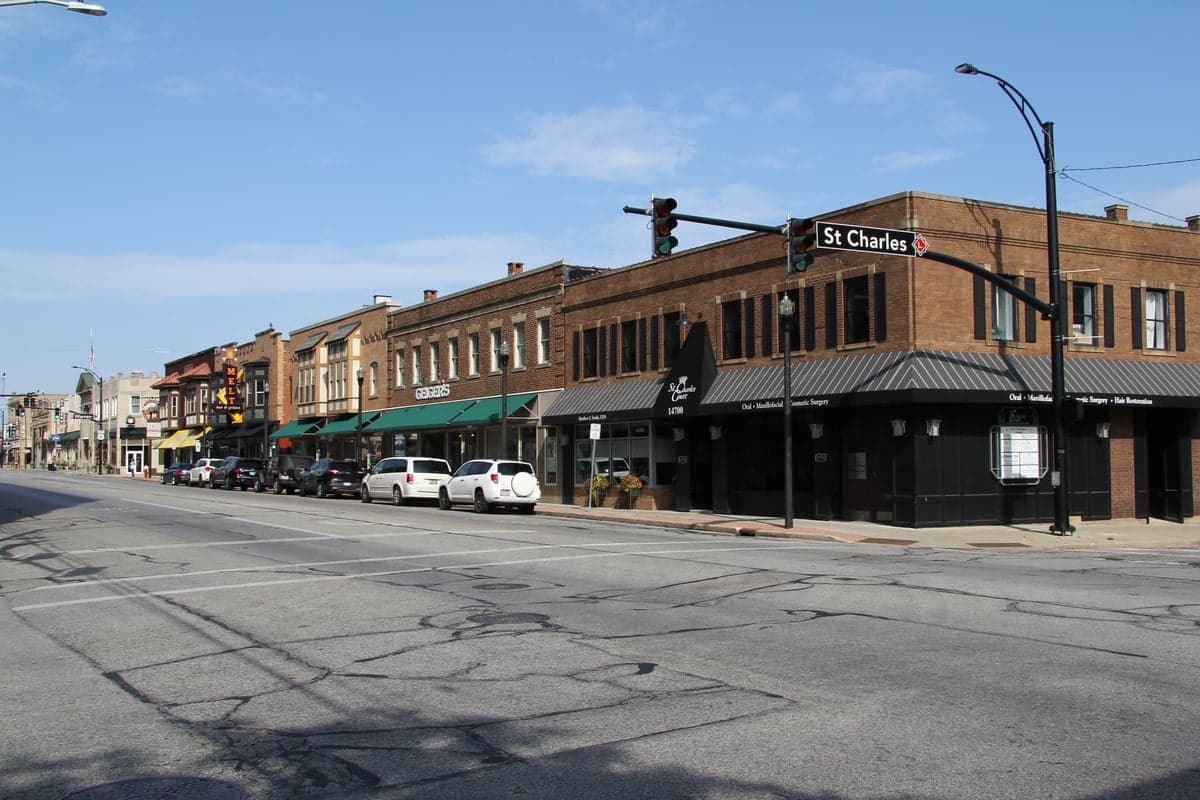
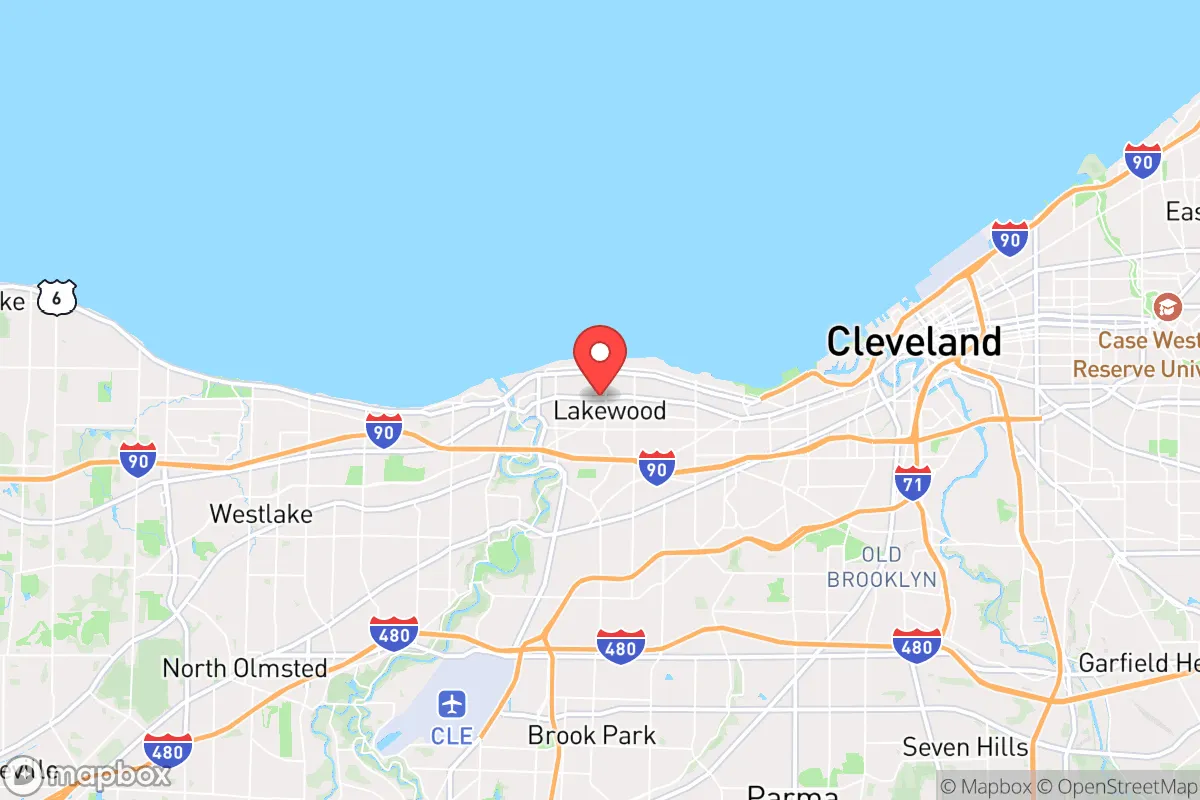
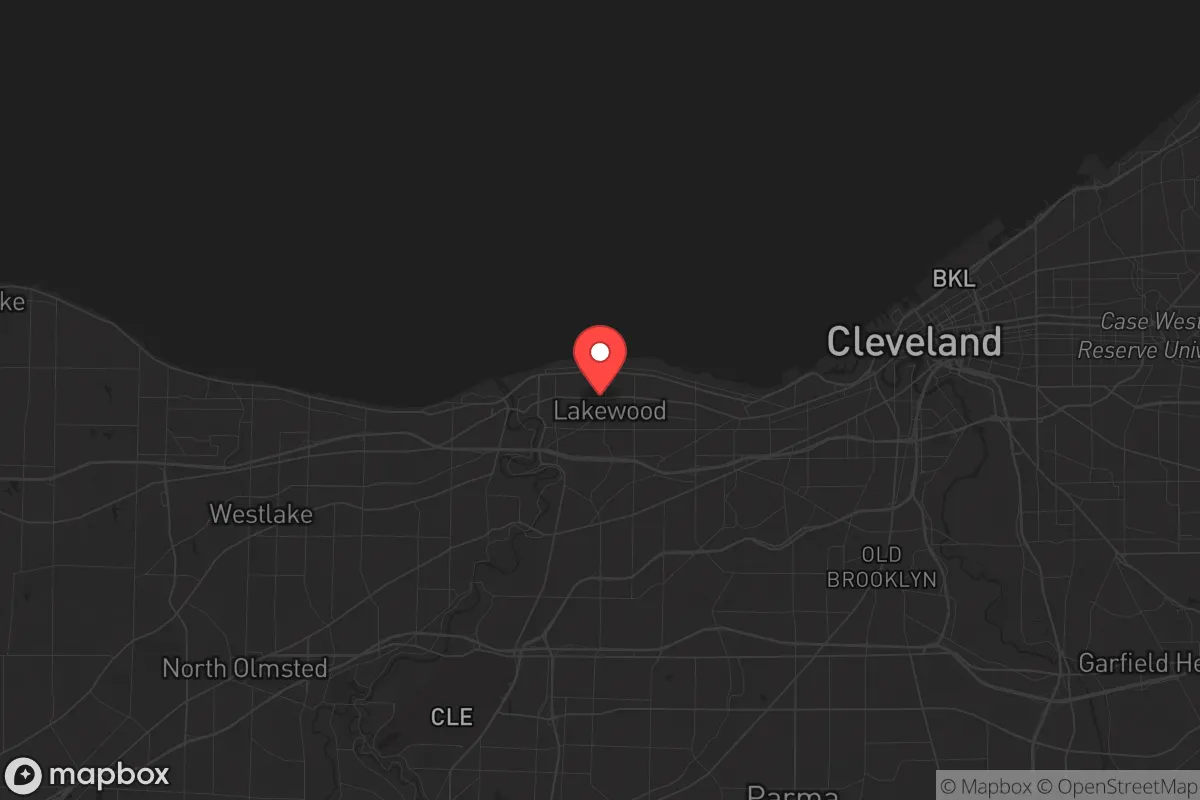
Photo: Wikipedia
Strategic Assessment of Lakewood, OH
Multiple tactical vulnerabilities. Population density, target proximity, or disaster risk are likely compounding. A retreat property and exit planning is required.
What does the Strategic Assessment tell us?
Our Strategic Assessment grades tactical survivability of an area. Major population centers, military targets, fallout zones, natural disasters, and border exposure all drive risk — lower exposure means a more defensible position in a crisis.
This is heavily inspired by Joel Skousen's Strategic Relocation book. Highly recommended you checkout the book ($)What does this tell us?
Our Strategic Assessment grades tactical survivability of an area. Major population centers, military targets, fallout zones, natural disasters, and border exposure all drive risk — lower exposure means a more defensible position in a crisis.
This is heavily inspired by Joel Skousen's Strategic Relocation book. Highly recommended you checkout the book ($)Strategic Pillars

Key Distances
Regional Safe Places
Below is our recommended "safe zones" in Ohio and the surrounding area based on our strategic heuristics. For most people, it's unrealistic to live in a “safe zone” full-time due to work, family or other personal reasons. They tend to be more rural. However, many of these areas are perfect for second homes and retreat properties that double as a vacation home or even a short-term rental.

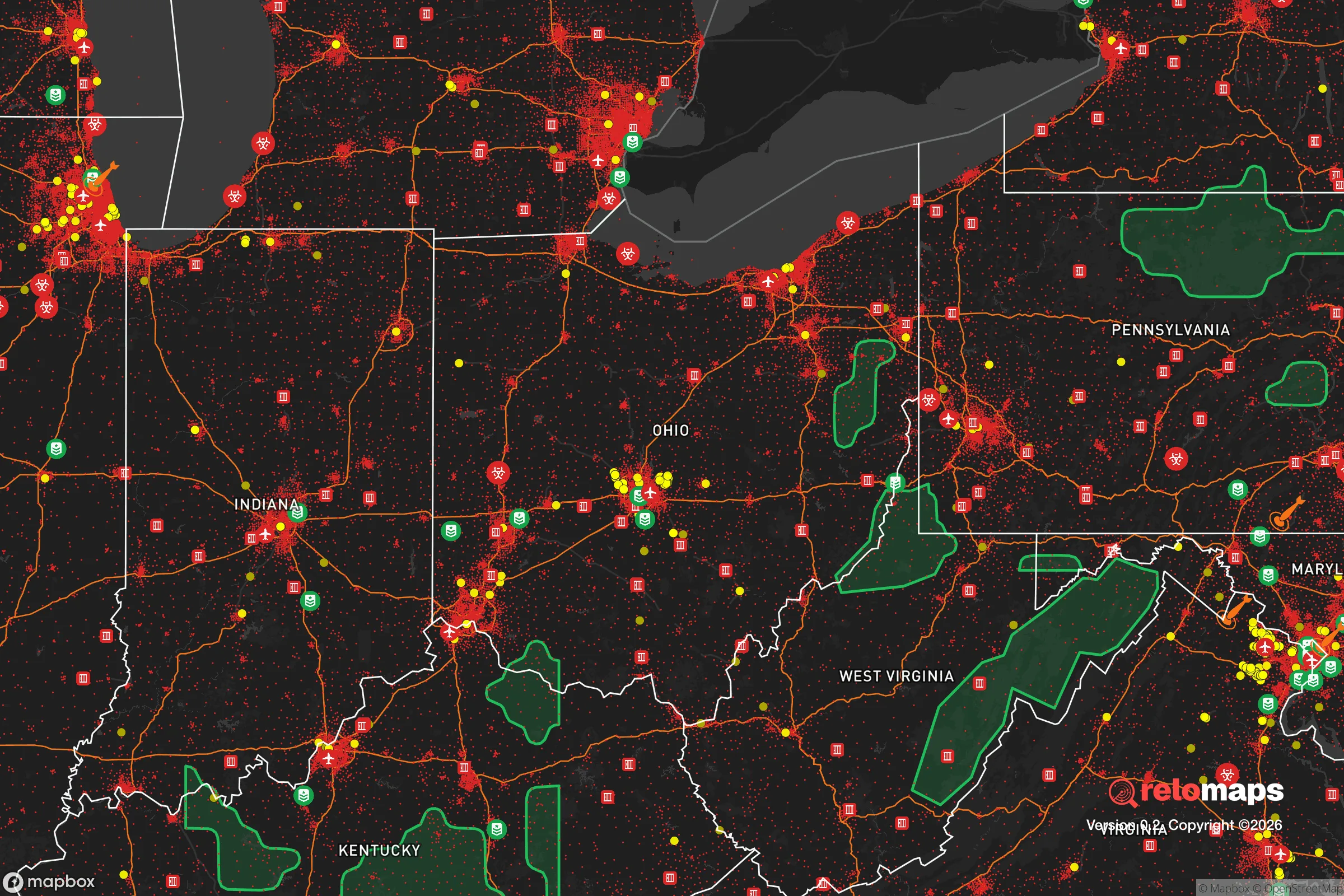


Important Note: For informational purposes only. This does not mean nothing bad ever happens in the green zones. Please use common sense. This is based on public data and modeled with AI. We tried to take a conservative approach but mistakes happen. We update this regularly as new information becomes available.
Solar Generator Recommendations
Backup power matters more here than in safer locations. We've picked three solar generators across budgets and capacity tiers — start with the budget unit if you only need a few essentials, or step up if you want to run a fridge and HVAC for days at a time.

Jackery Portable Power Station Explorer 300
Budget OptionPower on the Go: Weighing only 11 lbs, it's convenient to set up and store with book-sized foldable solar panels

BLUETTI Portable Power Station AC180
Designed for both indoor and outdoor scenarios, AC180 is highly capable as it has a robost capacity and continuous output power.

EF ECOFLOW DELTA Pro Ultra Power Station
Upgraded PickEcoFlow DELTA Pro Ultra is a whole-home energy system designed to grow with your family. Integrated with the Smart Home Panel 2, it scales to meet your evolving energy needs — keeping your home powered, intelligent, and secure through every stage of life.
We earn a commission, at no additional cost to you.
Strategic Assessment Analysis
Lakewood, Ohio, presents a complex strategic picture for the conservative prepper: it offers genuine resilience advantages in its dense, walkable infrastructure and strong community fabric, but its location directly abutting Cleveland and hugging the Lake Erie shoreline introduces severe vulnerabilities that cannot be ignored. For the single individual or family prioritizing preparedness, Lakewood is less a standalone redoubt and more a forward-operating base—a place with solid day-to-day living advantages that demands a clear-eyed plan for extraction or shelter-in-place during a major disruption. The key is understanding that this is not a rural survivalist haven, but a high-density urban environment with specific, exploitable strengths and undeniable risks.
Geographic position and natural advantages for a prepper household
Lakewood’s primary natural advantage is its direct frontage on Lake Erie, a massive, reliable freshwater source that no adversary can easily cut off. In a prolonged grid-down scenario, the lake provides a near-limitless supply for drinking (with proper filtration), sanitation, and even small-scale irrigation. The city’s elevation along the lakefront bluffs offers a modest defensive vantage point over the shoreline, and the prevailing westerly winds help disperse airborne contaminants from industrial or fallout events to the east. The area’s geology is stable—no significant earthquake or sinkhole risk—and the climate, while harsh in winter, is predictable. Lakewood sits on a grid of wide, tree-lined streets that, while not defensible in a military sense, allow for good observation and multiple egress routes. The Cuyahoga River valley to the east and the Rocky River valley to the west create natural chokepoints that could slow or channel movement from the interior, buying time for those who know the terrain. For a relocator, the presence of over 500 acres of public parkland within a 15-minute drive, including the Cleveland Metroparks’ Rocky River Reservation, provides immediate access to woodlands, game, and alternative water sources—a rare asset for a suburb this dense.
Risks, exposures, and proximity to fallout-relevant landmarks
The most glaring vulnerability is Lakewood’s position as a dense, built-up suburb of Cleveland, just 4 miles from downtown. In any scenario involving civil unrest, mass casualty events, or a coordinated attack, this proximity is a liability. The city is sandwiched between two major interstate corridors—I-90 to the south and the Shoreway (SR 2) along the lake—both of which would become evacuation chokepoints or avenues for hostile movement. Lakewood is also within the immediate fallout zone of the Perry Nuclear Power Plant (35 miles east) and within the broader risk radius of the Davis-Besse plant in Ohio and the Fermi plant in Michigan. A catastrophic release at any of these facilities would force a downwind evacuation or shelter-in-place order, and Lakewood’s high population density (over 50,000 people in 5.5 square miles) would make rapid, orderly evacuation nearly impossible. Additionally, the city’s infrastructure—aging water mains, a single major electrical substation, and a reliance on natural gas for heating—is vulnerable to both cyberattack and physical sabotage. The presence of multiple rail lines carrying hazardous materials through the city, including crude oil and chemicals, adds a daily, localized risk of derailment and toxic release. For the prepper, these are not theoretical concerns; they are concrete, map-able threats that demand a layered response plan.
Practical resilience for a relocator: food, water, energy, and defensibility
On the practical side, Lakewood offers several underappreciated resilience features. The city’s walkable, mixed-use zoning means that most necessities—groceries, pharmacies, hardware stores—are within a 15-minute walk for the average resident. This reduces dependence on a personal vehicle during fuel shortages or road blockages. There are at least four full-service grocery stores within city limits, plus numerous ethnic markets and corner stores that would be critical for barter and supply in a crisis. Water is the standout asset: Lake Erie is a short walk from nearly every home, and the city’s water treatment plant draws directly from the lake. In a prolonged outage, a simple hand pump or bucket-and-filter system could provide drinking water indefinitely. Energy is a weak point—most homes rely on the grid, and natural gas lines are vulnerable. However, the prevalence of older homes with basements and fireplaces means that wood-burning capability is common, and many homes have space for a small generator or solar panel setup. Defensibility is the hardest sell: Lakewood’s density works against it. There are no natural barriers to entry, and the street grid offers multiple approaches for any threat. The best defensive strategy here is not to fortify a single home but to build a neighborhood-level mutual-aid network. The city’s strong sense of community—evidenced by active block clubs, a robust local news scene, and high civic engagement—is a genuine force multiplier. A prepper who invests in relationships with neighbors, learns the alleyways and cut-throughs, and identifies safe houses within walking distance will be far more resilient than one who relies solely on stockpiles and locks.
The overall strategic picture for Lakewood is one of calculated trade-offs. It is not a place to ride out a long-term collapse or a nuclear exchange—the density, infrastructure fragility, and proximity to Cleveland’s potential chaos are too great. But for the relocator who wants a high-quality daily life with genuine preparedness advantages—unlimited fresh water, walkable access to supplies, a strong community, and a location that allows for quick extraction to the west or south—Lakewood is a viable option. The conservative prepper here must accept that they are living in a target-rich environment and plan accordingly: maintain a go-bag and a vehicle ready for immediate departure, build relationships with like-minded neighbors, and treat the home as a secure base rather than a fortress. If you can live with that tension, Lakewood offers a rare combination of urban convenience and natural resilience that few other suburbs in the Rust Belt can match.

* Values derived from national, state, county, city and local statistics and may differ in a specific area. Last updated: 2026-04-21T18:21:54.000Z
Narrative content on this page is AI-generated and may contain mistakes. Verify any details that matter before acting on them.
ReloMaps may earn a commission from affiliate links at no extra cost to you.

