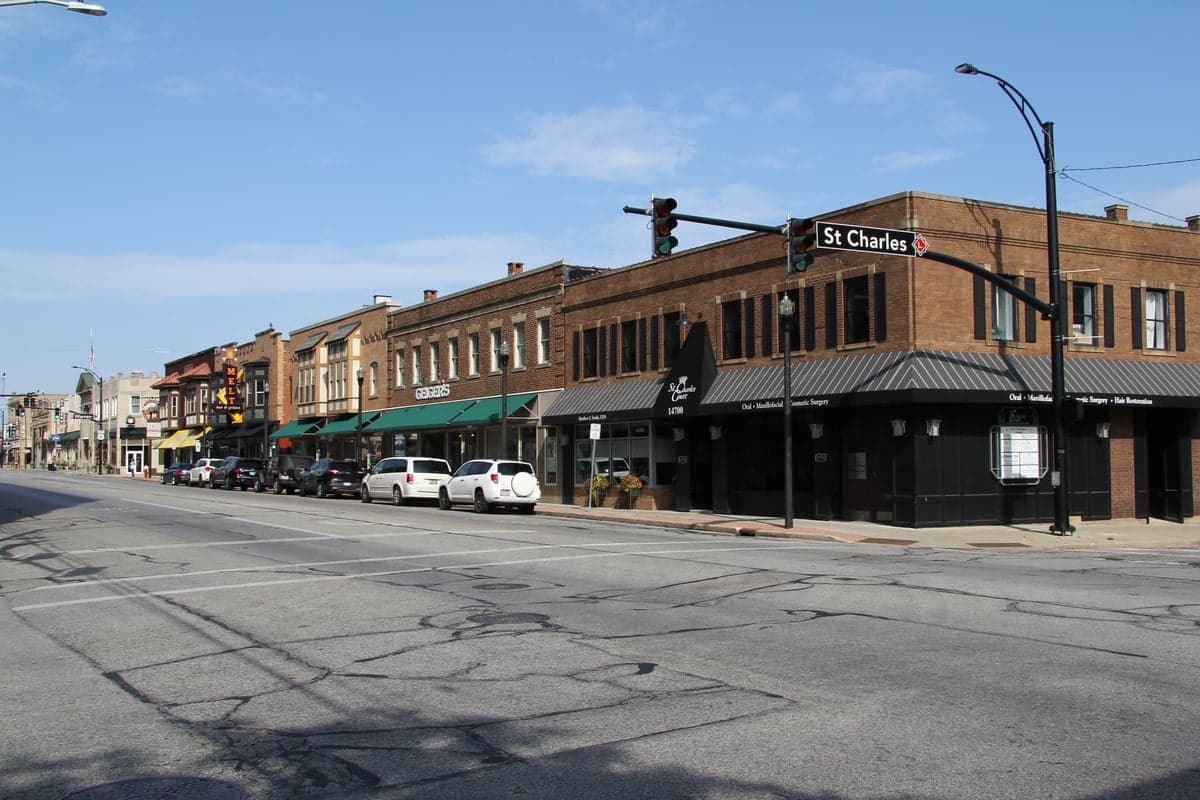
Photo: Wikipedia
Political ClimatePolitical Climate in Lakewood, OH
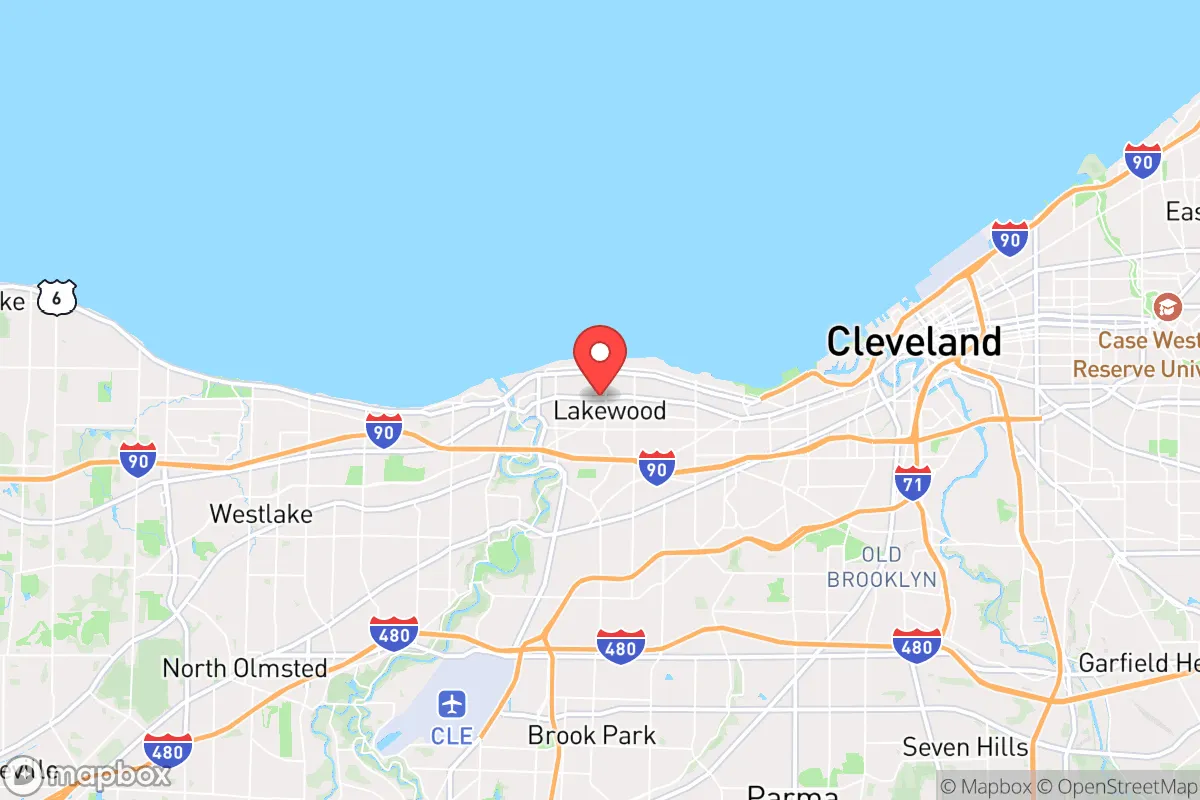
District shown is the primary district for this city’s centroid. Cities may span multiple districts.
Local Political AnalysisPolitical Analysis of Lakewood, OH
Lakewood, Ohio, is about as blue as it gets in this part of the Midwest, with a Cook PVI of D+28. That’s not just Democratic; it’s deep-blue territory, and it’s been trending that way for a while. If you’re looking at the political climate here, you’re looking at a place where progressive policies aren’t just debated—they’re the baseline. The city council and school board have been solidly left-leaning for years, and the local elections often feel like a primary between two flavors of the same party. For someone who remembers when Lakewood was a quieter, more middle-of-the-road suburb, the shift has been noticeable, and it’s not slowing down.
How it compares
Drive ten minutes west to Rocky River or Bay Village, and you’ll hit a different political planet. Those communities lean more conservative, with a mix of moderate Republicans and independents who actually show up in local races. Head east into Cleveland proper, and you’re back in D+30 territory, but Lakewood is its own bubble—denser, younger, and more activist-driven than its neighbors. The contrast is stark: Lakewood’s city council has passed ordinances on rent control, paid sick leave, and police oversight that would never fly in Westlake or Fairview Park. If you value local government staying out of your business, the comparison is a little unsettling. The surrounding towns tend to let you live your life without a new policy every other month.
What this means for residents
For the average homeowner or small business owner, the political lean here translates into a lot of red tape and a higher tax burden. Lakewood has one of the highest property tax rates in Cuyahoga County, and the city has been aggressive about adding new fees and regulations—think plastic bag bans, strict rental inspections, and zoning rules that make it harder to run a home-based business. The school board has also pushed progressive curriculum changes, including social-emotional learning programs and diversity initiatives that some parents feel go beyond academics. If you’re the type who thinks government should focus on roads and safety and leave the rest to individuals, you’ll find yourself on the losing end of most votes. The long-term trend? More of the same, with younger transplants from Cleveland and out-of-state renters driving the agenda further left.
What daily life is like for families
On the ground, the politics show up in everyday ways. You’ll see yard signs for local candidates that read like a wish list of progressive priorities—affordable housing mandates, climate action plans, and police reform. The city’s social media pages are full of announcements about equity workshops and sustainability committees. For a family just trying to get through the week, it can feel like the city is more focused on messaging than on fixing potholes or keeping the parks clean. That said, Lakewood still has a strong sense of community, with block parties, a walkable downtown, and good schools. But the political climate is something you have to opt into or opt out of—there’s not much middle ground. If you’re a conservative or even a moderate, you’ll learn to keep your head down at the farmers market or the school board meeting.
Culturally, Lakewood has become a hub for activism. You’ll see protests on Detroit Avenue, city council meetings that run late into the night over zoning disputes, and a general expectation that residents should be “engaged.” That engagement often means supporting policies that expand government’s role in housing, business, and education. For someone who values personal freedom and limited government, it’s a tough fit. The city’s identity is wrapped up in being progressive, and that’s not changing anytime soon. If you’re considering a move here, just know what you’re signing up for—it’s a place where the political climate is part of the daily conversation, and it’s not going to swing back toward the center anytime soon.

State Political ClimatePolitical Climate in Ohio
State Political AnalysisPolitical Environment in the State
Ohio is a classic purple state with a recent red shift, having voted for Donald Trump by 8 points in both 2016 and 2020 and by a wider 11-point margin in 2024, a stark contrast to its bellwether status from 1964 to 2012 when it picked every eventual winner. The dominant coalition is now a mix of working-class voters in small cities and rural areas, suburban conservatives, and a shrinking but still potent Democratic base anchored in the three C’s: Cleveland, Columbus, and Cincinnati. Over the last 20 years, the state has moved from a pure swing state to a reliably Republican-leaning one, driven by the collapse of union-Democrat alignment in the Mahoning Valley and Appalachian southeast, while the fast-growing Columbus suburbs have become more Democratic, creating a sharper urban-rural split than ever before.
Urban vs. rural divide
The political map of Ohio is a tale of two landscapes. The major metros—Cuyahoga County (Cleveland), Franklin County (Columbus), and Hamilton County (Cincinnati)—are Democratic strongholds, with Franklin County going for Biden by 21 points in 2020 and Harris by 18 in 2024. But outside these islands, the state is deeply red. The rural northwest, including counties like Mercer and Auglaize, routinely votes 75-80% Republican. The Appalachian southeast, once a Democratic stronghold under the New Deal, has flipped hard: Belmont County went from voting for Obama in 2008 to Trump by 38 points in 2024. The suburbs are the real battleground: Delaware County (north of Columbus) is now reliably Republican but with a growing moderate wing, while Warren County (north of Cincinnati) is one of the most conservative suburban counties in the nation, voting 65% for Trump in 2024. The once-blue Mahoning Valley, anchored by Youngstown, has shifted dramatically—Mahoning County itself went for Trump in 2024 after backing Obama twice, a sign of the region’s complete realignment around cultural and trade issues.
Policy environment
Ohio’s policy environment is broadly conservative but with notable exceptions. The state has a flat income tax rate of 3.5% as of 2025, down from over 5% a decade ago, and no tax on Social Security benefits—a major draw for retirees. Property taxes are moderate, averaging 1.5% of home value, but vary wildly by district. The regulatory posture is business-friendly: Ohio is a right-to-work state in practice if not by law (a 2011 law was repealed by referendum in 2012, but union membership has still declined). On education, the state has a robust school choice program: the EdChoice scholarship program allows students in underperforming districts to attend private or charter schools, and in 2023 the program was expanded to universal eligibility based on income. Ohio also has a constitutional amendment protecting the right to hunt and fish, passed in 2024 with 62% support. However, the state’s healthcare landscape is mixed: Medicaid expansion under the Affordable Care Act was accepted in 2013, and a 2023 ballot initiative enshrined abortion rights in the state constitution, overriding a 2019 heartbeat bill. Election laws have tightened: voter ID requirements were strengthened in 2023, and drop boxes are limited to one per county, a move that drew criticism from voting rights groups but was upheld by the state Supreme Court.
Trajectory & freedom
Ohio’s trajectory on personal freedom is a mixed bag that should give conservatives pause in some areas and relief in others. On the positive side, constitutional carry (permitless concealed carry) became law in 2022, and the state preempts local gun ordinances, meaning cities like Columbus cannot enact their own bans. Parental rights were strengthened in 2023 with the Parents’ Bill of Rights, which requires schools to notify parents of any changes to a student’s health or well-being services. Property rights are solid: Ohio is a “Dillon’s Rule” state, meaning local governments have only the powers explicitly granted by the state, which limits zoning overreach. However, the 2023 abortion amendment, while framed as a freedom issue, was a major loss for pro-life advocates and shows the power of out-of-state money in ballot initiatives. Medical autonomy took a hit in 2024 when the state banned gender-affirming care for minors, overriding a veto by Governor Mike DeWine—a win for parental rights advocates but a flashpoint for ongoing legal battles. The state also passed a law in 2024 prohibiting foreign ownership of agricultural land near military installations, a nod to national security concerns. On taxation, the trend is positive: the income tax has been cut every year since 2019, and the state is on track to eliminate it entirely by 2030, according to the state budget office.
Civil unrest & political movements
Ohio has seen its share of political turbulence. The 2020 protests in Columbus and Cleveland over George Floyd’s death were large but largely peaceful, though looting occurred in downtown Columbus. The state has been a battleground for election integrity: the 2020 and 2024 elections saw no major fraud cases, but Republican-led audits in counties like Butler and Warren found no irregularities, which has not stopped ongoing calls for hand-counting of ballots in some rural precincts. Immigration politics are relatively quiet compared to border states, but the 2024 influx of Haitian migrants in Springfield (Clark County) became a national story after local officials claimed the population had strained social services. The city of Springfield’s city council passed a resolution in 2024 declaring itself a “welcoming city” for immigrants, which drew backlash from state lawmakers who threatened to withhold funding. Organized activist movements include the Buckeye Firearms Association, which is one of the most effective state-level gun rights groups in the country, and the Ohio Right to Life organization, which is now focused on post-amendment strategies. On the left, the Ohio Organizing Collaborative has been active in pushing for criminal justice reform and voting access. There is no serious secession or nullification movement in Ohio, though some rural counties have passed symbolic resolutions affirming Second Amendment sanctuary status.
Projection
Over the next 5-10 years, Ohio is likely to become more Republican at the state level but with a growing Democratic urban core that could flip the state back to purple if national trends shift. The key demographic driver is the continued exodus of young people from rural areas to Columbus and Cincinnati, which are growing while Cleveland and the Mahoning Valley stagnate. By 2030, Franklin County alone is projected to hold 20% of the state’s population, up from 15% in 2010, which will make the urban-rural divide even more pronounced. In-migration patterns are mixed: Ohio is gaining retirees from the Northeast and Midwest who are drawn by low taxes and cost of living, but losing college-educated workers to Texas and Florida. The state’s political trajectory will hinge on whether the Republican Party can hold the suburbs—places like Delaware County are trending slightly left as professionals move in from Columbus. The flat tax elimination by 2030 is a realistic goal that would cement Ohio’s reputation as a low-tax state. However, the abortion amendment’s passage shows that ballot initiatives can override the legislature, and progressives are already eyeing a 2026 initiative on minimum wage and paid leave. The wild card is the 2026 governor’s race: if a hardline conservative wins the primary, the general election could be competitive, but the state’s fundamentals favor the GOP.
For a conservative considering a move to Ohio, the bottom line is this: you get a low-tax, gun-friendly, school-choice state with a Republican legislature that is actively cutting government, but you also get a state where a single ballot initiative can upend the policy landscape overnight. The urban areas are increasingly progressive, so if you want a reliably conservative community, look to the suburbs of Cincinnati (like Mason or West Chester) or the small cities of the northwest (like Findlay or Lima). The state is trending redder at the state level, but the cultural battles are far from over—and the 2023 abortion amendment is a reminder that no policy is safe from the ballot box. If you value local control and low taxes, Ohio is a solid bet; if you want a state where conservative values are locked in permanently, you might look further south. But for now, Ohio offers a decent balance of freedom and stability, with a trajectory that is more promising than worrying for those who lean right.
* Values derived from national, state, county, city and local statistics and may differ in a specific area. Last updated: 2026-04-21T18:21:54.000Z
Narrative content on this page is AI-generated and may contain mistakes. Verify any details that matter before acting on them.
ReloMaps may earn a commission from affiliate links at no extra cost to you.

