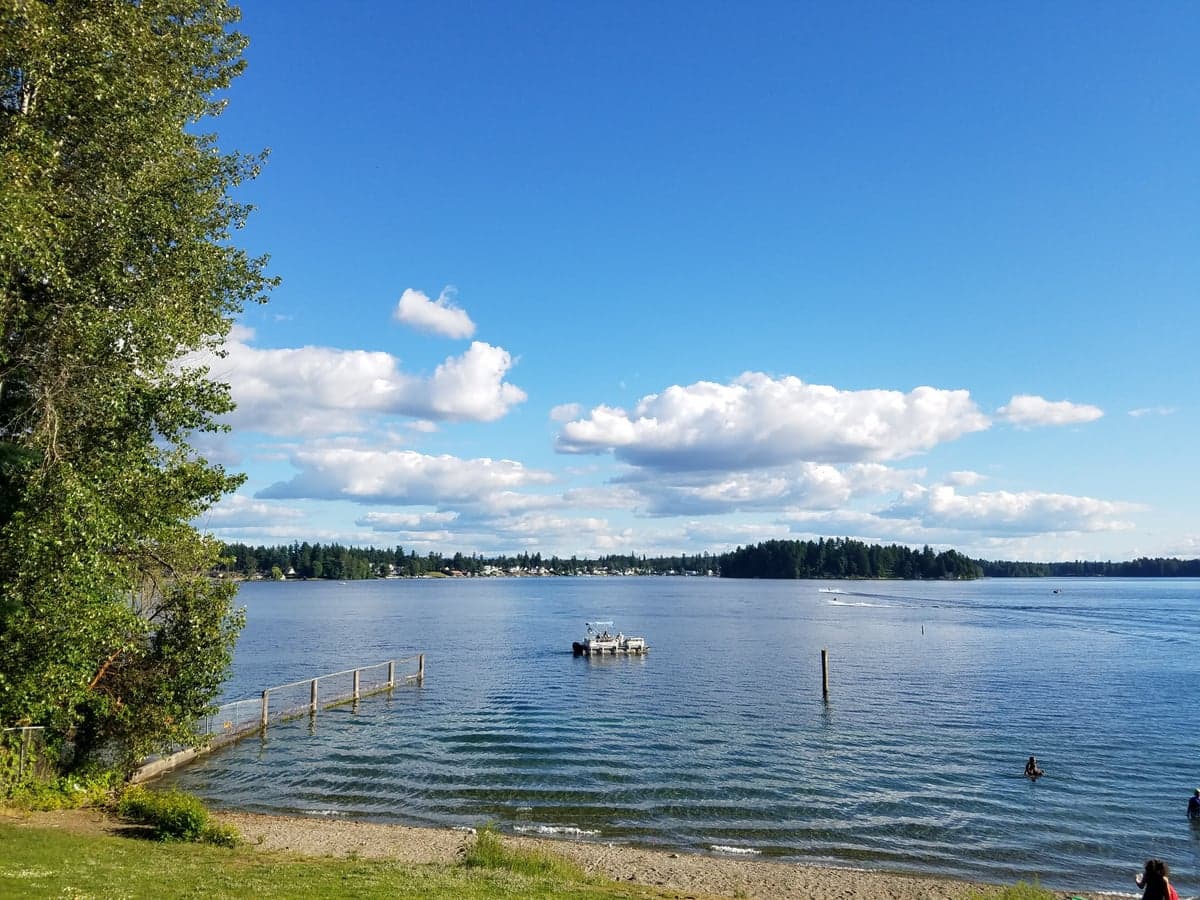
Photo: Wikipedia
Quality of Life in Lakewood, WA
A high quality of life with strong walkability, manageable living costs, healthy neighborhood signals, and solid amenity access.
What does Quality of Life tell us?
Quality of Life blends cost of living, nearby amenities, socioeconomic signals, and neighborhood character. City-level scores represent the whole municipality; individual neighborhoods can differ.
What does this tell us?
Quality of Life blends cost of living, nearby amenities, socioeconomic signals, and neighborhood character. City-level scores represent the whole municipality; individual neighborhoods can differ.
Cost of Living
35% above national average
The Real Cost of Living in Lakewood, WA for 2026
| Tier | Individual | Family (4) |
|---|---|---|
| Survival | $23k | $44k |
| Comfortable | $82k | $120k |
| Luxury | $127k+ | $197k+ |
| Elite (Top 5%) | $158k+ | $245k+ |
59%
The Area Signal
A metric tracking the socioeconomic signals of the area.
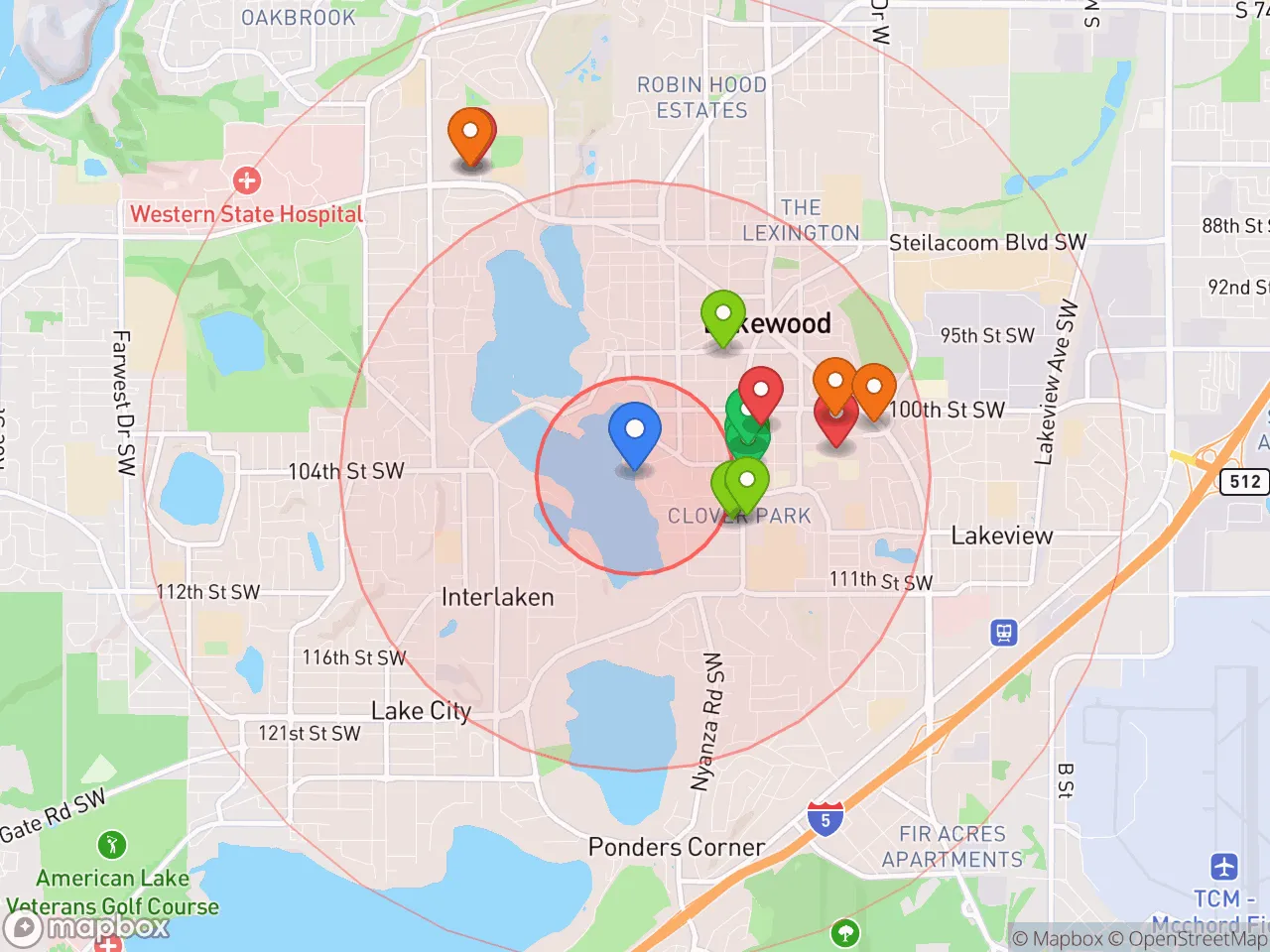
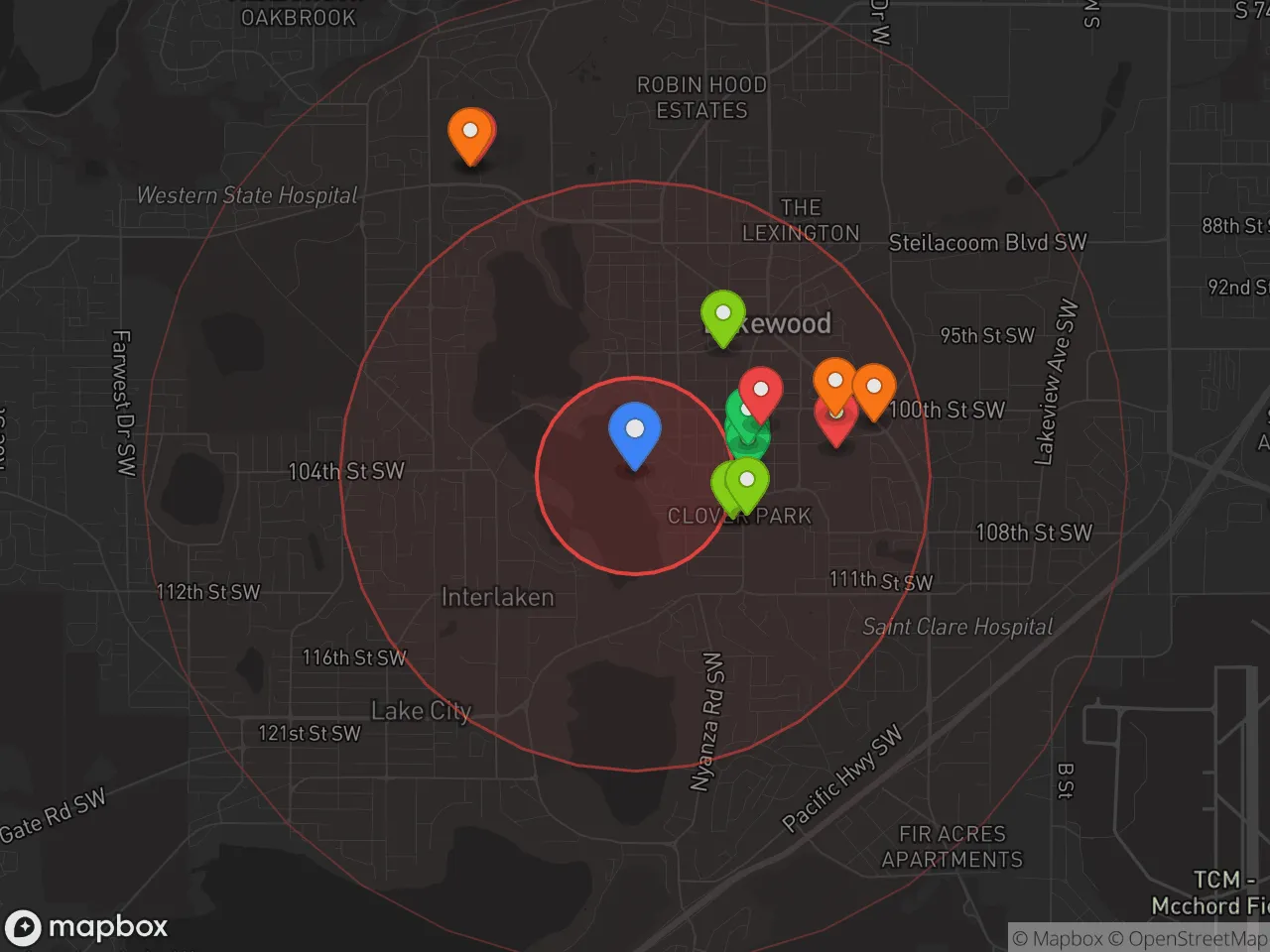
Hobbies
Explore the areaGroceries
7 within 10 miles
Gas
20 within 10 miles
Hospital
17 within 20 miles
Airport
SEA — Seattle–Tacoma International
Post Office
USPS — Lakewood, WA
Critical Amenities
Quality-of-Life Analysis
Lakewood, Washington, presents a quality-of-life profile that blends suburban convenience with a cost structure notably higher than the national average, attracting a mix of military families tied to Joint Base Lewis-McChord, long-term residents, and commuters working in Tacoma or Seattle. With a cost of living index of 135 (100 = US average), Lakewood is more expensive than the typical U.S. city but remains significantly more affordable than Seattle proper, where the index often exceeds 170. The area’s demographic character is shaped by its proximity to the base, a growing Hispanic and Asian population, and a steady influx of households seeking relative affordability within the Puget Sound region.
Cost of living, housing affordability, and how Lakewood compares to Tacoma and Seattle
Lakewood’s cost of living is 35% above the national average, driven primarily by housing and transportation. The median home value sits at $420,500, which is roughly $100,000 less than the median in Tacoma and about $350,000 below Seattle’s median. For renters, the median rent of $1,460 is competitive for the region—about $200 less than Tacoma’s median and several hundred dollars below Seattle’s. However, the average one-way commute of 28.8 minutes is a key trade-off: many residents drive to jobs in Tacoma (15–20 minutes) or Seattle (40–60 minutes via I-5), and the lack of a direct light-rail connection means car dependency is high. Property taxes in Pierce County are moderate (around 1.0% of assessed value), but Washington’s lack of a state income tax offsets some of the housing cost burden. Overall, Lakewood offers a middle ground: cheaper than core urban areas but still expensive relative to national norms, with affordability concentrated in older neighborhoods and apartment complexes near the base.
What daily life is like: amenities, schools, and local rhythm
Daily life in Lakewood revolves around a mix of retail corridors, parks, and military-adjacent services. The city’s Lakewood Towne Center provides big-box shopping and dining, while Fort Steilacoom Park—the largest park in the city—offers trails, sports fields, and a dog park. The Clover Park School District serves most of Lakewood, with Lakes High School and Clover Park High School as the main public options; the district’s graduation rate hovers around 80%, slightly below the state average. For higher education, Pierce College Fort Steilacoom is a major asset, offering two-year degrees and transfer pathways. The local rhythm is quieter than Tacoma’s: restaurants and bars cluster along South Tacoma Way and Bridgeport Way, but nightlife is limited. Traffic on I-5 peaks during commute hours, and the area’s proximity to Joint Base Lewis-McChord means periodic military aircraft noise. Families appreciate the lower crime rates in neighborhoods like Lake City and Springbrook, though property crime is a recurring concern citywide.
Lakewood is best suited for households that prioritize relative affordability within the Puget Sound region, especially those with ties to Joint Base Lewis-McChord or jobs in Tacoma. Military families benefit from the base’s proximity and the availability of VA services, while commuters accept the 28-minute average drive for lower housing costs than Seattle. Retirees on fixed incomes may find the cost of living challenging, but the city’s parks and community college offer low-cost recreation. For anyone seeking a quieter, more affordable alternative to Tacoma or Seattle—and willing to trade urban amenities for space and base access—Lakewood provides a functional, if unglamorous, quality of life.

Crime in Lakewood, WA
Crime rates similar to the national median for U.S. locations.
Violent CrimeViolent Crime Analysis
Property CrimeProperty Crime Analysis
Crime Analysis
Lakewood, Washington, presents a crime and safety profile that warrants serious consideration for potential residents. With a violent crime rate of 505.7 incidents per 100,000 residents and a property crime rate of 2,699.8 per 100,000, the city's statistics significantly exceed both Washington state and national averages. These figures place Lakewood in a higher-risk category for a city of its size, a reality shaped in part by the broader criminal justice policies of Pierce County and the Seattle-Tacoma metropolitan area.
Crime in context
Lakewood's violent crime rate is roughly 40% higher than the national average, while its property crime rate is nearly double the national figure. When compared to the state of Washington, which itself has above-average property crime rates, Lakewood still stands out as a higher-crime jurisdiction. These numbers reflect a community grappling with the consequences of a regional justice system that, under progressive leadership, has prioritized diversion programs and reduced sentencing for repeat offenders. The result, as seen in many large metro areas with similar policies, is a revolving door for property criminals and a diminished deterrent effect for violent offenses. Residents and local businesses bear the cost of this approach through increased theft, burglary, and a heightened sense of vulnerability.
What residents experience
For those living in Lakewood, the daily reality is shaped by property crime as the most common threat. Vehicle break-ins, package theft, and residential burglaries are frequent occurrences, particularly in neighborhoods near commercial corridors like South Tacoma Way and Bridgeport Way. Violent crime, while less common, is concentrated in specific areas and often tied to gang activity or domestic disputes. The presence of Joint Base Lewis-McChord (JBLM) brings a transient military population, which can both contribute to and complicate local crime dynamics. Many residents report feeling safe during the day but exercise heightened caution after dark, especially in isolated parking lots or less-trafficked residential streets. The progressive policies of the Pierce County Prosecutor's Office, which have emphasized pretrial release and reduced prosecution of non-violent offenses, are frequently cited by local community groups as a factor eroding public confidence in the justice system's ability to protect victims.
Neighborhood-level variation
Safety in Lakewood is not uniform. The area around Lakewood Towne Center and the neighborhoods west of Interstate 5, such as Tillicum and Woodbrook, tend to report higher concentrations of both property and violent crime. In contrast, the gated communities near American Lake and the newer developments along Gravelly Lake Drive offer a noticeably lower crime footprint, with residents often relying on private security and neighborhood watch programs. The city's proximity to Tacoma and Seattle means that regional crime trends—including organized retail theft and fentanyl-related incidents—directly impact Lakewood's statistics. Prospective residents should research specific block-level data through the Lakewood Police Department's crime mapping tool and consider that the city's overall numbers, while concerning, do not tell the full story of every street or subdivision.
* Values derived from national, state, county, city and local statistics and may differ in a specific area. Last updated: 2026-04-21T11:13:46.000Z
Narrative content on this page is AI-generated and may contain mistakes. Verify any details that matter before acting on them.
ReloMaps may earn a commission from affiliate links at no extra cost to you.

