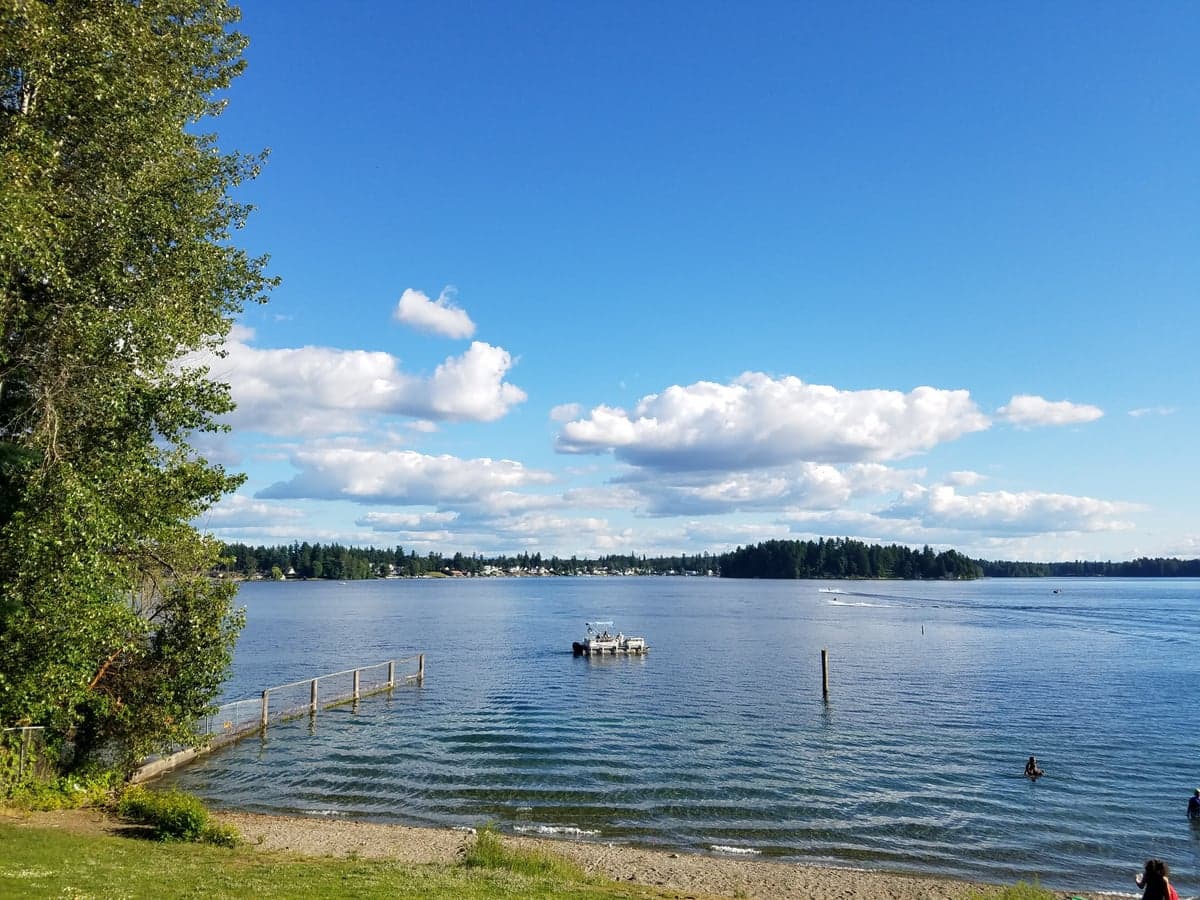
Photo: Wikipedia
Strategic Assessment of Lakewood, WA
Multiple tactical vulnerabilities. Population density, target proximity, or disaster risk are likely compounding. A retreat property and exit planning is required.
What does the Strategic Assessment tell us?
Our Strategic Assessment grades tactical survivability of an area. Major population centers, military targets, fallout zones, natural disasters, and border exposure all drive risk — lower exposure means a more defensible position in a crisis.
This is heavily inspired by Joel Skousen's Strategic Relocation book. Highly recommended you checkout the book ($)What does this tell us?
Our Strategic Assessment grades tactical survivability of an area. Major population centers, military targets, fallout zones, natural disasters, and border exposure all drive risk — lower exposure means a more defensible position in a crisis.
This is heavily inspired by Joel Skousen's Strategic Relocation book. Highly recommended you checkout the book ($)Strategic Pillars

Key Distances
Regional Safe Places
Below is our recommended "safe zones" in Washington and the surrounding area based on our strategic heuristics. For most people, it's unrealistic to live in a “safe zone” full-time due to work, family or other personal reasons. They tend to be more rural. However, many of these areas are perfect for second homes and retreat properties that double as a vacation home or even a short-term rental.
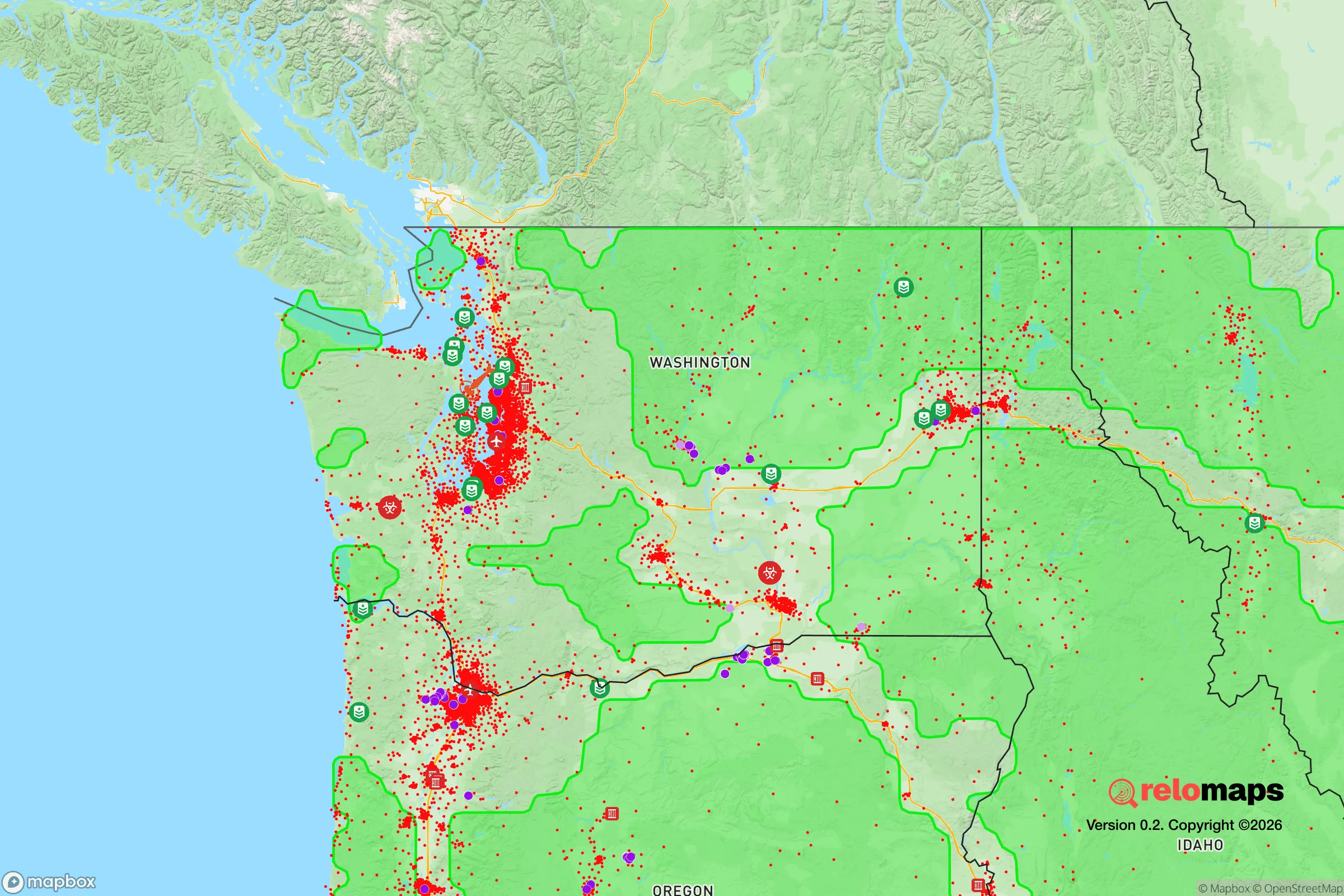
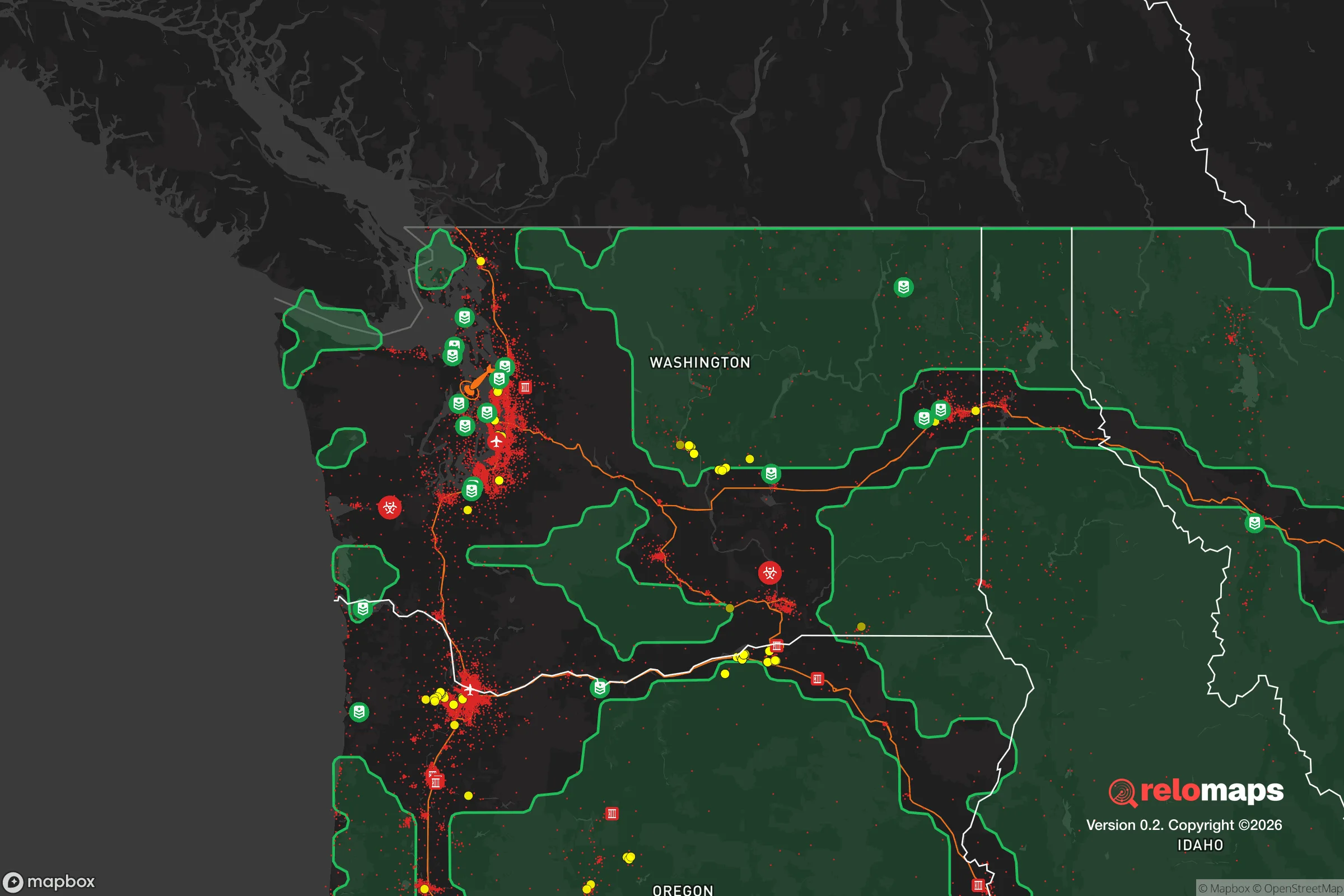


Important Note: For informational purposes only. This does not mean nothing bad ever happens in the green zones. Please use common sense. This is based on public data and modeled with AI. We tried to take a conservative approach but mistakes happen. We update this regularly as new information becomes available.
Solar Generator Recommendations
Backup power matters more here than in safer locations. We've picked three solar generators across budgets and capacity tiers — start with the budget unit if you only need a few essentials, or step up if you want to run a fridge and HVAC for days at a time.

Jackery Portable Power Station Explorer 300
Budget OptionPower on the Go: Weighing only 11 lbs, it's convenient to set up and store with book-sized foldable solar panels

BLUETTI Portable Power Station AC180
Designed for both indoor and outdoor scenarios, AC180 is highly capable as it has a robost capacity and continuous output power.

EF ECOFLOW DELTA Pro Ultra Power Station
Upgraded PickEcoFlow DELTA Pro Ultra is a whole-home energy system designed to grow with your family. Integrated with the Smart Home Panel 2, it scales to meet your evolving energy needs — keeping your home powered, intelligent, and secure through every stage of life.
We earn a commission, at no additional cost to you.
Strategic Assessment Analysis
Lakewood, Washington, sits in a precarious but potentially advantageous position for those prioritizing resilience and strategic relocation. Its location near Joint Base Lewis-McChord (JBLM) offers a unique blend of security infrastructure and potential risk, while its proximity to Tacoma and Seattle introduces significant exposure to urban collapse scenarios. For a prepper or survivalist, Lakewood is not a retreat—it is a forward operating base that demands constant awareness of its vulnerabilities and a clear plan for extraction or defense.
Geographic position and natural advantages for a survivalist
Lakewood’s geography is a double-edged sword. The city lies on the southern edge of Puget Sound, with access to the waters of American Lake and Gravelly Lake, providing fresh water sources and potential fishing. The surrounding landscape includes the Cascade foothills to the east and the Olympic Mountains to the west, offering multiple escape corridors into less populated terrain. The area’s temperate maritime climate means mild winters and moderate rainfall, reducing the risk of extreme temperature-related survival challenges. However, the region is seismically active—the Cascadia subduction zone poses a genuine threat of a magnitude 9.0 earthquake and subsequent tsunami. Lakewood sits at an elevation of roughly 200–300 feet, placing it above most tsunami inundation zones, but the risk of liquefaction and infrastructure collapse is real. The natural advantages here are real: abundant rainfall for catchment, fertile soil for small-scale agriculture, and proximity to national forest land for foraging and hunting. But these are offset by the reality that you are sharing this geography with over 60,000 other residents, many of whom will have the same ideas when things go sideways.
Risks, exposures, and proximity to fallout-relevant landmarks
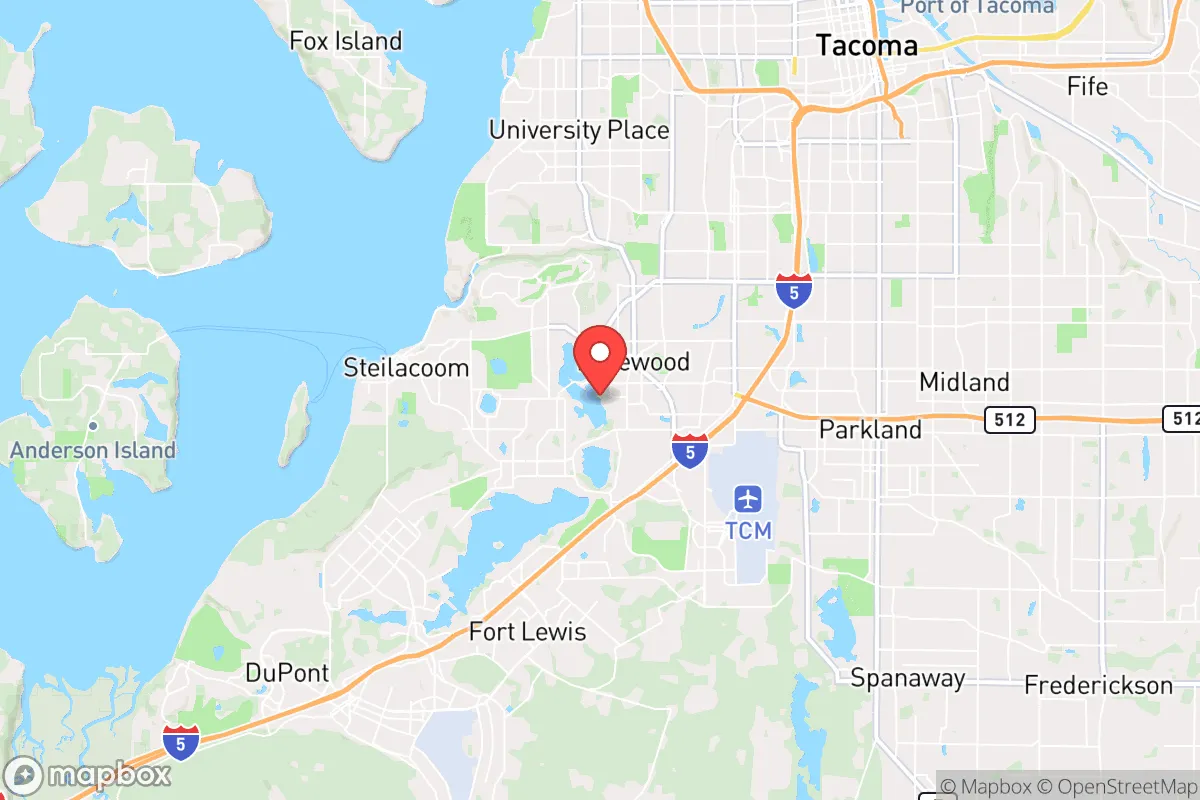
The single greatest risk in Lakewood is its proximity to JBLM, one of the largest military installations on the West Coast. In a scenario of civil unrest or foreign conflict, JBLM becomes a primary target for kinetic or cyber attack. The base houses the I Corps headquarters, the 7th Infantry Division, and the 62nd Airlift Wing—assets that make it a high-value target. Fallout from a conventional or nuclear strike on JBLM would directly impact Lakewood, which lies just south of the base. Additionally, the Port of Tacoma, a major logistics hub for the Pacific Rim, is only 10 miles north. In a collapse scenario, this port becomes a chokepoint for both military and civilian supply chains, drawing chaos and looting. Interstate 5, the region’s arterial highway, runs through Lakewood and will be a primary evacuation route—meaning it will be gridlocked within hours of any major event. The city’s proximity to Seattle (35 miles north) means that any large-scale urban disaster—pandemic, riot, or economic collapse—will send waves of refugees southward. Lakewood’s own population density (roughly 2,500 people per square mile) is moderate, but the surrounding Pierce County population exceeds 900,000, creating a pressure cooker of competition for resources. For the strategic relocator, the key takeaway is that Lakewood is not a bug-out location; it is a staging area with a hard deadline for evacuation if the situation deteriorates.
Practical resilience for a relocator: food, water, energy, and defensibility
For those committed to staying in Lakewood, practical resilience requires a layered approach. Water is the most immediate concern. The city draws from the Green River and groundwater wells, but municipal systems are vulnerable to seismic disruption and contamination. A minimum of two weeks of stored water per person is non-negotiable, along with a Berkey or similar gravity filter for local sources like American Lake. Food storage is complicated by the region’s humidity—mold and spoilage are constant threats. Mylar bags with oxygen absorbers and a dry, cool basement or crawlspace are essential. Local food production is possible but limited by the short growing season (roughly April to October). Raised beds with cold frames can extend it, but don’t expect to subsist on gardening alone. Energy resilience is more promising. The Pacific Northwest’s hydroelectric grid is robust, but a Cascadia quake would likely knock it out for weeks. Solar panels with battery storage (a 5–10 kW system) are viable given the region’s moderate sun, but you’ll need a backup generator for winter cloud cover. Propane is the most practical fuel for cooking and heating—store 100+ gallons in a secure, ventilated shed. Defensibility is Lakewood’s weakest point. The city’s layout is suburban sprawl with few natural chokepoints. Single-family homes on quarter-acre lots offer some buffer, but neighbors are close. A corner lot with a fenced backyard and a clear line of sight to the street is better than a cul-de-sac. Reinforced doors, window film, and a safe room are prudent. The best defensive strategy, however, is to have a pre-planned bug-out route east into the Cascades or south toward the Gifford Pinchot National Forest. Know your secondary roads—avoid I-5 and Highway 512 at all costs. A reliable 4x4 vehicle with a full survival kit (food, water, medical, comms) should be ready to go at all times.
The overall strategic picture for Lakewood is one of calculated risk. It offers genuine advantages—military-adjacent security, water access, and multiple escape routes—but those come with severe exposure to high-value targets and urban spillover. For the conservative prepper who values community and readiness over isolation, Lakewood can work as a base of operations, provided you have a hard exit plan and the supplies to sustain yourself through the first 72 hours of chaos. If you are looking for a long-term retreat where you can ride out the collapse in peace, look farther east or south. But if you need to stay close to the action—for work, family, or strategic reasons—Lakewood is a place where preparation and paranoia are not weaknesses, but necessities.

* Values derived from national, state, county, city and local statistics and may differ in a specific area. Last updated: 2026-04-21T11:13:46.000Z
Narrative content on this page is AI-generated and may contain mistakes. Verify any details that matter before acting on them.
ReloMaps may earn a commission from affiliate links at no extra cost to you.

