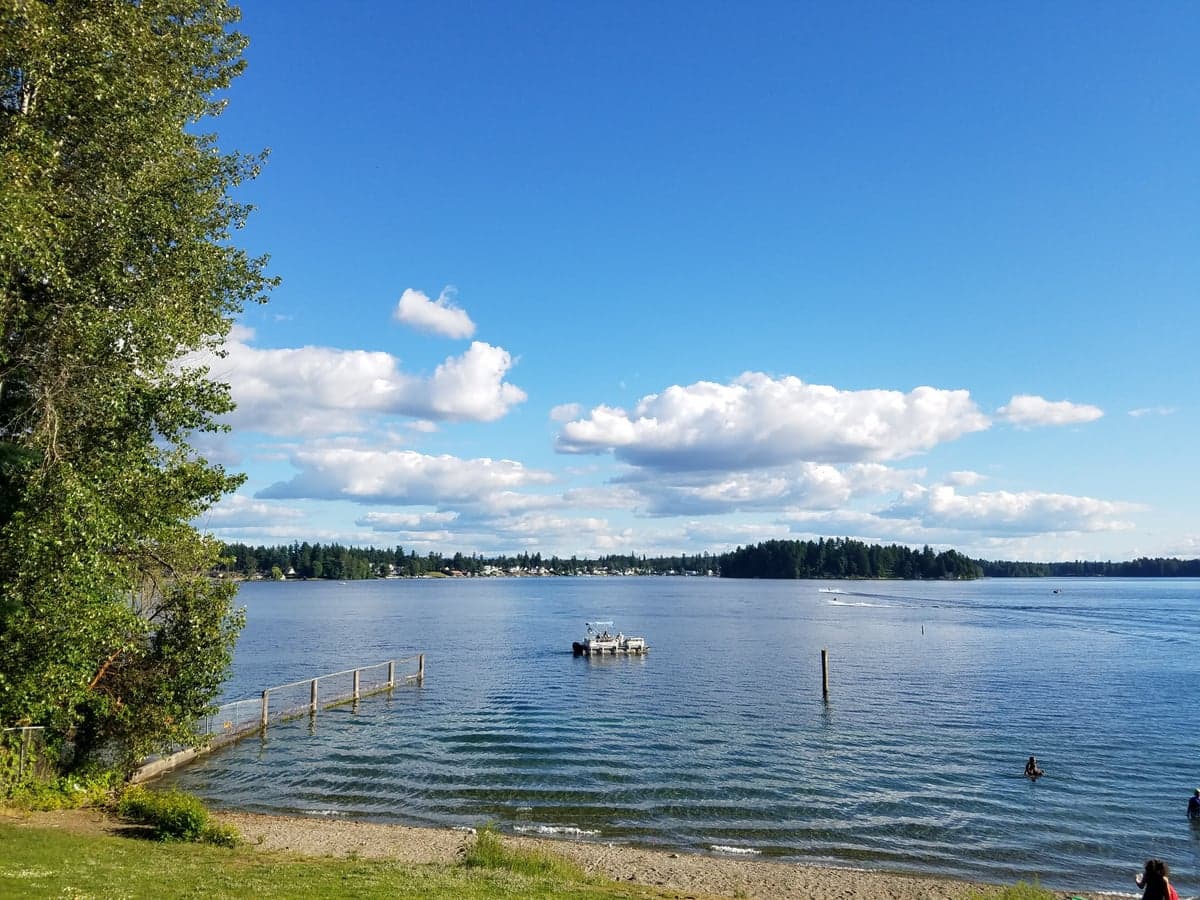
Photo: Wikipedia
Personal Sovereignty in Lakewood, WA
Viable for self-reliance. Generally workable, though some barriers may limit total independence.
What does Personal Sovereignty tell us?
Personal Sovereignty measures your capacity for self-reliance and independence with minimal government friction. Higher scores mean fewer barriers between you and the way you want to live... but it assumes you have the space you need and good neighbors.
What does this tell us?
Personal Sovereignty measures your capacity for self-reliance and independence with minimal government friction. Higher scores mean fewer barriers between you and the way you want to live... but it assumes you have the space you need and good neighbors.
State Policy
Energy independence: Importer (55% of energy produced in-state)
Personal Liberty
Homesteading

Personal Liberty Analysis
Lakewood, Washington, presents a mixed picture for those prioritizing personal sovereignty, where the natural advantages of the Pacific Northwest are increasingly weighed down by a state government that actively erodes individual autonomy. While the city itself offers a relatively affordable entry point into the region compared to Seattle or Tacoma, the overarching legal and tax framework from Olympia creates a persistent headwind for anyone seeking true self-determination. For the survivalist or prepper, Lakewood is a location that demands constant vigilance against state overreach, offering some tactical benefits but requiring a clear-eyed acceptance of its limitations.
Tax burden and regulatory posture: How Washington state's policies affect your wallet and freedom
Washington state’s tax structure is a double-edged sword for the sovereignty-minded individual. The absence of a state income tax is a genuine advantage, allowing you to keep more of what you earn and reducing the government’s direct claim on your labor. However, this is offset by some of the highest sales tax rates in the nation—Lakewood’s combined rate hovers around 10.1%—which hits every purchase, from groceries to building supplies, like a regressive consumption tax. Property taxes are also a significant factor, with effective rates around 1.0% of assessed value, and they tend to rise with home values, which have been climbing steadily in the region. The regulatory posture is where the real friction occurs. Washington state imposes a thick layer of environmental and land-use regulations, including the Growth Management Act, which heavily restricts what you can do with your property. Building permits, septic system approvals, and even minor renovations can become bureaucratic battles. For the prepper, this means that establishing a fully self-sufficient homestead within city limits is nearly impossible due to zoning and code enforcement. The state’s energy regulations also push toward electrification, limiting options for off-grid propane or diesel generators in residential areas. In short, while the lack of income tax is a clear win, the high consumption taxes and dense regulatory web make Lakewood a place where you must constantly navigate government permission slips.
Self-defense and gun law specifics: What you can and cannot do to protect yourself in Lakewood
Washington state’s gun laws have become increasingly restrictive, and Lakewood residents must operate within a framework that is hostile to the right to keep and bear arms. The state now bans so-called "assault weapons" (a broad, legally vague category), prohibits high-capacity magazines over ten rounds, and requires a 10-day waiting period and a completed background check for all firearm purchases, including private sales. There is no permit required to open carry, but doing so in public can invite unwanted attention from law enforcement and the public, especially in more urban parts of Pierce County. Concealed carry requires a license, which is shall-issue but subject to a background check and fingerprinting. The most concerning development for the prepper is the state’s move toward "safe storage" laws and potential liability for gun owners, which creates legal exposure if a firearm is used in a crime, even if stolen. Self-defense law in Washington follows a "reasonable belief" standard for the use of deadly force, but there is no "stand your ground" statute; you have a duty to retreat if safely possible. This legal nuance means that defending your home or property can lead to costly legal battles, even if you are morally justified. For the survivalist, Lakewood is not a place where you can freely build an arsenal or rely on a castle doctrine. You must be meticulous about compliance, store firearms securely to avoid liability, and understand that the legal system is stacked against the armed citizen. The nearby presence of Joint Base Lewis-McChord means a high concentration of military personnel who are generally pro-2A, but the state’s political leadership in Olympia is actively working to further restrict rights.
Self-reliance and homesteading viability: Lot sizes, zoning, and off-grid feasibility in Lakewood
Lakewood’s suburban character makes true homesteading a challenge, but not entirely impossible for those willing to work within the system. Typical residential lots range from 5,000 to 10,000 square feet, with some older neighborhoods offering larger parcels up to a quarter-acre. Zoning is predominantly single-family residential, which allows for vegetable gardens, small livestock like chickens (hens only, no roosters), and beekeeping with a permit. However, the city’s municipal code prohibits larger animals like goats, pigs, or cattle, and any structure over 120 square feet requires a building permit. Off-grid feasibility is severely limited. The city requires connection to municipal water and sewer systems in most areas, and solar panels are allowed but must be grid-tied and approved by the utility. Rainwater collection is legal for non-potable uses, but the state’s water rights laws complicate any attempt to rely on it as a primary source. Composting toilets are not permitted as a primary sanitation method. For the prepper, this means that Lakewood is a location for suburban resilience, not rural independence. You can grow a significant portion of your own food, store supplies, and maintain a low profile, but you cannot disconnect from the grid or raise your own meat without constant legal friction. The best strategy is to use Lakewood as a base for a more remote property in a less regulated county, such as Mason or Lewis, where zoning is looser and off-grid living is more feasible. Within the city, focus on maximizing your small lot with intensive gardening, food preservation, and a well-stocked pantry, while accepting that true self-reliance requires a secondary location.
Personal liberties: Parental rights, medical autonomy, speech, and property in Lakewood
Personal liberties in Lakewood are heavily shaped by Washington state’s progressive legal environment, which often prioritizes government authority over individual and parental rights. Parental rights are under constant pressure, with the state’s education system pushing comprehensive sex education and gender ideology that can conflict with traditional values. While parents can opt their children out of specific lessons, the default is inclusion, and school boards in the region are generally aligned with state mandates. Medical autonomy is another area of concern. Washington has broad vaccine mandates for school attendance and healthcare workers, and during the pandemic, the state enforced some of the strictest lockdowns and business closures in the nation. The state’s "shield laws" protect access to abortion and gender transition procedures, which may be a positive or negative depending on your perspective, but they also signal a government that is deeply involved in personal medical decisions. Free speech is protected under the First Amendment, but the state’s hate crime laws and social media regulations create a chilling effect for those who express dissenting views on sensitive topics. Property rights are the most compromised liberty in Lakewood. The state’s Growth Management Act and local zoning codes give the government immense control over how you use your land, and the city has been aggressive in enforcing code violations related to unpermitted structures, vehicle storage, and landscaping. For the prepper, this means that building a bunker, storing large quantities of supplies in visible ways, or even parking an RV in your driveway can lead to fines and legal orders. The overall environment is one where the government assumes a paternalistic role, and you must be strategic about what you do on your own property to avoid unwanted attention.
In the broader context of the Pacific Northwest, Lakewood offers a moderate level of personal sovereignty that is better than Seattle or King County but significantly worse than rural areas in eastern Washington or Idaho. The lack of income tax and relatively affordable housing are genuine draws, but the state’s aggressive taxation, restrictive gun laws, and heavy-handed regulation of property and personal choices create a constant friction for anyone seeking true self-reliance. For the survivalist or prepper, Lakewood is a compromise location—a place to build a suburban base with good access to military surplus, outdoor skills training, and a like-minded community, but not a place to make a final stand. The wise move is to treat Lakewood as a stepping stone, using its affordability to save capital for a more sovereign property in a less regulated jurisdiction, while maintaining a low profile and focusing on skills and supplies that do not attract government scrutiny.

* Values derived from national, state, county, city and local statistics and may differ in a specific area. Last updated: 2026-04-21T11:13:46.000Z
Narrative content on this page is AI-generated and may contain mistakes. Verify any details that matter before acting on them.
ReloMaps may earn a commission from affiliate links at no extra cost to you.

