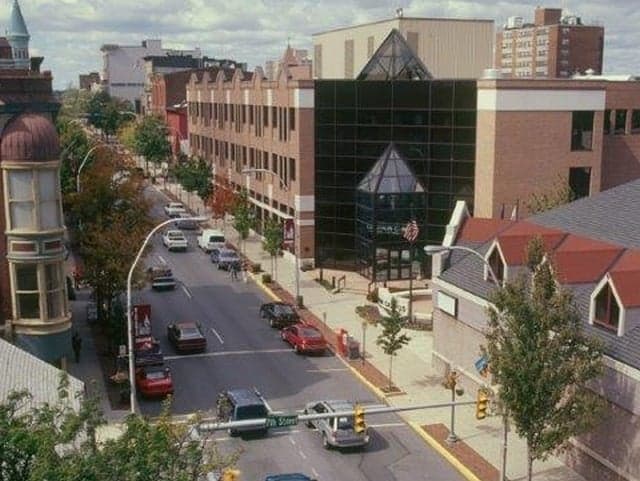
Photo: Wikipedia
Political ClimatePolitical Climate in Lebanon, PA
District shown is the primary district for this city’s centroid. Cities may span multiple districts.
Local Political AnalysisPolitical Analysis of Lebanon, PA
Lebanon, Pennsylvania, is about as solidly red as they come, and it’s been that way for as long as anyone around here can remember. The Cook Partisan Voting Index gives it a R+19 rating, meaning the district votes nearly 20 points more Republican than the national average. In the 2024 presidential race, Lebanon County went for the Republican candidate by a comfortable double-digit margin, and down-ballot races usually follow suit. That said, you can feel a subtle shift in the air over the last decade or so—not a flip, but a slow creep of progressive ideas seeping in from the bigger cities to the east and west. It’s still a place where folks value their Second Amendment rights and local control, but you’d be naive to think the political winds aren’t trying to blow in a different direction.
How it compares
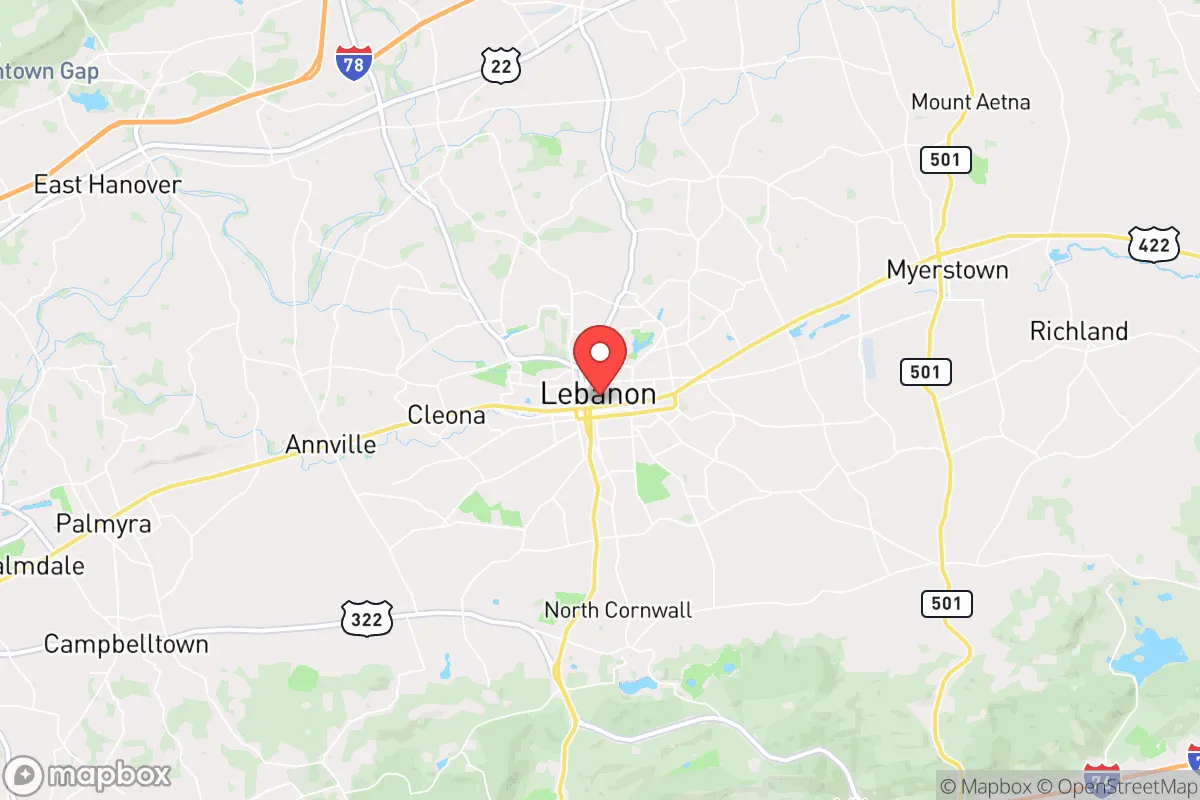
Drive 20 miles east to Reading, and you’re in a completely different world—Berks County has been trending blue for years, with a growing Hispanic population and a more urban, union-heavy base. Head west toward Harrisburg, and you’ll find Dauphin County is a toss-up, with the city itself voting heavily Democratic while the suburbs hold the line. Lebanon sits in a sweet spot of rural and small-town conservatism that hasn’t been fully overrun yet. Surrounding towns like Palmyra, Annville, and Myerstown are even more reliably red, with local school boards and township supervisors still pushing back against state-level mandates on things like mask requirements and curriculum changes. The contrast is stark: you can drive 15 minutes and go from a place where the local paper runs op-eds defending property rights to a city where the mayor is pushing for sanctuary city policies. That’s the kind of political whiplash that keeps folks here wary of any government overreach.
What this means for residents
For the average person living in Lebanon, the political climate means a lot of local fights are about preserving the way things have always been done. You’ll see heated debates at county commissioner meetings over zoning laws, tax rates, and whether to accept state grants that come with strings attached. The biggest concern for many is that progressive policies from Harrisburg or Washington—like stricter gun laws, higher property taxes to fund social programs, or mandates on energy use—will trickle down and erode the personal freedoms that make this area livable. There’s a strong sense that the federal government has no business telling a farmer in Lebanon County how to manage his land or a small business owner how to run his shop. That’s why local elections matter so much here; a shift of just a few seats on the school board or county commission can mean the difference between keeping things local and letting outside ideology take hold.
One thing that sets Lebanon apart culturally is its deep-rooted Pennsylvania Dutch heritage, which brings a practical, live-and-let-live attitude that doesn’t mix well with heavy-handed government. You’ll still see Amish buggies on the back roads, and many of the local businesses are family-owned for generations. That independent streak means residents are quick to push back against any policy that feels like an overreach—whether it’s vaccine mandates, land-use restrictions, or new taxes. The long-term outlook is a bit uncertain, though. As more people move in from the I-78 corridor looking for cheaper housing, they bring their voting habits with them. If that trend continues, Lebanon could see its R+19 edge start to slip, and that’s a real concern for anyone who values the freedom to live without the government breathing down your neck.

State Political ClimatePolitical Climate in Pennsylvania
State Political AnalysisPolitical Environment in the State
Pennsylvania is a classic swing state, but the swing has been lurching left for the better part of two decades, driven by the massive, consolidated blue vote in Philadelphia and Pittsburgh. While the state was a true battleground in 2000 and 2004, it has voted Democrat in every presidential election since 2008, and the margins in the populous southeastern counties have only grown. The old "Pennsyltucky" stereotype of a conservative, rural heartland still exists, but it’s being drowned out by the sheer population weight of the urban crescent from Philly to Scranton, making the state a frustrating place for conservatives who feel their votes are increasingly irrelevant in statewide races.
Urban vs. rural divide
The political map of Pennsylvania is a tale of two states. The southeastern corner—Philadelphia, its collar counties (Montgomery, Delaware, Chester, Bucks), and the Lehigh Valley (Allentown, Bethlehem, Easton)—is a deep blue fortress that decides every election. Philadelphia alone delivers about 500,000 Democratic votes, a margin that Republicans must overcome by running up the score in the vast, red "T" that stretches from Erie down through the center of the state and out to the western border. Pittsburgh and its immediate suburbs (Allegheny County) are also reliably blue, though less overwhelmingly so than Philly. The real Republican strongholds are the rural and exurban counties: Lancaster, York, Franklin, Adams, and the vast northern tier (Tioga, Bradford, Potter). A key flashpoint is the I-78 corridor in the Lehigh Valley, where once-red suburbs like Bethlehem Township and Lower Macungie have flipped blue as New York and New Jersey transplants flood in, bringing their politics with them. The 2020 election saw Luzerne County (Wilkes-Barre) flip back to Trump after voting Obama twice, but the Democratic gains in the Philly suburbs more than offset it.
Policy environment
The policy environment is a mixed bag, but the trend is unmistakably toward a bigger, more intrusive state government. Pennsylvania has a flat income tax rate of 3.07%, which is relatively low and a rare bright spot for fiscal conservatives. However, the state sales tax is 6%, and local taxes—especially in Philadelphia (city wage tax of nearly 4%) and Pittsburgh—can be punishing. The regulatory posture is heavy, particularly on energy: Pennsylvania is the second-largest natural gas producer in the country, but the state has imposed a severance tax that is lower than Ohio’s but higher than Texas’s, and the permitting process for new wells is slow and bureaucratic. On education, the state has seen a massive push for increased funding, with the courts ruling the current system unconstitutional, which will likely lead to higher property taxes. Governor Josh Shapiro has pushed for school choice expansion, but the powerful teachers' unions have blocked meaningful reform. Election laws are a sore spot: no voter ID requirement (though first-time voters must show ID), no-excuse mail-in voting was expanded in 2019 under Act 77, and the state has a notoriously slow vote-counting process that fuels distrust. The state also has a "red flag" law on the books, allowing for temporary firearm seizure, which was a major blow to Second Amendment advocates.
Trajectory & freedom
The trajectory is concerning for anyone who values personal liberty. The state is becoming less free by almost any measure. The most glaring example is the erosion of Second Amendment rights: in 2023, the legislature passed a preemption bill to stop local gun ordinances, but Governor Shapiro has signaled he would veto any further pro-gun measures, and the state Supreme Court has upheld Philadelphia's strict local gun laws. On medical freedom, Pennsylvania imposed some of the strictest COVID-19 mandates in the country, including a statewide school mask mandate that lasted into 2022, and the state still has a public health emergency declaration that gives the governor broad powers. Parental rights are under assault: the state Department of Education has pushed "LGBTQ+ inclusive" curriculum guidelines that many parents find invasive, and there is no statewide parental opt-out for sexually explicit materials in school libraries. Property rights are also shaky: the state's "Clean Slate" law automatically seals certain criminal records, but the real estate transfer tax is high (1% state, plus local), and the state's land use laws favor dense, urban development over rural autonomy. The only bright spot is that the state has not enacted a statewide rent control or a wealth tax, but both are perennially proposed.
Civil unrest & political movements
Pennsylvania has been a flashpoint for political activism on both sides. The 2020 election aftermath saw massive protests in Philadelphia and Pittsburgh, with some turning violent, and the "Stop the Steal" movement was particularly strong in rural counties like York and Lancaster, where thousands gathered at the state capitol in Harrisburg. The state has a robust Second Amendment sanctuary movement, with over 30 counties passing resolutions declaring themselves "sanctuary counties" against unconstitutional gun laws. Immigration politics are a growing fault line: Philadelphia is a self-declared "sanctuary city," and the state has a law (Act 30) that prohibits local governments from contracting with private prison companies for immigrant detention, which effectively limits cooperation with ICE. The most visible flashpoint is the ongoing battle over election integrity: the 2020 election saw a massive surge in mail-in ballots, and the state Supreme Court's decision to count ballots received up to three days after Election Day (overruling the legislature) has left a lasting scar. The "Election Integrity" movement is now a permanent feature of the political landscape, with groups like the Pennsylvania Election Integrity Network holding regular meetings in places like Butler and Washington counties.
Projection
Over the next 5-10 years, the trend is clear: Pennsylvania will continue to drift leftward, driven by in-migration from blue states (New York, New Jersey) into the southeastern suburbs and the Lehigh Valley. The rural population is aging and shrinking, while the urban and suburban populations are growing and diversifying. The state's electoral votes will likely remain in the Democratic column for the foreseeable future, barring a major national shift. The state legislature, gerrymandered to favor Republicans, will hold the line on some issues (like tax rates and energy regulation), but the governor's office and the state Supreme Court will continue to push progressive policies on education funding, voting access, and gun control. A new resident moving in now should expect to see higher property taxes, more state control over local schools, and a continued erosion of Second Amendment protections. The only wildcard is the energy sector: if the state embraces natural gas exports and builds out LNG infrastructure, it could create a new wave of economic growth in the rural west that might slow the demographic decline. But don't hold your breath.
For a conservative considering a move, the bottom line is this: Pennsylvania offers a relatively low income tax and a strong energy economy, but you will be living in a state where your vote for president, Senate, and governor is increasingly irrelevant. The cultural and political center of gravity is in the urban southeast, and that center is moving left. If you value local control, gun rights, and parental authority, you will find yourself fighting an uphill battle against a state government that is increasingly hostile to those values. The rural areas are still great places to live, but they are islands in a blue sea, and the tide is rising.
* Values derived from national, state, county, city and local statistics and may differ in a specific area. Last updated: 2026-05-01T09:23:47.000Z
Narrative content on this page is AI-generated and may contain mistakes. Verify any details that matter before acting on them.
ReloMaps may earn a commission from affiliate links at no extra cost to you.

