Photo: Wikipedia
Political ClimatePolitical Climate in Lincoln, NE
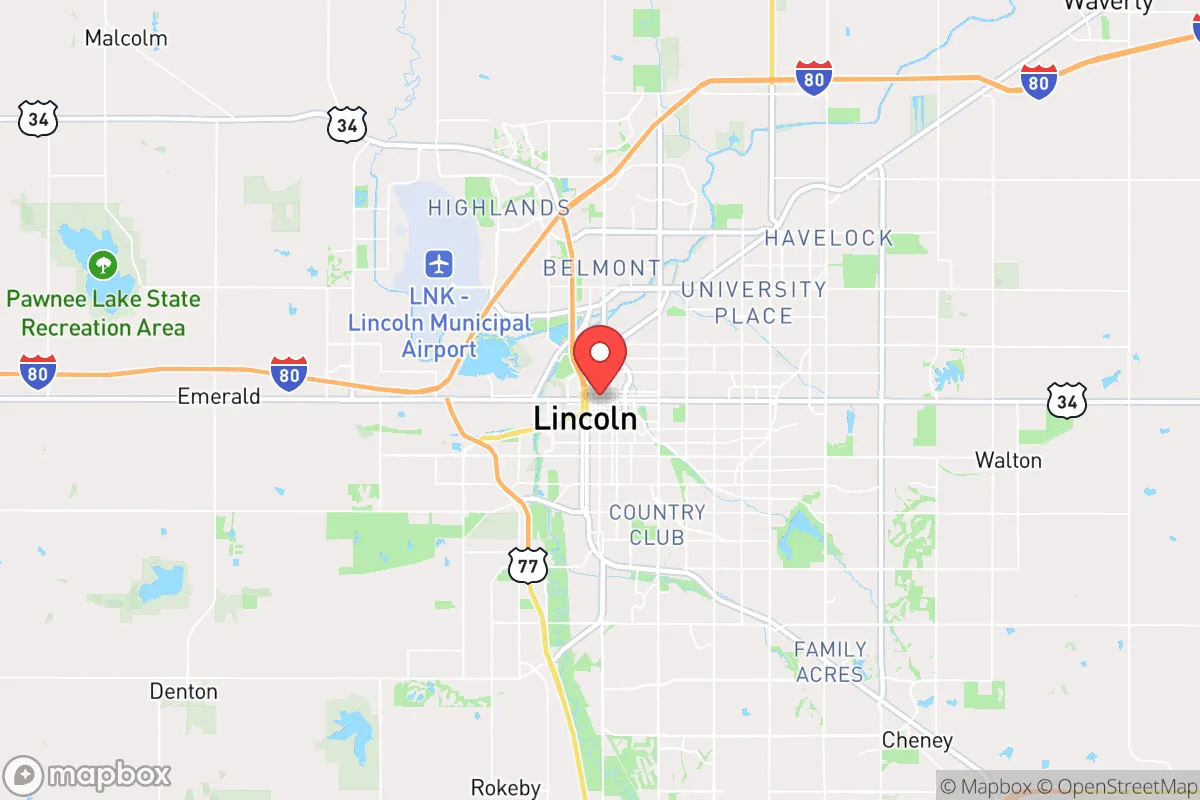
District shown is the primary district for this city’s centroid. Cities may span multiple districts.
Local Political AnalysisPolitical Analysis of Lincoln, NE
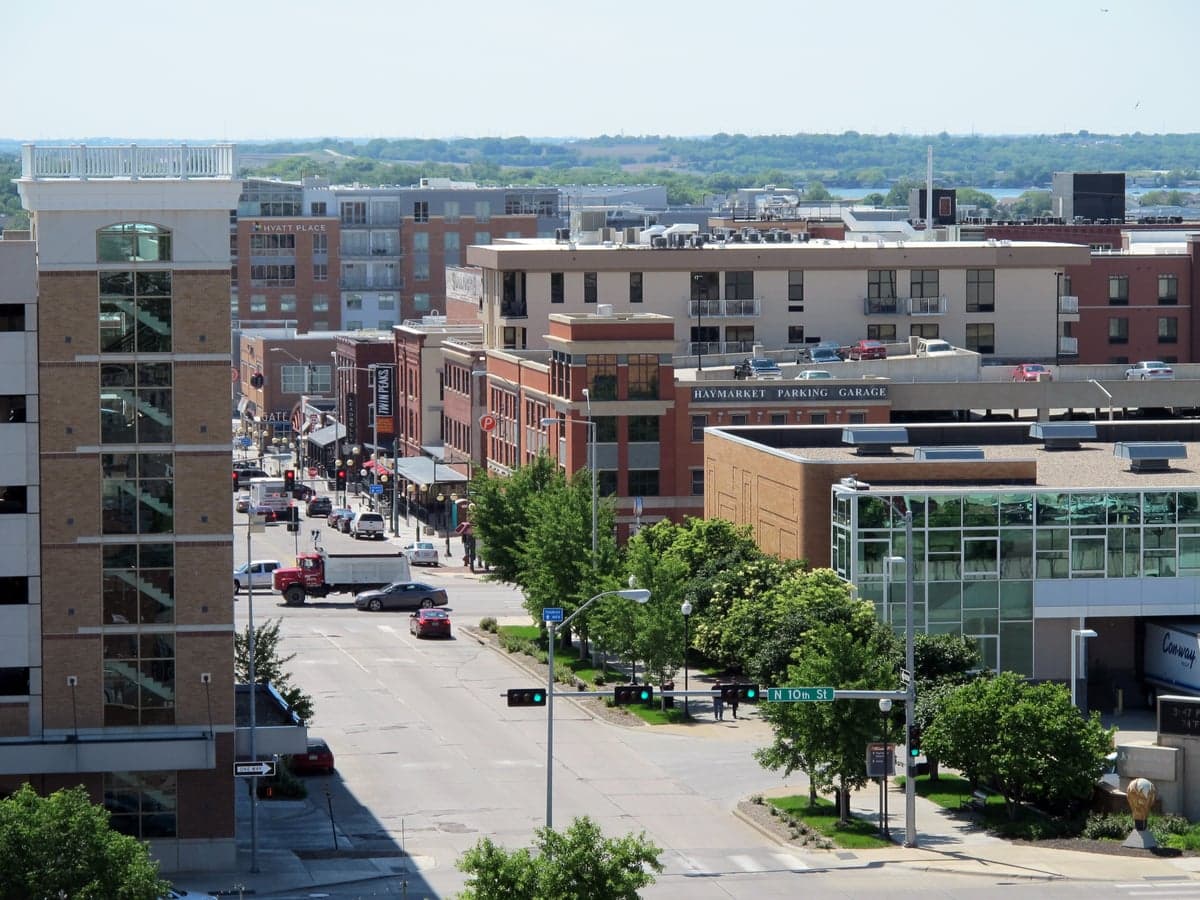
Lincoln’s political climate has shifted noticeably over the past decade, and if you’ve lived here as long as I have, you’ve felt it. The city itself leans more moderate than the rest of Nebraska, with a Cook PVI of R+6, meaning it’s still Republican-leaning but not by the wide margins you see in the rural parts of the state. That said, the trajectory is concerning. What was once a reliably conservative, common-sense town has seen a steady creep of progressive policies, especially in the city council and school board. You can feel the tension between the old-school Nebraska values of personal responsibility and limited government and the newer push for more centralized control over everything from housing to public health.
How it compares
Drive 20 minutes outside of Lincoln, and you’re in a completely different world. Towns like Waverly, Hickman, and even parts of Lancaster County vote overwhelmingly Republican, often by 20 to 30 points. They’re still the kind of places where people trust local control and don’t want the state telling them how to run their lives. Lincoln, by contrast, has become a bit of an island. It’s not as far left as Omaha—Omaha’s a whole different animal, with a Cook PVI of D+12—but it’s definitely drifting. The rural counties around us, like Seward and Saunders, are solid red, and they look at Lincoln’s recent moves on zoning, mask mandates, and diversity initiatives as proof that the city is losing its way. If you’re used to the hands-off, live-and-let-live vibe of small-town Nebraska, Lincoln’s growing appetite for government solutions can feel like a betrayal.
What this means for residents
For the average person, the biggest red flag is how quickly local government has started reaching into areas that used to be left alone. We’ve seen city council debates over rental regulations, noise ordinances, and even what kinds of businesses can open where—things that used to be handled by the market and common courtesy. The school board has been a battleground too, with some members pushing for curriculum changes that feel more like social engineering than education. If you value your Second Amendment rights, you’ll be relieved to know Nebraska is still a shall-issue state, but there’s always chatter about local restrictions. The tax burden is another sore spot: property taxes in Lincoln have crept up, and while the state legislature has tried to rein them in, the city keeps finding new ways to spend. For a conservative who believes in fiscal restraint and personal freedom, it’s a slow but steady erosion of what made this place great.
One thing that still sets Lincoln apart from the coasts is the culture. People here are polite, neighborly, and generally want to be left alone. You don’t see the aggressive activism you’d find in Denver or Portland. But the undercurrent is real. The long-term worry is that if these progressive trends continue, Lincoln could become a smaller version of Omaha—more regulations, higher taxes, and a government that thinks it knows better than you do. For now, it’s still a good place to raise a family, but you have to keep an eye on the ballot box. The old guard is fading, and the new voices are louder. If you’re thinking of moving here, just know that the political climate is in flux, and the direction it’s heading isn’t the one most of us grew up with.

State Political ClimatePolitical Climate in Nebraska
State Political AnalysisPolitical Environment in the State
Nebraska is a reliably red state in presidential elections, having voted Republican in every cycle since 1968, but its internal politics are more nuanced than the statewide tally suggests. The state’s unique unicameral, nonpartisan legislature and its congressional district split—where Omaha’s 2nd District can swing blue—create a political environment that is broadly conservative but not uniformly so. Over the past 20 years, the rural-urban divide has widened, with the eastern I-80 corridor becoming more competitive while the rest of the state has hardened its Republican lean.
Urban vs. rural divide
The political map of Nebraska is a tale of two landscapes. Omaha (Douglas County) and Lincoln (Lancaster County) are the blue dots in a sea of red. Omaha’s 2nd Congressional District has voted for Democratic presidential candidates in 2008, 2020, and 2024, driven by a growing diverse population and union-heavy manufacturing base. Lincoln, home to the University of Nebraska, leans left on social issues but remains moderate on fiscal matters. Outside these two metros, the state is overwhelmingly conservative. Scottsbluff in the Panhandle, Grand Island in the central Platte Valley, and Norfolk in the northeast are solidly Republican, often voting 70%+ for GOP candidates. The rural counties along the Kansas border—like Furnas and Harlan—are among the most conservative in the nation, with voter registration heavily skewed toward the GOP. The divide is stark: the 1st and 3rd Districts are safe red, while the 2nd is a perennial battleground that both parties pour money into.
Policy environment
Nebraska’s policy posture is broadly conservative, but with some notable wrinkles. There is no state income tax on Social Security benefits, and the state has been phasing down its top individual income tax rate—from 6.84% in 2020 to a planned 3.99% by 2027 under LB 754 (2023). Property taxes are a perennial complaint, with effective rates around 1.5% of home value, among the highest in the Plains. The state is a right-to-work state and has a Republican-controlled legislature that has consistently passed pro-business tort reform. On education, Nebraska has a robust school choice movement: the Opportunity Scholarship Act (LB 753) passed in 2023, creating tax-credit scholarships for private school tuition, though it faces a potential repeal referendum in 2024. Healthcare policy is mixed—Medicaid expansion was adopted via ballot initiative in 2018, but the state has not expanded eligibility further. Election laws are moderately restrictive: voter ID was enacted in 2023 (LB 514), and the state maintains a 30-day residency requirement for registration. Nebraska is one of only two states that splits its electoral votes by congressional district, a quirk that gives Omaha outsized national influence.
Trajectory & freedom
On personal liberty, Nebraska has moved in a decidedly pro-freedom direction over the past five years, particularly on gun rights and parental rights. Constitutional carry (LB 77) was signed into law in 2023, allowing permitless concealed carry for anyone 21 or older. The same year, the legislature passed the Parental Bill of Rights (LB 108), requiring schools to notify parents of any curriculum involving sexuality and to obtain consent before administering mental health surveys. On medical freedom, the state has resisted COVID-era mandates: LB 906 (2022) banned vaccine passports for government services, and the legislature has repeatedly blocked mask mandates in schools. However, property rights advocates have concerns: the state’s use of eminent domain for the Keystone XL pipeline (now canceled) and for transmission lines under the Rural Electric Association has sparked local backlash. The trend is toward more individual autonomy, but the legislature’s nonpartisan structure means bills often pass with bipartisan support, tempering extreme swings.
Civil unrest & political movements
Nebraska has seen relatively low levels of civil unrest compared to coastal states, but flashpoints exist. In 2020, Omaha experienced protests following George Floyd’s death, with some property damage and a heavy police response, but the unrest was contained and did not recur. The 2020 election integrity debate was muted here—Nebraska uses paper ballots and has strong chain-of-custody laws, so no major controversies erupted. Immigration politics are a live issue: Lexington and Schuyler, meatpacking towns with large Hispanic populations, have seen local debates over sanctuary policies, but the state has not passed a sanctuary city ban. On the right, the Nebraska Republican Party has been split between establishment and populist factions, with the latter gaining ground after the 2022 primary victories of candidates backed by the Nebraska Freedom Coalition. On the left, the Nebraska Democratic Party is energized by Omaha’s competitiveness but struggles to gain traction statewide. A notable movement is the rural secession talk in the Panhandle, where some residents have floated joining Wyoming or forming a separate state—though this remains fringe rhetoric.
Projection
Over the next 5-10 years, Nebraska’s political trajectory is likely to remain conservative but with a growing urban-suburban tension. In-migration is modest—the state grew about 2% from 2020-2024—but the newcomers are disproportionately moving to Omaha and Lincoln, which could make the 2nd District permanently competitive. The rural population is aging and shrinking, which will gradually shift the balance of power toward the eastern metros. The legislature’s nonpartisan structure may buffer against extreme polarization, but the GOP’s supermajority (49 of 49 seats) is likely to hold. Expect continued tax cuts, further school choice expansion, and a hardening of election laws. The wild card is the 2024 ballot initiative on school vouchers—if it fails, it could stall the school choice movement. For a conservative relocating here, the state will remain a safe bet for limited government and traditional values, but the Omaha area will become an increasingly important battleground that could shape statewide policy.
Bottom line for a new resident: If you’re moving to Nebraska, you’ll find a state that broadly respects personal freedom—low taxes, constitutional carry, and strong parental rights—but you’ll need to pick your county carefully. Stick to the rural areas or the conservative suburbs of Omaha like Papillion or Gretna to avoid the blue-leaning politics of the urban core. The state’s trajectory is stable and pro-freedom, but the growing influence of Omaha means you should keep an eye on local elections—they’ll determine whether Nebraska stays the course or drifts toward the progressive policies you’re likely leaving behind.
* Values derived from national, state, county, city and local statistics and may differ in a specific area. Last updated: 2026-04-15T23:39:09.000Z
Narrative content on this page is AI-generated and may contain mistakes. Verify any details that matter before acting on them.
ReloMaps may earn a commission from affiliate links at no extra cost to you.

