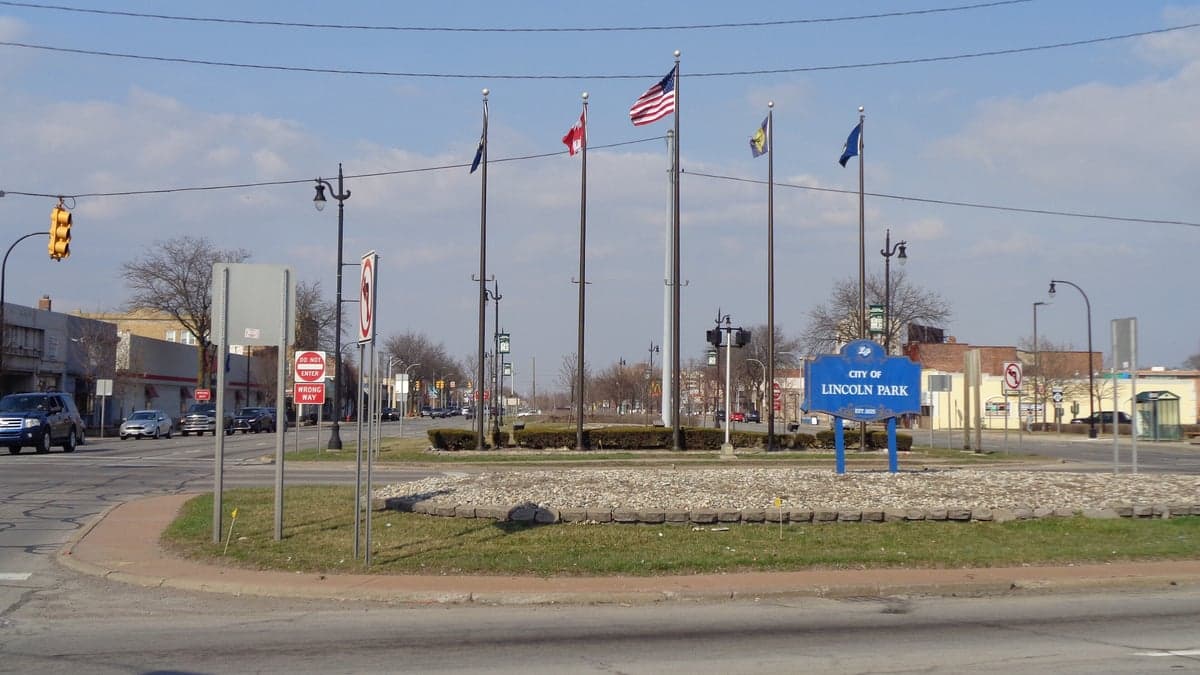
Photo: Wikipedia
Political ClimatePolitical Climate in Lincoln Park, MI
District shown is the primary district for this city’s centroid. Cities may span multiple districts.
Local Political AnalysisPolitical Analysis of Lincoln Park, MI
Lincoln Park, Michigan, has long been a solidly blue stronghold, with a Cook PVI of D+22 that puts it among the most reliably Democratic suburbs in Wayne County. But if you’ve lived here as long as I have, you know that “blue” doesn’t mean what it used to. This used to be a working-class, union Democrat town—folks who believed in a hard day’s work, a fair shake, and being left alone to raise their families. Over the last decade, that old-school identity has been slowly replaced by a more progressive, government-heavy agenda that feels less like neighborly help and more like top-down control. The trajectory is concerning: what was once a place of personal responsibility is now trending toward policies that chip away at local autonomy and individual freedoms.
How it compares
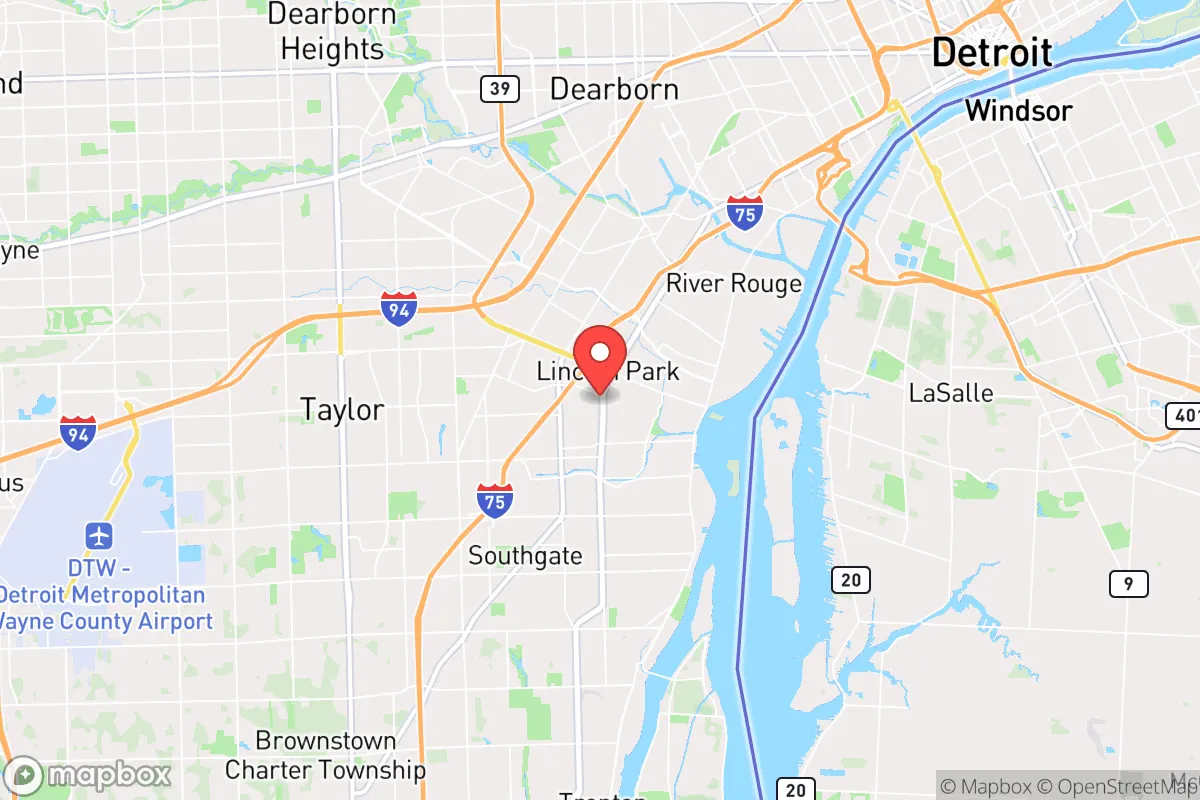
To understand Lincoln Park’s political climate, you have to look at the map around us. Head west a few miles into Allen Park or south into Southgate, and you’ll find communities that still lean Democratic but with a much more moderate, pragmatic flavor—places where the local council still listens to residents before rubber-stamping new ordinances. Drive north into Detroit proper, and you’re in a D+50 environment where progressive experiments are the norm. But the real contrast is east, into the Grosse Pointes or north into Dearborn—areas that, while still blue, have a stronger independent streak and push back harder on state-level mandates. Lincoln Park, by contrast, has become a testing ground for progressive pet projects: from zoning changes that override neighborhood input to tax hikes that fund programs many of us never asked for. It’s a far cry from the “live and let live” ethos that defined this town when I was growing up.
What this means for residents
For those of us who value personal freedoms, the shift is palpable. The local government has become more aggressive in dictating how we use our property, what businesses can operate where, and even how we heat our homes—with talk of electrification mandates that would force homeowners to rip out gas furnaces. School board decisions have leaned into curriculum changes that prioritize ideology over fundamentals, and there’s a growing sense that your voice at a city council meeting carries less weight than a grant-funded activist group’s. Property taxes have climbed steadily, outpacing inflation, while services haven’t kept up—a classic sign of government overreach without accountability. If you’re a small business owner or a homeowner who just wants to be left alone, you’re feeling squeezed. The long-term outlook? Unless there’s a serious course correction, I see more of the same: higher costs, less local control, and a culture that punishes dissent rather than encouraging it.
A cultural and policy distinction worth noting
One thing that still sets Lincoln Park apart from its neighbors is its stubborn, blue-collar pride. You’ll still find block parties, church potlucks, and neighbors who’ve known each other for 40 years. But that culture is under pressure. The city has embraced “equity” initiatives that prioritize group outcomes over individual merit, and there’s been a quiet but steady exodus of families who feel their values no longer fit. The police department, once a respected local institution, has seen morale dip under reform mandates that tie officers’ hands. And while the downtown has seen some new investment, it’s come with strings attached—like affordable housing quotas that feel more like social engineering than smart planning. For a long-time resident like me, the saddest part is watching a community that used to solve its own problems now look to Lansing and Washington for answers. That’s not the Lincoln Park I remember, and it’s not the one I want for my kids.

State Political ClimatePolitical Climate in Michigan
State Political AnalysisPolitical Environment in the State
Michigan has shifted from a reliably purple battleground to a state where Democrats now hold unified control of the governorship, legislature, and Supreme Court, a dramatic reversal from the GOP trifecta that ended in 2018. The state’s overall partisan lean is now a narrow Democratic tilt, with Joe Biden winning by 2.8 points in 2020 and Gretchen Whitmer winning re-election by 10.6 points in 2022. Over the past 20 years, the state has moved leftward, driven by the collapse of union-aligned blue-collar Democrats in rural areas and the explosive growth of progressive, college-educated voters in the suburbs of Detroit, Grand Rapids, and Ann Arbor.
Urban vs. rural divide
The political map of Michigan is a tale of two peninsulas and a shattered middle. The Democratic base is concentrated in Wayne County (Detroit), Washtenaw County (Ann Arbor), and Ingham County (Lansing), where margins exceed 30 points. The western side of the state, once a GOP stronghold, has seen Kent County (Grand Rapids) flip from red to purple, with Biden winning it by 5 points in 2020. Meanwhile, rural northern Michigan and the Upper Peninsula have swung hard to the right, with counties like Oscoda and Montmorency now voting +40 to +50 points Republican. The key battlegrounds are the suburban “collar counties” around Detroit — Macomb, Oakland, and Livingston — where the GOP’s failure to hold Macomb (a working-class, blue-collar bellwether) and Oakland’s shift to Democrats has been decisive. The city of Grand Rapids itself is now a Democratic stronghold, while its outer suburbs like Byron Center and Caledonia remain deeply red.
Policy environment
Michigan’s policy environment has lurched leftward since Democrats took full control in 2023. The state income tax is a flat 4.25%, but a 2023 law tied future rate cuts to revenue triggers, effectively freezing reductions. Property taxes are high, with an average effective rate of 1.5%, and the state’s Proposal A system caps annual increases but creates inequities for new buyers. The regulatory posture has become more aggressive: the Whitmer administration imposed strict COVID-19 mandates that were later struck down by the state Supreme Court, and a 2023 law repealed the state’s right-to-work law, allowing unions to require dues as a condition of employment. Education policy has shifted with the repeal of the 2011 “third grade reading law” and the expansion of universal pre-K, while school choice remains robust through charter schools and inter-district open enrollment. Healthcare policy includes a 2023 expansion of Medicaid coverage for postpartum care and a new state-level public option study. Election laws have been overhauled: Proposal 2 of 2022 enshrined nine days of early voting, automatic voter registration, and no-excuse absentee voting, while a 2023 law banned open carry at polling places and restricted ballot drop boxes. For a conservative, the policy environment is increasingly hostile to school choice, gun rights, and labor freedom.
Trajectory & freedom
Michigan is becoming less free by any conservative measure. The most alarming trend is the erosion of gun rights: a 2023 package of bills requires universal background checks, safe storage mandates, and a 24-hour waiting period for long guns, while a 2024 law bans “ghost guns” and raises the purchase age for semi-automatic rifles to 21. Parental rights have been curtailed by a 2023 law that prohibits school districts from notifying parents when a child changes their gender identity or pronouns, overriding local control. Medical autonomy took a hit with the 2022 repeal of the state’s 1931 abortion ban, replaced by a constitutional amendment (Proposal 3) that enshrines abortion access up to viability, with no parental consent requirement for minors. Property rights are under pressure from a 2023 law that allows local governments to impose rent control on mobile home parks, and a 2024 law that expands the state’s ability to seize land for renewable energy projects. Taxation freedom is constrained by the aforementioned income tax freeze and a 2023 law that reinstated the state’s estate tax on estates over $10 million. The trajectory is clear: the state is centralizing power in Lansing and restricting individual choice in education, healthcare, and self-defense.
Civil unrest & political movements
Michigan has been a flashpoint for political movements on both sides. The 2020 “Operation Gridlock” protests at the state capitol, where armed demonstrators opposed COVID-19 lockdowns, drew national attention and led to the Whitmer kidnapping plot. Since then, left-wing activism has been more visible: the “Michigan Liberation” coalition has pushed for prison reform and defunding police, while the “Michigan Democratic Party” has organized mass canvassing operations in suburban districts. Immigration politics are relatively quiet, but the state has a “sanctuary” policy in Detroit and Washtenaw County that limits cooperation with ICE, and a 2023 law expanded driver’s licenses to undocumented immigrants. Election integrity remains a hot-button issue: the 2020 election saw widespread allegations of irregularities in Detroit’s absentee ballot counting, and a 2023 audit by the conservative Mackinac Center found significant discrepancies in voter roll maintenance. The “Michigan Conservative Coalition” and “Moms for Liberty” chapters have been active in school board battles, particularly in Oakland County’s Rochester and Troy districts. Visible flashpoints include the ongoing debate over the Line 5 pipeline in the Straits of Mackinac, which has pitted environmental activists against labor unions and energy security advocates.
Projection
Over the next 5-10 years, Michigan is likely to continue its leftward drift, driven by demographic shifts. The Detroit suburbs are becoming more diverse and college-educated, while rural areas are aging and shrinking. In-migration from blue states like California and Illinois is accelerating, particularly to the Grand Rapids and Traverse City areas, bringing progressive voters with them. The GOP’s path to victory depends on holding Macomb County and flipping Oakland, but the party’s internal divisions between the “Trump wing” and the “establishment” are deepening. Expect more gun control, more union power, and more centralized education mandates. The state’s energy policy will likely shift toward renewable mandates, with a 2023 law requiring 100% clean energy by 2035, which will raise electricity costs and strain the grid. A new resident moving in now should expect a state where the political climate becomes more like Illinois or New York over the next decade, with higher taxes, more regulation, and less personal freedom.
Bottom line for a new resident: Michigan offers natural beauty, affordable housing, and strong job markets in manufacturing and tech, but the political climate is increasingly hostile to conservative values. If you value gun rights, school choice, and low taxes, you’ll find yourself fighting an uphill battle against a Democratic supermajority that shows no signs of moderating. The best bets for a conservative-friendly enclave are the outer suburbs of Grand Rapids (like Rockford and Lowell), the rural counties of the Thumb (like Sanilac and Huron), or the Upper Peninsula’s red-leaning areas (like Marquette County’s outskirts). But be prepared: the state as a whole is trending blue, and that trend is accelerating.
* Values derived from national, state, county, city and local statistics and may differ in a specific area. Last updated: 2026-04-30T02:05:39.000Z
Narrative content on this page is AI-generated and may contain mistakes. Verify any details that matter before acting on them.
ReloMaps may earn a commission from affiliate links at no extra cost to you.

