
Photo: Wikipedia
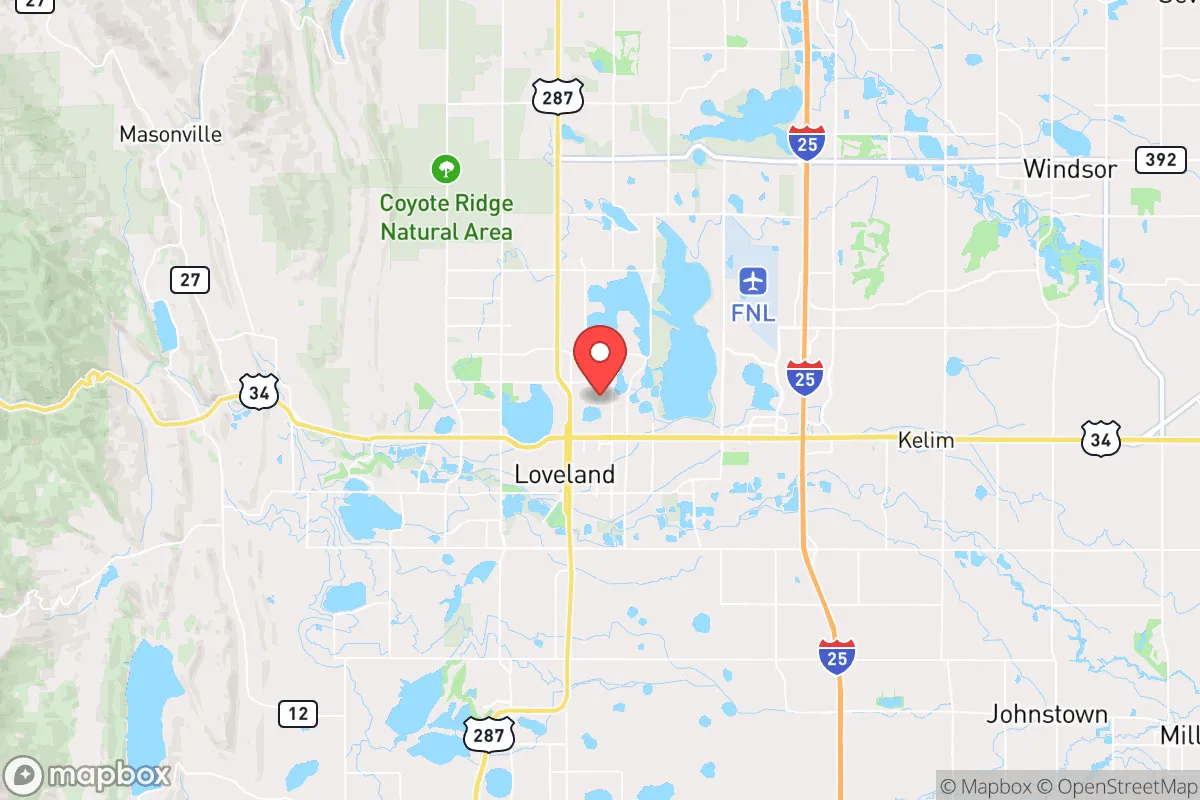
Personal Sovereignty in Loveland, CO
Viable for self-reliance. Generally workable, though some barriers may limit total independence.
What does Personal Sovereignty tell us?
Personal Sovereignty measures your capacity for self-reliance and independence with minimal government friction. Higher scores mean fewer barriers between you and the way you want to live... but it assumes you have the space you need and good neighbors.
What does this tell us?
Personal Sovereignty measures your capacity for self-reliance and independence with minimal government friction. Higher scores mean fewer barriers between you and the way you want to live... but it assumes you have the space you need and good neighbors.
State Policy
Energy independence: Net exporter (110% of energy produced in-state)
Personal Liberty
Homesteading

Personal Liberty Analysis
Loveland, Colorado, offers a mixed bag for those prioritizing personal sovereignty, sitting at the intersection of a historically libertarian-leaning state and a Front Range that has seen increasing progressive governance. While Colorado’s state-level policies on taxation and property rights remain relatively favorable compared to the West Coast or Northeast, the city’s proximity to Denver and Larimer County’s regulatory environment introduce constraints that a survivalist or prepper mindset must weigh carefully. The autonomy you can carve out here depends heavily on whether you’re willing to navigate local ordinances that sometimes clash with the state’s constitutional protections.
Tax burden and regulatory posture in Loveland compared to the Front Range
Colorado’s Taxpayer Bill of Rights (TABOR) remains a structural safeguard, limiting state and local revenue growth and requiring voter approval for tax increases. Loveland benefits from this framework: the city’s sales tax rate is 3.0%, with Larimer County adding 0.8%, and the state chipping in 2.9%, for a combined rate of roughly 6.7% — lower than Denver’s 8.81%. Property taxes are a standout advantage, with Loveland’s effective rate around 0.51% of assessed value, well below the national average of 0.99%. For a $500,000 home, that’s about $2,550 annually. However, the regulatory posture is less friendly. Larimer County has adopted stricter building codes and environmental regulations than rural Colorado counties, including stormwater management mandates and wildfire mitigation requirements that can add thousands to construction costs. The city’s development review process is thorough, meaning any off-grid or unconventional building project will face scrutiny. For a prepper, the tax burden is light, but the regulatory overhead is real — expect to spend time and money on permits and inspections if you’re building from scratch.
Self-defense and gun law specifics in Loveland and Larimer County
Colorado is a “shall-issue” state for concealed carry permits, and Loveland does not impose additional local restrictions beyond state law. As of 2026, the state requires a background check for all firearm transfers, including private sales, and bans magazines over 15 rounds — a law passed in 2013 that remains a sore point for Second Amendment advocates. Open carry is legal in Loveland without a permit, though local ordinances prohibit firearms in city buildings and parks. Larimer County’s sheriff has historically been supportive of gun rights, but the county’s population growth has brought pressure for “red flag” law enforcement. Colorado’s Extreme Risk Protection Order (ERPO) law allows family members or law enforcement to petition for temporary firearm seizure, and Larimer County courts have issued these orders at a moderate rate. For a survivalist, the magazine capacity limit is the most restrictive element — you cannot legally possess standard-capacity AR-15 magazines. Self-defense in the home is protected under Colorado’s “Make My Day” law, which grants immunity for use of deadly force against an intruder. Stand-your-ground laws do not exist in Colorado; there is a duty to retreat in public spaces if safely possible. This is a meaningful distinction for those who prioritize unambiguous self-defense rights.
Self-reliance and homesteading viability: lot sizes, zoning, and off-grid feasibility
Loveland’s zoning is a critical factor for anyone seeking self-sufficiency. Within city limits, minimum lot sizes in residential zones range from 6,000 to 10,000 square feet, which allows for substantial gardens and small livestock like chickens (hens only, no roosters) but prohibits larger animals like goats or pigs. The city’s urban growth boundary limits annexation, so most land suitable for true homesteading lies in unincorporated Larimer County, where minimum lot sizes for agricultural zoning start at 35 acres. Off-grid living is legally challenging: Colorado law requires new homes to connect to municipal water and sewer if within 1,000 feet of a line, and Larimer County mandates a minimum of 1 acre for a septic system. Solar panels are permitted, but net metering policies with Loveland’s municipal utility (Loveland Water and Power) are less generous than with investor-owned utilities like Xcel Energy — you’ll receive retail credit for excess generation only up to your monthly usage, with no annual carryover. Rainwater collection is legal for outdoor use only, with a maximum of 5,000 gallons of storage per property. For a prepper aiming for true independence, Loveland’s urban and suburban parcels are too constrained; you’ll need to look at rural properties north of town near Masonville or west toward the foothills, where well water and septic are standard and zoning is more permissive.
Personal liberties: parental rights, medical autonomy, speech, and property
Colorado’s state constitution includes strong protections for free speech and assembly, and Loveland has not enacted any local ordinances restricting political expression. Parental rights are a mixed picture: Colorado law requires parental consent for minors’ medical decisions, but the state has also passed laws allowing minors 12 and older to consent to mental health treatment and substance abuse counseling without parental notification. Vaccine mandates for school attendance were repealed in 2024, giving parents more choice, though exemptions still require a signed form. Medical autonomy is more constrained. Colorado has legalized recreational marijuana and psilocybin therapy, but the state also mandates COVID-19 vaccination for healthcare workers in certain settings and has a statewide immunization registry. Property rights are generally strong, with Colorado’s “private property rights” act requiring compensation for regulatory takings, but Larimer County’s land-use regulations can feel intrusive — the county has a “rural land use plan” that restricts subdivision and development in agricultural zones. For a parent concerned about government overreach, the key tension is between state-level protections (like TABOR and property rights) and local progressive policies (like ERPO laws and school curriculum transparency). Loveland’s city council is nonpartisan but has leaned center-right in recent elections, offering some buffer against the more aggressive progressive policies seen in Boulder or Denver.
Overall, Loveland provides a moderate level of personal sovereignty relative to other Front Range cities, but it falls short of the autonomy available in Colorado’s rural counties like Weld or Elbert. The tax burden is low, property rights are decent, and gun laws, while not ideal, are workable with some adaptation. The real limitations are regulatory: off-grid living is effectively impossible within city limits, and the county’s zoning and building codes add friction to any self-reliance project. For a survivalist or prepper, Loveland works best as a base of operations — a place with good infrastructure, low taxes, and a reasonable legal environment — but the actual homestead or retreat should be located in a less regulated county nearby. If your priority is maximum autonomy with minimal government interference, you’ll find better options in the eastern plains or the Western Slope. But if you need proximity to employment and services while maintaining a solid degree of personal freedom, Loveland is a defensible choice — just know where the lines are drawn and plan accordingly.

* Values derived from national, state, county, city and local statistics and may differ in a specific area. Last updated: 2026-04-23T03:58:47.000Z
Narrative content on this page is AI-generated and may contain mistakes. Verify any details that matter before acting on them.
ReloMaps may earn a commission from affiliate links at no extra cost to you.

