Photo: Wikipedia
Strategic Assessment of Loveland, CO
Meaningful friction. Expect exposure to either population pressure, blast zones, or natural disaster risk. Consider buying a retreat property.
What does the Strategic Assessment tell us?
Our Strategic Assessment grades tactical survivability of an area. Major population centers, military targets, fallout zones, natural disasters, and border exposure all drive risk — lower exposure means a more defensible position in a crisis.
This is heavily inspired by Joel Skousen's Strategic Relocation book. Highly recommended you checkout the book ($)What does this tell us?
Our Strategic Assessment grades tactical survivability of an area. Major population centers, military targets, fallout zones, natural disasters, and border exposure all drive risk — lower exposure means a more defensible position in a crisis.
This is heavily inspired by Joel Skousen's Strategic Relocation book. Highly recommended you checkout the book ($)Strategic Pillars

Key Distances
Regional Safe Places
Below is our recommended "safe zones" in Colorado and the surrounding area based on our strategic heuristics. For most people, it's unrealistic to live in a “safe zone” full-time due to work, family or other personal reasons. They tend to be more rural. However, many of these areas are perfect for second homes and retreat properties that double as a vacation home or even a short-term rental.
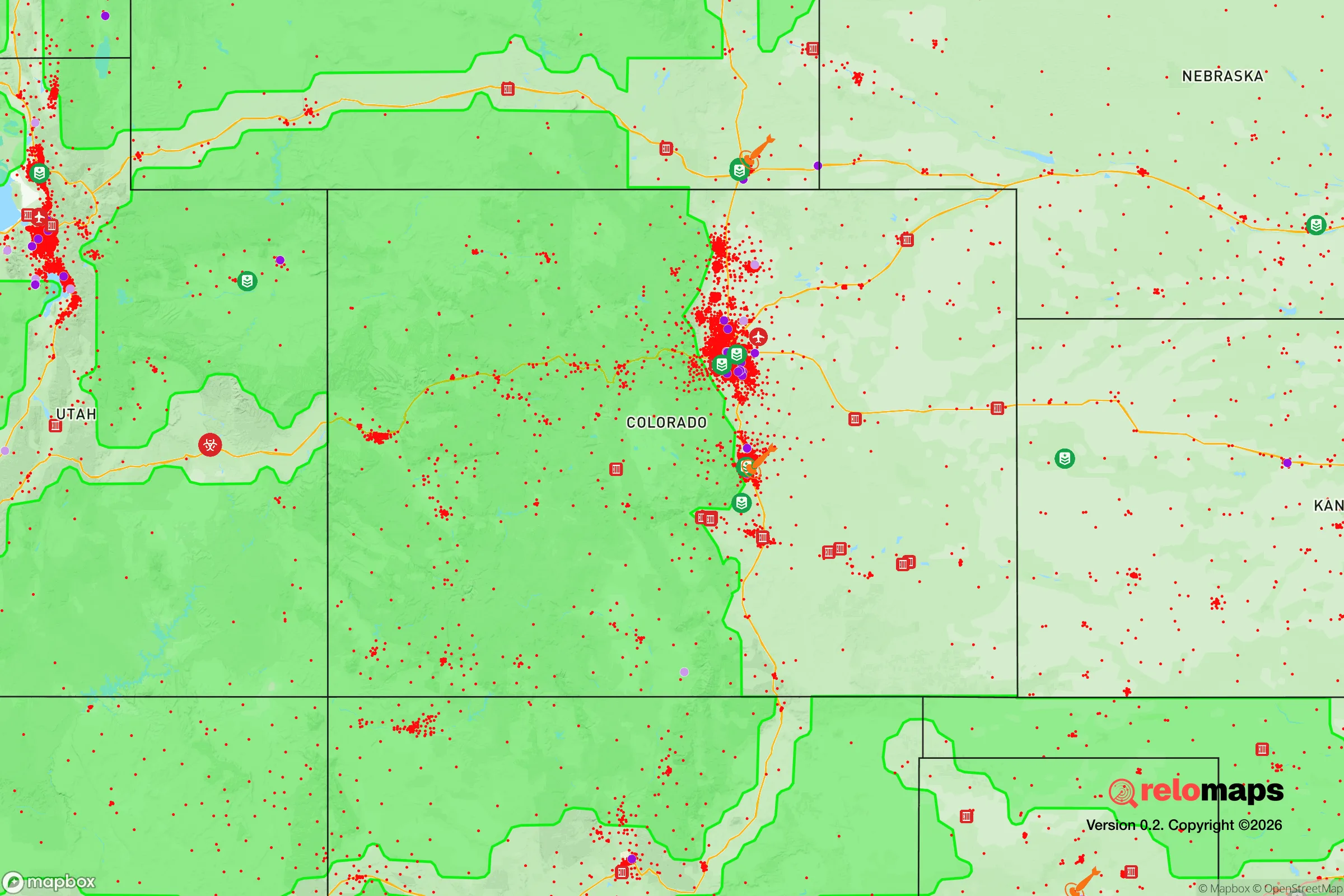
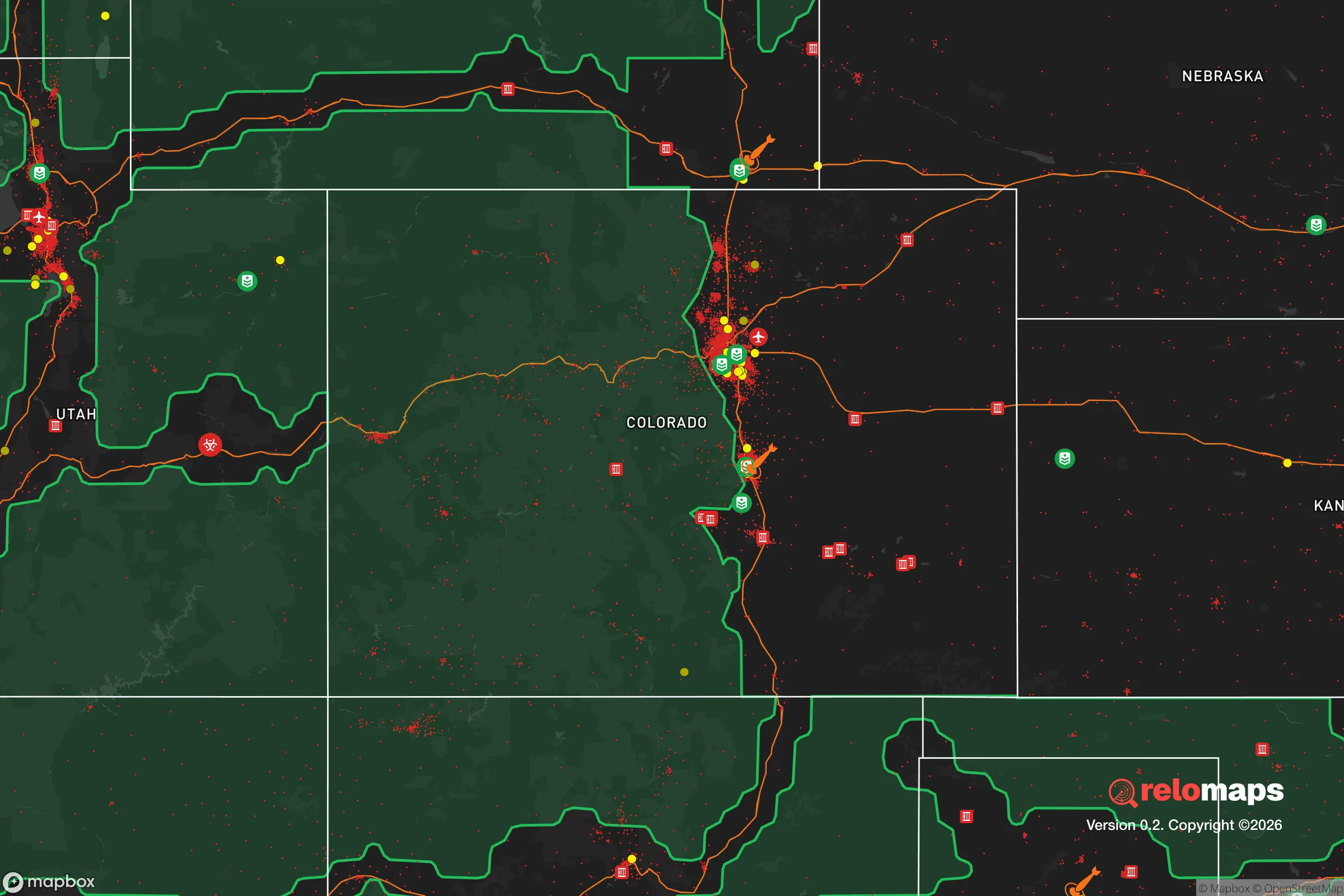


Important Note: For informational purposes only. This does not mean nothing bad ever happens in the green zones. Please use common sense. This is based on public data and modeled with AI. We tried to take a conservative approach but mistakes happen. We update this regularly as new information becomes available.
Solar Generator Recommendations
Backup power matters more here than in safer locations. We've picked three solar generators across budgets and capacity tiers — start with the budget unit if you only need a few essentials, or step up if you want to run a fridge and HVAC for days at a time.

Jackery Portable Power Station Explorer 300
Budget OptionPower on the Go: Weighing only 11 lbs, it's convenient to set up and store with book-sized foldable solar panels

BLUETTI Portable Power Station AC180
Designed for both indoor and outdoor scenarios, AC180 is highly capable as it has a robost capacity and continuous output power.

EF ECOFLOW DELTA Pro Ultra Power Station
Upgraded PickEcoFlow DELTA Pro Ultra is a whole-home energy system designed to grow with your family. Integrated with the Smart Home Panel 2, it scales to meet your evolving energy needs — keeping your home powered, intelligent, and secure through every stage of life.
We earn a commission, at no additional cost to you.
Strategic Assessment Analysis
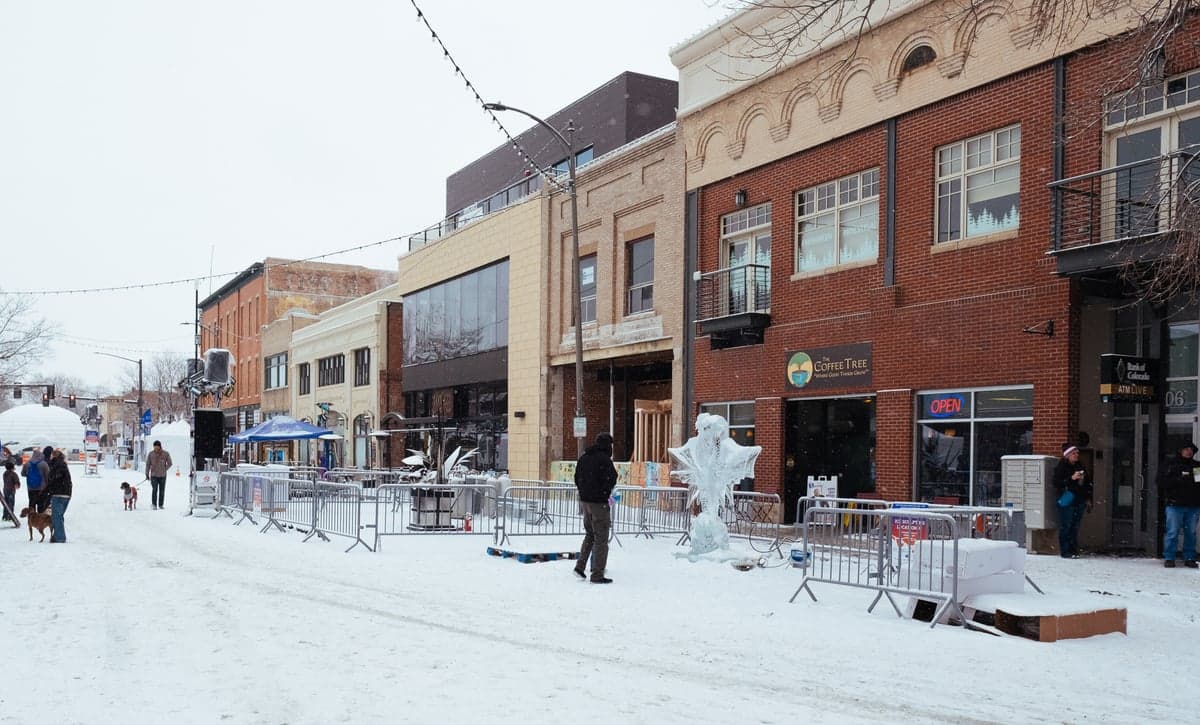
Loveland, Colorado, sits in a strategic sweet spot that few relocation analysts fully appreciate: far enough from Denver’s inevitable chaos to offer genuine buffer, yet close enough to access critical supply chains and medical infrastructure when things hold together. The city’s position along the Front Range, nestled against the foothills of the Rocky Mountains, provides natural defensibility, reliable water from the Big Thompson River, and a climate that supports year-round food production with the right setup. For a relocator thinking in terms of decades, not election cycles, Loveland offers a rare combination of geographic isolation from the worst fallout zones and practical access to what you’ll need when the grid flickers.
Geographic position and natural advantages for long-term stability
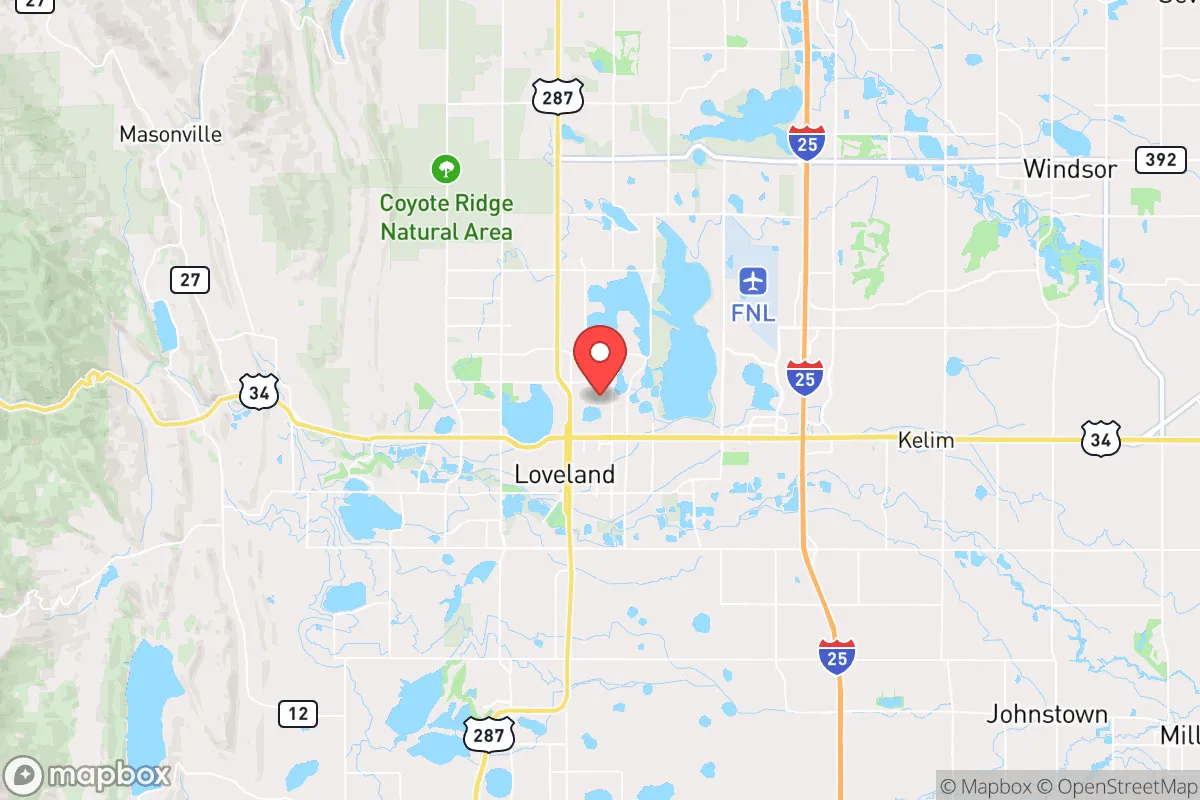
Loveland’s location at the mouth of the Big Thompson Canyon gives it a natural chokepoint advantage. The mountains to the west act as a physical barrier against any large-scale movement from that direction, while the plains to the east provide a clear line of sight for anyone watching for trouble. The city sits at roughly 5,000 feet elevation, which means you’re above the inversion layer that traps Denver’s air pollution and above the worst of the tornado alley that plagues eastern Colorado. The Big Thompson River and its tributaries provide a surface water source that doesn’t depend on the Colorado River compact—a critical detail as that system faces increasing legal battles and depletion. The surrounding Larimer County has some of the lowest population density in the Front Range corridor, with roughly 100 people per square mile outside city limits, giving you room to breathe and maneuver. The Cache la Poudre River drainage to the north adds another water security layer, and the area’s history of dryland farming means the soil can produce with minimal inputs if you know what you’re doing.
Risks, exposures, and proximity to fallout-relevant landmarks
No location is perfect, and Loveland has its share of exposure that a serious prepper needs to account for. The most immediate concern is proximity to the Rocky Flats National Wildlife Refuge, roughly 40 miles south—a former nuclear weapons plant that still has lingering contamination issues and would be a secondary fallout concern in any major event. The city is also within 50 miles of the National Center for Atmospheric Research in Boulder, a potential target for anyone looking to disrupt weather modeling or communications infrastructure. Interstate 25 runs right through Loveland’s eastern edge, which is a double-edged sword: it provides supply route access but also creates a natural corridor for any population movement out of Denver during a crisis. The Denver metro area’s 2.9 million people are roughly an hour south, meaning any mass evacuation or civil unrest in that population center will push north along I-25. Loveland’s own population of about 80,000 is manageable, but the city has grown rapidly since 2020, and new subdivisions are creeping toward the foothills, reducing the buffer zone. Wildfire risk is real—the 2020 Cameron Peak Fire came within 15 miles of the city—and the Big Thompson Canyon has a history of flash flooding, including the devastating 1976 flood that killed 144 people. You need to be uphill and away from the canyon mouth if you’re serious about long-term stability.
Practical resilience for a relocator: food, water, energy, and defensibility
For someone looking to set up a resilient homestead or smallholding, Loveland’s practical assets are solid but require work. The growing season runs roughly May through September, with about 120 frost-free days—enough for cold-hardy crops like potatoes, carrots, kale, and grains, but you’ll need a greenhouse or high tunnel to extend into October. The soil is primarily clay-loam with good drainage once amended, and the area’s annual precipitation of 15 inches means you’ll need irrigation from the river or a well. Water rights are the real battleground here: Larimer County is in the South Platte River Basin, and new wells are increasingly restricted. You’ll want to buy property with existing senior water rights or a direct ditch share, or plan on rainwater catchment (legal in Colorado since 2016 for up to 110 gallons per property). Energy resilience is better than most of the country: the area gets over 300 sunny days per year, making solar a no-brainer, and the mountains create consistent wind patterns that small-scale turbines can exploit. Natural gas is widely available in town, but rural properties will need propane or wood. Defensibility is where Loveland shines for the prepared relocator: the foothills provide natural cover and observation points, and the canyon roads can be blocked with minimal effort. The local gun culture is strong—Larimer County is a Second Amendment sanctuary—and the sheriff’s office has a reputation for not enforcing federal overreach. The Loveland Police Department is well-funded and professional, but in a grid-down scenario, you’re on your own after the first 72 hours, same as anywhere. The local prepper community is active but quiet; you’ll find like-minded folks at the Larimer County Fairgrounds gun shows and through the Rocky Mountain Survival Group meetups.
The overall strategic picture for Loveland is cautiously optimistic for the conservative relocator who values independence and preparation. You’re far enough from the major population centers to avoid the initial wave of any collapse, but close enough to access the resources you’ll need to rebuild. The water situation is manageable if you’re smart about property selection, the growing season is short but productive, and the community has the right cultural DNA for self-reliance. The risks are real—wildfire, flood, and the ever-present threat of Denver’s population spilling north—but they’re calculable and mitigable with proper planning. If you’re looking for a place to ride out the next decade with a solid plan and a few like-minded neighbors, Loveland deserves a serious look. Just don’t buy in the canyon bottom, get your water rights sorted before you close, and make sure your bug-out route goes west into the mountains, not south toward the city.

* Values derived from national, state, county, city and local statistics and may differ in a specific area. Last updated: 2026-04-23T03:58:47.000Z
Narrative content on this page is AI-generated and may contain mistakes. Verify any details that matter before acting on them.
ReloMaps may earn a commission from affiliate links at no extra cost to you.

