Photo: Wikipedia
Demographics of Madison Heights, MI
Affluence Level in Madison Heights, MI
A middle-class area roughly in line with national averages across income, home values, education, and employment.
People of Madison Heights, MI
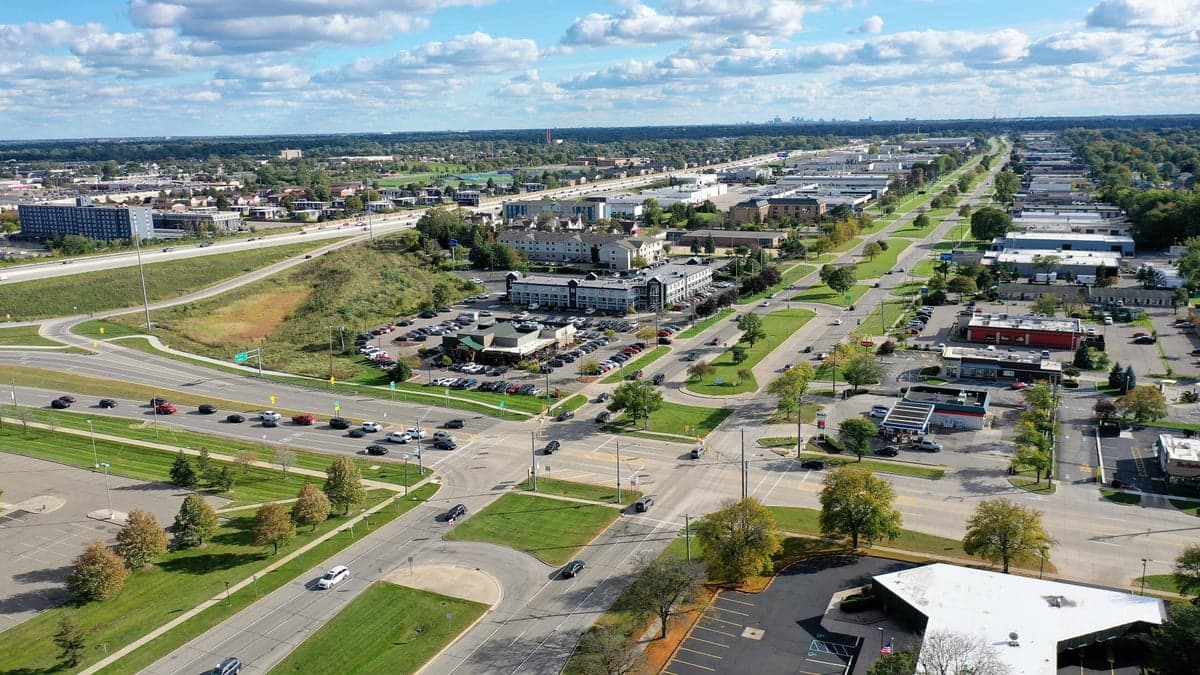
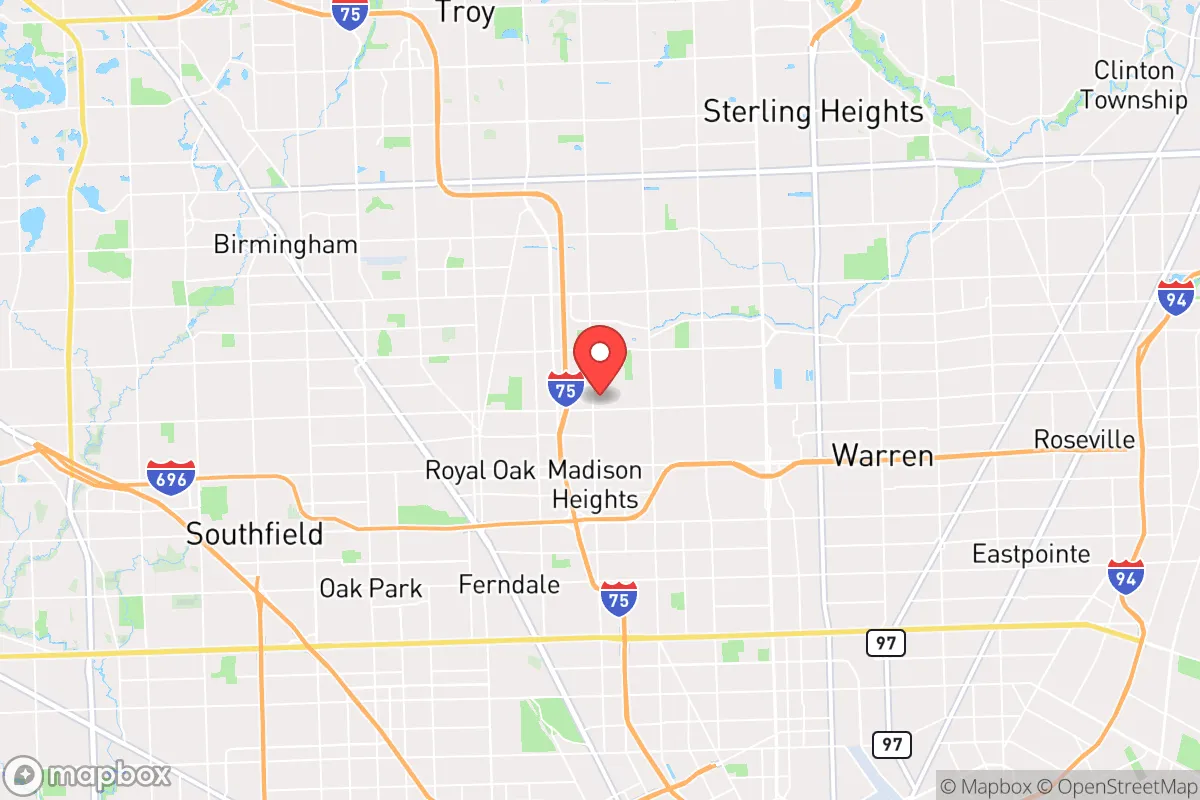
Madison Heights, Michigan, is a densely settled inner-ring suburb of Detroit with 28,411 residents, characterized by a predominantly white (79.3%) population that has been slowly diversifying since the late 20th century. The city’s identity is shaped by its blue-collar roots in the auto industry, a high rate of homeownership, and a modest foreign-born share of 5.9% that is notably lower than neighboring suburbs like Troy or Warren. With 32.1% of adults holding a college degree, Madison Heights sits between the working-class legacy of its past and a more educated, service-oriented present.
How the city was settled and grew
Madison Heights was originally part of Royal Oak Township and remained largely rural until the 1920s. The first significant wave of settlers were Polish and German immigrant farmers who arrived in the late 19th century, drawn by cheap land and proximity to Detroit’s growing markets. These families established small homesteads along what is now John R Road and Campbell Corners, a historic crossroads near 11 Mile Road. The city’s real transformation began after World War II, when the auto boom turned farmland into subdivisions. The Lincoln Park neighborhood (centered around Lincoln Avenue) was built in the 1950s for Appalachian white migrants from Kentucky and Tennessee who came for factory jobs at Chrysler’s Detroit Arsenal Tank Plant and nearby Ford plants. Simultaneously, Couzens Park (near Couzens Avenue and 12 Mile Road) attracted Italian and Greek families who opened small businesses along John R Road. By 1960, Madison Heights was a nearly all-white, working-class suburb of roughly 15,000 people, with a strong union culture and a deep attachment to the auto industry.
Modern era (post-1965)
The 1965 Hart-Cellar Act had a modest impact on Madison Heights compared to other Metro Detroit suburbs. The city’s first non-white residents were Black families who moved into the East Side (east of John R Road) in the 1970s, drawn by affordable housing and proximity to Detroit’s east-side industrial corridor. By 2026, Black residents make up 7.4% of the population, with the highest concentrations in the Couzens Park and Eastwood Park neighborhoods. A more notable shift came in the 1990s and 2000s, when East and Southeast Asian immigrants (primarily Vietnamese and Chinese) began settling in the West Side (west of John R Road), near the Troy border. These families were attracted by the area’s lower home prices compared to Troy and the growing Asian commercial corridor along John R Road. Today, East/Southeast Asian residents account for 6.5% of the population, with a visible cluster of Vietnamese-owned nail salons and Chinese restaurants in the John R Plaza district. The Indian subcontinent population remains small at 0.9%, concentrated in the Lincoln Park neighborhood near 11 Mile Road. Hispanic residents (1.8%) are scattered but slightly more visible in the Campbell Corners area, where a few Mexican bakeries and taquerias have opened since 2010.
The future
Madison Heights is not homogenizing or tribalizing into distinct ethnic enclaves; rather, it is experiencing a slow, steady diversification that is more dispersed than concentrated. The white share (79.3%) is declining gradually as older white residents age in place and younger, more diverse families move in. The East/Southeast Asian population is growing at the fastest rate, driven by continued migration from Vietnam and China and by second-generation families moving out of Troy’s expensive housing market. The Black population is stable, with little new in-migration from Detroit. The Indian subcontinent population is plateauing, as most Indian families in Metro Detroit prefer Troy or Novi. The foreign-born share (5.9%) is likely to rise to 8-10% by 2035, but Madison Heights will remain a predominantly native-born, white-majority suburb. The biggest demographic risk is aging: the median age is 41, and the city’s school-age population has declined 12% since 2010, suggesting that younger families are choosing other suburbs or moving farther out.
For a conservative-leaning mover today, Madison Heights offers a stable, middle-class environment with a modestly diversifying population and a strong sense of local identity. It is not a melting pot or a rapidly changing suburb, but a place where traditional working-class values coexist with a slow influx of immigrant entrepreneurs. The city’s future is one of gradual, manageable change — not a demographic revolution, but a quiet evolution that preserves its character while opening doors to new residents.

* Values derived from national, state, county, city and local statistics and may differ in a specific area. Last updated: 2026-04-29T23:21:31.000Z
Narrative content on this page is AI-generated and may contain mistakes. Verify any details that matter before acting on them.
ReloMaps may earn a commission from affiliate links at no extra cost to you.

