Photo: Wikipedia
Political ClimatePolitical Climate in Madison Heights, MI
District shown is the primary district for this city’s centroid. Cities may span multiple districts.
Local Political AnalysisPolitical Analysis of Madison Heights, MI
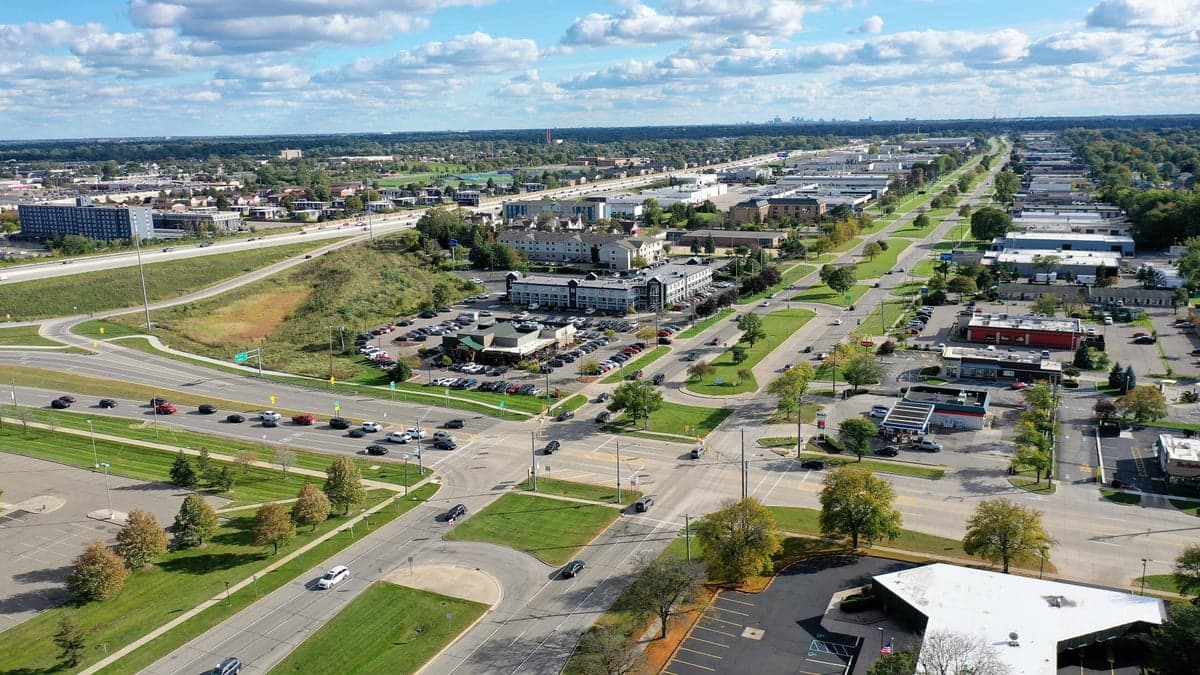
Madison Heights, Michigan, sits in a political bubble that’s been drifting further left for years, and the numbers back it up. The area’s Cook Partisan Voting Index (PVI) of D+9 means it leans reliably Democratic, and that’s not just a fluke of one election—it’s a trend that’s been building since the early 2000s. If you’ve lived here as long as I have, you remember when this was a solidly blue-collar, union-heavy town where folks voted their pocketbooks and didn’t care much for social experiments. Now, it feels like every local election brings another push for policies that chip away at personal freedoms—higher taxes, more regulations, and a government that wants a say in everything from your backyard to your business.
How it compares
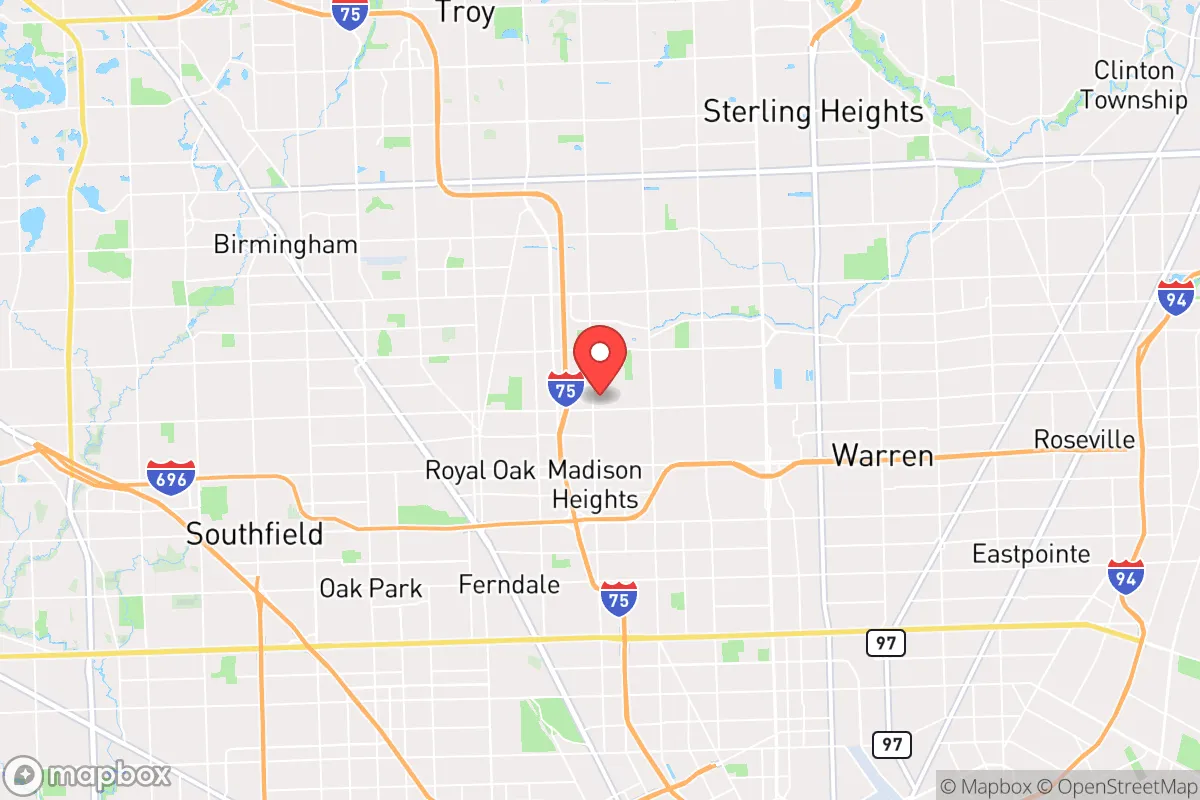
Drive ten minutes north to Troy or east to Royal Oak, and you’ll see the contrast sharp and clear. Troy leans Republican-leaning in its outer precincts, with a more business-friendly vibe and lower property tax rates that actually let you keep what you earn. Royal Oak, on the other hand, is a progressive stronghold that makes Madison Heights look moderate—think bike lanes, plastic bag bans, and a city council that’s all-in on “equity” initiatives. Madison Heights sits uncomfortably in the middle: it’s not as far left as Ferndale or Hazel Park, but it’s lost the independent streak it had in the ’90s. Back then, you could count on your vote meaning something against the Detroit machine; now, the county party apparatus calls the shots, and local reps fall in line. The D+9 rating doesn’t capture how fast the shift has been—just ten years ago, this was a D+3 area, and the acceleration is worrying.
What this means for residents
For folks who value personal liberty, the writing’s on the wall. The city council has been pushing zoning changes that make it harder to run a home-based business without endless permits, and the school board’s curriculum choices feel more like social engineering than education. Property taxes here are already among the highest in Oakland County, and every bond proposal passes with a shrug from the majority. If you’re a small business owner or a tradesman who just wants to be left alone, you’ll feel the squeeze—more red tape, fewer exceptions, and a general attitude that government knows best. The police department is still decent, but defunding chatter pops up every budget cycle, and the city’s response to the 2020 protests was to double down on “equity training” rather than focus on public safety. Long-term, I see this place becoming a satellite of Detroit’s politics—higher taxes, weaker property rights, and a culture that penalizes success. If you’re thinking of moving here, ask yourself how much government involvement you can stomach.
Culturally, Madison Heights still has its old-school diners and auto shops, but the small-town feel is fading fast. The city’s big on “inclusivity” events that feel more like mandatory fun than community bonding, and the local paper’s editorial page reads like a party press release. One policy that stands out: the city banned single-use plastic bags in 2023, a move that hit small grocers harder than the big chains. It’s a small thing, but it shows the mindset—government reaching into your shopping cart. If you want a place where your vote actually pushes back against overreach, you’re better off looking at Lake Orion or Oxford, where the politics are still rooted in common sense. Madison Heights? It’s a comfortable suburb if you agree with the direction, but for those who don’t, it’s a slow slide into a place where your freedoms come second to the agenda.

State Political ClimatePolitical Climate in Michigan
State Political AnalysisPolitical Environment in the State
Michigan has shifted from a reliably purple battleground to a state with a clear blue lean at the statewide level, though its internal political geography is deeply fractured. Democrats have won the governorship, both U.S. Senate seats, and the state legislature in recent cycles, but the margins are often narrow and driven almost entirely by the Detroit metro area. Over the past 10-20 years, the state has moved left on cultural and economic issues, with the 2022 midterms cementing Democratic control of all three branches of state government for the first time in four decades. For a conservative considering relocation, the picture is mixed: the state’s rural and exurban areas remain deeply red, but the levers of power in Lansing are firmly in progressive hands.
Urban vs. rural divide
The political map of Michigan is a tale of two worlds. The urban core of Detroit and its inner-ring suburbs like Southfield and Dearborn are overwhelmingly Democratic, often delivering margins of 80% or more for statewide candidates. Ann Arbor, home to the University of Michigan, is a progressive stronghold that punches far above its population in activist energy and policy influence. Meanwhile, the vast majority of the state’s landmass — from the Upper Peninsula down through the central Lower Peninsula — votes solidly Republican. Grand Rapids, once a conservative bastion, has become a swing city as its downtown gentrifies and attracts younger, left-leaning professionals. The key battleground is the ring of suburban counties around Detroit: Macomb County (a classic Reagan Democrat stronghold that has trended right in presidential races) and Oakland County (once reliably red, now reliably blue). In 2020, Joe Biden won Michigan by just over 150,000 votes, with Detroit’s Wayne County alone providing a net margin of over 300,000. Without that urban machine, the state would be solidly red.
Policy environment
The policy landscape in Lansing has shifted dramatically since Democrats took full control in 2023. The state’s income tax rate was temporarily reduced from 4.25% to 4.05% due to a 2015 law triggered by surplus revenue, but the Democratic legislature has signaled intent to repeal that trigger mechanism, effectively locking in higher rates. Property taxes remain high by national standards, with average effective rates around 1.5% of home value. On education, the state repealed its right-to-work law in 2023, a major blow to workplace freedom that allows unions to require dues as a condition of employment. The same legislative session expanded the Elliott-Larsen Civil Rights Act to include sexual orientation and gender identity, which has led to legal conflicts over religious liberty and parental rights in schools. Election laws have been loosened: no-reason absentee voting and same-day voter registration were approved by ballot initiative in 2018 and 2022, respectively, and the state now has nine days of early in-person voting. For conservatives, the regulatory posture is increasingly hostile: the state’s environmental agency has aggressively pursued emissions rules that impact agriculture and manufacturing, and a new paid sick leave law mandates one hour of leave for every 30 hours worked for most employees.
Trajectory & freedom
Michigan is clearly moving in the direction of less personal freedom, particularly on economic and cultural fronts. The 2023 repeal of right-to-work was a major step backward for individual liberty, forcing workers in unionized workplaces to pay dues or lose their jobs. The same session saw the repeal of a 1931 law banning abortion, but also the passage of a sweeping gun control package that includes universal background checks, safe storage requirements, and a red flag law allowing courts to temporarily seize firearms from individuals deemed a risk. The red flag law, in particular, has raised due process concerns among gun owners. On parental rights, the state’s new LGBTQ+ nondiscrimination protections have been used to challenge school policies that require parental notification for a child’s gender identity changes. A 2024 law also banned conversion therapy for minors, which some religious conservatives view as an infringement on parental authority. The state’s energy mandate — requiring 100% carbon-free electricity by 2040 — will likely drive up utility costs and restrict property use for rural landowners. On the positive side for freedom, Michigan has no state-level occupational licensing for several trades, and the state’s constitutional right to hunt and fish was reaffirmed by voters in 2020.
Civil unrest & political movements
Michigan has been a flashpoint for political activism on both sides. The 2020 COVID lockdowns sparked the “Operation Gridlock” protest in Lansing, where thousands of armed demonstrators — many from rural counties like Lapeer and St. Clair — surrounded the state capitol to protest Governor Gretchen Whitmer’s stay-at-home orders. That movement evolved into the “Wolverine Watchmen” militia plot to kidnap the governor, which resulted in several convictions. On the left, the “Michigan Liberation” and “Detroit Justice Center” groups have organized around prison abolition and defunding police, though these efforts have largely stalled at the ballot box. Immigration politics are quieter than in border states, but the city of Detroit has a formal “Welcoming City” ordinance that limits cooperation with federal immigration enforcement. Election integrity remains a live issue: the 2020 election saw widespread allegations of irregularities in Detroit’s absentee ballot counting process, leading to Republican-led audits and a 2024 state law that tightened chain-of-custody rules for ballot drop boxes. The state’s independent redistricting commission, created by a 2018 ballot initiative, has drawn maps that favor Democrats in the legislature, but the process has been relatively transparent compared to past gerrymandering.
Projection
Over the next 5-10 years, Michigan will likely continue its leftward drift at the state level, driven by in-migration to the urban core and the growing political influence of college-educated professionals in suburbs like Royal Oak and Ferndale. The state’s population is aging and slowly declining, but the Detroit metro area is seeing a modest influx of younger people from other states, many of whom lean left. The rural exodus — young people leaving places like Alpena and Cadillac for jobs in the cities — will further concentrate Democratic power. However, the state’s electoral college votes remain competitive: a Republican who can win back Macomb County and hold the rural vote could flip the state in a presidential year. The biggest wildcard is the state’s economic trajectory: if the auto industry’s transition to electric vehicles falters, or if the state’s high energy costs drive out manufacturing, the resulting economic pain could swing voters back to the right. For now, expect more progressive legislation on climate, labor, and social issues, with the state Supreme Court (currently 4-3 Democratic) likely to uphold these laws.
For a conservative moving to Michigan, the practical takeaway is that you will find strong communities of like-minded people in the state’s rural and exurban areas, but you will be living under a state government that is increasingly hostile to your values on taxes, guns, education, and parental rights. The best strategy is to choose a county wisely — Ottawa County (west of Grand Rapids) and Livingston County (northwest of Detroit) are reliably red and offer good schools and lower crime. But be prepared for a constant political fight at the ballot box and in the legislature. Michigan is not a lost cause, but it is a state where conservatives must be organized and engaged to hold the line.
* Values derived from national, state, county, city and local statistics and may differ in a specific area. Last updated: 2026-04-29T23:21:31.000Z
Narrative content on this page is AI-generated and may contain mistakes. Verify any details that matter before acting on them.
ReloMaps may earn a commission from affiliate links at no extra cost to you.

