Photo: Wikipedia
Personal Sovereignty in Madison Heights, MI
Strong independent fundamentals that actively favor personal liberty and low regulation.
What does Personal Sovereignty tell us?
Personal Sovereignty measures your capacity for self-reliance and independence with minimal government friction. Higher scores mean fewer barriers between you and the way you want to live... but it assumes you have the space you need and good neighbors.
What does this tell us?
Personal Sovereignty measures your capacity for self-reliance and independence with minimal government friction. Higher scores mean fewer barriers between you and the way you want to live... but it assumes you have the space you need and good neighbors.
State Policy
Energy independence: Importer (20% of energy produced in-state)
Personal Liberty
Homesteading

Personal Liberty Analysis
Madison Heights, Michigan, offers a mixed bag for those prioritizing personal sovereignty, sitting in a state with a strong tradition of local control but also a recent history of expanding state-level authority. As a strategic relocation consideration for a conservative or prepper-minded individual, the city provides a suburban environment where you can exercise significant autonomy in daily life, but you must navigate a regulatory landscape that is increasingly shaped by policies out of Lansing. The key is understanding where you have room to maneuver and where the state’s reach is most restrictive, particularly regarding taxation, self-defense, and property use.
Tax burden and regulatory posture in a blue state environment
Michigan’s overall tax burden is moderate compared to high-tax states like New York or California, but it is not a low-tax haven. The state income tax is a flat 4.25% as of 2026, which is predictable but not negligible. Property taxes in Madison Heights are a more significant concern, with the city’s millage rate typically landing around 50-55 mills on taxable value (which is half of market value). This means a home assessed at $200,000 could carry an annual property tax bill of roughly $5,000 to $5,500. For a prepper focused on long-term self-reliance, this is a recurring cost that eats into savings for land, supplies, or equipment. The regulatory posture in Madison Heights itself is fairly standard for a first-ring suburb: zoning is enforced, building permits are required, and the city has a code enforcement division that responds to complaints. There is no broad "freedom from regulation" here; you will need to follow the rules for sheds, fences, and home businesses. The state-level regulatory environment is more concerning, with Michigan having a robust Department of Environment, Great Lakes, and Energy (EGLE) that can impose strict rules on water use, septic systems, and land alteration. For a survivalist, this means that any significant off-grid infrastructure—like a well or a greywater system—will likely require permits and inspections, reducing the ability to operate completely outside the system.
Self-defense and gun law specifics in Michigan
On the positive side for personal sovereignty, Michigan is a "shall issue" state for concealed pistol licenses (CPL), and as of 2024, the state moved to permitless carry for individuals 21 and older who are legally allowed to possess a firearm. This means you can carry a concealed handgun without a license in Madison Heights, though a CPL is still recommended for reciprocity when traveling to other states. The city itself has no local gun ordinances that are more restrictive than state law, so you are not facing a "safe storage" mandate or a ban on certain firearm types at the municipal level. However, the state has a universal background check law for all firearm sales, including private transactions, which is a significant infringement on the traditional private sale market. This law, passed in 2023, requires a background check through a licensed dealer for any transfer, even between family members or neighbors. For a prepper building a community armory, this creates a paper trail and a potential point of government overreach. Magazine capacity is not restricted by state law, and there is no state-level assault weapons ban, though local cities like Detroit have tried to enact their own (which were struck down). In Madison Heights, you can legally own standard-capacity magazines and commonly-owned semi-automatic rifles. The use of deadly force in self-defense is governed by the "stand your ground" doctrine, which Michigan adopted in 2006. You have no duty to retreat in any place you are lawfully present, including your home, vehicle, or public space. This is a strong legal protection for a survivalist mindset, but it is not absolute—you must still be able to demonstrate a reasonable belief of imminent death or great bodily harm. The legal system in Oakland County, where Madison Heights sits, is generally conservative on self-defense cases, but a shooting will still result in a lengthy legal process and significant financial cost.
Self-reliance and homesteading viability in a suburban lot
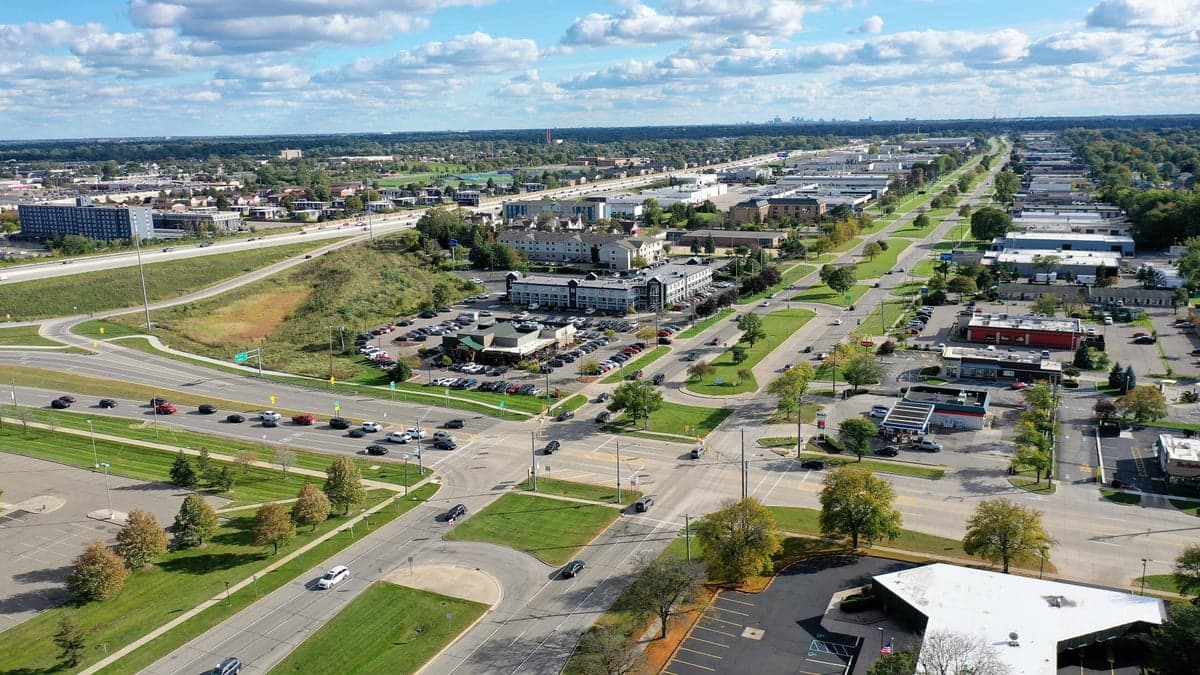
Madison Heights is a densely developed suburb with typical lot sizes of 0.15 to 0.25 acres. This is not homesteading territory. The zoning code allows for vegetable gardens and small fruit trees, but keeping livestock—chickens, goats, or bees—is restricted. Chickens are permitted with a permit and specific setback requirements, but larger animals are not allowed on standard residential lots. For a prepper focused on food security, this means you are limited to intensive gardening, container growing, and possibly a small greenhouse. Off-grid feasibility is extremely low. The city requires connection to municipal water and sewer systems; you cannot drill a well or install a septic system on a standard lot. Solar panels are allowed but must be installed per building code and electrical code, and you cannot disconnect from the grid. The city has no specific "right to dry" ordinance, but clotheslines are generally not restricted. Rainwater collection is legal in Michigan, but the state has no clear law on it, and local codes may limit the size of collection barrels. For a serious prepper, Madison Heights is a location for building community and skills, not for achieving true self-sufficiency. You can store supplies, maintain a deep pantry, and practice gardening, but you will remain dependent on municipal infrastructure for water, waste, and power. The real value here is proximity to resources—hardware stores, medical facilities, and potential trade partners—rather than the ability to go fully off-grid.
Personal liberties: parental rights, medical autonomy, speech, and property
Michigan has a mixed record on personal liberties that directly affect a conservative worldview. Parental rights are generally strong in the state, with a legal presumption that parents have the right to direct the upbringing, education, and healthcare of their children. However, the state has moved to expand access to certain medical procedures for minors without parental consent, including reproductive healthcare and mental health services. For a parent concerned about government overreach into family decisions, this is a red flag. The state also mandates certain vaccines for school attendance, though medical and religious exemptions are available. Medical autonomy for adults is more straightforward: you can refuse any medical treatment, and there is no state-level vaccine mandate for adults. The state does have a prescription drug monitoring program, which creates a record of controlled substance prescriptions, but this is standard across most states. Free speech is protected under the First Amendment, and Michigan has no state-level law that restricts political speech or assembly beyond standard public safety regulations. Property rights are a significant concern. Michigan has a strong "eminent domain" law, and the state has used it for economic development projects. The Michigan Supreme Court has generally upheld the government's ability to take private property for public use, including for private development that serves a public purpose. For a prepper who values land as a sovereign asset, this is a vulnerability. Additionally, the state has a "right to farm" act that protects agricultural operations from nuisance lawsuits, but this does not apply to suburban lots in Madison Heights. The city also has a rental inspection program, which means if you own rental property, you are subject to periodic inspections by the city. This is a direct example of government intrusion into private property.
Overall, Madison Heights offers a moderate level of personal sovereignty that is typical of a suburban Michigan city. You have strong self-defense rights and a predictable tax structure, but you face significant restrictions on property use, a state-level background check requirement for firearms, and a regulatory environment that limits true off-grid living. For a conservative or prepper-minded individual, this is not a location for total autonomy, but it is a viable base of operations where you can exercise many personal liberties while being aware of the areas where the state holds the upper hand. Compared to deep-blue cities like Ann Arbor or Detroit, Madison Heights is a relative haven for conservative values. Compared to rural northern Michigan or the Upper Peninsula, it is far more restrictive. Your strategy here should be one of prudent compliance—know the rules, work within them where necessary, and build your resilience through community and knowledge rather than through isolation and complete self-sufficiency.

* Values derived from national, state, county, city and local statistics and may differ in a specific area. Last updated: 2026-04-29T23:21:31.000Z
Narrative content on this page is AI-generated and may contain mistakes. Verify any details that matter before acting on them.
ReloMaps may earn a commission from affiliate links at no extra cost to you.

