 Popular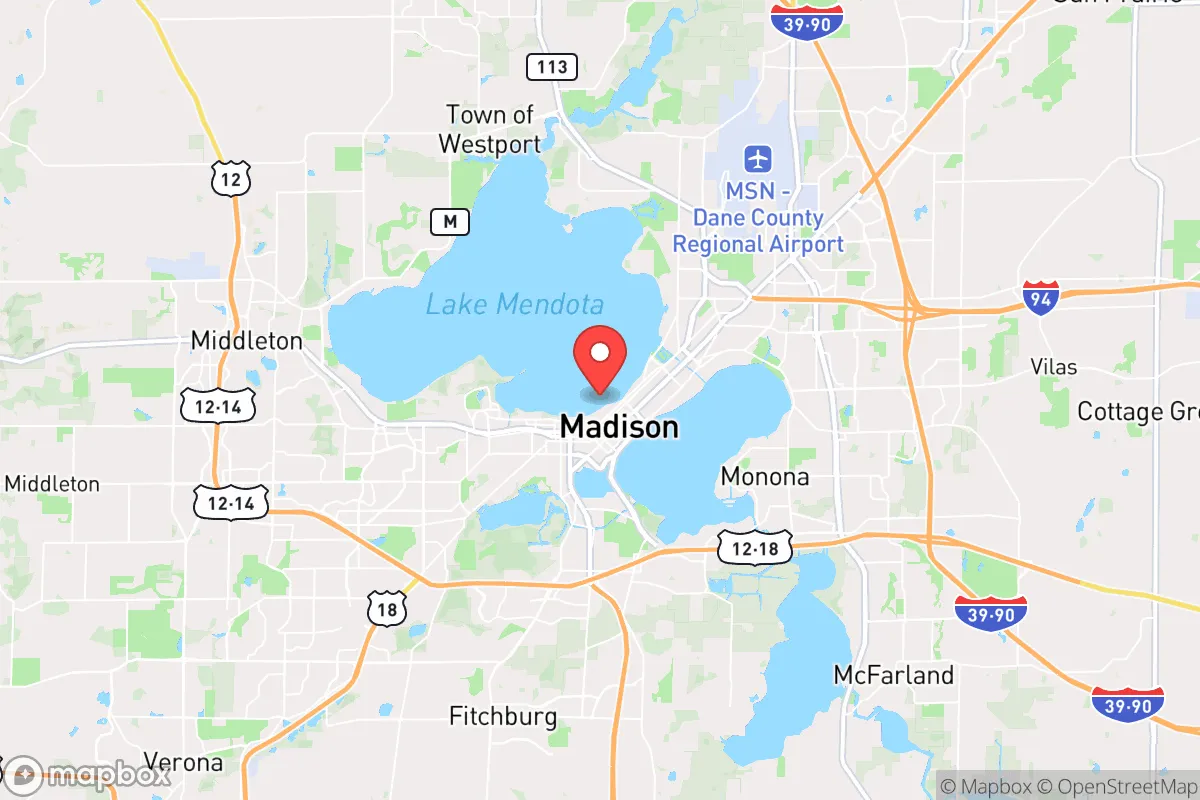
Photo: Wikipedia
Personal Sovereignty in Madison, WI
Moderate friction. Expect trade-offs in some aspect of personal liberty and independence.
What does Personal Sovereignty tell us?
Personal Sovereignty measures your capacity for self-reliance and independence with minimal government friction. Higher scores mean fewer barriers between you and the way you want to live... but it assumes you have the space you need and good neighbors.
What does this tell us?
Personal Sovereignty measures your capacity for self-reliance and independence with minimal government friction. Higher scores mean fewer barriers between you and the way you want to live... but it assumes you have the space you need and good neighbors.
State Policy
Energy independence: Importer (15% of energy produced in-state)
Personal Liberty
Homesteading

Personal Liberty Analysis
Madison, Wisconsin presents a complex and often contradictory environment for personal sovereignty, one that demands careful navigation rather than blind trust. While the city itself is a progressive stronghold with policies that can feel intrusive to those valuing individual autonomy, the surrounding Dane County and the broader state context offer some counterbalancing opportunities for those willing to work within the system. For a conservative-leaning individual or family with a survivalist mindset, Madison is not a place of outright hostility to personal freedom, but it is a place where you must be deliberate, informed, and prepared to defend your rights at the local level. The core tension here is between a city government that actively seeks to manage daily life and a state framework that, in certain key areas like gun rights and property use, still provides meaningful buffers against overreach.
Tax burden and regulatory posture: How much of your income and choices are controlled?
Madison’s tax burden is among the highest in Wisconsin, and that directly impacts your financial sovereignty. The combined state and local tax load is significant, driven by a city government that funds expansive social programs, public transit, and environmental initiatives. Property taxes in Dane County are notably high, with the median effective property tax rate hovering around 2.1% of assessed home value, which is well above the national average. This means a $400,000 home could carry an annual tax bill of roughly $8,400. Income taxes are also steep, with Wisconsin’s top marginal rate at 7.65%, and the city adds its own local option sales tax. For a prepper or someone seeking financial independence, this constant outflow of capital to a government you may not trust is a real drag on your ability to stockpile resources, invest in land, or build self-reliant systems. The regulatory environment is equally dense. Madison has strict building codes, energy efficiency mandates, and zoning ordinances that can make even modest home improvements or alternative energy installations a bureaucratic ordeal. Permitting for solar panels, rainwater catchment, or backyard structures is not straightforward and often requires navigating multiple city departments. This is not a place where you can easily go off-grid or make unilateral changes to your property without city approval. The regulatory posture is one of active management, not laissez-faire, which directly challenges the principle of personal autonomy over your own land and finances.
Self-defense and gun law specifics: Can you legally protect yourself and your family?
On the critical issue of self-defense, Wisconsin provides a relatively strong foundation that Madison cannot fully undermine. The state is a shall-issue jurisdiction for concealed carry permits, meaning that as long as you meet basic requirements—background check, training course, and no disqualifying offenses—the state must issue your permit. There is no discretionary denial by local sheriffs. Open carry is legal without a permit, though local ordinances in Madison may create practical hurdles. The state also has a Stand Your Ground law, codified in Wisconsin Statute 939.48, which removes the duty to retreat before using deadly force if you are lawfully present and reasonably believe it is necessary to prevent imminent death or great bodily harm. This is a critical legal protection for anyone serious about self-defense. However, Madison itself is not gun-friendly. The city council has passed resolutions supporting universal background checks and has attempted to create local gun storage ordinances, though state preemption laws (Wis. Stat. 66.0409) generally prevent cities from enacting their own firearm regulations that are more restrictive than state law. This preemption is your shield. While you may face social stigma or political opposition in Madison, your legal right to keep and bear arms is largely intact. For a survivalist, this means you can maintain a defensive capability, but you should expect to be a political outlier in local circles. The practical advice: keep your paperwork in order, understand the preemption law, and be prepared for potential future challenges from the city council.
Self-reliance and homesteading viability: Lot sizes, zoning, and off-grid feasibility
For those seeking true self-reliance—growing food, raising animals, generating power, and reducing dependence on external systems—Madison proper is a difficult environment. The city’s zoning code is urban and suburban in character, with most residential lots ranging from 5,000 to 10,000 square feet. Keeping chickens is permitted in many areas, but with strict limits on the number of birds and coop placement. Larger livestock like goats or pigs are generally prohibited within city limits. Gardening is allowed, but front-yard vegetable gardens may be subject to aesthetic regulations. The real constraint is the inability to achieve meaningful off-grid independence. Madison requires connection to municipal water and sewer systems in most developed areas, and building codes mandate grid-tied electrical connections for new construction. Solar panels are allowed but must meet city aesthetic standards and often require a conditional use permit. Rainwater harvesting for potable use is heavily regulated by the state Department of Natural Resources. For a prepper, the practical reality is that Madison is not a homesteading destination. The land is expensive, the lots are small, and the regulatory environment discourages self-sufficient systems. The better strategy is to consider a property in the surrounding Dane County townships or even further into rural areas like Sauk or Columbia counties, where lot sizes of 1-5 acres are more common, zoning is looser, and you can realistically install a septic system, well, and solar array without city interference. The commute to Madison for work or supplies is manageable, but the sovereignty gains are substantial.
Personal liberties: Parental rights, medical autonomy, speech, and property
Personal liberties in Madison are a mixed bag, heavily influenced by the city’s progressive political culture. On parental rights, Wisconsin state law generally supports parental authority in education and healthcare decisions, but Madison schools have been at the forefront of implementing policies that can bypass parental consent, particularly regarding gender identity and sexual health. The Madison Metropolitan School District has policies that allow students to use preferred names and pronouns without notifying parents, and school-based health clinics may provide certain services confidentially. For a conservative parent, this is a direct challenge to your authority over your child’s upbringing. Medical autonomy is similarly contested. While Wisconsin does not have a state-level vaccine mandate for adults, Madison has shown willingness to impose local health orders, including mask mandates and business restrictions during public health emergencies. The city’s health department has broad powers, and there is a history of aggressive enforcement. For those who prioritize medical choice, this is a red flag. Free speech is protected by the First Amendment, but Madison’s social climate can be hostile to conservative viewpoints. Public expression of traditional values, especially on issues like abortion, marriage, or immigration, may invite social ostracism or even public confrontation. The city has also experimented with “hate speech” ordinances that, while likely unconstitutional, create a chilling effect. Property rights are the most secure of these liberties, thanks to state-level protections. Wisconsin’s property rights laws are relatively strong, and eminent domain abuse is less common than in some states. However, Madison’s zoning and land-use regulations can feel like a slow erosion of your right to use your property as you see fit. The overall picture: you have legal rights on paper, but exercising them in Madison requires a thick skin and a willingness to be an outlier.
In the broader landscape of American cities, Madison ranks as a place where personal sovereignty is under constant, low-grade pressure rather than outright assault. Compared to cities like Portland or Seattle, Madison’s gun laws are far more permissive, and its property rights are better protected by state preemption. Compared to rural Texas or Idaho, however, it is a high-tax, high-regulation environment that demands constant vigilance. For a conservative-leaning survivalist, the strategic move is not to fight the city from within but to use it as an economic hub while establishing your true base of autonomy in the surrounding countryside. Madison offers good jobs, a strong economy, and access to resources, but it does not offer freedom from government oversight. If you are willing to play the long game—pay the taxes, navigate the bureaucracy, and keep your head down on cultural issues—you can live here and maintain your personal sovereignty. Just know that the city’s default posture is one of control, not liberty, and your freedom will be something you have to actively defend, not something that is given to you.

* Values derived from national, state, county, city and local statistics and may differ in a specific area. Last updated: 2026-04-21T10:04:44.000Z
Narrative content on this page is AI-generated and may contain mistakes. Verify any details that matter before acting on them.
ReloMaps may earn a commission from affiliate links at no extra cost to you.

