 Popular
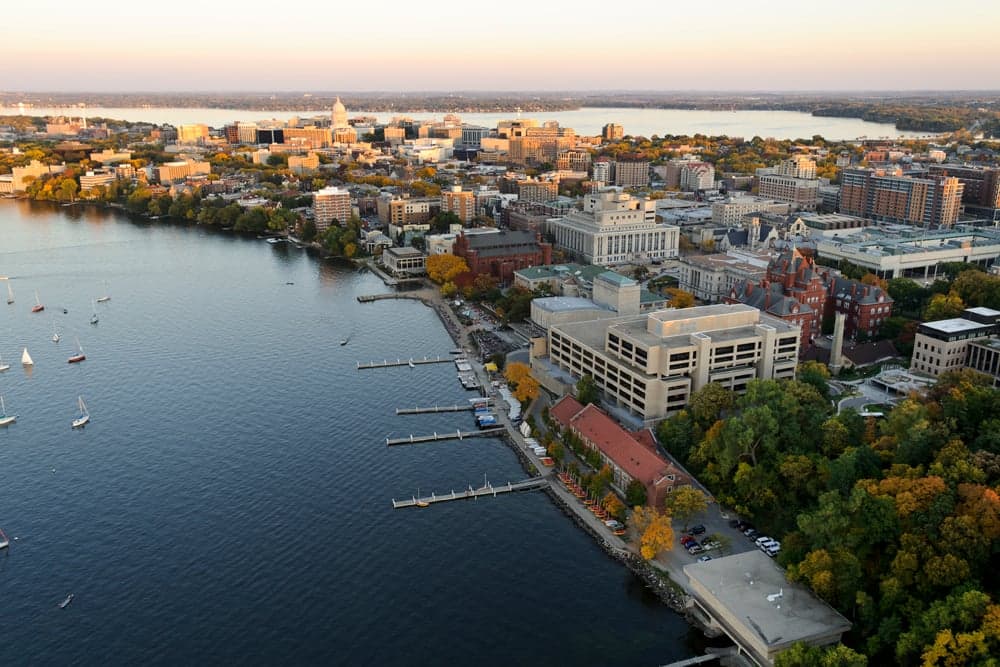
Photo: Wikipedia
Strategic Assessment of Madison, WI
Multiple tactical vulnerabilities. Population density, target proximity, or disaster risk are likely compounding. A retreat property and exit planning is required.
What does the Strategic Assessment tell us?
Our Strategic Assessment grades tactical survivability of an area. Major population centers, military targets, fallout zones, natural disasters, and border exposure all drive risk — lower exposure means a more defensible position in a crisis.
This is heavily inspired by Joel Skousen's Strategic Relocation book. Highly recommended you checkout the book ($)What does this tell us?
Our Strategic Assessment grades tactical survivability of an area. Major population centers, military targets, fallout zones, natural disasters, and border exposure all drive risk — lower exposure means a more defensible position in a crisis.
This is heavily inspired by Joel Skousen's Strategic Relocation book. Highly recommended you checkout the book ($)Strategic Pillars

Key Distances
Regional Safe Places
Below is our recommended "safe zones" in Wisconsin and the surrounding area based on our strategic heuristics. For most people, it's unrealistic to live in a “safe zone” full-time due to work, family or other personal reasons. They tend to be more rural. However, many of these areas are perfect for second homes and retreat properties that double as a vacation home or even a short-term rental.
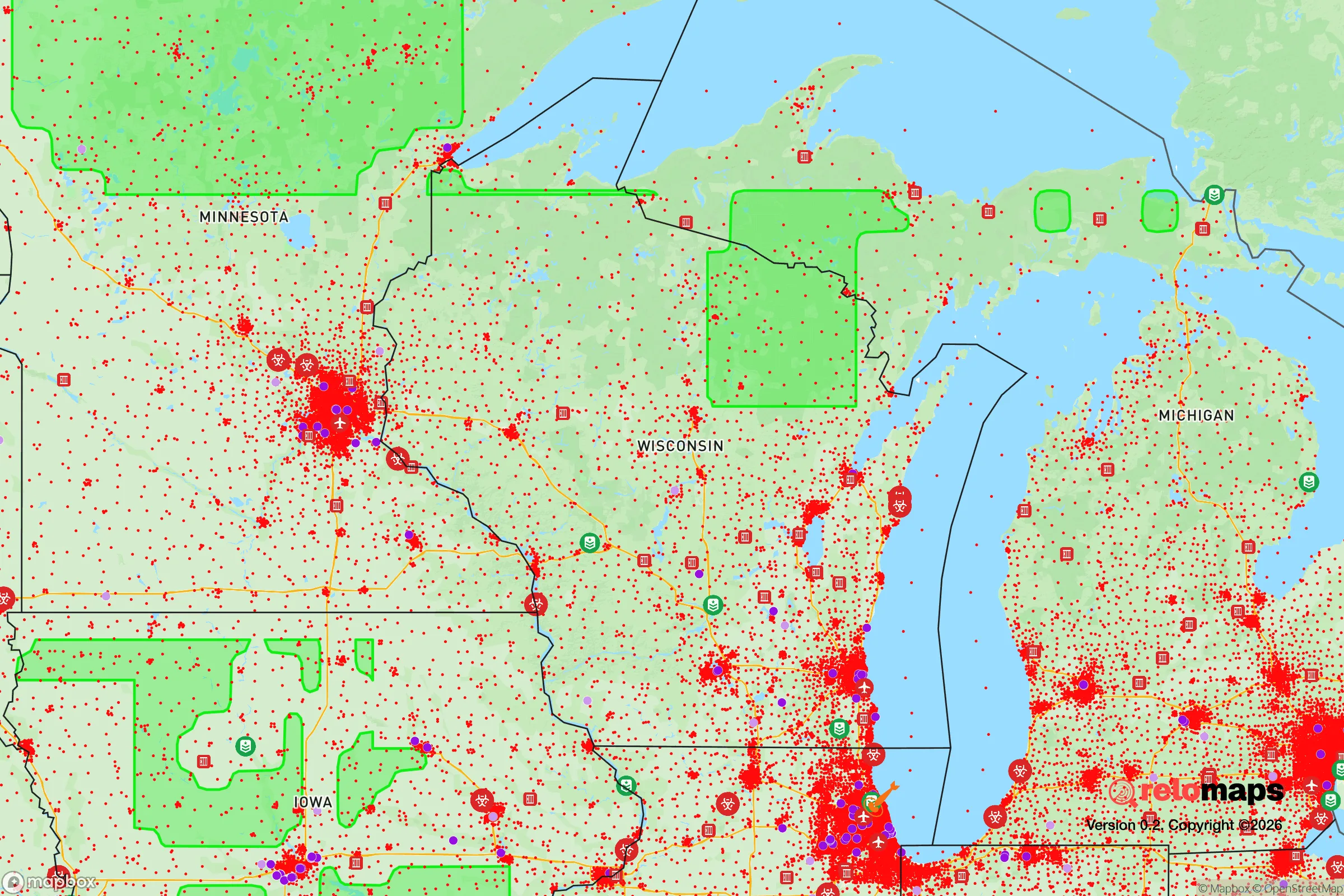
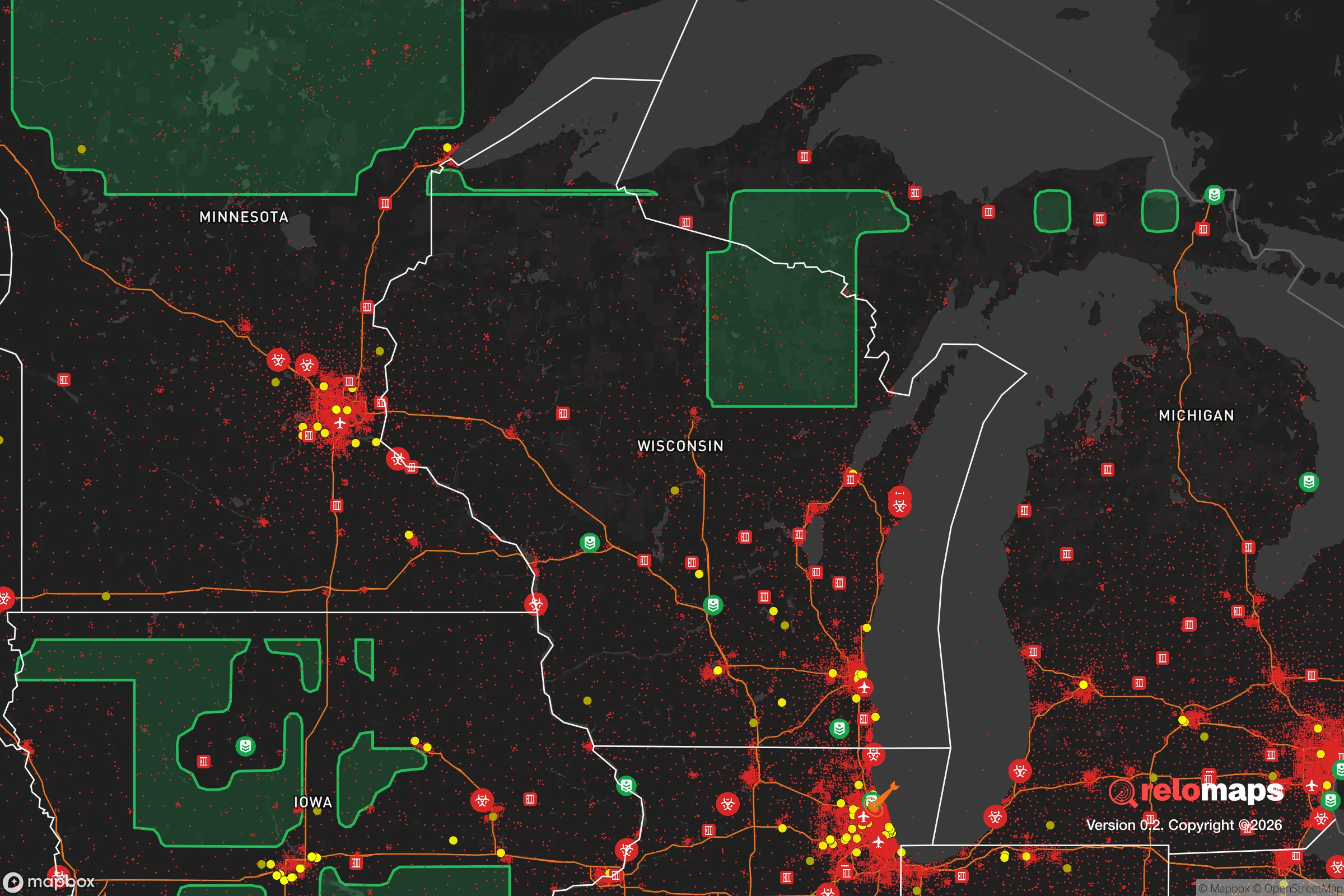


Important Note: For informational purposes only. This does not mean nothing bad ever happens in the green zones. Please use common sense. This is based on public data and modeled with AI. We tried to take a conservative approach but mistakes happen. We update this regularly as new information becomes available.
Solar Generator Recommendations
Backup power matters more here than in safer locations. We've picked three solar generators across budgets and capacity tiers — start with the budget unit if you only need a few essentials, or step up if you want to run a fridge and HVAC for days at a time.

Jackery Portable Power Station Explorer 300
Budget OptionPower on the Go: Weighing only 11 lbs, it's convenient to set up and store with book-sized foldable solar panels

BLUETTI Portable Power Station AC180
Designed for both indoor and outdoor scenarios, AC180 is highly capable as it has a robost capacity and continuous output power.

EF ECOFLOW DELTA Pro Ultra Power Station
Upgraded PickEcoFlow DELTA Pro Ultra is a whole-home energy system designed to grow with your family. Integrated with the Smart Home Panel 2, it scales to meet your evolving energy needs — keeping your home powered, intelligent, and secure through every stage of life.
We earn a commission, at no additional cost to you.
Strategic Assessment Analysis
Madison, Wisconsin, presents a deeply contradictory picture for the conservative prepper or strategic relocator. On one hand, its position as a state capital and major university town places it squarely in the crosshairs of the very demographic and political trends many are seeking to avoid. On the other hand, its geographic location, access to freshwater, and relatively insulated regional economy offer genuine resilience advantages that are hard to find elsewhere in the Midwest. The key is understanding that Madison is not a retreat—it is a forward operating base with significant risks that must be managed with clear-eyed discipline.
Geographic position and natural advantages for long-term security
Madison sits on an isthmus between Lake Mendota and Lake Monona, part of the larger Yahara River watershed that connects to the Rock River and ultimately the Mississippi. This means freshwater access is virtually guaranteed—a non-negotiable asset in any long-term disruption scenario. The surrounding Dane County is a patchwork of glacial moraines, drumlins, and fertile soils that support a robust local food system, including the famous Dane County Farmers' Market and dozens of community-supported agriculture operations. The city’s elevation, roughly 850 feet above sea level, keeps it well above any plausible flood risk from the Great Lakes or Mississippi, and the region is seismically stable. For a relocator, the natural advantages are real: abundant water, arable land, and a climate that, while cold, is predictable and manageable with proper preparation. The Driftless Area to the west offers rugged terrain and deep valleys that could serve as fallback positions if the isthmus becomes untenable.
Risks, exposures, and proximity to fallout-relevant landmarks
The most glaring vulnerability is Madison’s role as a political and logistical hub. The Wisconsin State Capitol, the University of Wisconsin–Madison campus, and the Dane County Regional Airport are all high-value targets in any scenario involving civil unrest or state-level conflict. The city has a history of large-scale protests—the 2011 Act 10 demonstrations drew over 100,000 people—and the presence of a highly educated, left-leaning population means that any future unrest could be both intense and prolonged. Madison is also within 150 miles of Chicago, Milwaukee, and the Twin Cities, making it a likely destination for displaced populations in a regional crisis. The nearby Columbia Generating Station, a natural gas plant, and the Koshkonong solar farm are energy infrastructure points that could become chokepoints. More concerning is the proximity to the University of Wisconsin–Madison’s research reactors and the Meriter Hospital’s radiological sources—while not weapons-grade, any incident involving these facilities would draw federal attention and complicate a stay-put strategy. The city’s reliance on the interstate system (I-39/90/94) for supply chains means that a single bridge failure or blockade could isolate the isthmus quickly.
Practical resilience for a relocator: food, water, energy, and defensibility
For the individual or family looking to establish a resilient household, Madison offers a mixed bag. The city’s water supply comes from the Madison Metropolitan Sewerage District, which draws from the Yahara chain of lakes. While the water is treated to high standards, a prolonged power outage would compromise pumping stations. Private well ownership is common in the surrounding towns of Middleton, Verona, and Oregon, and a property with a well and septic system is a major resilience upgrade. Food security is strong: the region produces dairy, corn, soybeans, and a growing number of specialty crops. The Willy Street Co-op and multiple year-round farmers’ markets provide local sourcing, but the prepper should note that Madison’s grocery supply chain is heavily dependent on trucking from Chicago and Milwaukee. Energy-wise, Madison Gas and Electric (MGE) has a mix of natural gas, coal, and renewables, but the grid is aging. Solar with battery backup is a viable option here, as the region gets about 190 sunny days per year—not great, but workable with proper panel orientation. Defensibility is the weak point. The isthmus layout means that any roadblock on John Nolen Drive or East Washington Avenue can trap residents. The city’s density and liberal gun laws (Wisconsin is a shall-issue state with no assault weapons ban, but Dane County has its own restrictions) mean that a determined group could secure a perimeter, but the average suburban home in Fitchburg or Sun Prairie offers little natural cover. The best bet is a property on the western edge of the county, near the Driftless Area, where terrain provides both concealment and escape routes.
Overall strategic picture: a calculated gamble for the prepared
Madison is not a bug-out location. It is a live-in location with significant upside for those willing to accept its risks. The combination of freshwater, local food systems, and a relatively stable regional economy makes it one of the better Midwestern cities for a long-term resilience strategy. But the political and demographic realities cannot be ignored. Dane County voted 75% for Biden in 2020, and the city’s culture is aggressively progressive. For a conservative relocator, this means social isolation and potential friction with neighbors, especially in a crisis where ideological lines harden. The prepper calculus here is simple: if you can secure a property with a well, solar, and a defensible position in the western exurbs, and you are willing to maintain a low profile, Madison offers a solid foundation. If you need a community of like-minded individuals or a location that can be easily fortified, look elsewhere. The city’s greatest strength—its economic and political centrality—is also its greatest liability. Plan accordingly, and never assume the lakes will protect you from the chaos that follows the crowds.

* Values derived from national, state, county, city and local statistics and may differ in a specific area. Last updated: 2026-04-21T10:04:44.000Z
Narrative content on this page is AI-generated and may contain mistakes. Verify any details that matter before acting on them.
ReloMaps may earn a commission from affiliate links at no extra cost to you.

