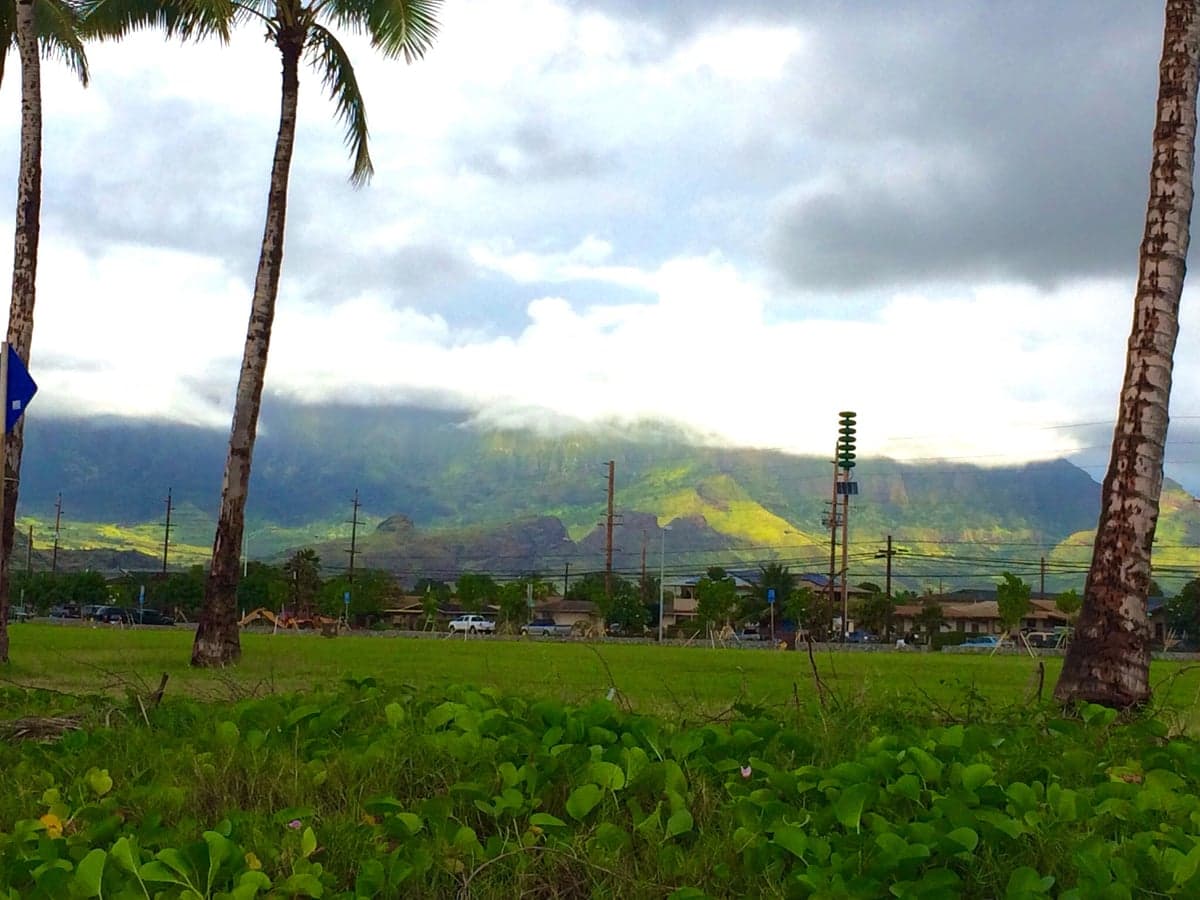
Photo: Wikipedia
Strategic Assessment of Maili, HI
Workable tactical position. Some exposure to population density or targets, but generally defensible in a crisis.
What does the Strategic Assessment tell us?
Our Strategic Assessment grades tactical survivability of an area. Major population centers, military targets, fallout zones, natural disasters, and border exposure all drive risk — lower exposure means a more defensible position in a crisis.
This is heavily inspired by Joel Skousen's Strategic Relocation book. Highly recommended you checkout the book ($)What does this tell us?
Our Strategic Assessment grades tactical survivability of an area. Major population centers, military targets, fallout zones, natural disasters, and border exposure all drive risk — lower exposure means a more defensible position in a crisis.
This is heavily inspired by Joel Skousen's Strategic Relocation book. Highly recommended you checkout the book ($)Strategic Pillars

Key Distances
Regional Safe Places
Below is our recommended "safe zones" in Hawaii and the surrounding area based on our strategic heuristics. For most people, it's unrealistic to live in a “safe zone” full-time due to work, family or other personal reasons. They tend to be more rural. However, many of these areas are perfect for second homes and retreat properties that double as a vacation home or even a short-term rental.

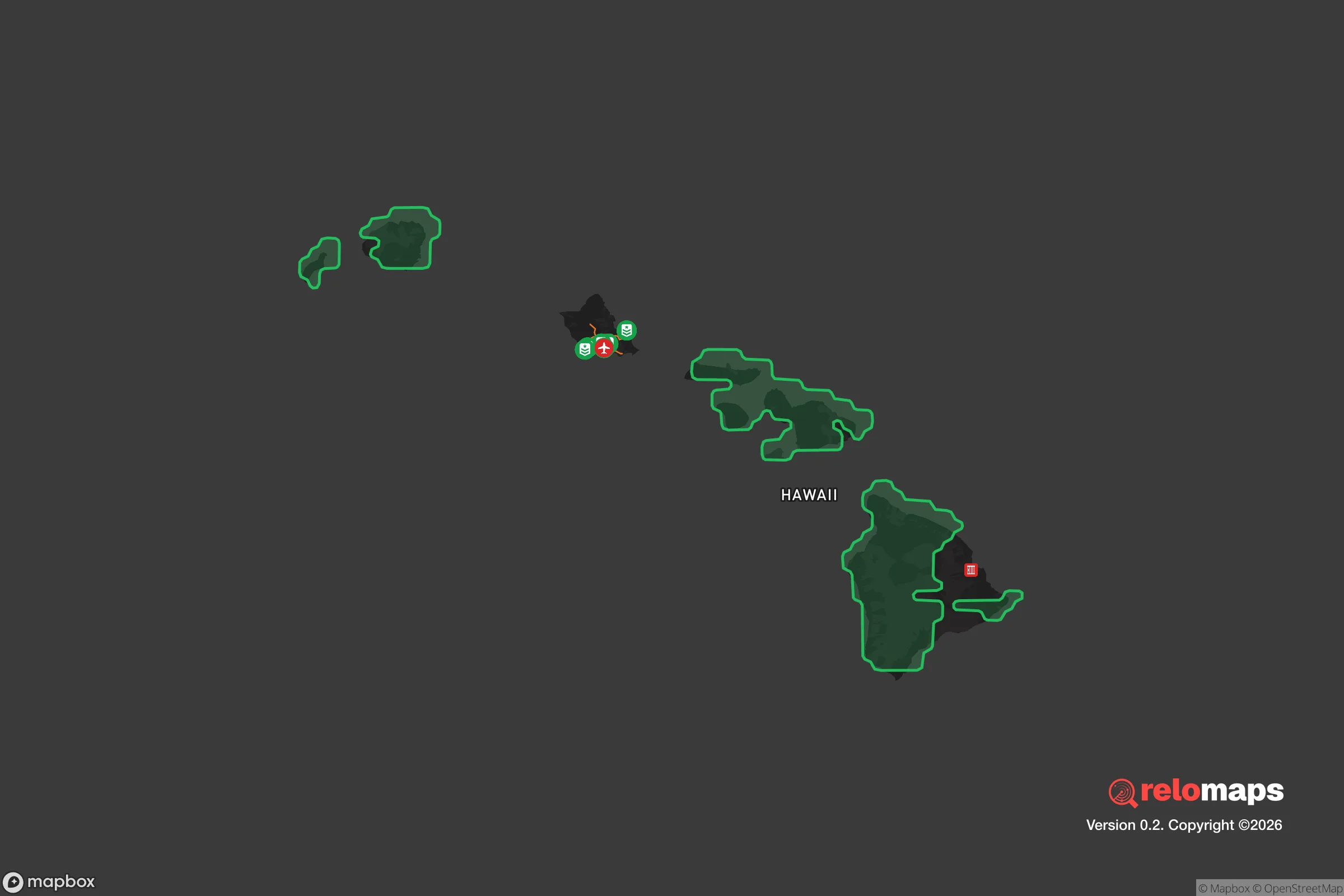


Important Note: For informational purposes only. This does not mean nothing bad ever happens in the green zones. Please use common sense. This is based on public data and modeled with AI. We tried to take a conservative approach but mistakes happen. We update this regularly as new information becomes available.
Solar Generator Recommendations
Backup power matters more here than in safer locations. We've picked three solar generators across budgets and capacity tiers — start with the budget unit if you only need a few essentials, or step up if you want to run a fridge and HVAC for days at a time.

Jackery Portable Power Station Explorer 300
Budget OptionPower on the Go: Weighing only 11 lbs, it's convenient to set up and store with book-sized foldable solar panels

BLUETTI Portable Power Station AC180
Designed for both indoor and outdoor scenarios, AC180 is highly capable as it has a robost capacity and continuous output power.

EF ECOFLOW DELTA Pro Ultra Power Station
Upgraded PickEcoFlow DELTA Pro Ultra is a whole-home energy system designed to grow with your family. Integrated with the Smart Home Panel 2, it scales to meet your evolving energy needs — keeping your home powered, intelligent, and secure through every stage of life.
We earn a commission, at no additional cost to you.
Strategic Assessment Analysis
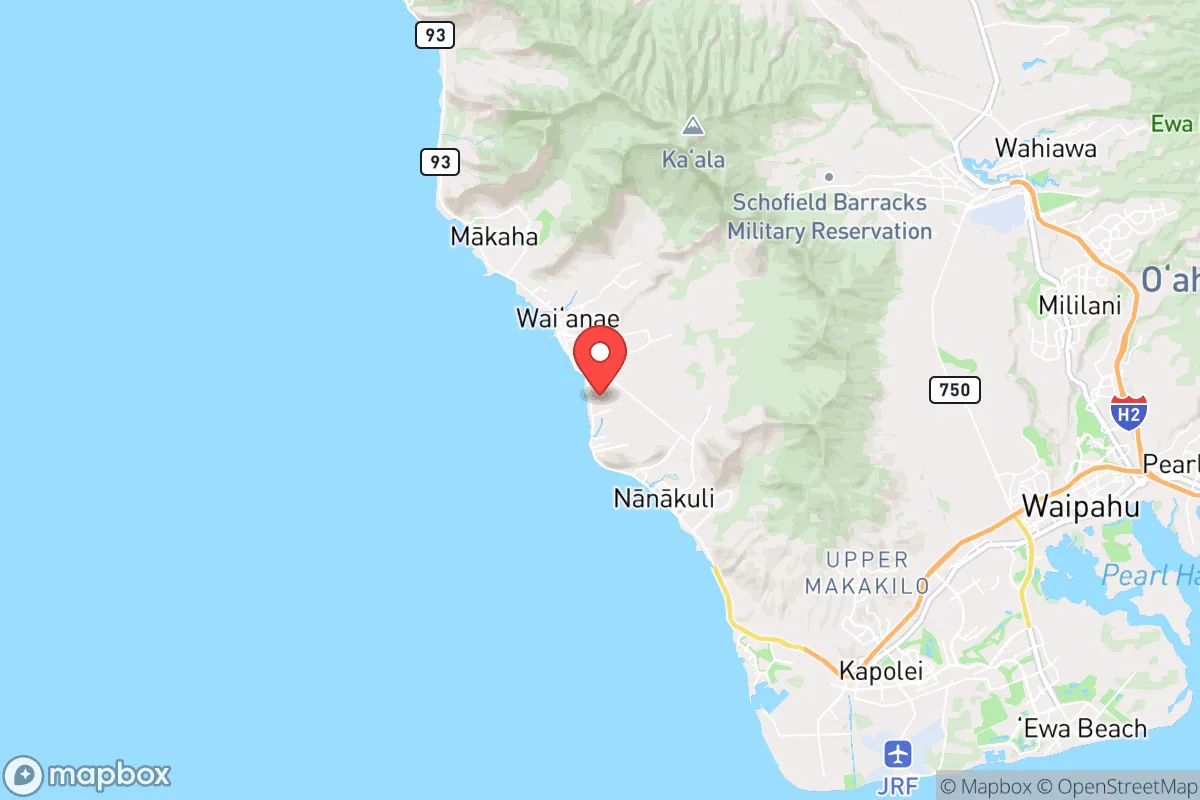
Maili, Hawaii, offers a unique strategic position for those prioritizing resilience and self-sufficiency, but it comes with significant trade-offs that demand careful consideration. Located on the leeward (west) coast of Oahu, roughly 20 miles from downtown Honolulu, Maili sits in a semi-rural corridor that provides a buffer from the dense urban core while still being within reach of critical infrastructure. For the prepper or survivalist, this area presents a mix of natural advantages—consistent trade winds, access to the Pacific, and a relatively lower population density compared to Honolulu—alongside real vulnerabilities tied to its island geography and proximity to military and economic targets. The key question for a relocator is whether Maili’s isolation from the worst of Oahu’s congestion outweighs the inherent risks of living on an island that is a prime target in any major conflict or disaster scenario.
Geographic position and natural advantages for long-term survival
Maili’s location on the Waianae Coast gives it a distinct edge in terms of natural defensibility and resource access. The area is backed by the Waianae mountain range, which acts as a physical barrier against the wetter, more developed windward side, and opens to the ocean on the west. This positioning means consistent trade winds provide natural ventilation and reduce reliance on air conditioning, a practical advantage if the grid goes down. The coastline offers potential for small-scale fishing and maritime evacuation routes, though the waters can be rough. The surrounding agricultural land—though diminished—still supports some small farms and homesteads, offering a foundation for local food production. For a relocator, the proximity to the Waianae Kai Forest Reserve and nearby hiking trails provides both a resource for foraging and a potential retreat corridor into higher terrain if coastal areas become compromised. The area’s lower real estate density compared to Honolulu means more space for rainwater catchment, solar panels, and garden plots—critical for a self-reliant setup. However, the trade-off is that Maili is not truly remote; it’s a 30-40 minute drive from Kapolei, Oahu’s “second city,” which brings both convenience and exposure.
Risks, exposures, and proximity to fallout-relevant landmarks
The most significant strategic drawback of Maili is its location on an island that hosts multiple high-value military and economic targets. Oahu is home to Pearl Harbor, Hickam Air Force Base, Schofield Barracks, and the Pacific Missile Range Facility—all of which would be primary targets in any major conflict involving the United States. Maili is roughly 15-20 miles from Pearl Harbor as the crow flies, placing it within the potential fallout zone of a conventional or nuclear strike on those facilities. While the Waianae Mountains offer some shielding from blast effects, prevailing winds could carry radioactive debris or chemical fallout from a harbor attack toward the west coast. Additionally, Honolulu International Airport and the Port of Honolulu are critical logistics hubs that would be disrupted or destroyed in a crisis, cutting off Maili from resupply. The area is also exposed to natural hazards: tsunamis could impact the low-lying coastal strip, and the region’s dry climate makes it prone to wildfires, which could spread rapidly through brushland. For the prepper, the proximity to these targets means that Maili is not a “bug-out” location but a “bug-in” one—you cannot easily leave the island, and you must assume that any major event will isolate you completely. The nearby Waianae Coast has a reputation for higher crime rates and gang activity in certain pockets, which could escalate during civil unrest, adding a human threat to the environmental ones.
Practical resilience for a relocator: food, water, energy, and defensibility
Building a resilient setup in Maili requires a deliberate focus on self-sufficiency, as the area’s infrastructure is not designed for prolonged isolation. Water is the most critical concern: the leeward coast receives only 20-30 inches of rain annually, far less than windward areas. A reliable rainwater catchment system with large storage tanks (1,000+ gallons) is essential, and you should plan for drought periods. The local water utility, Honolulu Board of Water Supply, serves the area, but a grid-down scenario would leave you dependent on your own supply. Solar power is viable given the high sun exposure, but you’ll need battery storage and possibly a backup generator for cloudy stretches. Food resilience is moderate: the soil in Maili is volcanic but can be rocky and dry, so raised beds, drip irrigation, and drought-tolerant crops like sweet potatoes, taro, and bananas are practical. The ocean provides protein, but fishing requires skill and gear, and the nearshore waters are heavily fished. Defensibility is mixed: Maili’s layout is a mix of single-family homes on large lots and older subdivisions, with some properties offering good sightlines and setback from the road. However, the area is not gated or fortified, and the main road (Farrington Highway) is a choke point that could become a funnel for evacuees or looters. A strategic relocator should prioritize a property with a solid perimeter, a well, and a location slightly inland (e.g., near Mailiilii Road) to avoid coastal surge and provide better escape routes into the mountains. Stockpiling supplies is straightforward given the space, but you must plan for the fact that Oahu’s single port and airport mean no resupply for weeks or months after a major event.
The overall strategic picture for Maili is one of calculated compromise. It offers a genuine escape from the density and chaos of Honolulu, with enough land and natural resources to support a semi-self-reliant lifestyle. The climate is forgiving, the community is tight-knit (though with some rough edges), and the isolation from the urban core provides a buffer against the worst of civil unrest. But the island’s vulnerability as a military target, the limited water supply, and the impossibility of evacuation off Oahu mean that Maili is best suited for those who plan to stay put and ride out a crisis, not for those seeking a remote retreat. For a conservative-leaning relocator who values preparedness, community, and a slower pace, Maili can work—if you accept that you are betting on the island’s resilience rather than your ability to leave. The smart move is to treat Maili as a base for long-term survival, not a temporary refuge, and to invest heavily in water, energy, and food systems before any crisis hits. If you can handle the trade-offs, it’s a defensible corner of a vulnerable island. If not, look to the mainland.

* Values derived from national, state, county, city and local statistics and may differ in a specific area. Last updated: 2026-04-29T20:10:46.000Z
Narrative content on this page is AI-generated and may contain mistakes. Verify any details that matter before acting on them.
ReloMaps may earn a commission from affiliate links at no extra cost to you.

