Photo: Wikipedia
Demographics of Makakilo, HI
Affluence Level in Makakilo, HI
An upper-middle-class area. Household wealth, education levels, and homeownership run ahead of national benchmarks.
People of Makakilo, HI
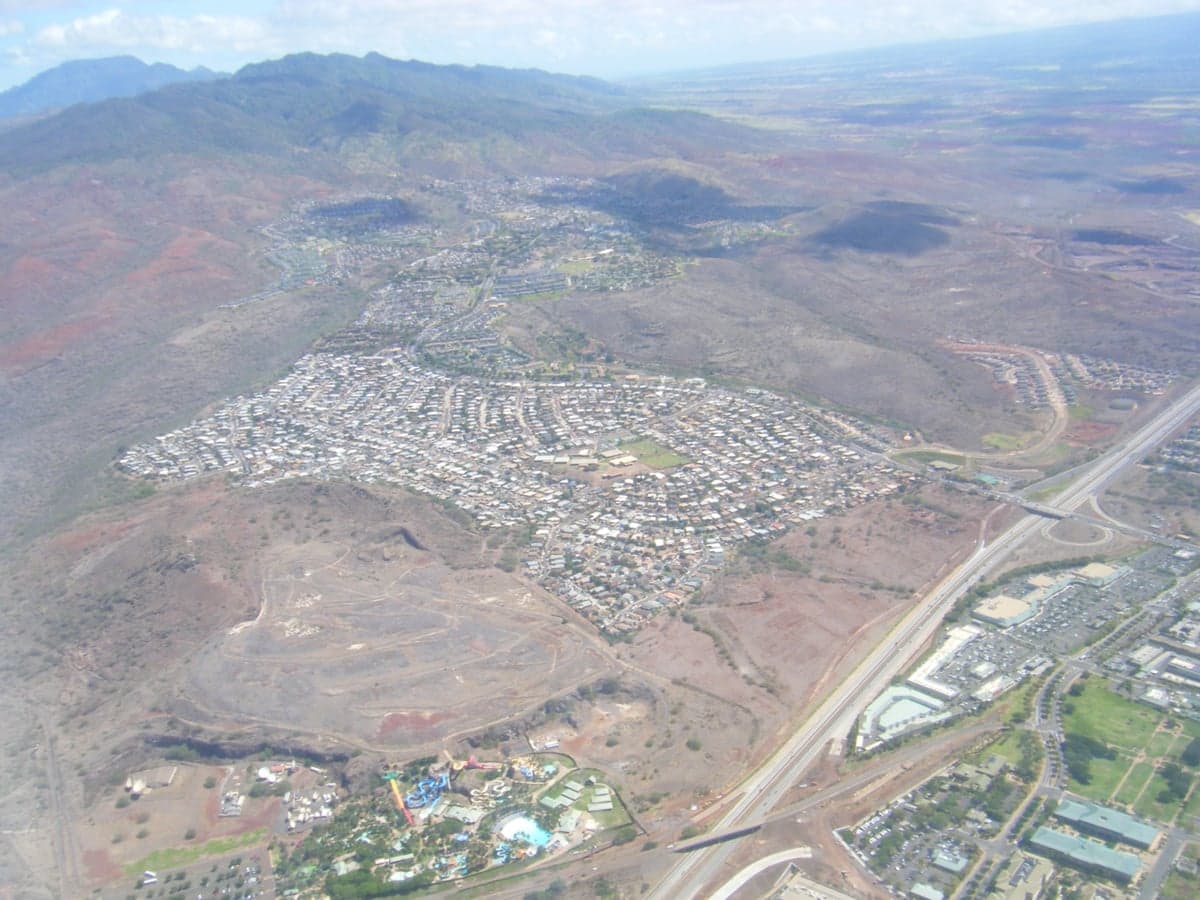
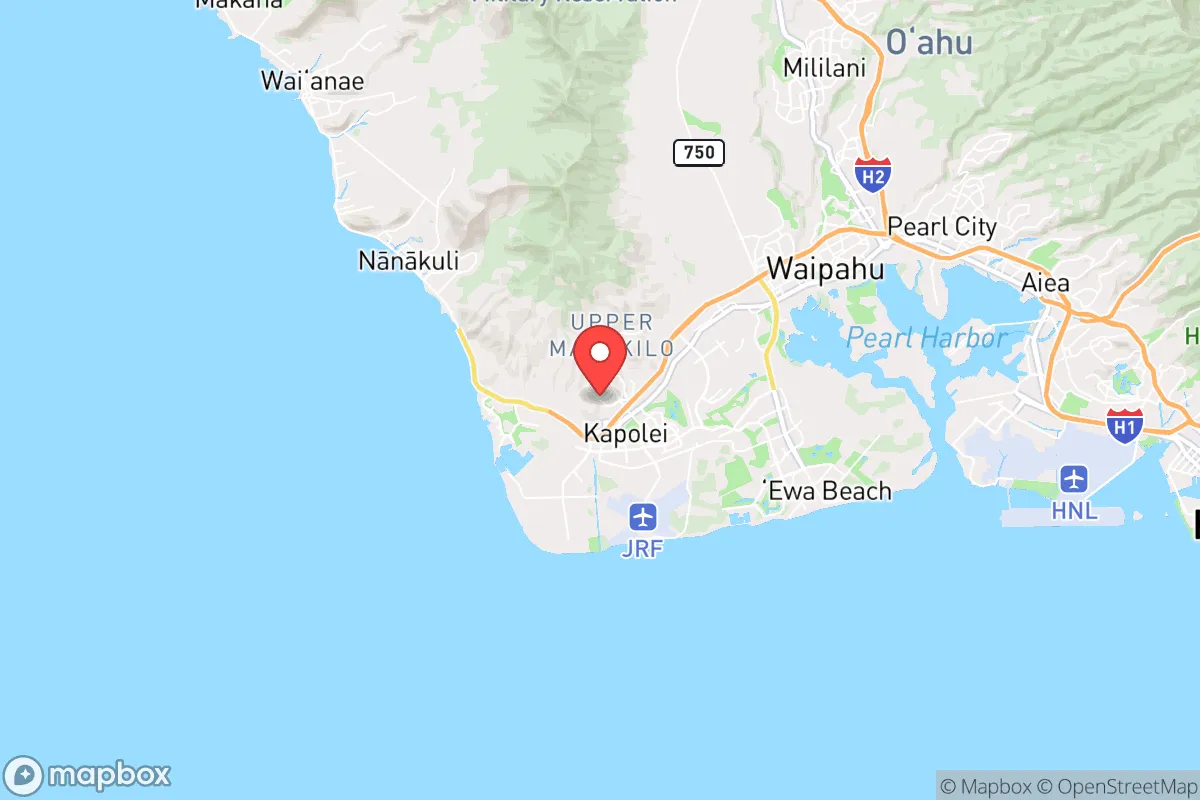
Makakilo, a census-designated place on the island of Oʻahu, is home to 20,372 residents who form a distinctive, family-oriented community with a strong East and Southeast Asian plurality. The population is notably diverse, with 30.2% identifying as Asian (East and Southeast Asian), 18.1% as White, 14.1% as Hispanic, and 5.6% as Black, while only 3.4% are foreign-born, indicating a largely native-born population. The community is characterized by its suburban layout, high proportion of single-family homes, and a college education rate of 36.5%, reflecting a middle-class, professional demographic. Makakilo’s identity is shaped by its role as a bedroom community for Honolulu and the nearby Kapolei job center, with a strong sense of local pride and a relatively stable, long-term resident base.
How the city was settled and grew
Makakilo is a genuinely post-1960s planned community, with no significant pre-colonial or 19th-century settlement on its current footprint. The area was originally dry, scrub-covered slopes used for ranching and limited agriculture, part of the larger ʻEwa District. The first major wave of development began in the 1970s, driven by the expansion of Honolulu’s urban core and the construction of the H-1 freeway, which made the leeward coast accessible for commuters. The original subdivisions, such as Makakilo Heights and Makakilo Valley, were built on former ranchland and marketed to middle-class families, many of whom were military personnel stationed at nearby Joint Base Pearl Harbor-Hickam or workers in Honolulu’s service and government sectors. These early residents were predominantly White and Japanese-American, reflecting the broader demographic patterns of post-statehood Hawaii. The development of Makakilo Drive as the main arterial road anchored the community, with homes built in phases through the 1980s. Unlike older Hawaiian towns, Makakilo had no plantation-era history; its population was drawn entirely by the promise of affordable suburban housing in a rapidly urbanizing region.
Modern era (post-1965)
After the 1965 Hart-Cellar Act, Hawaii’s immigration patterns shifted, but Makakilo’s growth remained primarily domestic rather than immigrant-driven. The 1980s and 1990s saw a second wave of development, with new subdivisions like Makakilo Knolls and Makakilo Kai attracting a more diverse mix of residents. Filipino-American families became a significant presence, drawn by job opportunities in healthcare, hospitality, and construction, and they now form a core part of the East and Southeast Asian plurality. The Hispanic population, largely of Puerto Rican and Mexican descent, grew as military families and service workers moved into the area, particularly in the Makakilo Village section. The Black population, at 5.6%, is also heavily tied to military and federal employment, with many families settling in the newer, larger homes near the Kapolei border. The Indian subcontinent population remains tiny at 0.4%, reflecting Hawaii’s overall low South Asian immigration. The foreign-born share of just 3.4% is strikingly low for a U.S. suburb, indicating that Makakilo’s diversity is primarily the result of internal migration from other parts of Hawaii and the mainland, rather than direct immigration. The community has remained stable, with many residents living in the same homes for decades, and the Makakilo Elementary School zone serving as a neighborhood anchor.
The future
Makakilo’s population is likely to continue its gradual homogenization into a stable, multiethnic middle-class suburb, rather than tribalizing into distinct enclaves. The East and Southeast Asian plurality, particularly Filipino and Japanese-American families, is expected to remain dominant, as these groups have deep roots in the area and high rates of homeownership. The Hispanic and White populations are projected to plateau, with limited new immigration to drive growth. The Black population may see modest increases if military basing remains stable. The tiny Indian subcontinent population is unlikely to grow significantly, given Hawaii’s distance from major South Asian immigration hubs. New development is concentrated in the Makakilo East area, where townhomes and smaller lots are being built for younger families, but the overall character of the community will remain suburban and family-oriented. The next 10-20 years will likely see an aging population, as many original residents retire in place, with younger families moving in to replace them. Makakilo is not becoming more diverse in the immigrant sense; rather, it is solidifying as a native-born, multiethnic community where Asian and Pacific Islander identities are the norm.
For someone moving in now, Makakilo offers a stable, family-focused environment with a strong sense of community and low turnover. The population is predominantly native-born, middle-class, and diverse in a distinctly Hawaiian way—where East and Southeast Asian cultures are central, and other groups are integrated into that framework. The lack of significant new immigration means the demographic character is unlikely to shift dramatically, making it a predictable choice for those seeking a suburban lifestyle with access to Honolulu’s jobs and amenities.

* Values derived from national, state, county, city and local statistics and may differ in a specific area. Last updated: 2026-04-24T00:09:51.000Z
Narrative content on this page is AI-generated and may contain mistakes. Verify any details that matter before acting on them.
ReloMaps may earn a commission from affiliate links at no extra cost to you.

