Photo: Wikipedia
Personal Sovereignty in Makakilo, HI
Moderate friction. Expect trade-offs in some aspect of personal liberty and independence.
What does Personal Sovereignty tell us?
Personal Sovereignty measures your capacity for self-reliance and independence with minimal government friction. Higher scores mean fewer barriers between you and the way you want to live... but it assumes you have the space you need and good neighbors.
What does this tell us?
Personal Sovereignty measures your capacity for self-reliance and independence with minimal government friction. Higher scores mean fewer barriers between you and the way you want to live... but it assumes you have the space you need and good neighbors.
State Policy
Energy independence: Importer (2% of energy produced in-state)
Personal Liberty
Homesteading

Personal Liberty Analysis
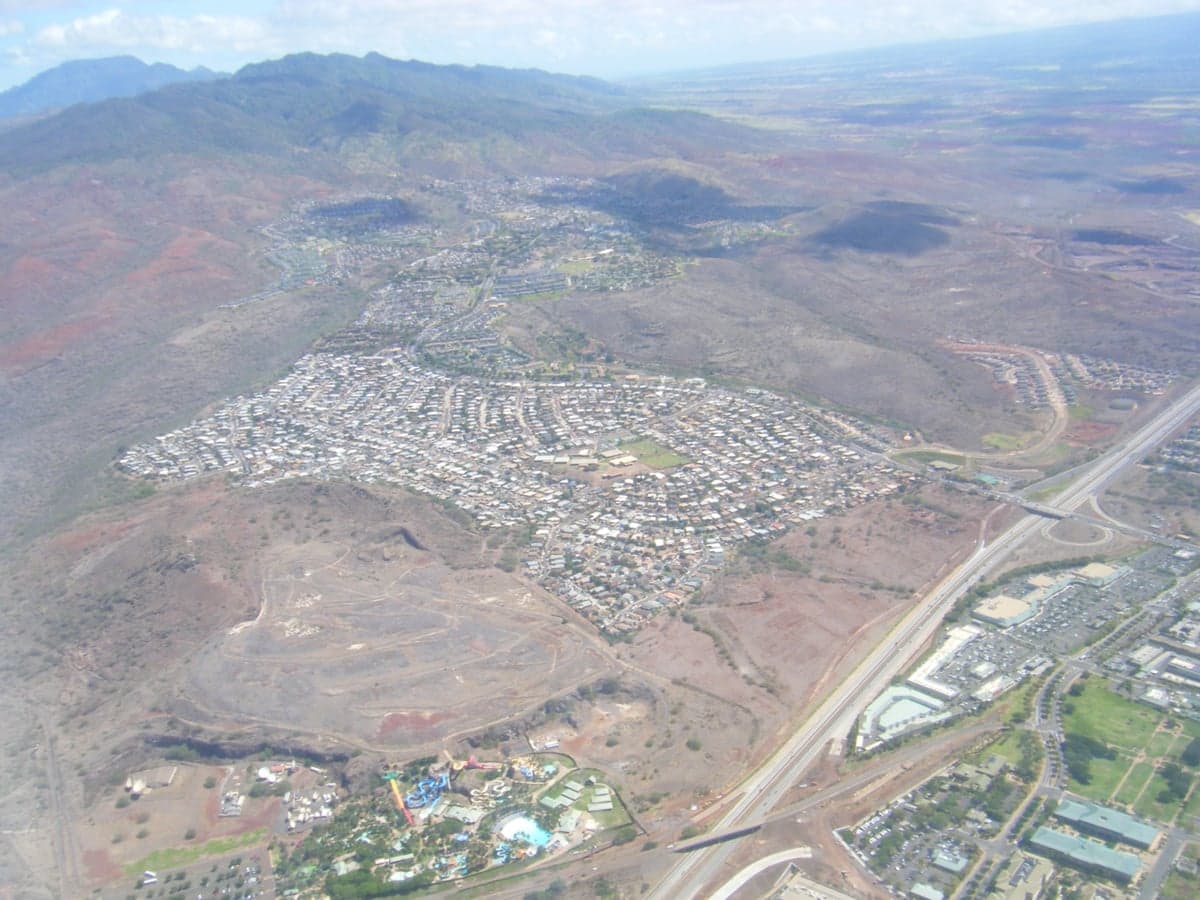
Makakilo, a residential community perched on the slopes of Oahu’s Waianae Range, presents a complex picture for those prioritizing personal sovereignty. While Hawaii’s state-level policies often rank among the most restrictive in the nation—particularly regarding taxation, gun rights, and land use—the day-to-day autonomy environment in Makakilo itself offers a few strategic advantages for the survivalist-minded individual. The key is understanding that personal sovereignty here is less about broad legal freedoms and more about navigating a high-cost, high-regulation environment with deliberate, low-profile choices. For a conservative-leaning single person or parent weighing relocation, the trade-offs are stark: you gain a tight-knit, geographically isolated community with strong informal networks, but you operate within a state government that consistently prioritizes collective mandates over individual liberty.
Tax burden and regulatory posture: what you keep and what the state takes
Hawaii’s tax structure is a significant drag on personal sovereignty. The state imposes a general excise tax (GET) of 4% on nearly all goods and services, including groceries and medical supplies—a regressive levy that hits families hard. There is no local sales tax in Makakilo, but the GET effectively functions as one. Property taxes are relatively low by national standards, with Honolulu County’s effective rate hovering around 0.35% of assessed value, but home prices in Makakilo are stratospheric—median single-family homes routinely exceed $800,000. For a prepper, this means a substantial portion of income goes to housing before you can stockpile supplies. Income taxes are progressive, topping out at 11% for high earners, and the state aggressively taxes capital gains. Regulatory posture is equally burdensome: Hawaii’s land use commission and county zoning boards exert tight control over property modifications, meaning even adding a rainwater catchment system or a small workshop may require permits and neighbor notifications. The state’s COVID-era mandates, including prolonged indoor mask requirements and vaccine passport systems, signaled a willingness to enforce public health directives with little tolerance for individual opt-outs. For the sovereignty-minded, this is a high-tax, high-regulation environment where financial independence requires careful planning to avoid state overreach.
Self-defense and gun law specifics: navigating Hawaii’s restrictive framework
Hawaii’s gun laws are among the most restrictive in the United States, and Makakilo residents operate under the same state-level constraints. Open carry is effectively banned, and concealed carry permits are issued only on a “may-issue” basis—meaning the county police chief has broad discretion to deny applications. In practice, Honolulu County issues very few permits, and those granted often require a demonstrated “exceptional case” of specific threats. The state also mandates a 14-day waiting period for all firearm purchases, requires registration of all handguns, and bans “assault weapons” (defined broadly to include many common semi-automatic rifles). Magazine capacity is capped at 10 rounds. For a prepper, this means building a self-defense arsenal is legally constrained and bureaucratically slow. However, home defense with a registered handgun or shotgun is legally permissible, and Makakilo’s relatively low violent crime rate (about 2.5 incidents per 1,000 residents, per 2024 data) reduces the immediate need for armed response. The practical workaround for the sovereignty-minded is to focus on non-firearm self-defense tools—pepper spray, knives, and physical security measures—while maintaining a low profile with any firearms you do possess. The state’s strict liability laws also mean that any use of force, even in self-defense, can lead to legal scrutiny, so understanding Hawaii’s “stand your ground” limitations (the state does not have a stand-your-ground statute) is critical.
Self-reliance and homesteading viability: lot sizes, zoning, and off-grid feasibility
Makakilo’s residential character is suburban, not rural, which limits traditional homesteading. Most lots are between 5,000 and 10,000 square feet, with zoning that restricts agricultural activities. Keeping chickens or small livestock is generally prohibited under county codes, and even vegetable gardens may face HOA restrictions in the area’s many planned communities. Off-grid feasibility is extremely low: the entire neighborhood is connected to Honolulu’s municipal water and electrical grid, and solar panel installations require permits and utility approval. Rainwater catchment systems are uncommon and may violate health codes if used for potable water. For a prepper seeking true self-reliance, Makakilo is a poor fit—you cannot easily drill a well, raise goats, or store large fuel tanks without drawing regulatory attention. However, the area’s proximity to the Waianae Coast and the island’s less developed north shore offers strategic access to public lands for foraging, fishing, and hunting (with proper licenses). The real self-reliance strategy here is financial and logistical: stockpiling non-perishable food, maintaining a deep pantry, and building community networks for barter and mutual aid. The high cost of living means that any homesteading effort must be offset by a robust income stream, making remote work or a high-paying local job essential for maintaining sovereignty.
Personal liberties: parental rights, medical autonomy, speech, and property
Hawaii’s state government has a strong track record of prioritizing collective welfare over individual rights, which directly impacts personal liberties in Makakilo. Parental rights are limited: the state mandates comprehensive sex education in public schools, requires vaccination for school attendance (with narrow medical exemptions), and has a history of aggressive child protective services investigations for parents who refuse standard medical care. Medical autonomy is similarly constrained—Hawaii has strict prescription drug monitoring, mandatory reporting laws for alternative treatments, and a state-run health insurance exchange that penalizes those who opt out. Free speech is constitutionally protected, but the state’s anti-discrimination laws and hate speech statutes create a legal environment where expressing certain political or religious views can lead to civil liability or employment consequences. Property rights are the weakest link: Hawaii’s land use laws allow the county to impose strict building codes, environmental restrictions, and even eminent domain for public projects. The state’s rent control and tenant protection laws also tilt heavily toward renters, meaning landlords have limited ability to evict or raise rents. For the sovereignty-minded parent, this means you must be prepared to homeschool (which is legal but requires annual notification and standardized testing) and to maintain a low public profile on controversial issues. The informal community in Makakilo, with its strong local Facebook groups and neighborhood watch programs, can provide a buffer against state overreach, but it requires active participation and trust-building.
Overall, Makakilo offers a moderate level of personal sovereignty when compared to other parts of Hawaii, but it falls far short of the freedom found in lower-regulation states like Texas or Idaho. The trade-off is geographic isolation and a tight-knit community that can serve as a resilience network in times of crisis. For the survivalist or prepper, the strategic approach is to treat Makakilo as a base of operations—a place to build financial stability and community ties—while maintaining a low regulatory profile and preparing for the possibility of relocation if state overreach becomes untenable. The state’s high taxes, restrictive gun laws, and limited homesteading options mean that personal sovereignty here is a constant negotiation, not a given. If you value absolute autonomy, look elsewhere. But if you can navigate the bureaucracy and leverage the community’s informal strengths, Makakilo can be a defensible, if imperfect, outpost for a conservative-leaning individual or family.

* Values derived from national, state, county, city and local statistics and may differ in a specific area. Last updated: 2026-04-24T00:09:51.000Z
Narrative content on this page is AI-generated and may contain mistakes. Verify any details that matter before acting on them.
ReloMaps may earn a commission from affiliate links at no extra cost to you.

