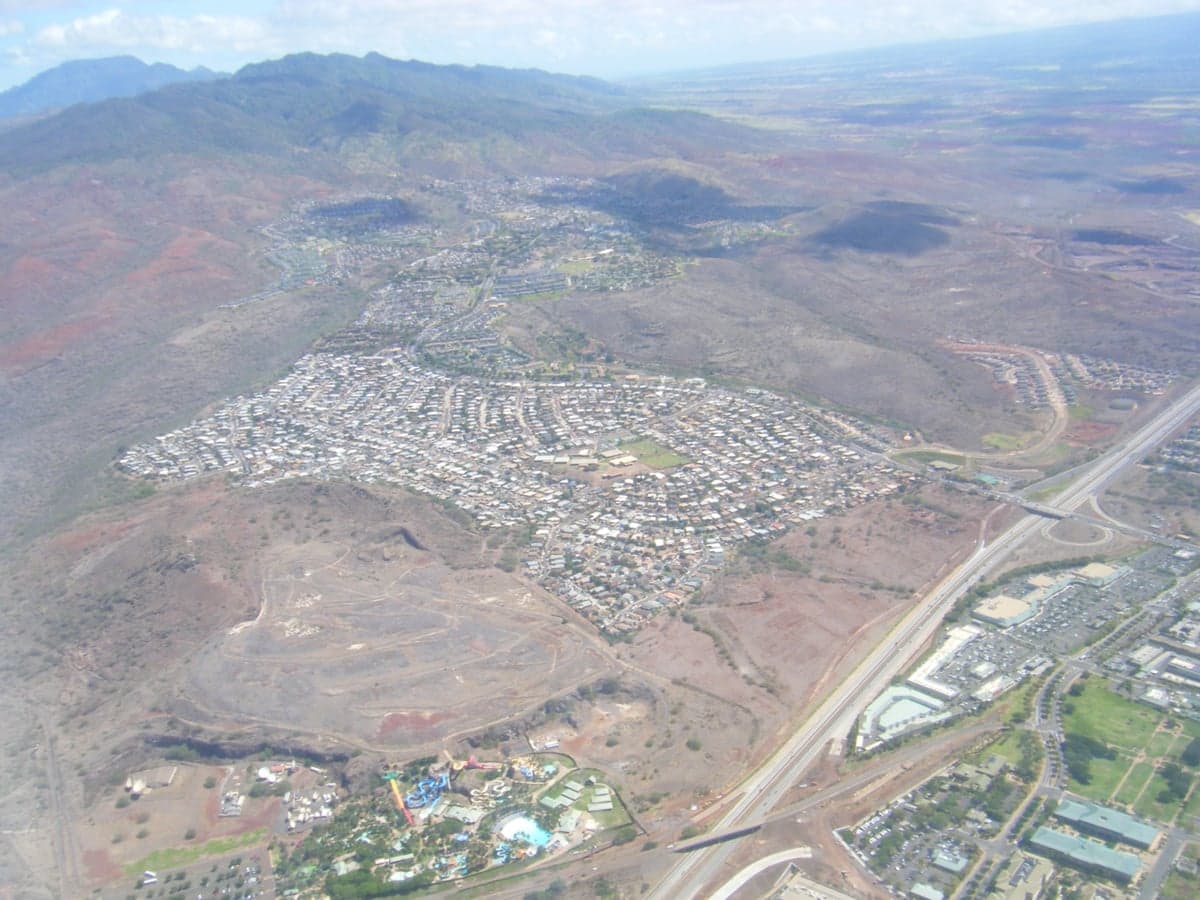
Photo: Wikipedia
Political ClimatePolitical Climate in Makakilo, HI
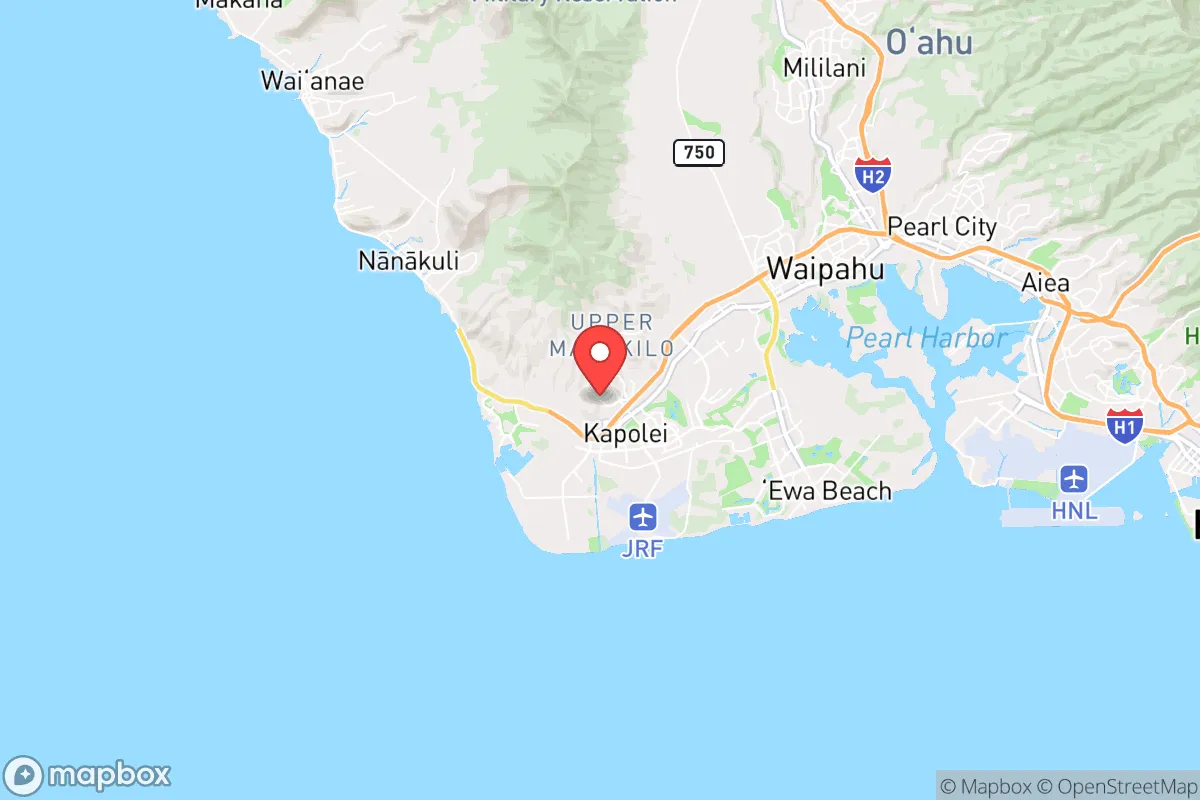
District shown is the primary district for this city’s centroid. Cities may span multiple districts.
Local Political AnalysisPolitical Analysis of Makakilo, HI
Makakilo, on the leeward side of Oahu, has a Cook PVI of D+12, meaning it leans heavily Democratic, but don’t let that number fool you into thinking it’s a monolith. The area has a strong, quiet conservative undercurrent, especially among long-time local families and military-connected residents who value personal freedom and fiscal restraint. Over the last decade, the political trajectory has shifted noticeably leftward, driven by an influx of transplants from the mainland and younger voters who embrace progressive policies, which is a real concern for those of us who remember when the neighborhood felt more balanced.
How it compares
Drive ten minutes down the H-1 to Kapolei, and you’ll find a similar D+12 lean, but the political vibe is more corporate and development-friendly, with less of the grassroots pushback you see in Makakilo. Head east into urban Honolulu, and the contrast is stark—places like Manoa or Kaimuki are deep blue, with D+20 or higher, where progressive activism is the norm. On the other hand, go north to the rural North Shore or windward side towns like Laie, and you’ll find pockets of red, with some precincts voting Republican by 10 points or more. Makakilo sits in a weird middle ground: it’s blue on paper, but the local culture still prizes independence and skepticism of government overreach, which is increasingly at odds with the state legislature’s agenda.
What this means for residents
For those of us who value personal freedoms, the shift is worrying. The state government, controlled by Democrats for decades, has steadily expanded its reach into everyday life—think strict COVID mandates that lasted longer than most places, aggressive land-use regulations that limit what you can do with your own property, and a tax burden that keeps climbing. In Makakilo, you feel this most acutely in housing costs and zoning rules; the county’s push for high-density development near the rail station threatens the suburban character that drew many families here. Property taxes have risen 15% since 2020, and new state laws on short-term rentals and vacation units have hit homeowners hard, limiting their ability to generate income from their own land. The local school board and city council races are where the rubber meets the road—progressive candidates often win, but turnout is low, meaning a small, motivated group can push policies that don’t reflect the broader community’s values.
On the cultural front, Makakilo still holds onto a neighborly, live-and-let-live ethos that’s rare in more urbanized parts of the island. You’ll see plenty of American flags and pickup trucks with gun racks, and the local church community is strong. But the political pressure is mounting: the state’s push for a carbon tax and electric vehicle mandates feels like a direct hit on working-class families who rely on older cars or can’t afford the switch. The long-term outlook is uncertain—if the progressive wave continues, Makakilo could lose its independent character, becoming just another bedroom community for Honolulu’s bureaucracy. For now, it’s a place where you can still have a conversation with your neighbor about politics without it turning into a fight, but that’s getting harder every election cycle.

State Political ClimatePolitical Climate in Hawaii
State Political AnalysisPolitical Environment in the State
Hawaii has been a one-party Democratic stronghold for decades, with Democrats controlling the governorship, both chambers of the legislature, and both US Senate seats for most of the last 60 years. The state’s overall partisan lean is roughly D+20 in presidential elections, but that masks a growing conservative undercurrent, especially among Native Hawaiians, military families, and rural residents. Over the last 10-20 years, the Democratic coalition has shifted from a more moderate, labor-driven base to a progressive, government-expanding machine, while Republicans have been squeezed into a few rural and suburban pockets. For a conservative considering relocation, the key takeaway is that Hawaii’s political climate is increasingly hostile to traditional values, but there are still places where you can breathe free—if you know where to look.
Urban vs. rural divide
The political map of Hawaii is starkly divided between the urban core of Honolulu on Oahu and the rest of the state. Honolulu and its suburbs—like Waikiki, Kaimuki, and Manoa—are deep blue, driven by a dense population of government workers, university faculty, and service industry employees. These areas reliably vote 70-80% Democratic and are the engine of progressive legislation. In contrast, the rest of Oahu, particularly the Leeward Coast (Waianae, Makaha) and the North Shore (Haleiwa, Laie), leans more conservative, with strong military and Native Hawaiian communities pushing back against Honolulu’s agenda. On the neighbor islands, the divide is even sharper: Hilo on the Big Island is a progressive enclave, while Kona and the Puna district are more libertarian-leaning. Maui’s central valley (Kahului, Wailuku) is blue, but Upcountry (Kula, Makawao) and Hana are redder. Kauai is the most uniformly blue of the neighbor islands, but even there, the rural west side (Waimea, Hanapepe) has a conservative streak. The 2022 gubernatorial race saw Republican candidate Duke Aiona win 33% of the vote, with his strongest support coming from the Leeward Coast, the Big Island’s Kona district, and Maui’s Upcountry—places where government overreach is felt most acutely.
Policy environment
Hawaii’s policy environment is a textbook case of progressive overreach. The state has the highest combined state and local tax burden in the nation, with a 4.4% income tax on the lowest bracket and a top rate of 11%—among the highest in the country. Property taxes are relatively low (around 0.4% of assessed value), but the state’s General Excise Tax (GET) of 4% on nearly all goods and services, plus county surcharges, means you pay tax on everything from groceries to rent. Education policy is dominated by a single statewide school district, the Hawaii Department of Education, which is notoriously bureaucratic and underperforming—only about 50% of students are proficient in reading and math. School choice is limited, though charter schools and private schools (like Punahou and Iolani) are options for those who can afford them. Healthcare is heavily regulated, with the state mandating employer-provided insurance and offering a robust Medicaid program. Election laws are among the most restrictive in the nation: Hawaii has all-mail voting, same-day registration, and no voter ID requirement, which critics say invites fraud. The state also has a “sanctuary” policy that limits cooperation with federal immigration enforcement, and it was the first state to pass a “Dreamer” tuition equity law. For a conservative, the policy environment feels like a slow-motion squeeze on personal freedom, with every lever of government used to expand control.
Trajectory & freedom
Hawaii is becoming less free by almost any measure. The state has some of the strictest gun laws in the nation, including a ban on assault weapons, a 14-day waiting period, and a requirement that all firearm sales go through a licensed dealer. In 2022, the legislature passed Act 216, which expanded the state’s “red flag” law to allow family members and law enforcement to petition for temporary firearm seizure without a criminal conviction. Parental rights have been eroded: in 2023, the state passed a law requiring public schools to allow students to use restrooms and locker rooms matching their gender identity, overriding parental notification. Medical autonomy is under assault: Hawaii has a strict vaccine mandate for school attendance, and in 2021, the state imposed one of the nation’s longest indoor mask mandates, lasting over 500 days. Property rights are weak: the state’s Land Use Commission has near-total control over zoning, and the county of Honolulu has a “Bill 40” that restricts short-term rentals, effectively limiting how you can use your own home. On the positive side, Hawaii has no “right-to-work” law, meaning union membership is effectively mandatory in many sectors, and the state’s rent control policies in Honolulu are expanding. The trajectory is clear: more mandates, more taxes, and less individual choice.
Civil unrest & political movements
Hawaii has a long history of civil unrest, much of it centered on land rights and Native Hawaiian sovereignty. The most visible flashpoint in recent years was the 2019 protest against the Thirty Meter Telescope (TMT) on Mauna Kea, which drew thousands of Native Hawaiian activists and their allies, blocking construction for months. That movement was a rare coalition of left-wing environmentalists and conservative Native Hawaiians who oppose outside control of sacred land. On the right, the Hawaii Republican Party is small but active, with a strong presence in military-heavy areas like Wahiawa and Kapolei. The state has seen growing election integrity concerns: in 2020, the Hawaii Office of Elections admitted to sending out over 200,000 unsolicited mail-in ballots to inactive voters, and a 2022 audit found that 1,200 non-citizens were registered to vote. Immigration politics are muted compared to the mainland, but the state’s sanctuary policies have led to tensions, particularly in communities like Waipahu, which has a large Filipino immigrant population. Secessionist rhetoric is common among Native Hawaiian sovereignty groups, who argue that the US illegally overthrew the kingdom in 1893. While this movement is mostly symbolic, it does create a unique political dynamic where both left and right can agree on opposing federal overreach—at least on some issues.
Projection
Over the next 5-10 years, Hawaii’s political trajectory is likely to continue its leftward march, driven by demographic shifts and in-migration from the mainland. The state’s population is aging and declining, with a net loss of about 10,000 residents per year, many of whom are middle-class families moving to lower-cost states like Nevada, Texas, and Idaho. Those who replace them are often wealthy retirees or remote workers from California and the Pacific Northwest, who bring progressive voting habits with them. The Native Hawaiian population, which tends to be more conservative on social issues, is shrinking as a share of the total. The Democratic Party’s internal dynamics are also shifting: the old guard of labor-friendly moderates is being replaced by a younger, more progressive faction that is pushing for a state-level universal basic income, a single-payer healthcare system, and even more restrictive gun laws. Republicans are unlikely to win statewide office again soon, but they could hold onto a few legislative seats in rural areas. For a conservative moving in now, expect to find a state that is increasingly hostile to your values, with higher taxes, more regulations, and less personal freedom. The best you can hope for is to find a niche in a conservative pocket like the Leeward Coast or Upcountry Maui, where you can live relatively undisturbed—but the political winds are blowing against you.
Bottom line for a new resident: If you’re a conservative considering Hawaii, go in with your eyes open. The state’s natural beauty and aloha spirit are real, but the political climate is increasingly hostile to traditional values. You’ll pay high taxes, deal with heavy regulation, and watch your freedoms erode year by year. Your best bet is to target rural areas like Waianae, Kona, or Kula, where the local culture is more independent and less influenced by Honolulu’s progressive machine. But even there, the state government’s long arm will reach you. Hawaii is a beautiful place to visit, but for a conservative looking to build a life, it’s a tough sell.
* Values derived from national, state, county, city and local statistics and may differ in a specific area. Last updated: 2026-04-24T00:09:51.000Z
Narrative content on this page is AI-generated and may contain mistakes. Verify any details that matter before acting on them.
ReloMaps may earn a commission from affiliate links at no extra cost to you.

