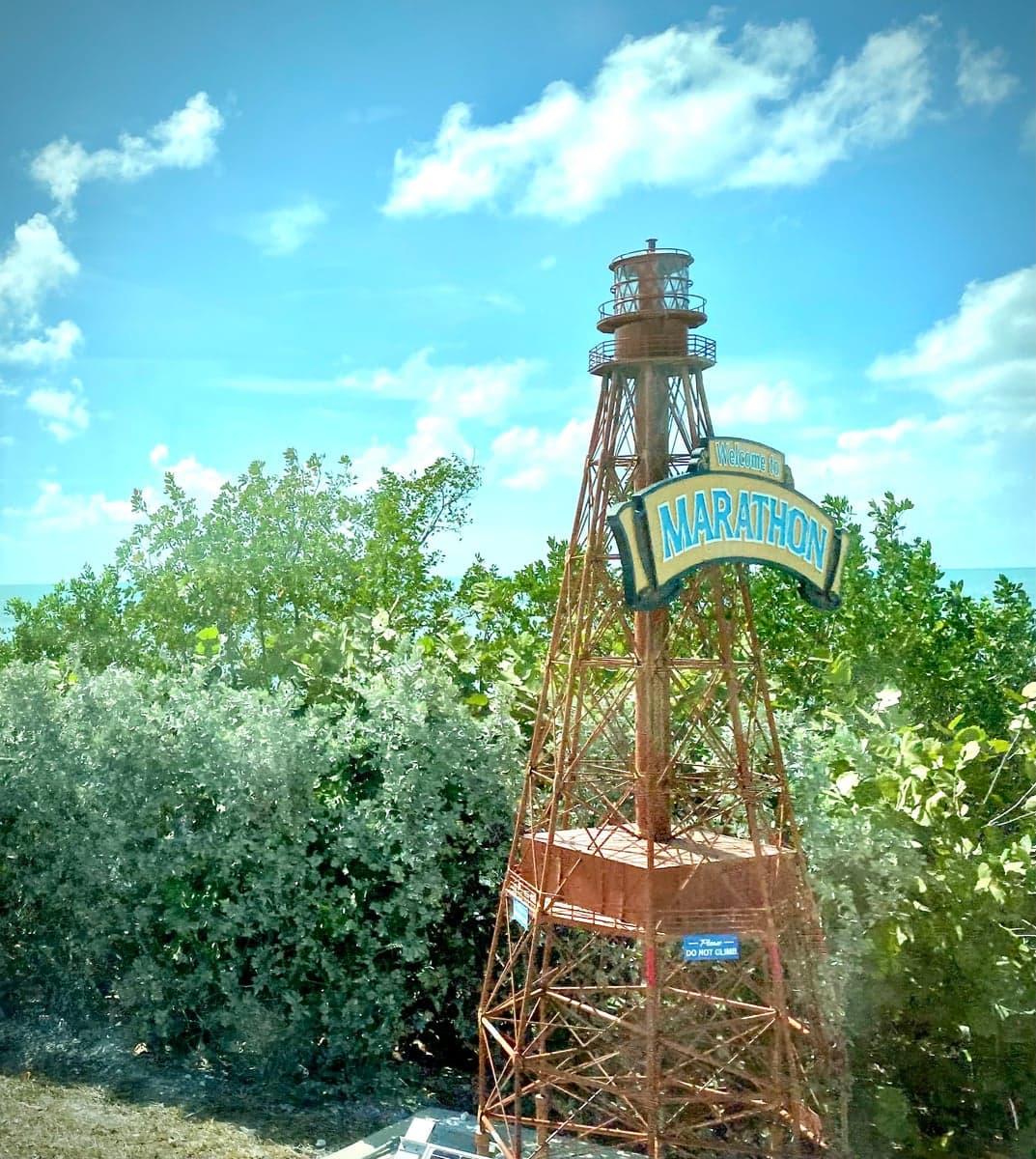
Photo: Wikipedia
Demographics of Marathon, FL
Affluence Level in Marathon, FL
An upper-middle-class area. Household wealth, education levels, and homeownership run ahead of national benchmarks.
People of Marathon, FL
The people of Marathon, Florida today form a compact, service-oriented community of roughly 9,831 residents, characterized by a blend of longtime Florida Keys families and recent transplants drawn by marine trades and tourism. The city’s population is 59.3% White, 33.1% Hispanic, 3.9% Black, and 0.2% East/Southeast Asian, with a foreign-born share of 10.6% and a college-educated rate of 33.0%. Distinctively, Marathon feels more working-class and transient than the upper Keys, with a strong seasonal rhythm tied to fishing, boating, and hospitality.
How the city was settled and grew
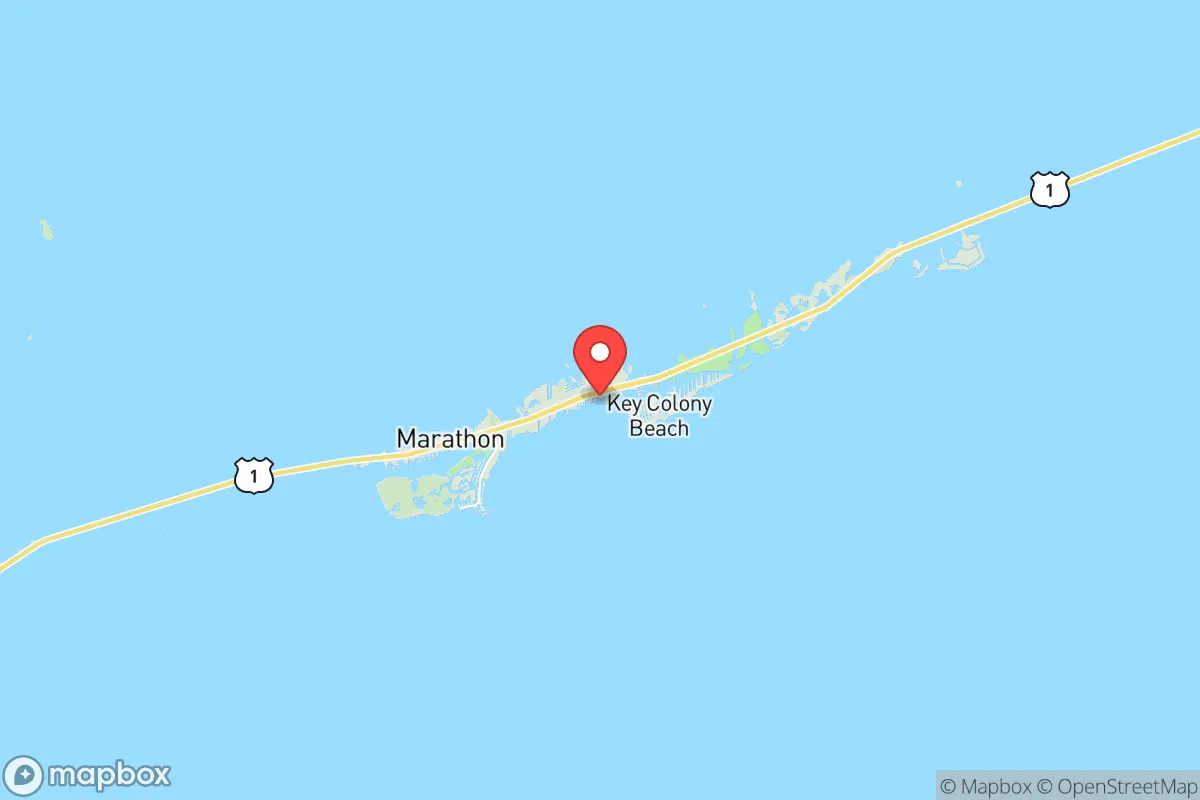
Marathon was not a colonial-era settlement; its history begins in the early 20th century. The Florida East Coast Railway reached the area around 1908, and the city was officially incorporated in 1999. The original population was a mix of Anglo-American railroad workers, Bahamian immigrants, and Cuban fishermen who built small camps along the bayside. The Key Colony Beach neighborhood, developed in the 1950s, attracted middle-class retirees and vacation-home buyers from the Midwest and Northeast. Coco Plum Beach, a quieter residential enclave on the Atlantic side, grew with families working in the burgeoning sportfishing industry. The Marathon Shores area, inland and more affordable, became home to many of the Bahamian-descended families who had worked in the sponge and turtle fisheries. By mid-century, the population was overwhelmingly White and native-born, with a small but established Hispanic minority of Cuban origin.
Modern era (post-1965)
After the 1965 Hart-Cellar Act, Marathon saw a modest but steady influx of Cuban and later Central American immigrants, primarily drawn to construction, landscaping, and hospitality jobs. The Hispanic share rose from roughly 10% in 1980 to 33.1% today, making it the fastest-growing demographic. Most of these newer arrivals settled in the Airport Industrial Park area and the older, denser blocks near Overseas Highway (US-1) between 48th and 53rd Streets, where rents are lower and Spanish-language services are concentrated. Meanwhile, domestic in-migration from the Northeast and Florida’s interior accelerated after 2000, with many retirees and remote workers buying in Sombrero Beach and Vaca Cut neighborhoods. The Black population, historically small at 3.9%, remains concentrated in the Marathon Shores area, where some families trace roots back to Bahamian laborers who arrived before World War II. The East/Southeast Asian population (0.2%) and Indian-subcontinent population (0.2%) are negligible, mostly tied to medical and marine-engineering professionals living scattered across the city.
The future
Marathon’s population is trending toward greater Hispanic plurality, driven by continued immigration from Central America and higher birth rates among Hispanic families. The White non-Hispanic share, now 59.3%, is slowly declining as older retirees die or move to lower-cost mainland areas. The city is not tribalizing into distinct ethnic enclaves—most neighborhoods remain mixed—but the Overseas Highway corridor is becoming a de facto Hispanic commercial and residential strip, while Key Colony Beach and Sombrero Beach remain overwhelmingly White and English-dominant. The foreign-born share (10.6%) is plateauing, as housing costs push new immigrants farther down the Keys or to Homestead. Over the next 10–20 years, Marathon will likely become a majority-minority city, with a Hispanic population approaching 40–45%, while the Black and Asian shares remain small. The college-educated rate (33.0%) is stable, as remote work and marine-tourism jobs attract some professionals but not enough to shift the city’s blue-collar character.
Marathon is becoming a more Hispanic, younger, and slightly more diverse community, but it remains a working-class Keys town defined by its marine economy and seasonal rhythms. For someone moving in now, the city offers a tight-knit, politically moderate-to-conservative atmosphere where English is still the default language in most neighborhoods, but Spanish is increasingly common in daily commerce. The key trade-off is affordable (by Keys standards) housing versus limited upward mobility and a population that turns over frequently with the tourist cycle.

* Values derived from national, state, county, city and local statistics and may differ in a specific area. Last updated: 2026-05-14T01:41:43.000Z
Narrative content on this page is AI-generated and may contain mistakes. Verify any details that matter before acting on them.
ReloMaps may earn a commission from affiliate links at no extra cost to you.

